Tugboats sent by SpaceX are working to retrieve Flight 13’s Starship from the Indian Ocean
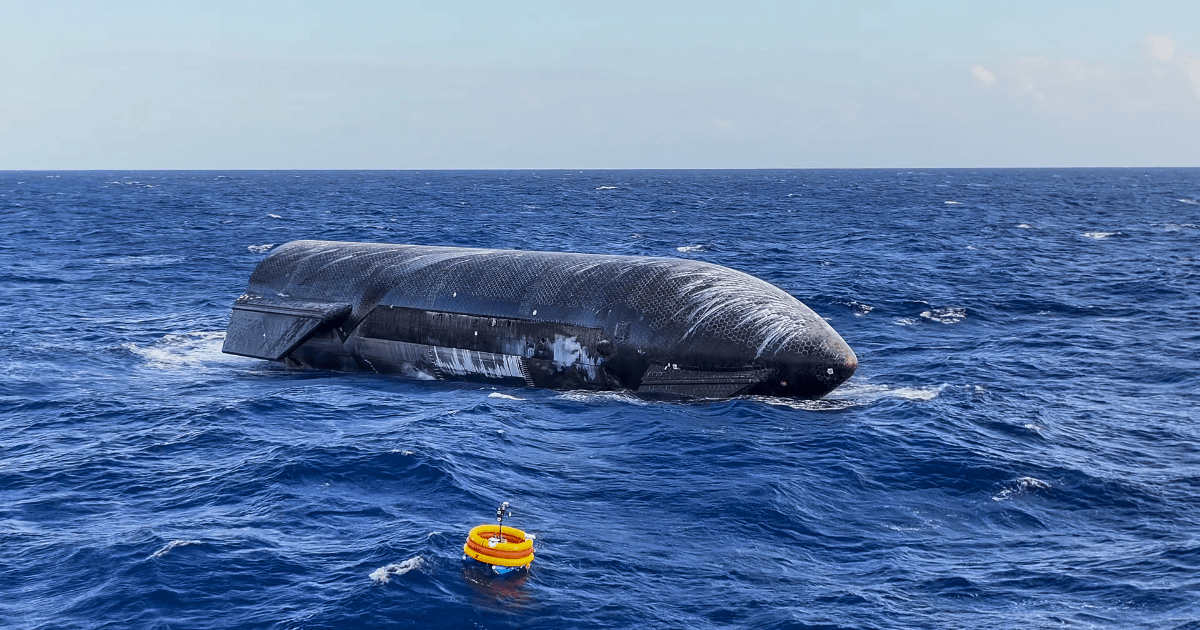
SpaceX has begun preparations to secure Ship 40, the upper stage used for the recent Flight 13 of Starship, in order to bring it back to shore. Based on satellite images shared by Vantor, it appears that three recovery ships were deployed to the site in the Indian Ocean where SpaceX’s flagship vehicle is currently floating after having performed a controlled splashdown on July 24, 2026. Even though no plans to recover Starship had been announced prior to launch, CEO Elon Musk confirmed on July 28 via X that a recovery attempt would be made given how well it fared after a gentle tip-over on its side.
The Starship Recovery team has continued gathering imagery of the vehicle, which is still afloat in the Indian Ocean pic.twitter.com/ozCJYtxXGU
— SpaceX (@SpaceX) July 28, 2026
The recovery efforts are currently being led by two Norwegian ships known as the Normand Ranger and Skimmer Tide, according to CNN. Initially, SpaceX's own Starship Recovery team had made their way to the spot where Ship 40 has drifted aboard the Go Australis vessel. That ship can now be tracked moving back towards the Australian coast. It isn't clear whether the tugging has already begun to bring the upper stage of SpaceX's heavy lift rocket back to land, though a small boat and what appears to be a line attached to Starship's nose in the Vantor satellite images that have since been reshared by other unofficial accounts on X suggests that the journey is about to begin.
SpaceX may not have but CNN and Vantor did. https://t.co/GCBlbNAyCY pic.twitter.com/8V4WEPv26Z
— Booster 10 (@booster_10) August 3, 2026
Should the recovery of Ship 40 succeed, engineers at SpaceX will get another opportunity to get a good look at the heat shield tiles. Because SpaceX expected the vehicle to either break apart upon splashdown—as it did during Flight 12—or sink into the ocean, cameras had been fitted onto six of the twenty Starlink V3 satellites that the vehicle ended up putting on a sub-orbital trajectory like itself. These satellites beamed high-resolution video back to Earth for flight engineers to perform a visual analysis of the heat shield tiles across the 170-foot-long Starship. Sensors had also been mounted amidst the tiles to measure loads during Max Q—the point during the rocket's ascent where it experiences the maximum aerodynamic pressure from the atmosphere.
The Starship Recovery team has continued gathering imagery of the vehicle, which is still afloat in the Indian Ocean pic.twitter.com/ozCJYtxXGU
— SpaceX (@SpaceX) July 28, 2026
The decision to invest time and effort into an impromptu recovery shows the value that a first-hand inspection would provide. This is especially true since the next Starship flight could be an orbital one and return to Starbase in Texas instead of splashing down into the ocean—pending approval by the Federal Aviation Administration. The capacity to check each tile up close could help SpaceX develop even better safety measures to protect its massive vehicle from the fiery re-entry into the Earth's atmosphere.
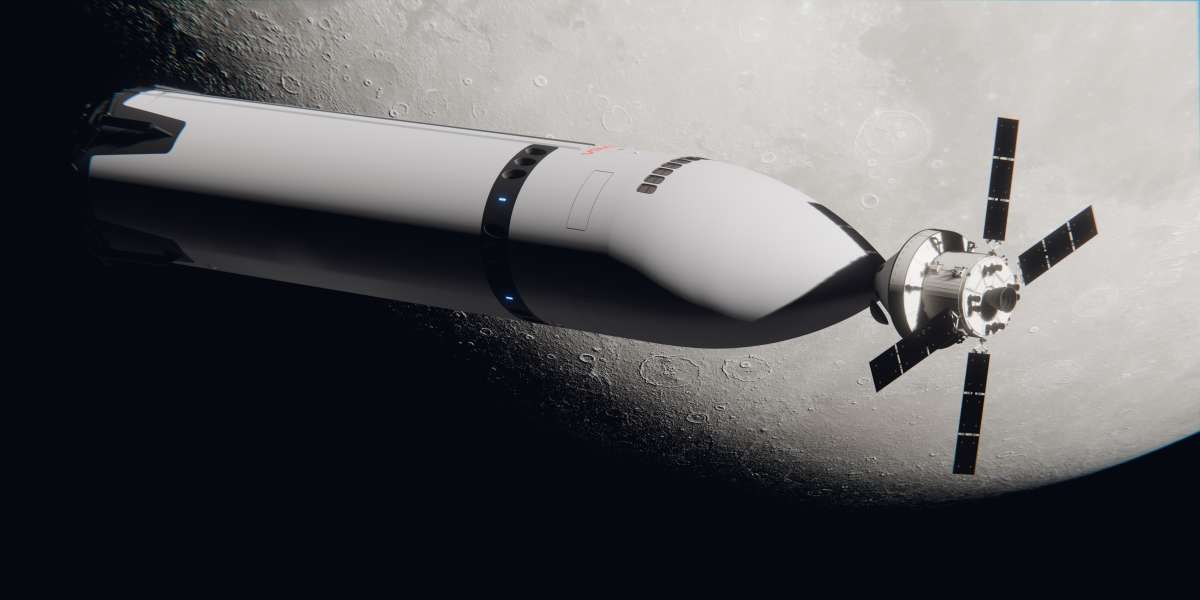
With a combination of the Starship vehicle and its Super Heavy booster, SpaceX is aiming to build completely reusable heavy-lift rockets that can eventually land large amounts of payloads and humans on the Moon and Mars, while reducing the logistical costs of space travel. The company and its Starship program are major players in NASA's Artemis III mission, which will act as a stepping stone towards landing the first humans on the Moon since the 1970s by 2028 with Artemis IV. Even as the company has seemingly struggled to keep pace with the time frames that NASA has stipulated for its industry partners in developing Human Landing System (HLS) spacecraft for a lunar landing, these recent developments should stand SpaceX in good stead going forward.
More on Starlust:
Why is Starship made of stainless steel, not carbon fiber? Here's what Elon Musk had to say