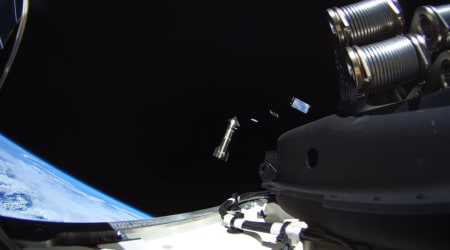
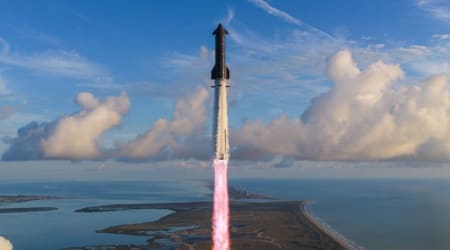
Starlink footage shows Starship firing its thrusters in space during Flight 13; watch video
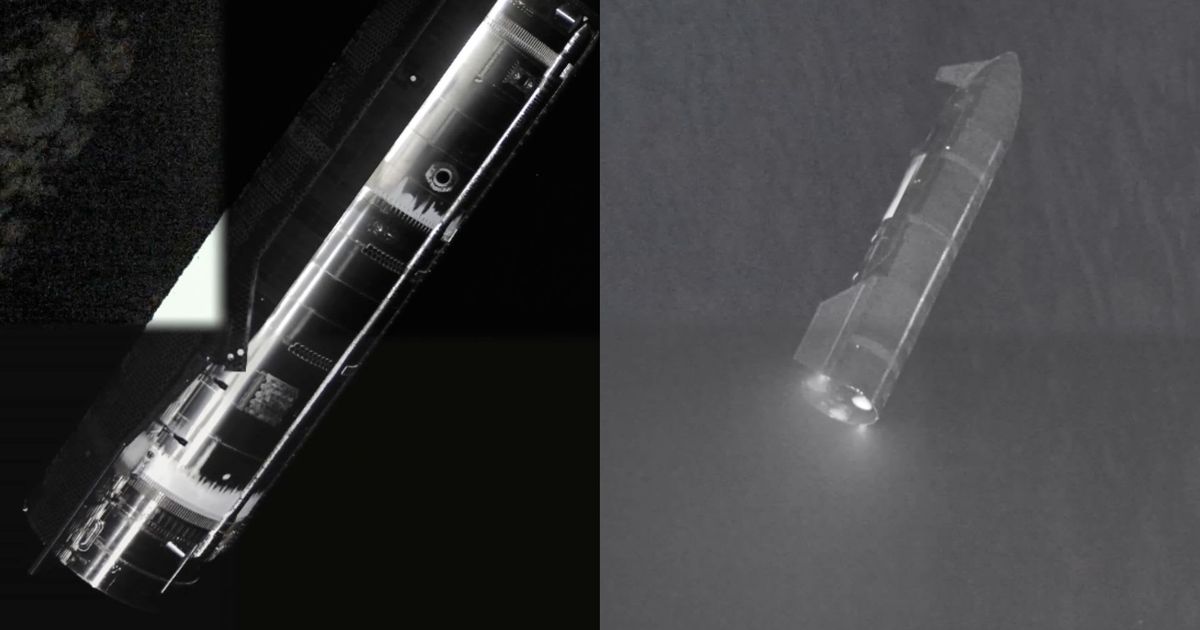
SpaceX has shared stunning new imagery of the Starship rocket in space, beamed to Earth by a Starlink satellite. The footage, featuring the upper stage of the launch vehicle, was captured on July 24 when the rocket lifted off from Starbase, Texas, for its 13th integrated test flight. Starship’s upper stage had carried 20 next-gen Starlink satellites to space, and six of them were equipped with cameras for in-space imaging of the rocket’s heat shield.
Starship in space set to Moonlight Sonata pic.twitter.com/bgjkzwXD9z
— SpaceX (@SpaceX) July 31, 2026
“Starship in space set to Moonlight Sonata,” SpaceX captioned the video shared on X. The minute-long footage shows the shiny, 171-foot-tall (52-meter) upper stage called Starship or Ship firing its thrusters on its suborbital trajectory as it drifted away from the satellites. Flight 13 marked the second flight of the Version 3 or V3 Starship rocket and the first involving the deployment of next-gen Starlink V3 satellites. As intended, all the 20 satellites burned up in the atmosphere approximately 20 minutes after being deployed. The V3 satellites represent a major upgrade in terms of capabilities over the current V2 iteration of Starlink satellites, which SpaceX launches onboard its workhorse Falcon 9 rocket. For instance, they offer a 10x improvement in downlink capacity and a 22x improvement in uplink capacity over their predecessors.
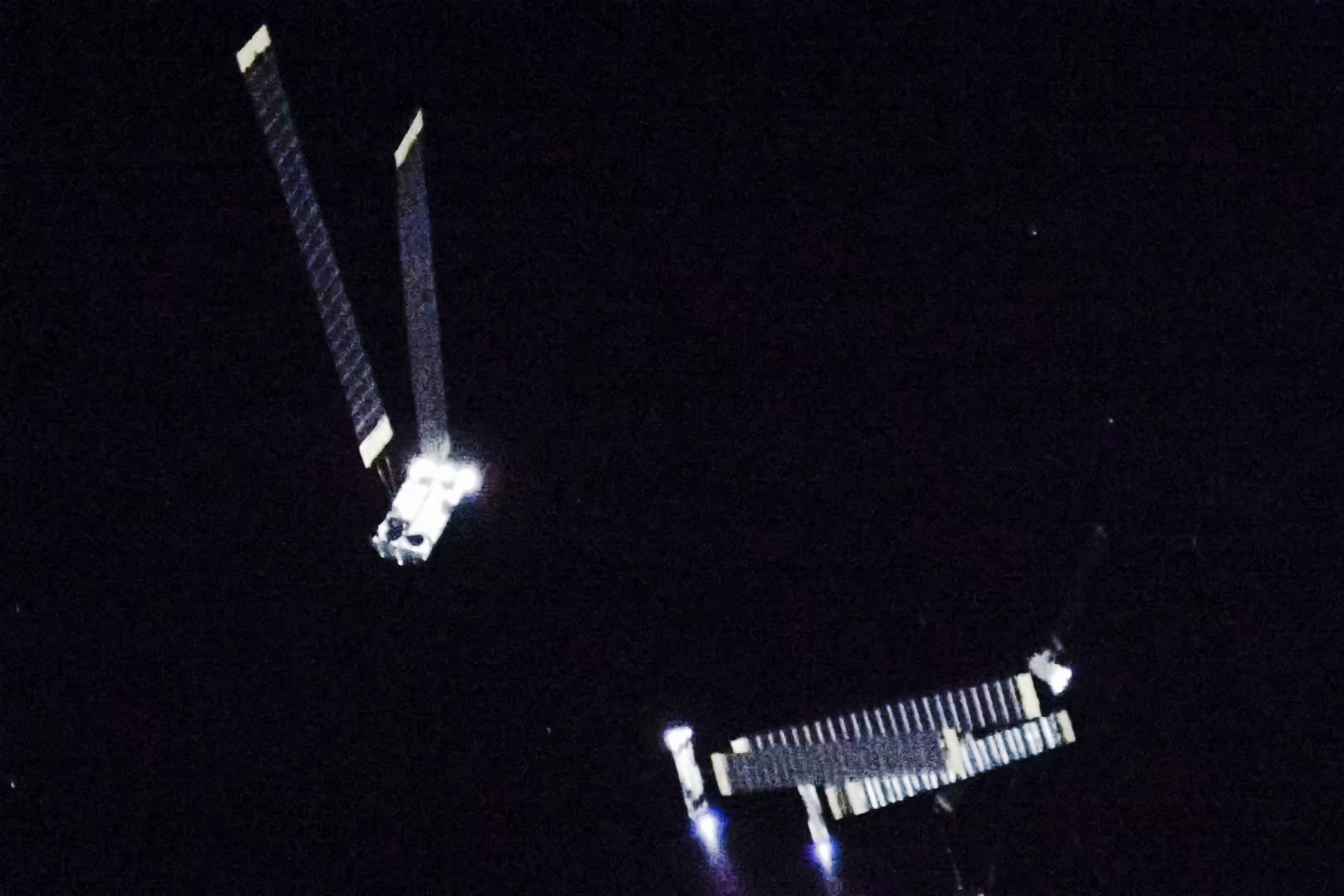
The latest Starship mission was largely successful, as it achieved several major milestones and ended with the ‘softest’ splashdown in the Indian Ocean to date. The initial phase, however, was not as smooth. While the first-stage Super Heavy Booster, consisting of 33 Raptor engines, worked nominally during liftoff, it faced issues after separating from the upper stage. It required 13 of those engines to work for a soft splashdown in the Gulf of America, but only 10 restarted, causing a hard landing into the sea.
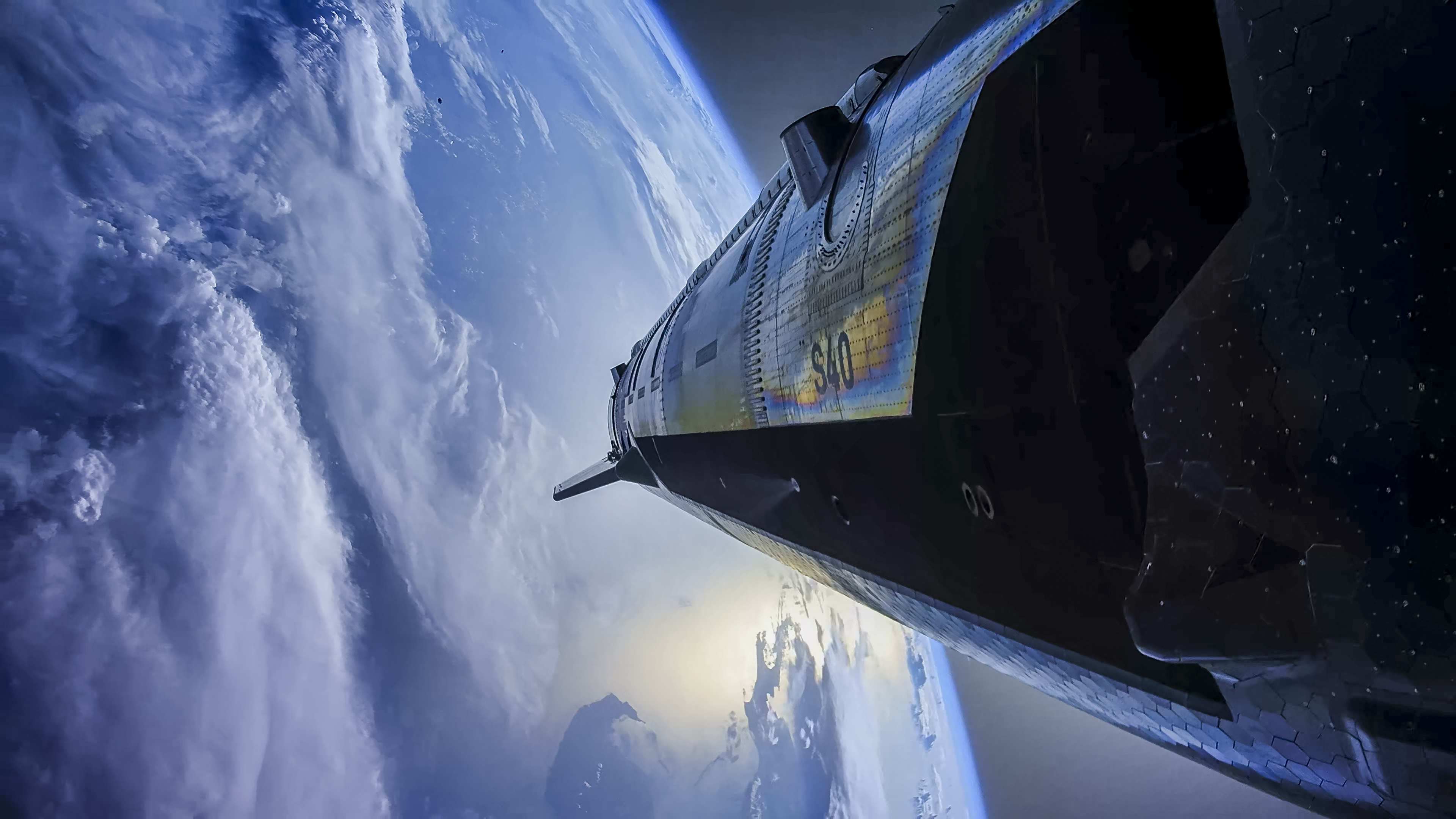
The upper stage, on the other hand, continued on its sub-orbital journey and completed the Starlink V3 satellite deployment. SpaceX says it also successfully reignited one of the six Raptor engines to demonstrate “a core capability for future orbital missions" before falling through the atmosphere for reentry. On July 28, the company revealed that the upper stage was still floating in the Indian Ocean, with CEO Elon Musk announcing that a recovery team was underway to secure Ship.
More on Starlust
SpaceX Falcon 9 rocket debris to crash into the Moon on August 5 at 5,400 mph—can you see it?