Chinese experts warn against ‘competition narrative’ as NASA plans to revive Mars sample return mission

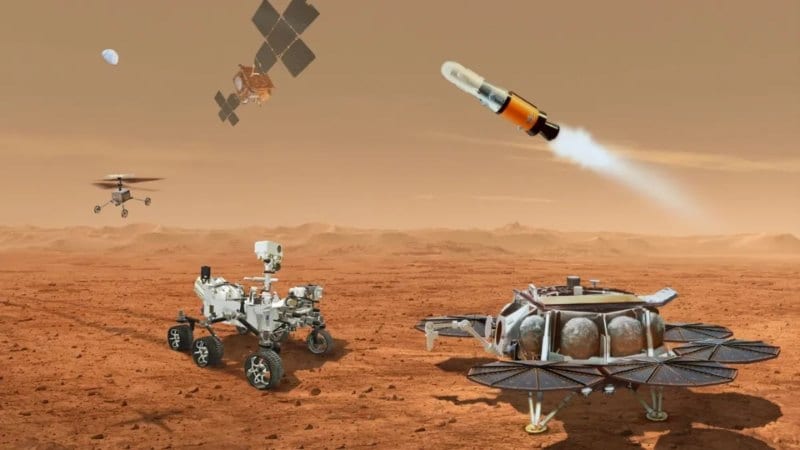
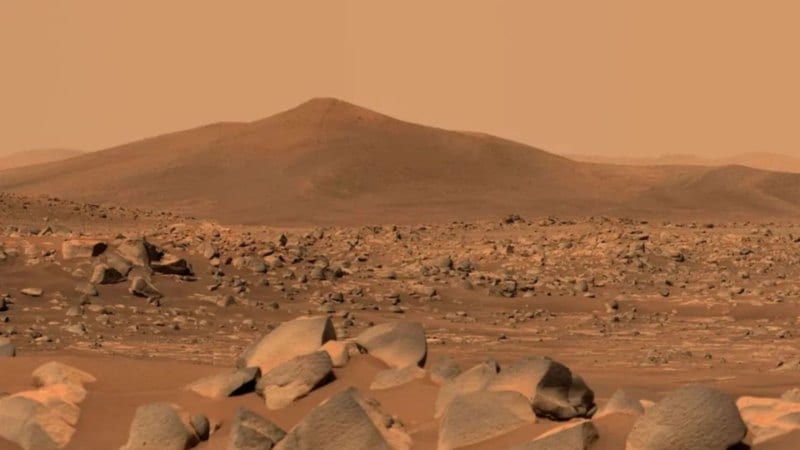
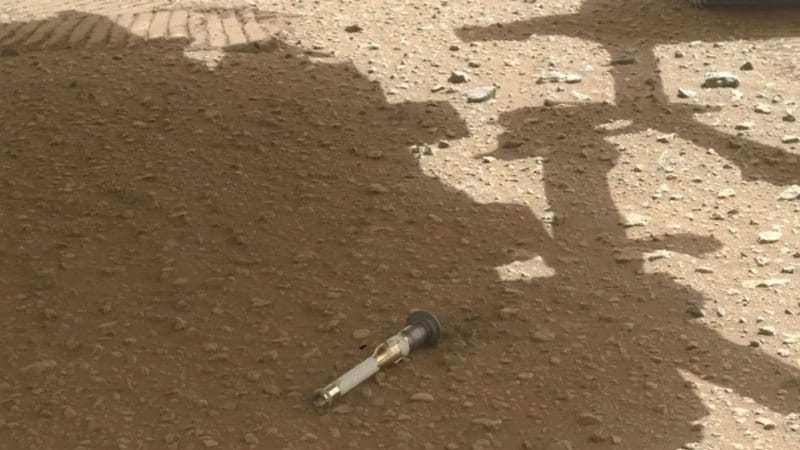
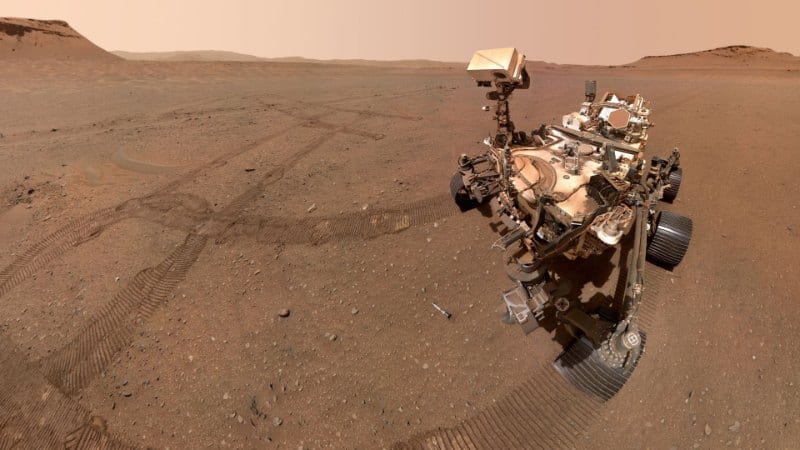
Chinese scientists have refuted a report which claimed that NASA is trying to revive its Mars sample return mission due to 'competitive pressure'. A report by Space.com revealed that the agency's leadership is discussing new strategies to bring rock samples collected by the Perseverance rover and that China’s Tianwen-3 mission is one of the driving forces behind it. Tianwen-3 is China’s mission to bring Martian rocks to Earth for lab analysis by 2031 and it's scheduled to launch in 2028. NASA, on the other hand, had to cancel its sample retrieval plans which would have cost up to an estimated $11 billion with a possible 2040 return.
Pang Zhihao, a senior space expert, has refuted the media claims of any competition between the two parties, saying Tianwen-3 does not seek to outpace the U.S. and that it has its own scientific roadmap. "The Chinese and US Mars sample-return missions are independently planned scientific projects, with different schedules and technical approaches,” Zhihao told state media Global Times. “Tianwen-3 is rooted in China's step-by-step planetary exploration program, with the goal of obtaining Martian samples for cutting-edge scientific research, rather than benchmarking itself against or catching up with the US.” He further took a dig at the U.S. saying that portraying China as a rival might secure funding for missions but “cannot fundamentally resolve engineering challenges.”
Kang Guohua, a senior member of the Chinese Society of Astronautics, also criticised the report saying that the ‘China pressure’ angle is meant to divert attention from NASA’s cost overruns and management failures. Guohua also said that bringing the sample back to Earth matters far more to China than winning a race on who brings it first.
Tianwen-3 is targeted for launch in 2028 and it will fetch about 500 grams (1.1 pounds) of Martian regolith to find signs of past microbial life on the red planet. This mission will have five components—a lander, an ascender, a service capsule, an orbiter, and a reentry module—that will launch on two different Long March 5 rockets. Chinese scientists have selected eight candidate sites where the lander might touchdown to scoop up the samples.
What is NASA planning?
According to Space.com, senior NASA leaders held a meeting on November 9 for the Perseverance Sample Retrieval Architecture (PSRA)—an initiative to develop a fresh plan on how to collect the rocks gathered by the Mars Perseverance rover. The PSRA was announced by Tiffany Morgan, director of the NASA Mars Exploration Program (MEP), who said that the its strategy team will kickoff in January 2027 and present its final report in winter 2027-2028. Under the initiative, NASA might seek help from private companies to ensure the mission remains within the planned budget and on schedule.
Notably, the U.S. governmnent has not sounded any alarm on lagging behind China regarding Mars as the competition has largely focused on the Moon where both nations want to land before 2030. It is safe to say that this competition also extends to Mars, where NASA and its partners intend to plant their flags first.
More on Starlust
China likely to send Pakistan’s first astronaut to its Tiangong Space Station this month
'Dodged a bullet': NASA chief Jared Isaacman relieved by delay in China's Chang’e-7 Moon mission