Stargazing in early July 2026? Here are some stunning sights to see at the start of the month

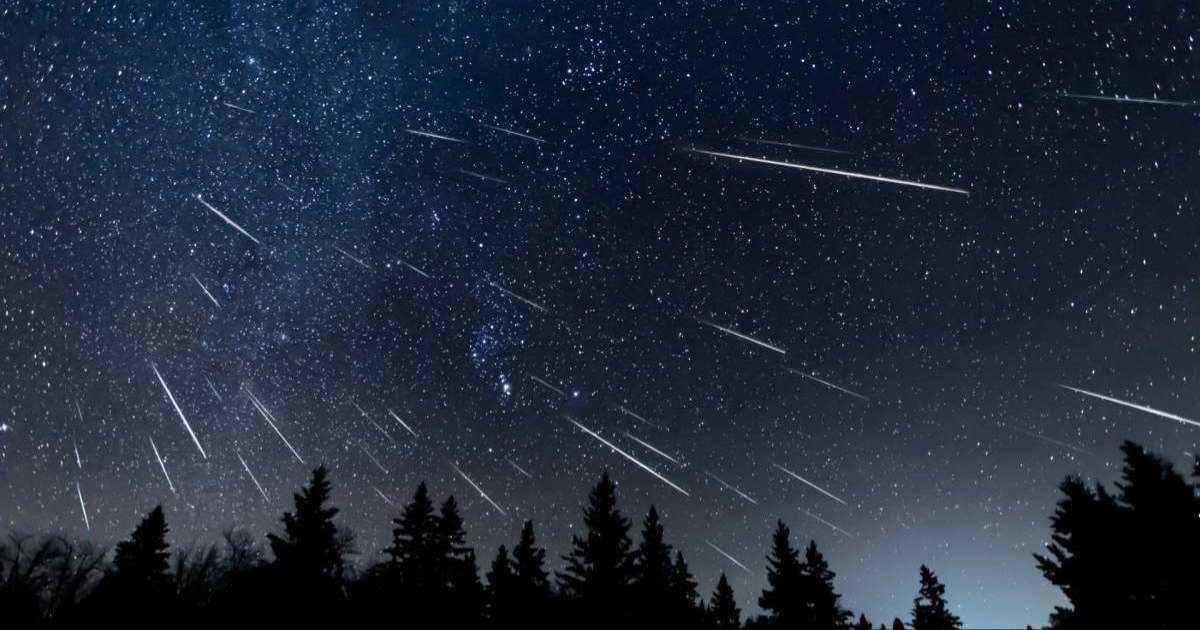
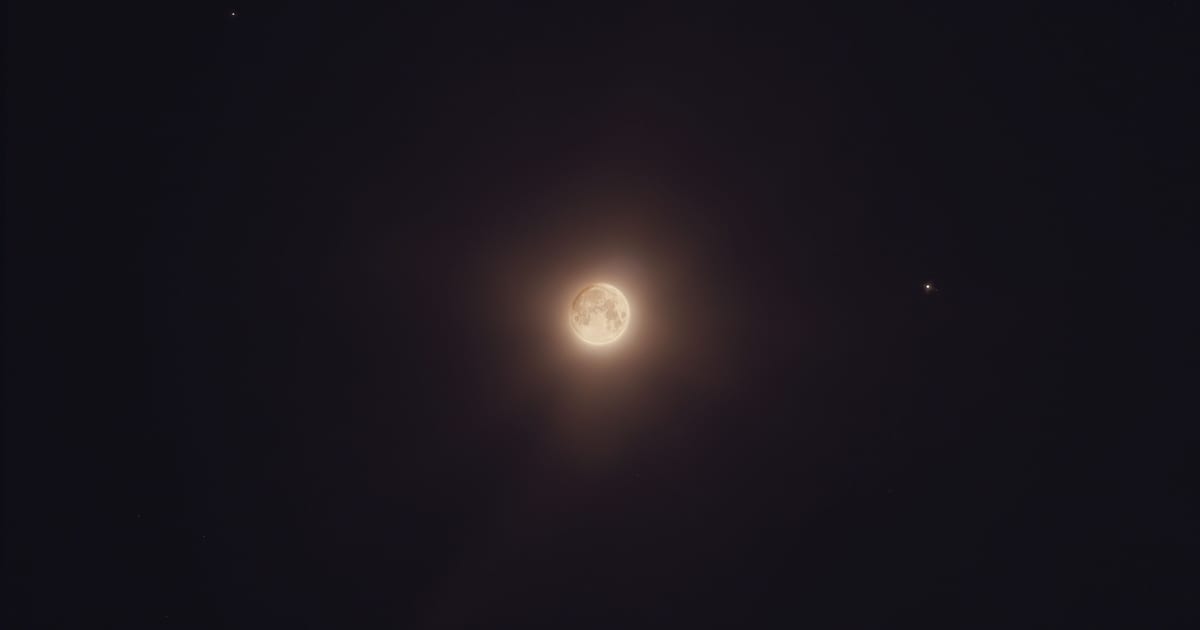
June was a busy month for skywatchers, kicking off with a spectacular Venus-Jupiter conjunction, marking the summer solstice, and culminating with the glowing ‘Strawberry Moon.’ July, too, is poised to offer its own marquee events. Stargazers are already looking forward to the Buck Moon on July 29, as well as the Southern Delta Aquariids meteor shower peaking on July 30 and 31. Keep in mind, however, that the brilliant Buck Moon will dominate the sky during this time, and its intense moonlight will likely wash out many of the fainter meteors. But before those events take the stage, you can open the month by hunting down a few beautiful deep-sky objects and planetary pairings.

Venus and Jupiter
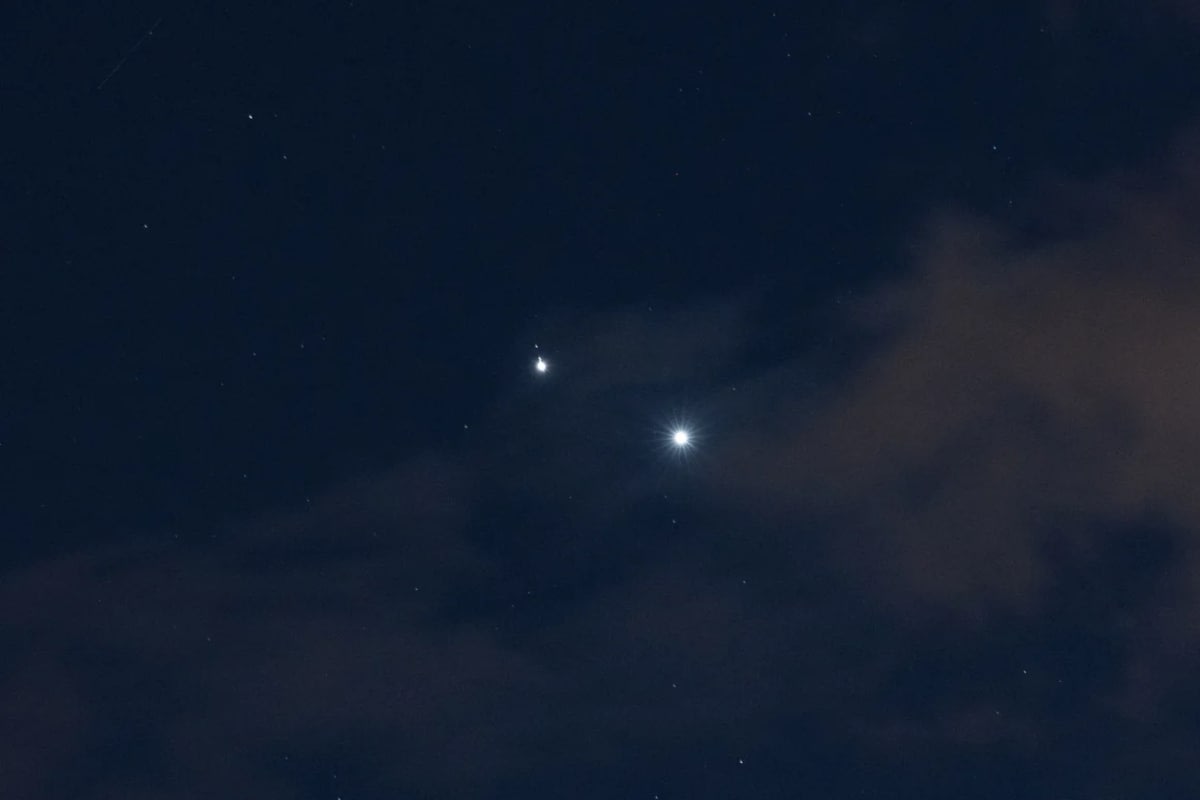
Back in early June, we were treated to a close conjunction of Jupiter and Venus, where the two planets sat just a couple of degrees apart. While they have since drifted, they still provide a highly rewarding twilight target. On July 1, Venus blazes at a brilliant magnitude of -4.1. Following sunset, the 'Evening Star' will dominate the western sky, sitting just below the Sickle—a backward question mark-shaped asterism in the constellation Leo the Lion. Jupiter is also visible, but it sits much lower in the evening twilight as it plunges toward solar conjunction later in the month. Any trees or buildings on your western horizon will pose a significant obstacle when trying to lock your eyes on the gas giant before it sets.
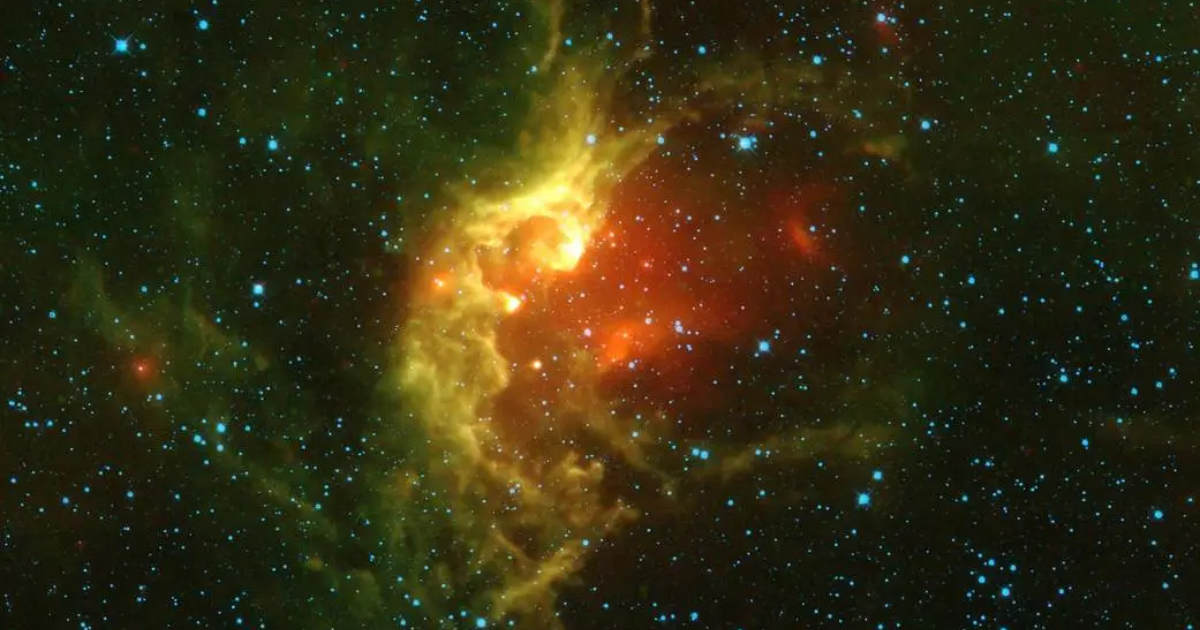
Wizard Nebula
On the night of July 2, look to the right of the North Star, Polaris, to find Cepheus the King. This house-shaped constellation is packed with deep-sky objects, including the Wizard Nebula (NGC 7380). The nebula's dim surface brightness makes the gas cloud itself incredibly difficult to spot visually, but it cradles a young open star cluster that glows brightly at magnitude 7. To find it, scan the southeastern region of Cepheus. Locate magnitude 3.4 Zeta (ζ) Cephei—the star marking the lower-left corner of the 'house' when the constellation sits upright on its base. From Zeta Cephei, scan approximately 4.8 degrees eastward (toward the horizon) to land on the star cluster at the heart of the Wizard. A useful tip is to hold three of your fingers together at arm's length against the sky—they cover roughly 5 degrees of the sky, making it easy to measure this distance. While the central cluster of young stars is easily identified in a telescope, the surrounding gas cloud will likely remain invisible to the naked eye.
Center of the Milky Way
Looking low over the southern horizon on July 3, skywatchers can peer directly toward the center of the Milky Way. As midnight approaches, look for the fiery red supergiant Antares. Just to its left sits the Teapot asterism in the constellation Sagittarius. Identify the 'spout' of the Teapot by locating the 3rd-magnitude star Alnasl (Gamma [γ] Sagittarii). From there, scan approximately 4.5 degrees to the upper right (northwest)—again, using the three-finger trick to gauge the distance. This marks the exact location of Sagittarius A*, the supermassive black hole residing at the heart of our spiral galaxy. While you obviously cannot see the black hole itself, pointing your optics here means you are looking right at the galactic center. Boasting a mass millions of times greater than that of our Sun, Sagittarius A* is predominantly dormant, quietly absorbing only the occasional wisp of passing gas and dust.
More on Starlust:
Southern Delta Aquariids set to peak in July: Date, time, how to watch—here's all you need to know
August 12, 2026 total solar eclipse to bring rare sunset spectacle—check the best viewing locations
Total Solar Eclipse 2026: Date, time, viewing locations, and safety measures—all you need to know