The Milky Way's chaotic center has an island of calm gas that can spawn new stars, a study finds

Astronomers have found a calm island of gas—the kind of environment where most stars may have taken birth—in the chaotic center of the Milky Way. Despite being shrouded by extreme turbulence, it may form stars in the future. The results of the study, which is available on the arXiv preprint server, were presented at the 248th American Astronomical Association meeting on June 16 in Pasadena, California.
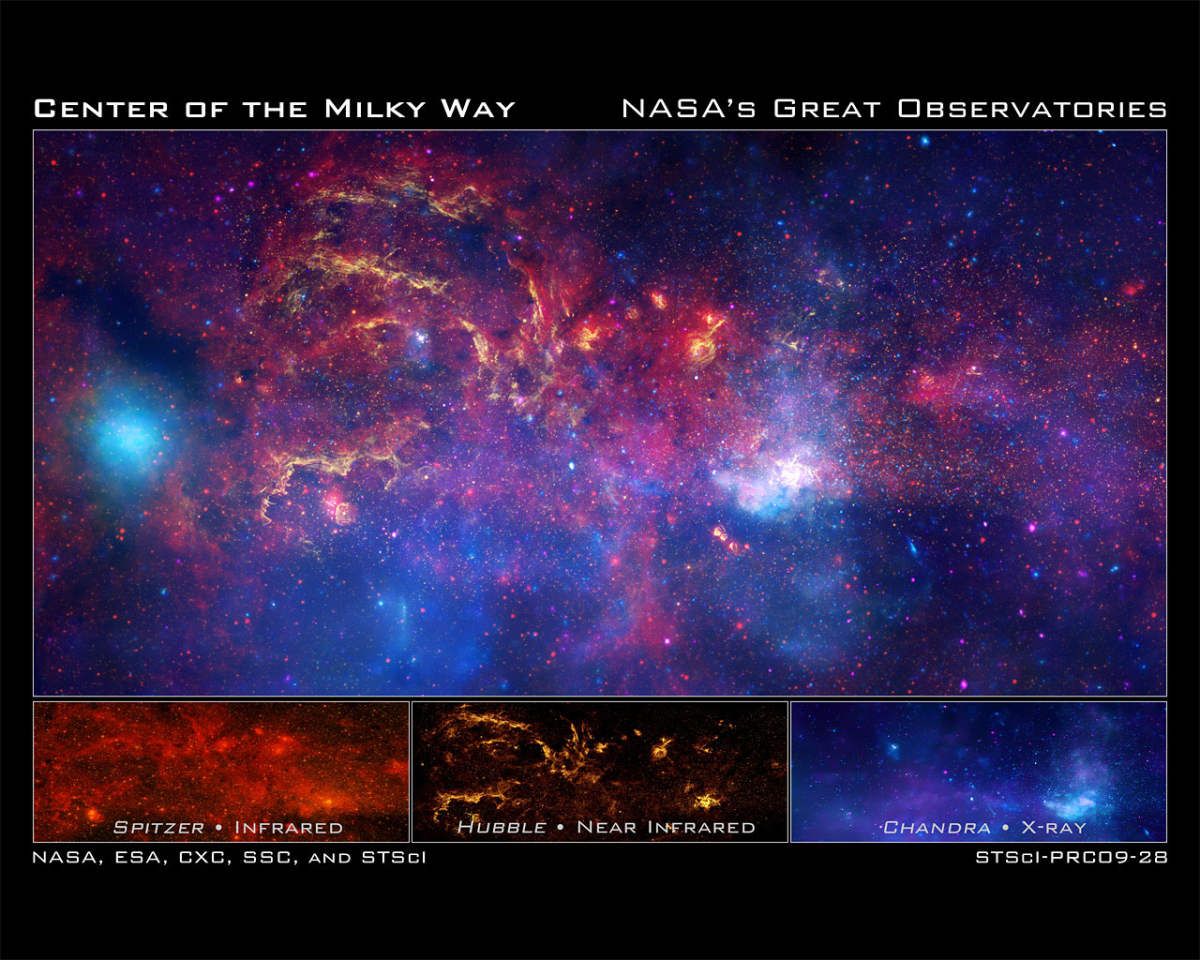
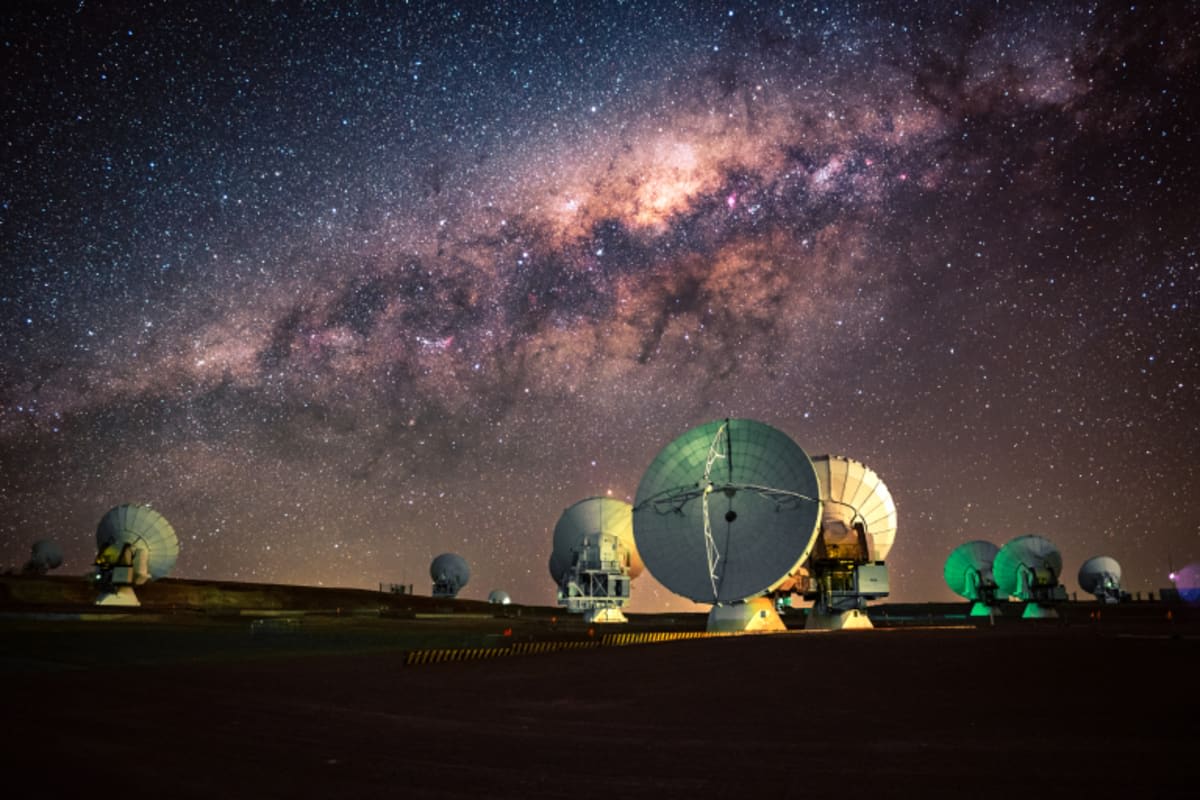
“Using ALMA, we were able to measure the motions of dense gas in the Galactic Center with very fine resolution,” said Rojita Buddhacharya, who's a member of the team and a student at the Center for Astrophysics | Harvard & Smithsonian and Liverpool John Moores University, in a statement. “This lets us see, in remarkable detail, how gas motions transition from a highly turbulent state to calm on very small scales.” The researchers detected a thread-like structure or filament of gas inside the subsonic region. They observed that gas moves randomly along the filament. However, upon reaching the edge of this region, gas turns turbulent and gains speed. This shows that the change from subsonic to supersonic (when gas moves faster than the speed of sound) takes place over a short distance.
In the dense subsonic region, gravity is strong enough to hold the gas together. Dense gas and strong gravity provide the right conditions to form new stars, suggesting that the site could see star formation in the future. Previous studies focused on the central molecular zone of our galaxy and looked for signs of newborn stars. But this study goes further back and homes in on the calm gas that could spawn young stars. “We’re looking at the calm pockets of gas that may trigger star formation,” said co-author Qizhou Zhang, who's a senior astrophysicist at the Center for Astrophysics | Harvard & Smithsonian. “Because the Central Molecular Zone contains more than ten million spectral data points, we are developing a machine learning tool to uncover such 'islands of calm' throughout the Galactic Center.”
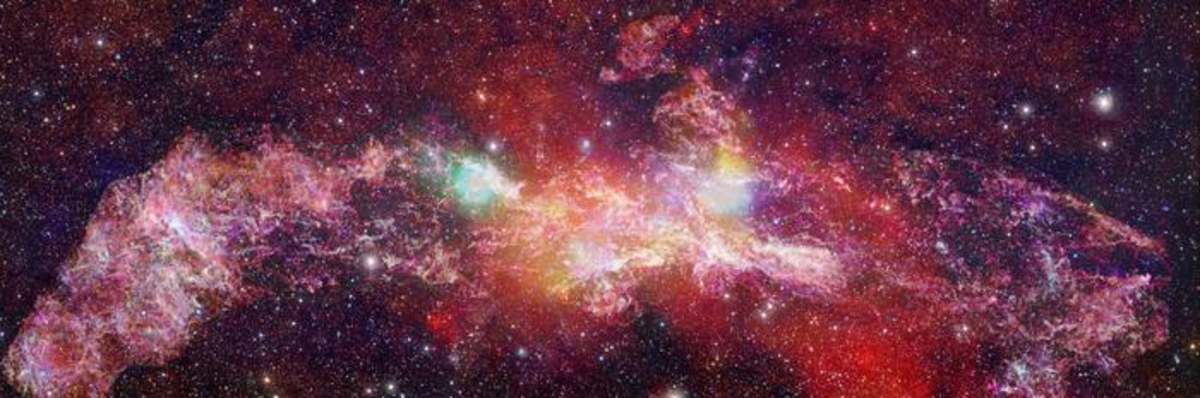
To date, astronomers have detected such calm gas within star-forming regions near the Sun. Previous research has shown that most stars, including the Sun, formed about 4.5 billion years ago when the universe was younger and conditions were more hostile. The discovery in question shows that even amid chaos at the heart of the Milky Way, gas can remain calm and cool, allowing gravity to have an edge. Such a situation resembles the star-brewing clouds in the Milky Way’s disk. The discovery points out that the stages for star formation may work like this across various environments of our galaxy. This sheds light on the birth of the Sun that might have gone through a calm phase before being born.
More on Starlust
Four generations of stars discovered in region near the center of the Milky Way
A supernova remnant may have been found near the Milky Way's central supermassive black hole