August 12 solar eclipse from International Space Station: NASA astronaut Jessica Meir shares photos
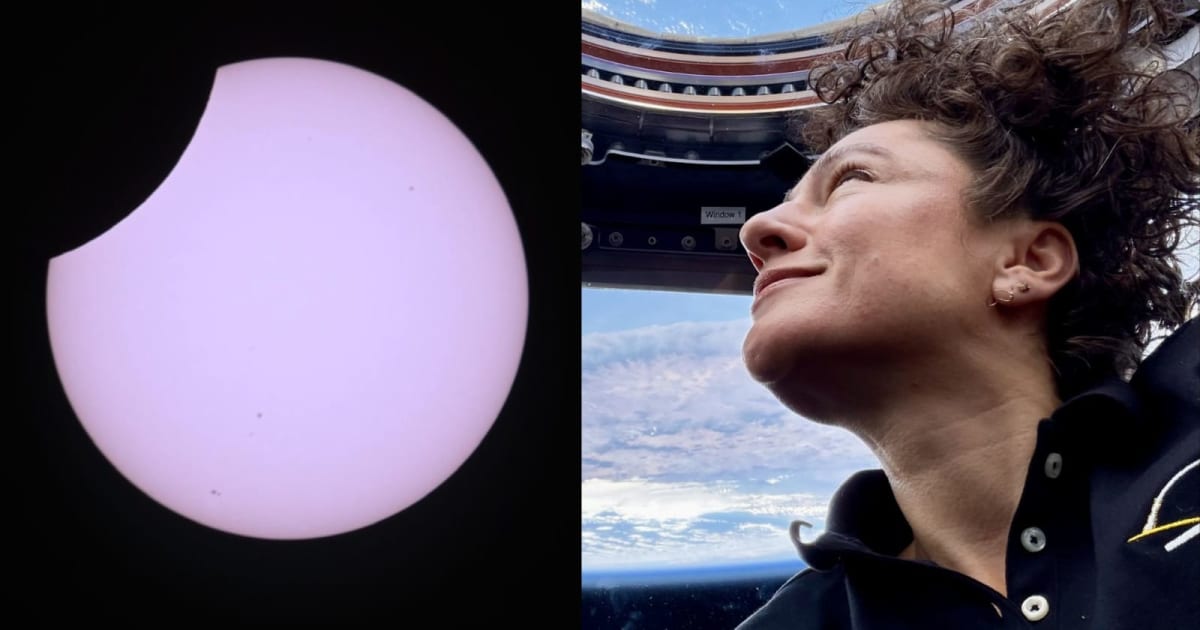
The solar eclipse on August 12 wowed millions around the world, and countless pictures of the event are going viral on social media. While residents of mainland Europe—particularly Iceland and Spain—were lucky to witness a total solar eclipse, those in the US, Canada, Africa, and many European nations saw a partial eclipse. But as thrilling as the phenomenon was for people on Earth, those in space right now were treated to equally stunning views.
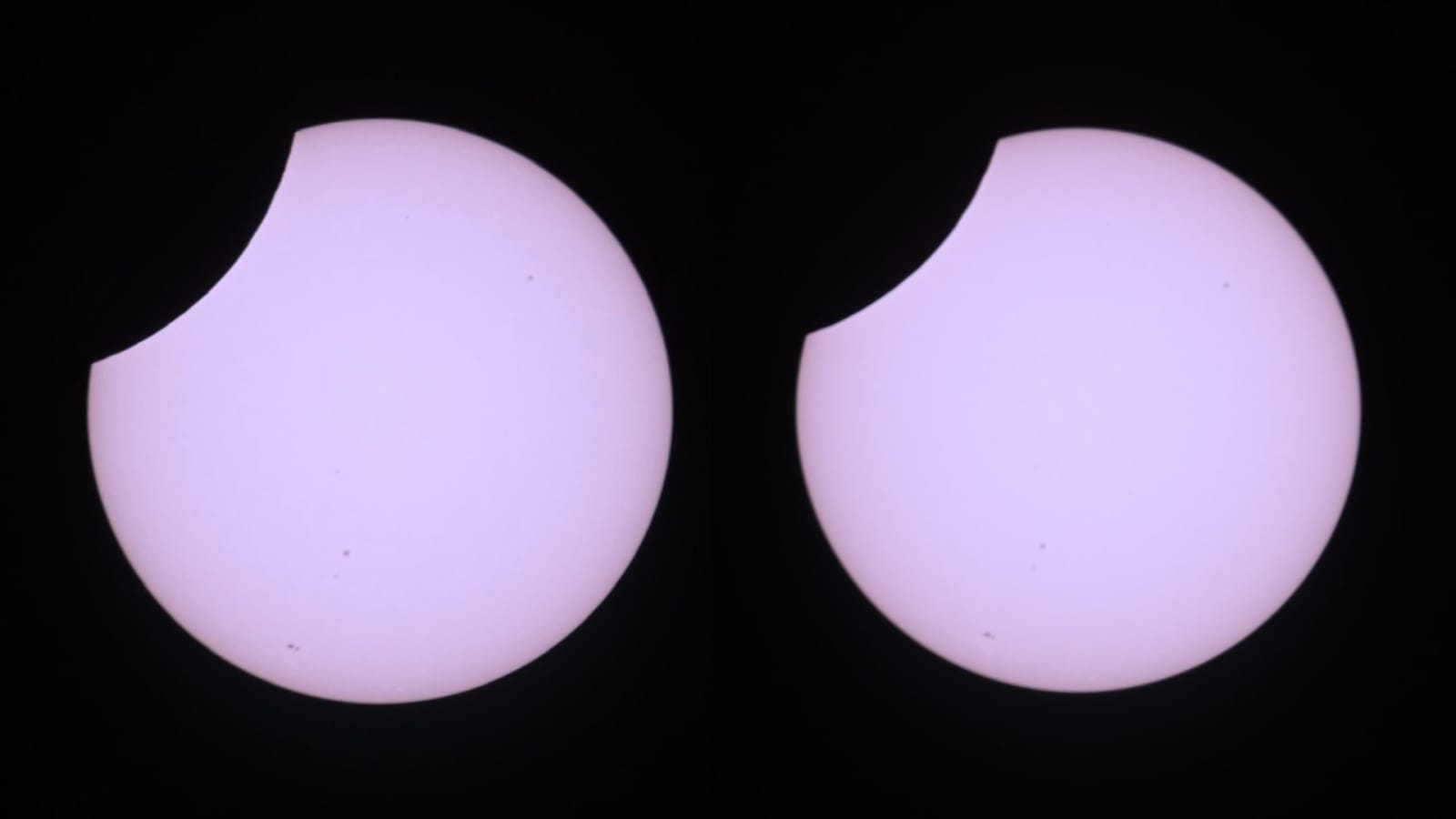
Given the location of the @Space_Station at the time of the total solar eclipse today, we saw only a partial eclipse, with a peak of around 18% sun coverage. Here’s how it looked from a window in the Russian segment about 45 minutes ago. Photo of the sun taken with a Nikon Z9,… pic.twitter.com/BUrMQVR808
— Jessica Meir (@Astro_Jessica) August 12, 2026
Crew-12 mission commander and NASA astronaut Jessica Meir has shared some pictures of the eclipse captured from the International Space Station (ISS), which offered a unique perspective of the event from low Earth orbit. Taking to X on August 12, she posted: “Given the location of the International Space Station at the time of the total solar eclipse today, we saw only a partial eclipse, with a peak of around 18% sun coverage. Here’s how it looked from a window in the Russian segment about 45 minutes ago.” The photos were taken using a special filter on her camera and show the Moon taking a bite out of the Sun, as it happens during a partial eclipse.
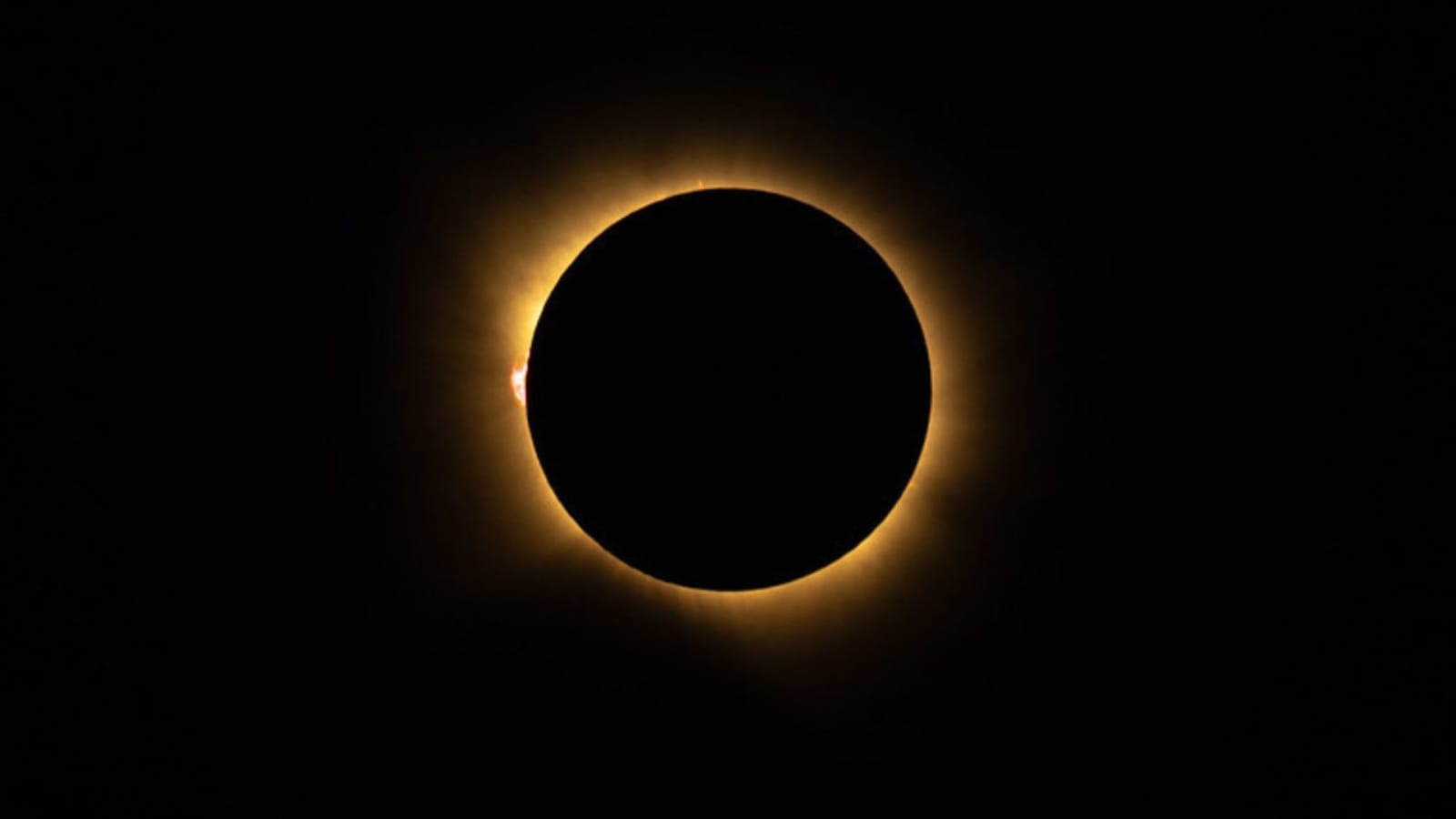
A total solar eclipse occurs when the Moon completely blocks the Sun, and it is seen only along a narrow region on Earth, also called the path of totality. Regions outside this path get a partial eclipse. The path of totality yesterday passed through northern Russia, Spain, Iceland, Greenland, and a small corner of Portugal, making it the first total solar eclipse to be visible from mainland Europe since 1999.
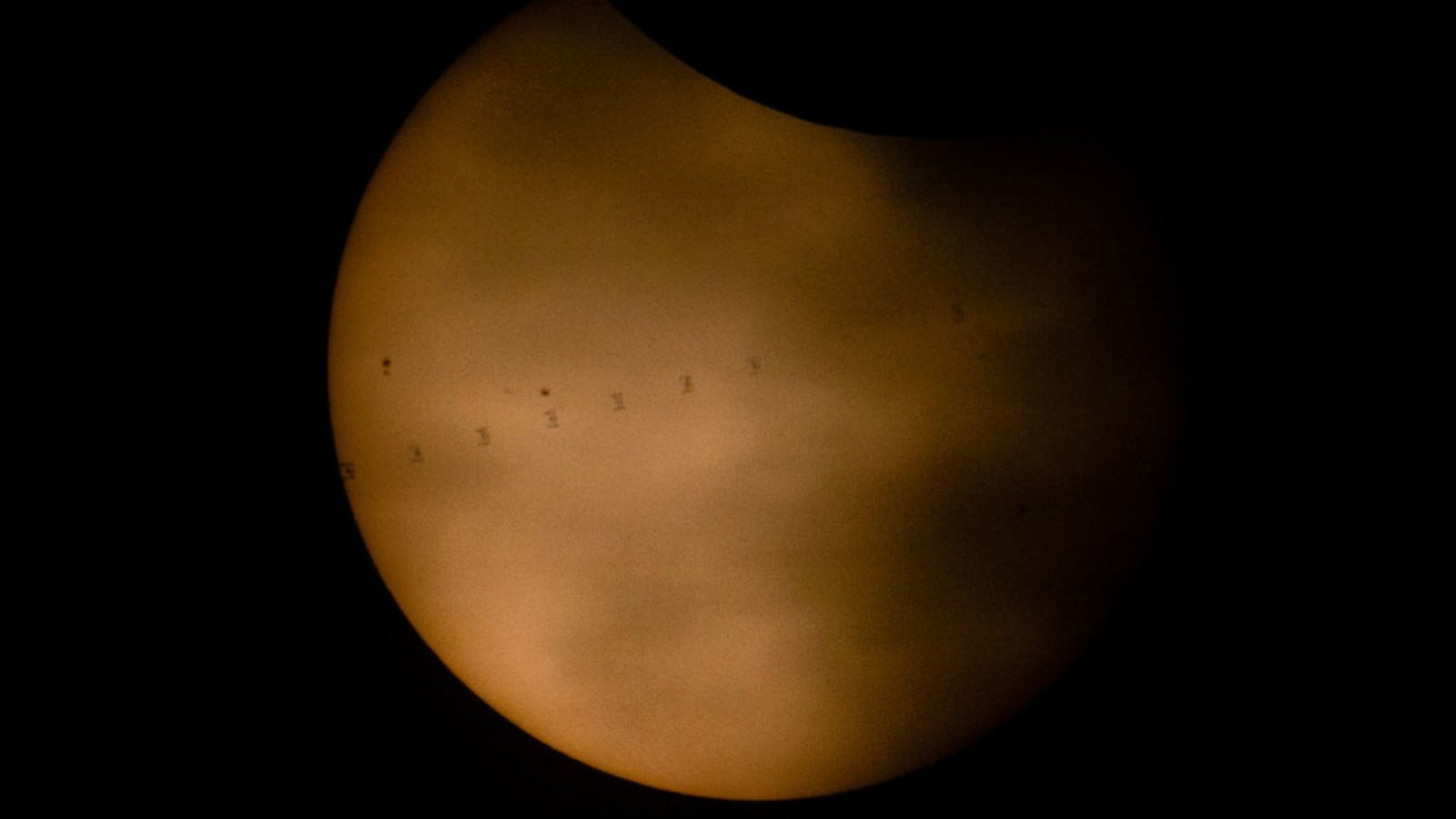
In the US, a partial eclipse was visible from Alaska to North Carolina and lasted close to two hours in some cities. NASA made good use of the opportunity to study the Sun during the solar eclipse, as it could reveal a lot about the formation of solar prominences—giant loops of charged plasma extending away from the surface—and may answer why the corona (outer solar atmosphere) heats to a million degrees. The agency also supported experiments, including scientific balloons that were launched by students in Iceland and Spain to investigate the changes a solar eclipse causes in Earth’s atmosphere.
Two weeks from now, we will be treated to an 'almost Blood Moon' during a lunar eclipse. An eclipse with this kind of coverage won't be seen again until New Year's Eve 2028. According to EarthSky, it will begin at 8:23 p.m. CDT on August 27 and end at 2:02 a.m. CDT on August 28. Residents in North and South America will have the best views of the eclipse overall, whereas Europe and Africa will get excellent views of the predawn moonset eclipse.
More on Starlust:
August 2026 skywatching: lesser-known meteor showers worth catching this month