Mark your calendar: 2027 brings a "ring of fire" eclipse and a record-long total eclipse

Two solar eclipses are coming in 2027—here's when and where you can catch them.
Image of a total solar eclipse as seen from Berlanga de Duero, central Spain, Wednesday, Aug. 12, 2026. (Cover Image Source: AP Photo/Bernat Armangue)

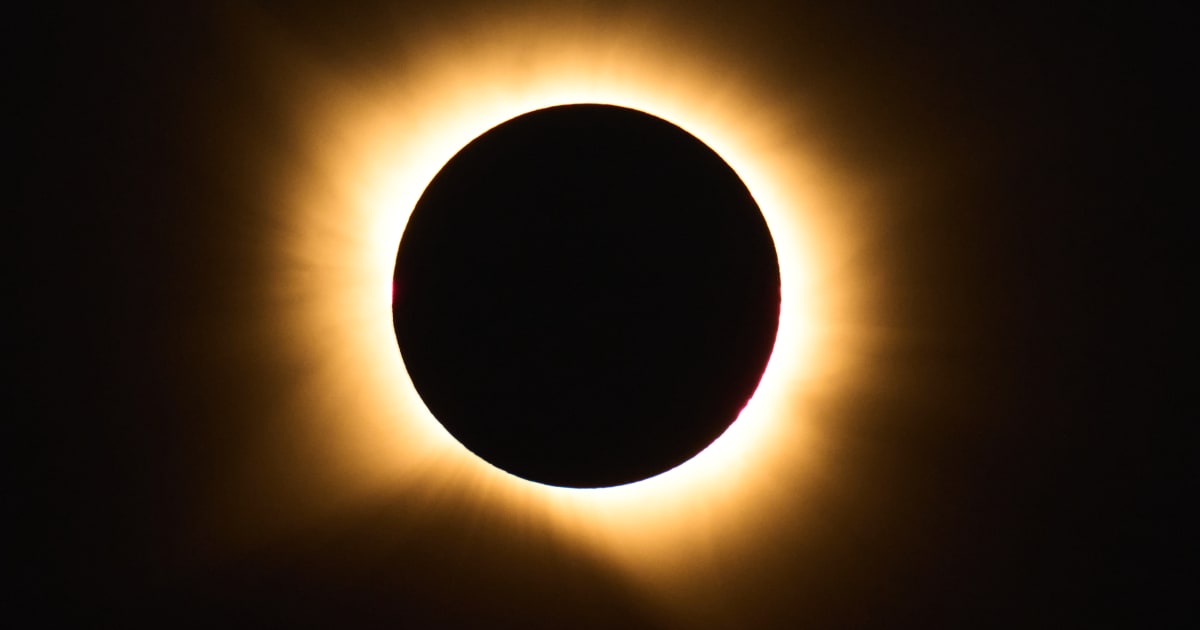
The sky has something big in store for eclipse chasers. In 2027, skywatchers will be able to witness not one, but two major solar eclipse events with a gap of just six months. The first will create a striking “ring of fire” in February, while the second, in August, will turn day into night along its path of totality and is already being called the “eclipse of the century.” If you’re thinking about getting on an eclipse trip, this could be the year to start making those plans. 
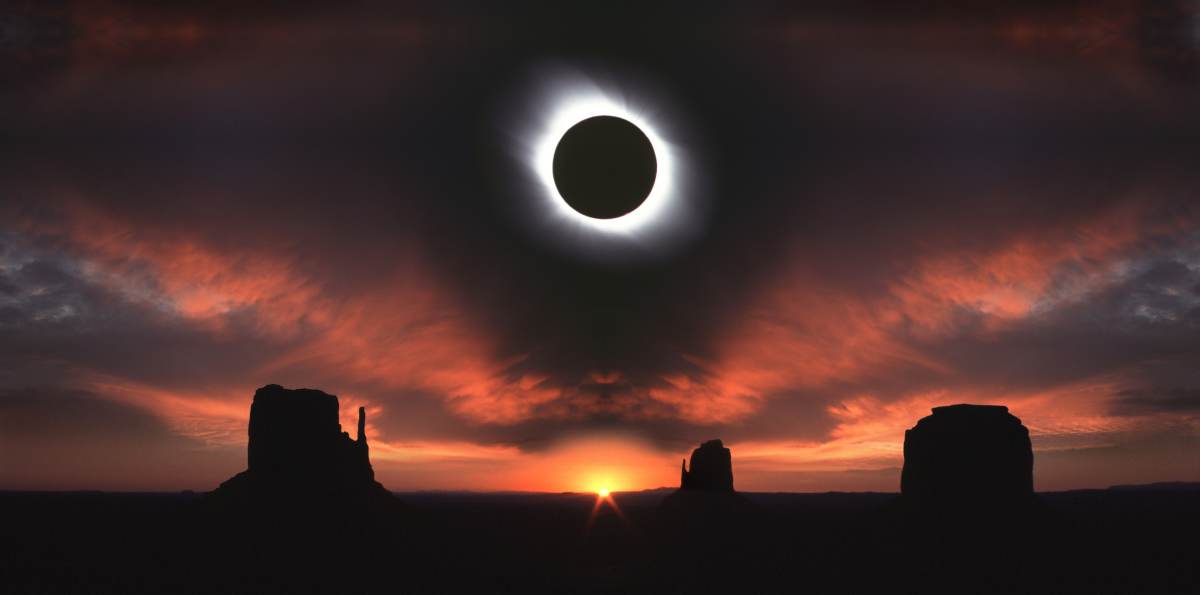
A stock image of a total solar eclipse and Monument Valley at sunrise in Utah, USA. (Image Source: Getty | Diane Miller)

The “ring of fire” eclipse: when and where to watch

The first annual solar eclipse of 2027 will take place on February 06, 2027, when the Moon will line up with the Sun, but it will be a little farther away than a total solar eclipse. Those who are keeping an eye on this event will be able to see a “ring of fire”, which is where a bright ring of sunlight will glow around the Moon’s edges. 
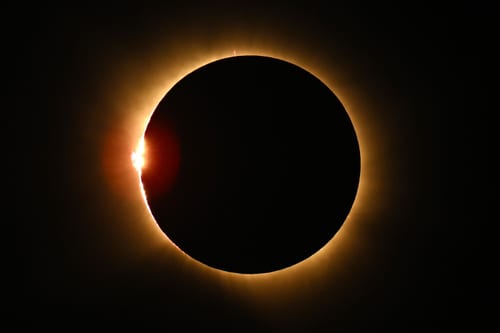
PALENCIA, SPAIN - AUGUST 12: A total solar eclipse is seen on August 12, 2026 in Palencia, Spain. It was the first time a total solar eclipse, when the sun is blocked by the moon's orbit, could be viewed from Spain since 1905. (Photo by Leon Neal/Getty Images)
Image of a total solar eclipse as seen on August 12, 2026 in Palencia, Spain. (Image Source: Leon Neal/Getty Images)

It will be visible for those near Easter Island in the South Pacific and stretch all the way to the Gulf of Guinea along Africa’s west coast. The viewing path will be roughly 180 to 220 miles wide. The solar eclipse will also pass over southern Chile, Argentina, Uruguay, a small part of Brazil, and the Atlantic Ocean. 
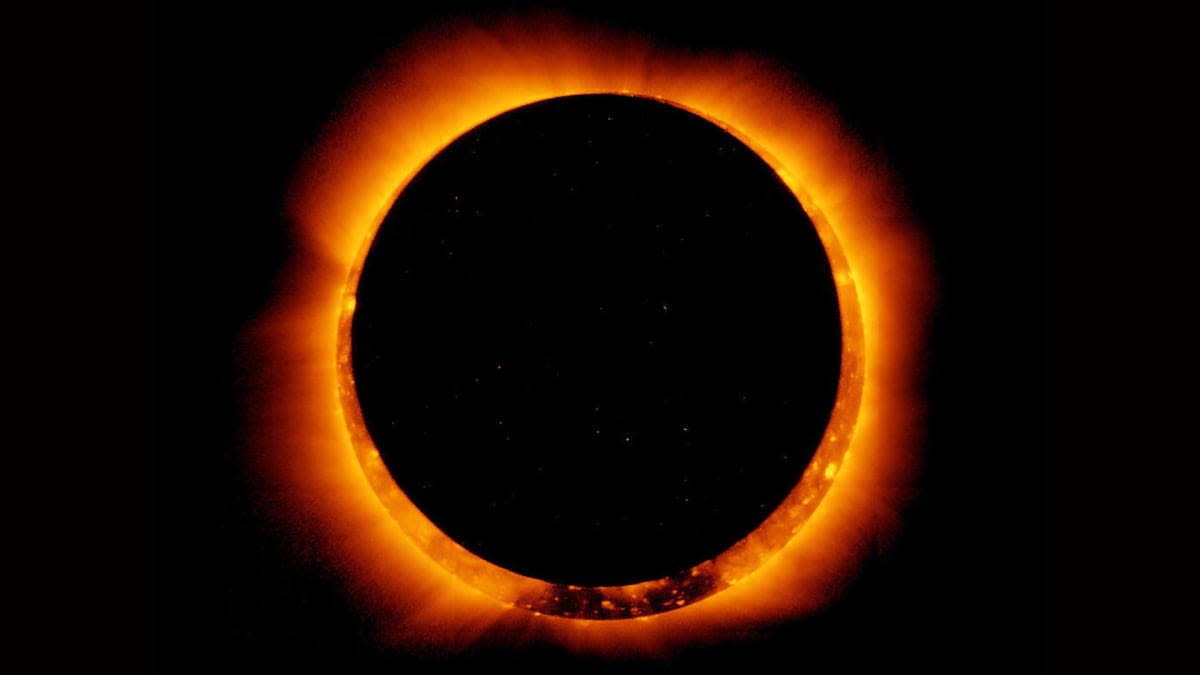
Sun spots are seen as the moon moves into a full eclipse position during the first annular eclipse seen in the U.S. since 1994 on May 20, 2012. (Photo by JAXA / NASA / Hinode via Getty Images)
Sunspots are seen as the moon moves into a full eclipse position during the first annular eclipse seen in the U.S. since 1994 on May 20, 2012. (Image Source: JAXA / NASA / Hinode via Getty Images)

For skywatchers watching in Africa, the eclipse will be visible along the coastlines of Côte d’Ivoire, Ghana, Togo, Benin, and Nigeria. This event will be the longest annular eclipse of the decade, as its peak activity will remain for about 7 minutes and 51 seconds. This is where the Moon will cover 93% of the Sun and create the ring effect. Viewers from parts of South America and West Africa will be able to see a partial eclipse. 
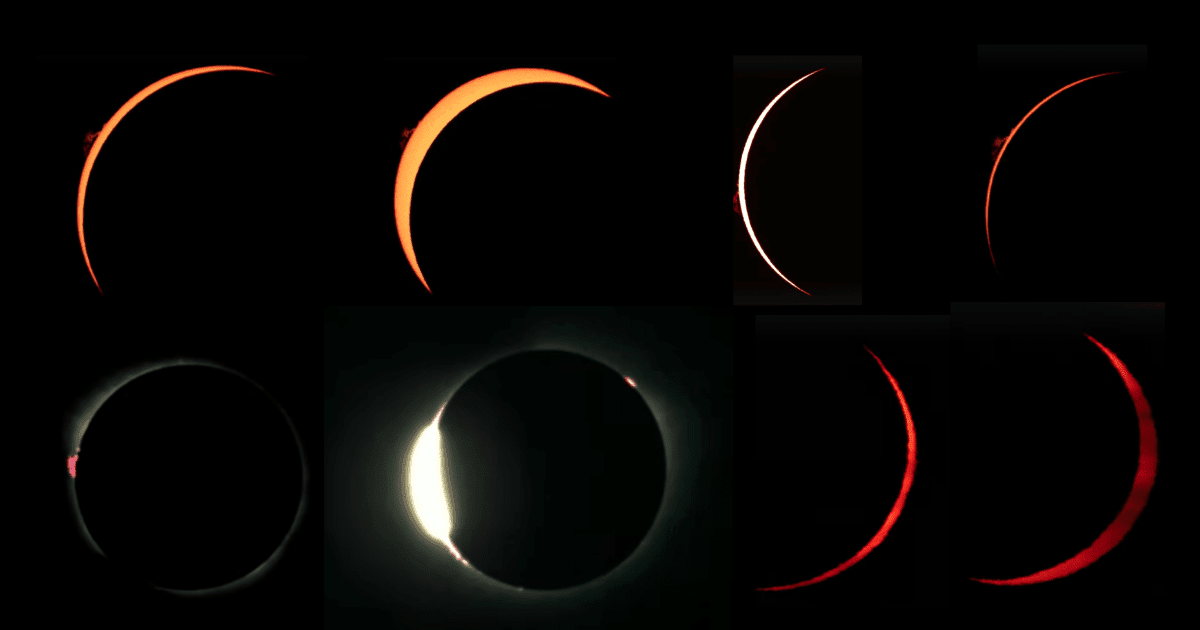
Still images from the 2026 total solar eclipse as seen across Spain on August 13, 2026. (Image Source: timeanddate; edited in Canva)

“Eclipse of the century”: when and where to see it

One of the major skywatching events of 2027 will be the “eclipse of the century” that will appear in the sky on August 02, 2027. This one will pass across North Africa, and it will be the longest totality seen since 1991, and the longest one after this won’t be visible until 2114. For this, the totality will last for about 6 minutes and 23 seconds to cross the planet. 
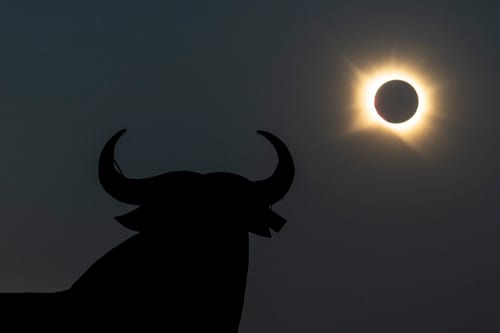
GUADALAJARA, SPAIN - AUGUST 12: A view of the sun behind El Toro Osborne 'The Osborne Bull' during the total solar eclipse on August 12, 2026 in Guadalajara, Spain. It was the first time a total solar eclipse, when the sun is blocked by the moon's orbit, could be viewed from Spain since 1905. (Photo by Pablo Blazquez Dominguez/Getty Images)
A view of the sun behind El Toro Osborne 'The Osborne Bull' during the total solar eclipse on August 12, 2026 in Guadalajara, Spain. (Image Source: Pablo Blazquez Dominguez/Getty Images)

The Moon’s shadow will be about 160 miles wide and will take roughly 3 hours and 20 minutes. The path covers the Atlantic Ocean, southern Spain, northern Morocco, northern Algeria, northern Tunisia, northeast Libya, and central Egypt. On top of that, this eclipse will also cover the northeastern tip of Sudan, southwestern Saudi Arabia, Yemen, and the northeastern tip of Somalia, before departing just east of the Chagos Archipelago in the Indian Ocean.

More on Starlust:

Total solar eclipse 2026 recap: Key highlights, images, videos and what comes next

Why are total solar eclipses so rare, and how can you watch one safely?
MORE STORIES

Meir shared photos captured from the Russian segment of the ISS, which saw a partial solar eclipse.
13 hours ago
A recap of the total solar eclipse that swept the globe on August 12, in images and video.
1 day ago
One must remember to ensure any solar eclipse viewing gear conforms with safety standards.
1 day ago
Residents of the US, Europe, Canada, and northwestern Africa will see a partial eclipse, meaning only a portion of the Sun will be blocked by the Moon.
1 day ago
August brings in many events for skywatchers, and here are a few lesser-known meteor showers worth a look.
2 days ago
This year's peak arrives hours after a rare total solar eclipse. Here's where to catch it.
2 days ago
Afraid of missing the total solar eclipse of August 12? Worry not, there are many livestreams available.
2 days ago
Besides auroral activity, the U.S. will also get to experience a solar eclipse and the Perseid meteor shower on August 12.
2 days ago
Here’s what to look for before, during and after totality on August 12, 2026.
3 days ago
Here's what will happen in the sky during the total solar eclipse, from partial eclipse to totality.
3 days ago