August 12, 2026 total solar eclipse to bring rare sunset spectacle—check the best viewing locations
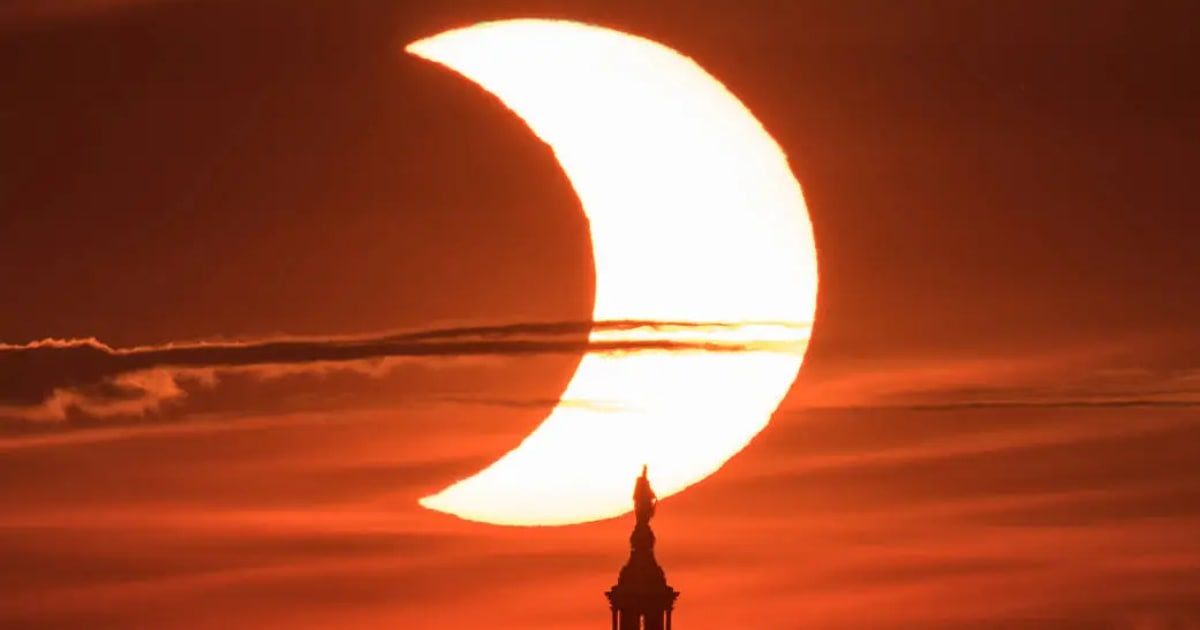
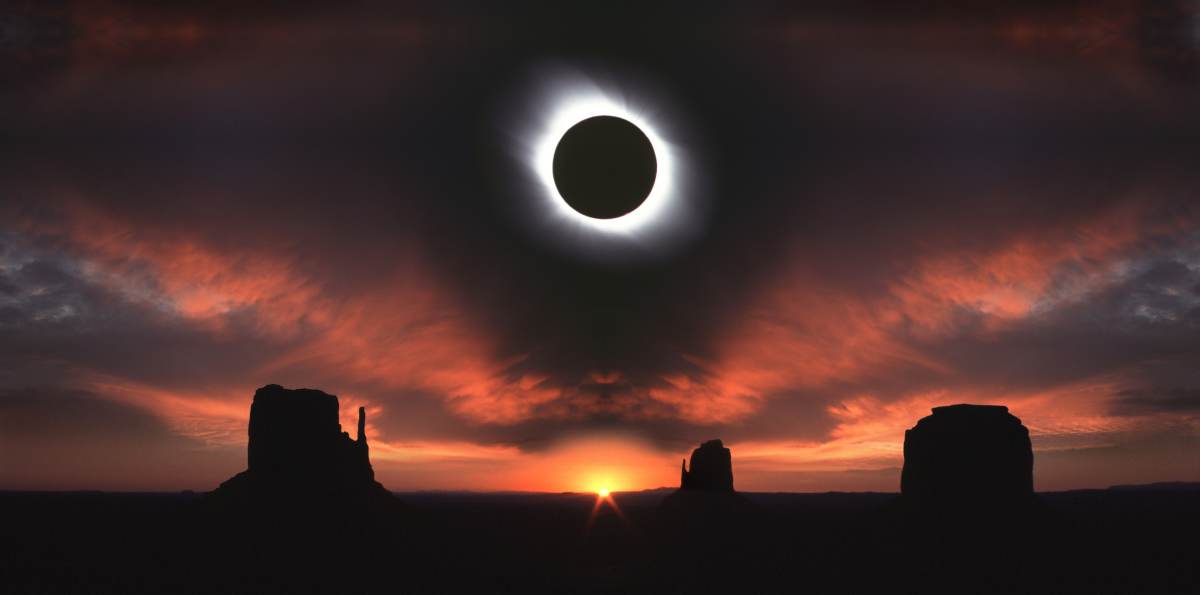
A total solar eclipse on August 12, 2026, will offer millions of skywatchers a rare opportunity to witness an extraordinary celestial event at sunset. The August 12, 2026, total solar eclipse begins its partial phase at 15:34 UTC, with global totality starting at 16:58 UTC, reaching its maximum point at 17:46 UTC. Skywatchers from major parts of the globe, including eastern Greenland, western Iceland, and northern Spain, will get to witness the rare solar eclipse. But alongside them, skywatchers from several parts of the world will have the chance to witness one of the most spectacular sights—some observers will be able to spot the Sun completely covered by the Moon just above the western horizon moments before it sets. Thus, a darkened Sun will put on a show before it disappears into the twilight.
Where can skywatchers see the solar eclipse coincide with sunset for a unique sky show?
As the eclipse will unfold quite late in the day, viewing locations will play a crucial role. Across most parts of Europe, the Moon will cover a significant portion of the Sun, creating a striking sight even for those who are not in the narrow zone of totality. But the spectacle will turn out to be more unusual for skywatchers from many parts of Europe and Northwest Africa, where the partially eclipsed Sun will be visible as it sets below the horizon. This rare combination of a solar eclipse and sunset will be seen across a wide range of countries. France, Belgium, Germany, Poland, Estonia, Latvia, Lithuania, Belarus, Russia, Finland, Ukraine, Slovakia, Austria, Croatia, Hungary, Romania, Serbia, Italy, Kosovo, North Macedonia, and Albania will get to witness this special sunset. Morocco, Western Sahara, Mauritania, Algeria, Tunisia, Mali, Senegal, the Gambia, Guinea-Bissau, Guinea, Sierra Leone, Liberia, the Ivory Coast, and Burkina Faso from Northwest Africa, too, will observe the event.

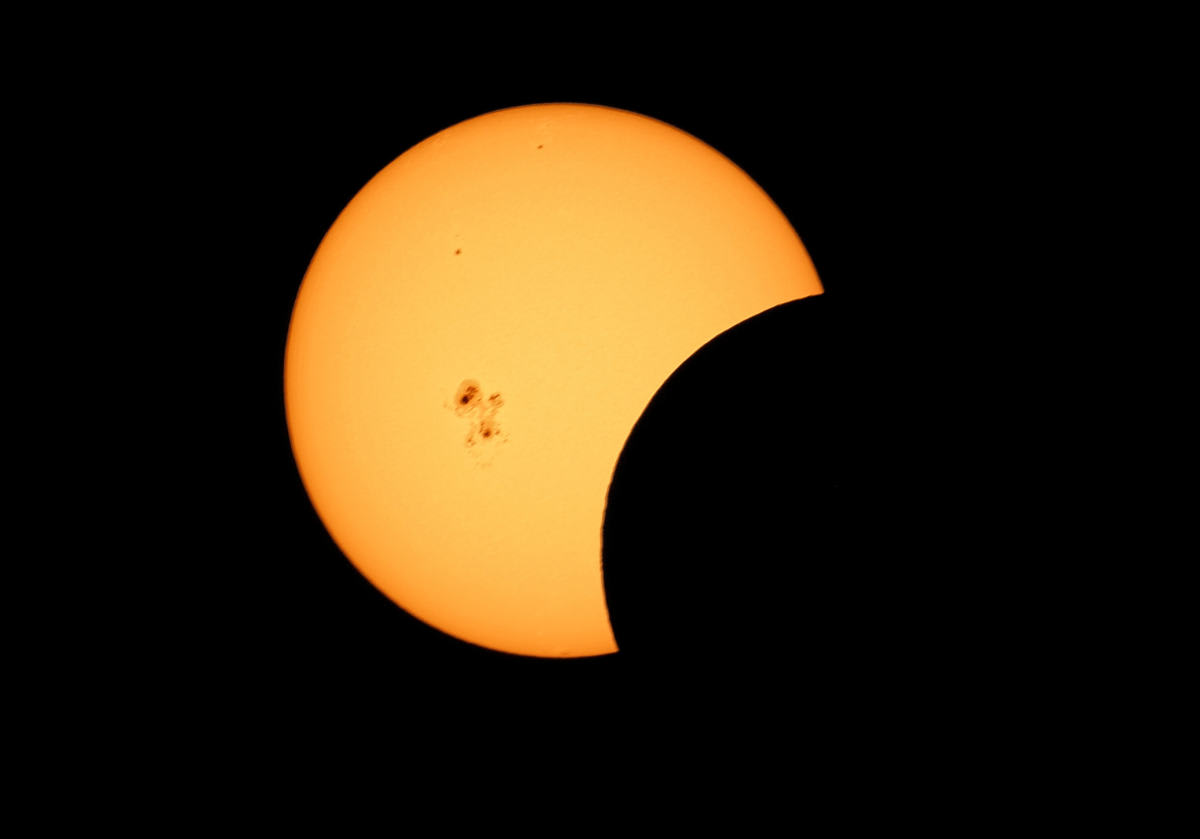
At many of these viewing sites across Europe, the eclipse will reach its greatest extent around 10 to 15 minutes before sunset. This will allow observers to see the Sun at its most dramatic appearance before it disappears from view. The most distinctive feature of this sun-show will be the shape of the Sun that will remain visible. As the Moon covers much of the solar disk, the Sun will appear as a thin crescent. From Europe, this crescent is expected to point downward, creating a shape that resembles an upside-down smiley face or a "sad face." Adding to the shape, the hues of sunset will make this unusual sight even more stunning.
Northwest Africa will also offer excellent opportunities to observe the eclipse. In several selected locations, the eclipse will reach its greatest extent within 30 minutes of sunset, giving observers a chance to see the partially covered Sun shortly before it disappears from view. The appearance of the eclipsed Sun from parts of Northwest Africa will differ from what stargazers will witness in Europe. The Sun is expected to form a crescent resembling the letter "C" as it sinks below the horizon. Several parts of Spain, on the other hand, will get to witness the partial eclipse after they have already observed the total eclipse.
To find the best locations to observe a partial eclipse, it is highly beneficial to study an eclipse map. An eclipse map helps one to understand where different eclipse views will occur. "People living along the black sunset line will experience a beautiful deep partial eclipse at sunset. Some ideal locations to see this over water are Algiers, Corsica, the Italian coast by the Ligurian Sea, and Venice, while High Alpine spots in eastern Austria will also have a dramatic sunset — a photographer's dream,” eclipse cartographer Michael Zeiler shared with Space.com.

Locations in Europe where one can witness the partially eclipsed sunset
- Village d'Occi, Corsica, France (96% at 8:25 p.m. CEST, 24% chance of cloud, according to Timeanddate.com)
- La Spezia, Ligurian Sea, Italy (94% at 8:22 p.m. CEST, 43% chance of cloud)
- Modena, Italy (92% at 8:21 p.m. CEST, 38% chance of cloud)
- Venice, Italy (91% at 8:19 p.m. CEST, 43% chance of cloud)
- Kitzsteinhorn, Austria (89% at 8:16 p.m. CEST, 68% chance of cloud)
- Olympiaberg, Munich, Germany (88% at 8:15 p.m. CEST, 61% chance of cloud)
- Letná Park, Prague, Czechia (86% at 8:11 p.m. CEST, 65% chance of cloud)
- Ostrów Tumski, Wrocław, Poland (84% at 8:09 p.m. CEST, 66% chance of cloud)
- Warsaw, Poland (83% at 8:02 p.m. CEST, 61% chance of cloud)
- Kaunas, Lithuania (81% at 8:56 p.m. EEST, 66% chance of cloud)
- Lilastes pludmale, Gulf of Riga, Latvia (80% at 8:57 p.m. EEST, 63% chance of cloud)
Locations of Northwest Africa where the partially eclipsed sunset can be observed
- Cape Matifou, Tamentfoust, Algeria (98.5% at 7:42 p.m. CET, 49% chance of cloud)
- Essaouira, Morocco (81% at 7:47 p.m. WEST, 15% chance of cloud)
- Dakar, Senegal (37% at 7:12 p.m. GMT, 82% chance of cloud)
- Banjul, Gambia (34% at 7:13 p.m. GMT, 80% chance of cloud)
More on Starlust:
Satellite captures Moon’s shadow traversing Antarctica during February 17 annular solar eclipse
Summer Solstice 2026: All about the longest day of the year and the science behind it