Perseid meteor shower peak 2026: Best images of the celestial fireworks from August 12-13
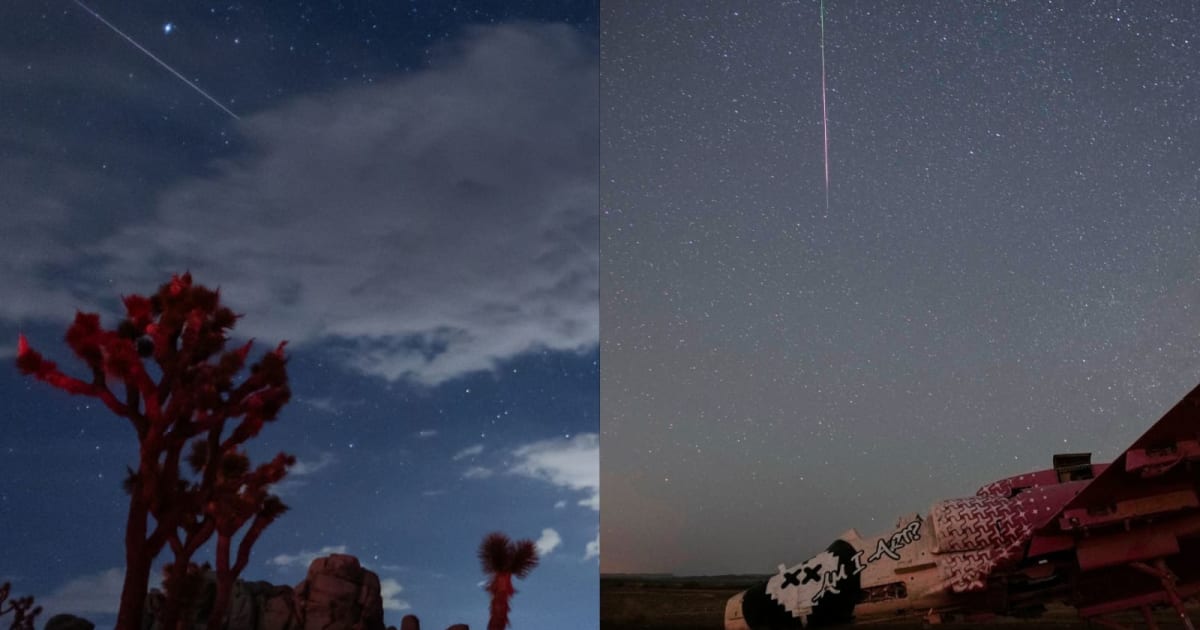
The Perseids will be active until August 24, so you can spot more meteors in the days to come.
Perseid Meteor Shower is captured over Joshua Tree National Park, California, US (L); A meteor streaks above a destroyed aircraft in Israel, August 12, 2026 (R). — (Cover Image Source: Getty/Apu Gomes-AP/Ohad Zwigenberg)

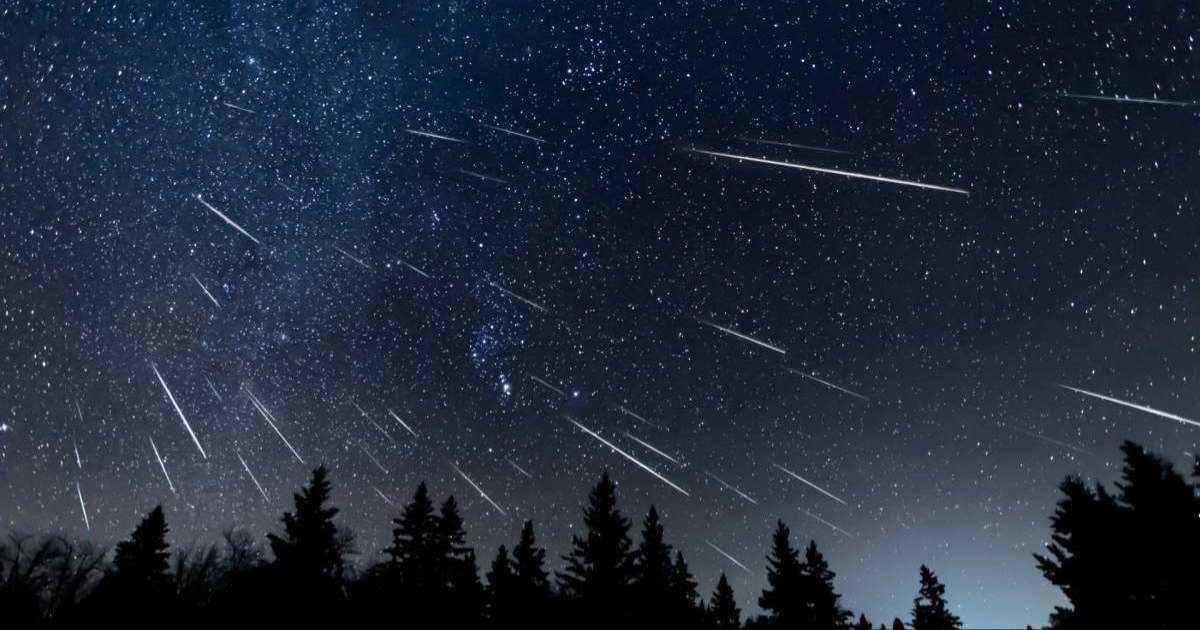
The Perseid meteor shower dazzled the night sky in several parts of the world when it peaked on the night of August 12 and into the pre-dawn hours of August 13. Brilliantly glowing fireballs were spotted across the U.S., Canada, Europe, the Middle East, and northern Asia during what is considered the best meteor shower of the year. The Perseids bring as many as 100 meteors per hour, and the images captured by lucky observers did not disappoint.

Best images of the Perseid meteor shower 

Parts of Canada such as Nova Scotia, Quebec, and British Columbia were fortunate enough to witness the celestial fireworks, along with U.S. states including Texas, California, New York, Utah, New Mexico, and Pennsylvania. In Europe, the Alpine regions as well as parts of Scotland, Spain, Wales, and Portugal were also treated to the meteor shower. The fireballs were also spotted in countries like Japan, India, Thailand, the Maldives, and Singapore. The following image shows a meteor streaking across the Milky Way during the Perseid meteor shower peak on August 13, 2026 in Deep Bay, Vancouver Island, British Columbia, Canada.
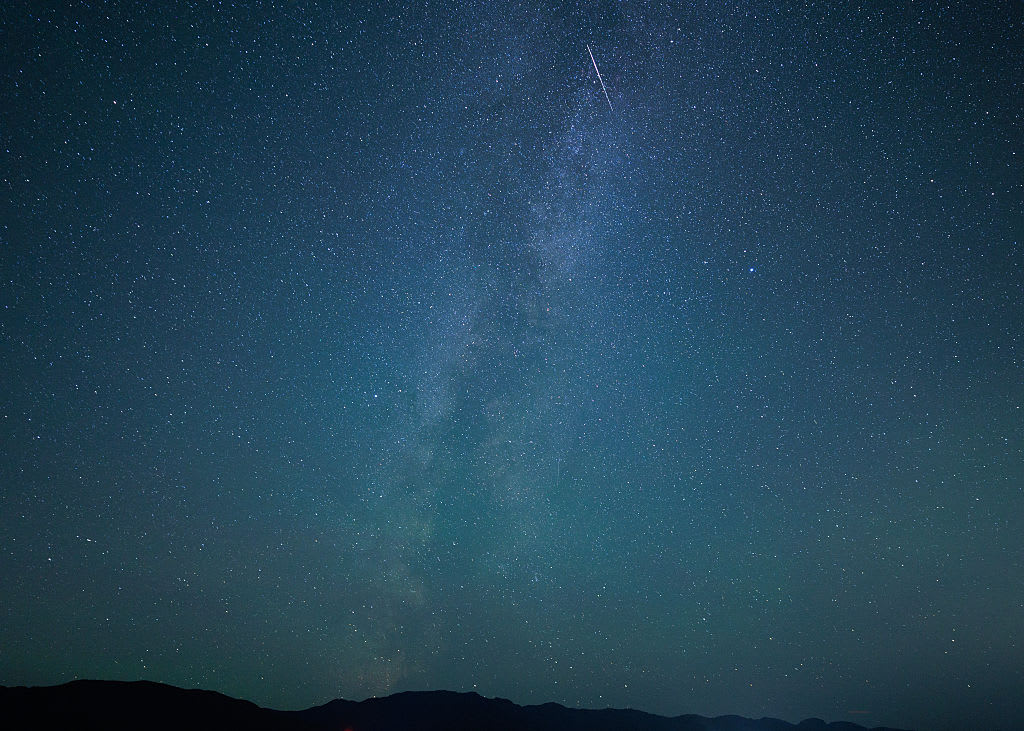
A meteor streaks across the Milky Way during the Perseid meteor shower peak on August 13, 2026 in Deep Bay, Vancouver Island, British Columbia, Canada.
View of a meteor streaking across the sky during the Perseid meteor shower on August 13, 2026. — (Image Source: Getty/Andrew Chin)

The picture below was captured over Joshua Tree National Park on August 12 in Joshua Tree, California. 
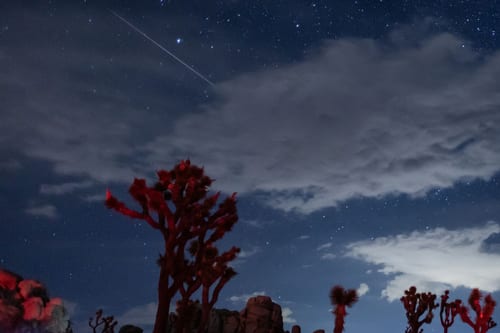
Perseid Meteor Shower captured over Joshua Tree National Park on August 12, 2026 in Joshua Tree, California. (Image Source: Apu Gomes/Getty Images)
Perseid Meteor Shower begins annually around mid-July and continues until late August. (Image Source: Apu Gomes/Getty Images)

The following image shows a meteor (bright streak on the left) during the Perseid meteor shower peak at Pedernales Falls State Park on August 13 in Johnson City, Texas 
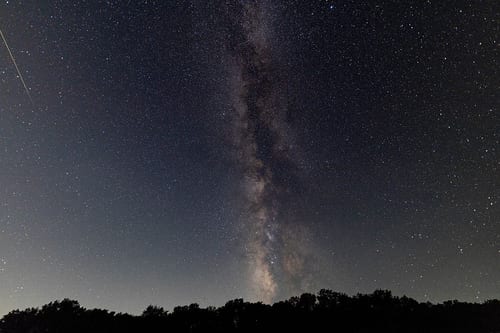
A meteor streaks across the sky during the Perseid meteor shower peak at Pedernales Falls State Park on August 13, 2026 in Johnson City, Texas. (Image Source: Rick Kern/Getty Images)
The Perseid meteor shower is considered the best annual meteor shower. (Image Source: Rick Kern/Getty Images)

In the image below, a meteor streaks above a destroyed aircraft used for training purposes in the Negev Desert, Israel, on August 13.
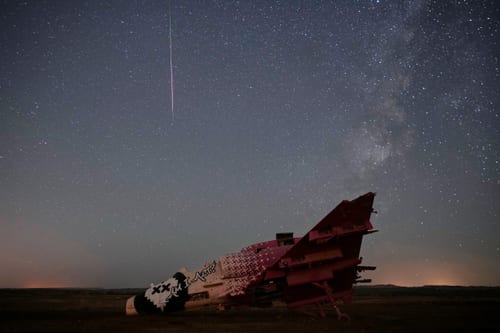
A meteor streaks above a destroyed aircraft used for training purposes in the Negev Desert, Israel, Aug. 13, 2026. (Image Source: AP/Ohad Zwigenberg)
The Perseids were visible in several countries from the US to Thailand. (Image Source: AP/Ohad Zwigenberg) — AP Photo/Ohad Zwigenberg

Another picture below shows a meteor during the Perseid meteor shower peak at Pedernales Falls State Park on August 12 in Johnson City, Texas. 
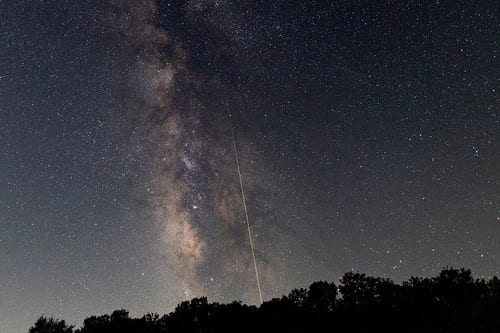
A meteor streaks across the sky during the Perseid meteor shower peak at Pedernales Falls State Park on August 12, 2026 in Johnson City, Texas. (Image Source: Rick Kern/Getty Images)
The Perseid meteors are said to originate from the comet 109P/Swift-Tuttle. — (Image Source: Rick Kern/Getty Images)

The picture below features a meteor captured over Joshua Tree National Park on August 12, 2026 in Joshua Tree, California.
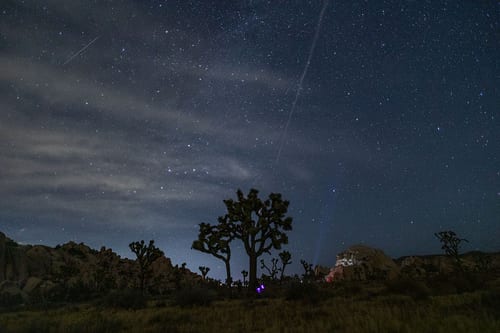
Perseid Meteor Shower were captured over Joshua Tree National Park on August 12, 2026 in Joshua Tree, California. (Image Source: Getty/Apu Gomes)
The apparent point of origin or radiant of the Perseid meteors is the constellation Perseus. — (Image Source: Getty/Apu Gomes)

The following image shows stars appearing in the sky over the desert during the peak of the Perseid meteor shower on August 12 in Wadi Rum, Jordan. 
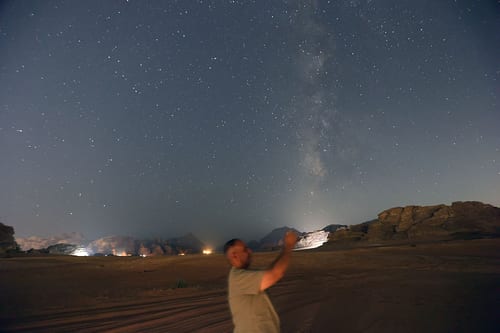
Stars appear in the sky over the desert during the peak of the Perseid meteor shower on August 12, 2026 in Wadi Rum, Jordan. (Image Source: Getty/Salah Malkawi)
The meteors are best spotted in dark regions which is free from light pollution. Moonlight also tends to hinder the viewing experience. — (Image Source: Getty/Salah Malkawi)

The picture below features the Milky way during the Perseid Meteor Shower over Joshua Tree National Park on August 13, in Joshua Tree, California.
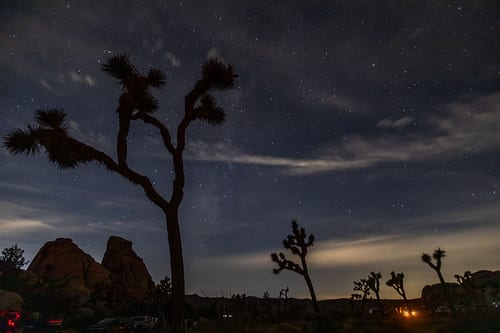
Milky way is seen in the sky during the Perseid Meteor Shower over Joshua Tree National Park on August 13, 2026 in Joshua Tree, California. (Image Source: Apu Gomes/Getty Images)
The Perseid meteor shower will be followed by the Aurigid meteor shower on September 1. (Image Source: Apu Gomes/Getty Images)

The view below captures the skies as the Perseid Meteor Shower is snapped over Joshua Tree National Park on August 13 in Joshua Tree, California.
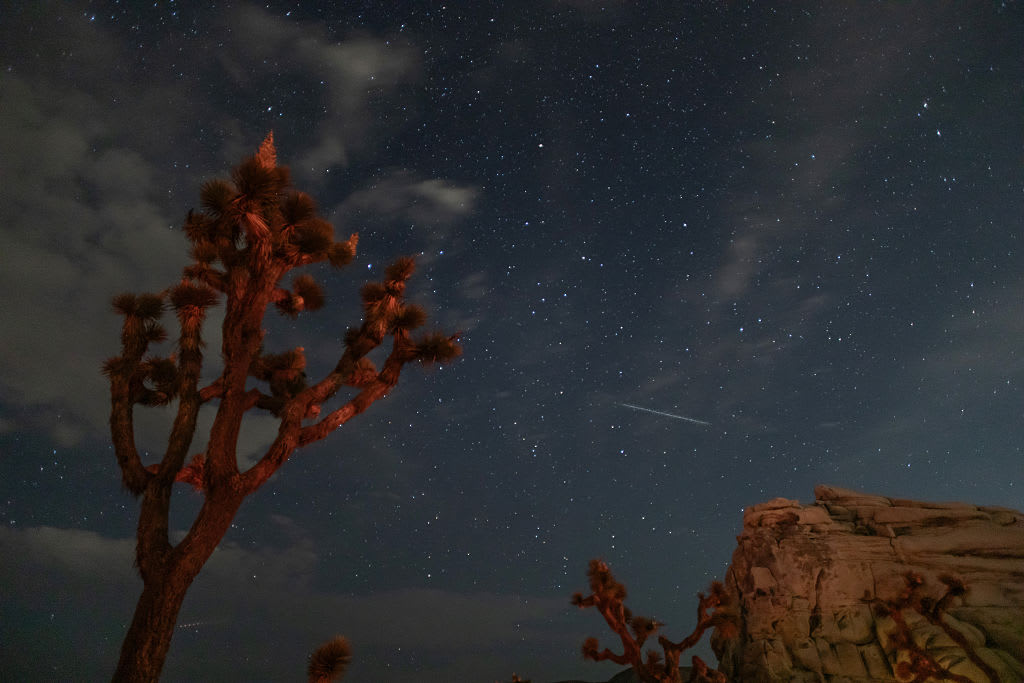
A view of the skies as the Perseid Meteor Shower is captured over Joshua Tree National Park on August 13, 2026 in Joshua Tree, California
The Perseid meteor shower is extremely popular and is observed by thousands of stargazers every year. — (Image Source: Getty/Apu Gomes)

Another image below features a meteor captured over Pedernales Falls State Park on August 13 in Johnson City, Texas.
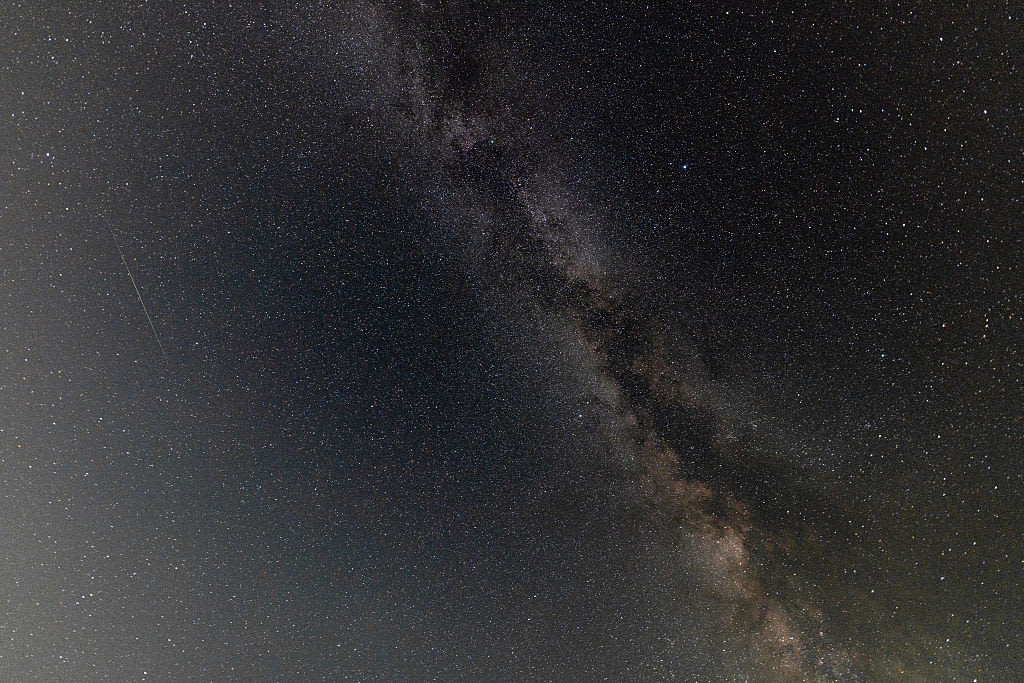
Pedernales Falls State Park on August 13, 2026 in Johnson City, Texas.
The Perseids can bring over a 100 meteors per hour at their peak. — (Image Source: Getty/Rick Kern)

The Perseids will be active until August 24, so there's a good chance you may spot them over the next few nights under perfect sky conditions. But if you missed the peak, there's another meteor shower awaiting us next month. On September 1, the Aurigid meteor shower will reach its peak activity and you might spot up to 6 meteors per hour. 
More on Starlust:

After the 2026 total solar eclipse, get ready for a 'ring of fire' and 'Eclipse of the Century' in 2027

August's Lunar Eclipse will be the best until 2028. Time and best places to watch this 'almost Blood Moon

MORE STORIES

The Aurigids are one of the lesser known and shorter-lived showers that are active from August end.
7 hours ago
Two solar eclipses are coming in 2027—here's when and where you can catch them.
5 hours ago
Meir shared photos captured from the Russian segment of the ISS, which saw a partial solar eclipse.
5 hours ago
A recap of the total solar eclipse that swept the globe on August 12, in images and video.
1 day ago
One must remember to ensure any solar eclipse viewing gear conforms with safety standards.
2 days ago
Residents of the US, Europe, Canada, and northwestern Africa will see a partial eclipse, meaning only a portion of the Sun will be blocked by the Moon.
2 days ago
August brings in many events for skywatchers, and here are a few lesser-known meteor showers worth a look.
2 days ago
This year's peak arrives hours after a rare total solar eclipse. Here's where to catch it.
2 days ago
Afraid of missing the total solar eclipse of August 12? Worry not, there are many livestreams available.
3 days ago
Besides auroral activity, the U.S. will also get to experience a solar eclipse and the Perseid meteor shower on August 12.
3 days ago