Space weekly recap, September 5–11, 2026: Key stories you may have missed

The past seven days have brought about a few developments that could prove to be groundbreaking for astronomy and space exploration in the future. This includes scientists getting closer to ‘the theory of everything’, as predicted by Einstein. In the world of spaceflight, the main engines of NASA's giant Moon rocket that will help test designs of future lunar landers in space have been fitted, while SpaceX—with its ambitions of Mars colonization—is preparing two of its flagship rockets for Earth orbital tests. Take a look at the other important stories you might have missed this week.
1) Scientists get closer to 'the theory of everything'
A century-old principle of Einstein’s gravity has passed a quantum test 🔬
— University of Oxford (@UniofOxford) September 4, 2026
For the first time, an international team, including Nobel Prize-winning physicist Prof Sir Roger Penrose, has observed a long-predicted effect of gravity on a falling quantum object.
Read more ⬇️… pic.twitter.com/sNQMknv7XI
For decades, scientists have been attempting to reconcile two realms of our universe. One is quantum mechanics, where extremely tiny particles like atoms and subatomic particles operate. The other is the vastness of space around us where gravity reigns supreme. Unification of the two fundamental forces on these two scales might produce what has been called the unified theory, or 'the theory of everything'. An experiment by an international team of researchers allowed them to measure the quantum properties of atoms falling under gravity, and the effect observed was the same as predicted by Einstein decades ago. "These two pillars of modern physics have so far eluded all attempts at a unified theoretical framework, but this complex experiment gives more hints as to how such a unification may be achieved," said lead author of the study, Ron Folman.
2) Artemis III SLS rocket RS-25 engine installation
Last week, we showed you all four RS-25 engines installed on the @NASAArtemis III rocket core stage. Now see all the work behind the scenes.
— NASA's Kennedy Space Center (@NASAKennedy) September 10, 2026
These engines will help launch the Orion spacecraft and its crew into low Earth orbit, generating more than two million pounds of thrust… pic.twitter.com/XPnjnXcaDC
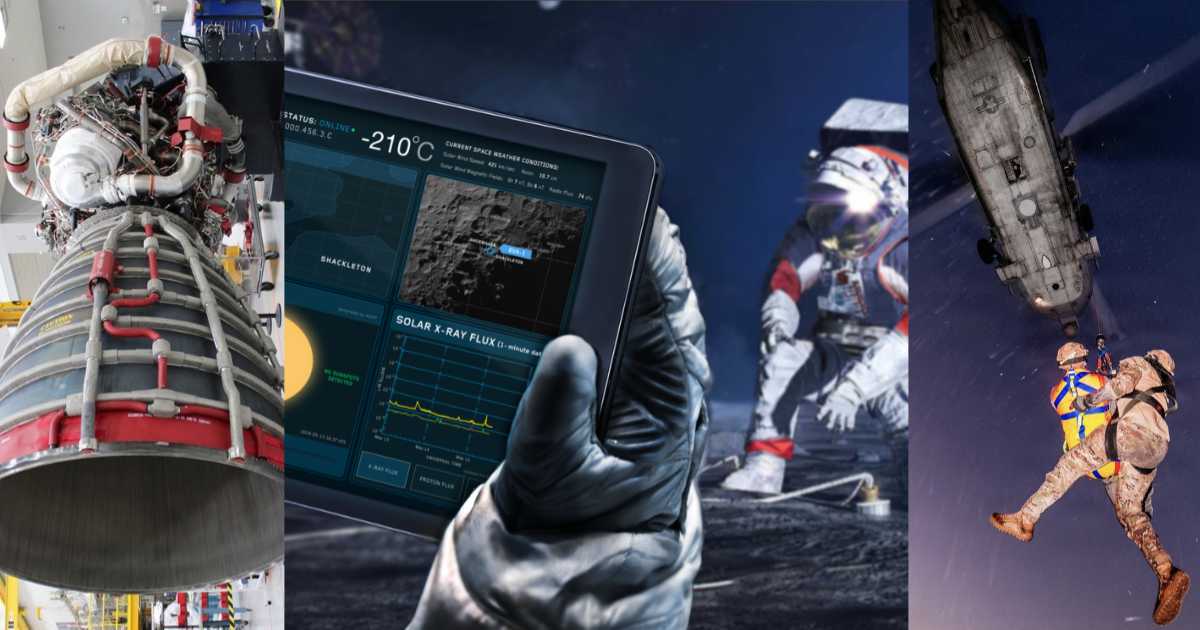
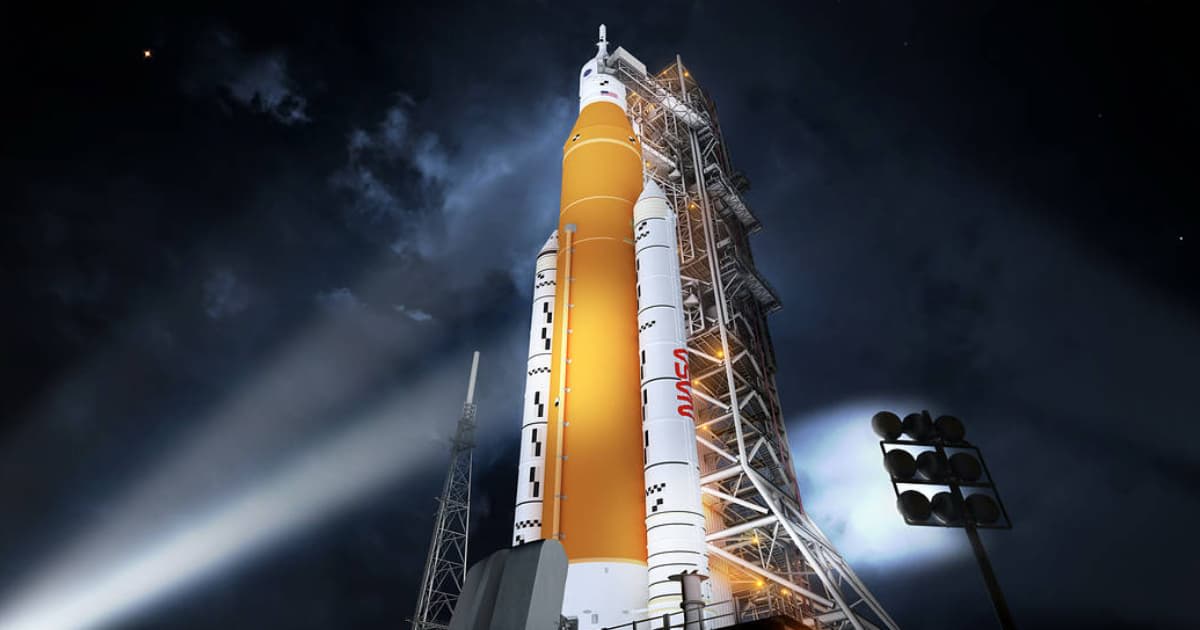
Engineers working on the Space Launch System to be used for the Artemis III mission have finished installing all four RS-25 engines underneath the rocket. To see the completion of this task, the four-person crew that will hitch a ride into Earth's orbit to execute the mission also visited the Vehicle Assembly Building at Kennedy Space Center in Florida last week. In the meantime, the crew, who recently underwent suit tests at the Johnson Space Center in Houston, is also training on the systems onboard the Orion capsule that will be their home for two weeks. The Artemis III mission will serve as a precursor to Artemis IV, which will be the first time humans return to the Moon in over 55 years.
3) SpaceX Flight 15 preparations underway
SpaceX is closing in on Flight 14 while also preparing Flight 15 in tandem. A sign of future operations: two sets of boosters and ships are lining up for Flights 14 and 15 in potentially close succession.
— NSF - NASASpaceflight.com (@NASASpaceflight) September 10, 2026
➡️https://t.co/CEIbsxdJji pic.twitter.com/W6t1DlMyYR
SpaceX is well on its way to getting its flight hardware ready for launch for Flight 15. While Flight 14 is next up on the company's agenda to test out its fully reusable rocket design, the Super Heavy booster and Starship 42 could be seen being rolled out to Massey's Outpost at Starbase in Texas for what appeared to be cryogenic fueling tests. Flight 14 is slated for this month, most likely targeted for September 18. While this launch would have seen a return of Starship with a catch at Pad 2 of Starbase, those plans were canceled later on. If all goes well, a version of the heavy-lift vehicle—called the Starship Human Landing System—could land on the Moon's south pole in 2028.
4) Relativity Space Terran R rocket to be available for NASA missions
💫 Terran R has been selected for NASA’s Launch Services (NLS) II contract, making us eligible to compete to launch future @NASA science, planetary, and exploration missions. We’re excited to help unlock new frontiers of discovery beyond Earth.
— Relativity Space (@relativityspace) September 9, 2026
Learn more:… pic.twitter.com/FZs9o7ARqb
NASA has offered a NASA Launch Services (NLS) II contract to the California-based company Relativity Space. Besides NASA's own SLS rocket, the agency currently has a fleet of SpaceX's Falcon 9 and Falcon Heavy, United Launch Alliance's Vulcan, Northrop Grumman's Pegasus XL, and Rocket Lab's Electron rockets available to it for science and exploration missions. Thanks to this latest contract award, Relativity Space's Terran R rocket will also be able to compete to secure missions, where it can serve as the launch vehicle for agency missions between June 2030 and December 2032.
5) Axiom Space prepares windows of future space station
The Earth Observatory on Axiom Station will feature eight massive acrylic panes forming a room sized cupola with an expansive windowed observatory - the largest windows ever constructed for space. Each pane must hold full cabin pressure against the vacuum of space while remaining… pic.twitter.com/mprMpo4awA
— Koichi Wakata 若田光一 (@Astro_Wakata) September 10, 2026
The aerospace company Axiom Space is currently building parts for what will be a replacement for the International Space Station after it retires in 2031. Known as Axiom Station, this space station will feature an observation capsule much like the Cupola on the ISS. It will feature the "largest windows ever constructed for space." The first module of the Axiom station is already being welded together by Thales Alenia Space, after passing some preliminary and critical design reviews conducted alongside NASA.
6) NASA's Office of Inspector General warns against lack of launch vehicles
As the International Space Station nears retirement, reliable crew and cargo transportation is critical. Catch up on our work examining over a decade of commercial spaceflight, current launch bottlenecks, and the future of the low Earth orbit economy: https://t.co/dSYsCOyFvH pic.twitter.com/xkugj9ymVP
— NASA Office of Inspector General (@NASAOIG) September 10, 2026
NASA's watchdog, the Office of Inspector General, has raised an alarm over whether the agency can realistically maintain the operations of the International Space Station until its planned end of life. Citing a limited number of rockets that can launch crews and cargo as part of the Commercial Crew and Commercial Resupply Services missions, the OIG report from September 8, 2026, highlights that there are not enough launch vehicles to keep astronauts safe, amid reports of leaks at the orbital outpost and solar arrays becoming worn out. The report also alluded to Boeing's Class A mishap last year, and pointed to a lack of progress by the company in getting its Starliner vehicle launch-ready.
7) European Space Agency signs agreement with Vast for sixth private astronaut mission to the ISS
Vast and @esa, on behalf of Greece, have signed an agreement for Vast’s private astronaut mission to the International Space Station in partnership with @NASA. @astrovenator is slated to serve as a mission specialist, becoming the first Greek astronaut. https://t.co/JbEi0smOXS pic.twitter.com/RW78Tzyo0D
— Vast (@vast) September 9, 2026
The private aerospace firm Vast has managed to secure a contract with the ESA on Wednesday that will allow it to send an astronaut to the orbital laboratory in 2028. The mission will make Dr. Adrianos Golemis the first Greek person in space, who will launch alongside ESA's Commander Thomas Pesquet from France and Pilot Aleš Svoboda from Czechia. The mission will be launched by SpaceX, using their Falcon 9 rocket and with the crew housed inside a Dragon capsule. With this award, Vast will become only the fourth private company to be able to send astronauts it selected itself to space. Vast hopes to learn about working in space, with its own private space station called Haven being built and tested for post-ISS orbital operations.
8) BepiColombo shows how solar particles penetrate Mercury's magnetic field and rain down on its surface
ESA and JAXA's BepiColombo, which is preparing to enter Mercury's orbit after an eight-year journey, has long been making scientific observations of the closest planet to the Sun. During its close approach to Mercury in September 2024, when it passed just 102 miles above the surface, it made some interesting readings that have become the basis for a study, which was published on September 8, 2026. According to the data collected by BepiColombo, the surface of the planet was being bombarded by solar energetic particles due to a weak magnetosphere, triggering the production of X-rays, which in turn provided scientists with data about Mercury's surface composition and evolution. BepiColombo is set to begin its primary mission later this year, when its constituent spacecraft will separate.
9) 27 new Trans-Neptunian Objects discovered by combining the power of Webb and Hubble space telescopes
A survey performed by Webb and Hubble has captured some of the dimmest, tiny worlds beyond the orbit of Neptune. In what was the largest survey so far of these Trans-Neptunian Objects, 27 new ones were discovered. The discoveries were made by a combination of Hubble's ability to capture distant objects in visible light with that of the James Webb Space Telescope in capturing infrared light. The icy bodies are thought to have preserved their early surface compositions from over 4.5 billion years ago, holding clues to how our solar system evolved over time.
10) Extremely fast black hole winds found in a galaxy that was not expected to have them

A black hole spewing winds at a significant fraction of the speed of light has been found in a galaxy that was thought to be 'dead'. Called KUG 1208+386, this galaxy, located near the Milky Way, was understood to have stopped producing new stars over 9 billion years ago. At its center, the supermassive black hole is producing wind speeds of over 13,000 miles per second, which is 7 percent of the speed of light. Such enormous speeds were only thought to come from black holes consuming material at a high rate. This may still be the case for this particular black hole, even with its location. "It shows that a galaxy can look ‘dead’ on large scales while remaining remarkably active at its very center," said lead author of the research paper, Yerong Xu.
11) Space startup Inversion Space proposes new approach to spacecraft visiting planets
Inversion has been selected by @NASA to advance aerocapture technology for interplanetary missions.
— Inversion (@InversionSpace) September 10, 2026
Aerocapture is a simple but powerful idea: use a planet’s atmosphere to slow down instead of fuel.
Spacecraft arriving at another planet are traveling at tremendous speeds and… pic.twitter.com/qsSB2ytFcD
The aerospace startup Inversion Space has been selected by NASA to test and develop a new way of entering the orbit of a planet. This technique, called aerocapture, avoids the use of propellants for a spacecraft to be slowed down enough to be captured in an intended orbit around said planet. This is done by making a close flyby of the destination planet, where a specialized spacecraft can use the atmosphere to slow down before settling into a desired orbit. This is supposed to save fuel, time, and capacity, allowing more instruments to be included for scientific experiments.
12) Lake Kickapoo in Texas selected as site for US Space Force DARC installation
The #SpaceForce has approved project planning and selected Lake Kickapoo, Texas, as the preferred location for the third and final site of the Deep Space Advanced Radar Capability global network, pending final planning approvals. More: https://t.co/FKknlRbIkJ pic.twitter.com/TNCC3fPAcB
— Space Systems Command (@USSF_SSC) September 9, 2026
In collaboration with the United Kingdom and Australia, the United States Space Force is working on completing the Deep Space Advanced Radar Capability (DARC). It is a collection of three globally spread space sensors that will allow the US and its allies to keep continuous track of deep space, specifically, geostationary orbits. The final site of the trio of installations has been chosen as Lake Kickapoo, Texas. "This capability will improve visibility in our contested domain and reinforce our shared capacity to protect the space systems on which our nations rely," stated USSF Chief of Space Operations Gen. Douglas Schiess. The project's construction is slated to begin in 2027, pending regulatory approvals, and the facility will begin its operations in 2030.
Here are our five most-viewed space stories from this week
2- Moon phases 2026: New Moon on September 11 to provide an excellent night for stargazing
3- Artemis IV: NASA just asked Axiom to revise spacesuits for 2028 Moon landing. Here's why
4- When and where to watch the next 5 total lunar eclipses in the U.S.: Dates and city-wise timings