Asteroid that exploded over Australia on September 6 might be the first-of-its-kind discovered before impact
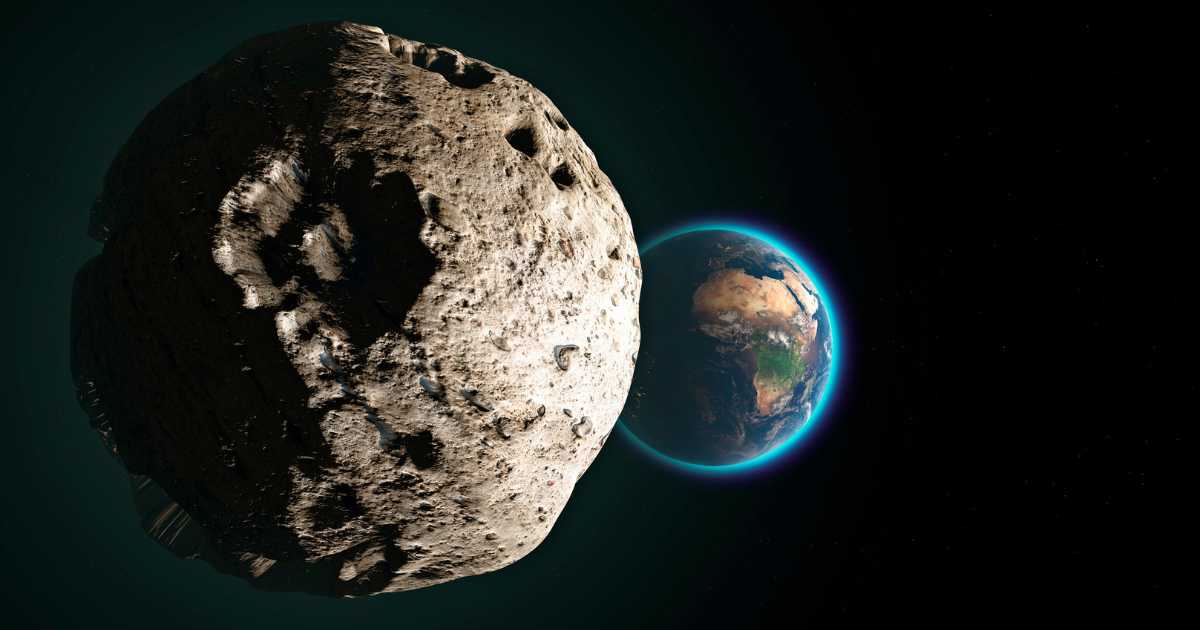
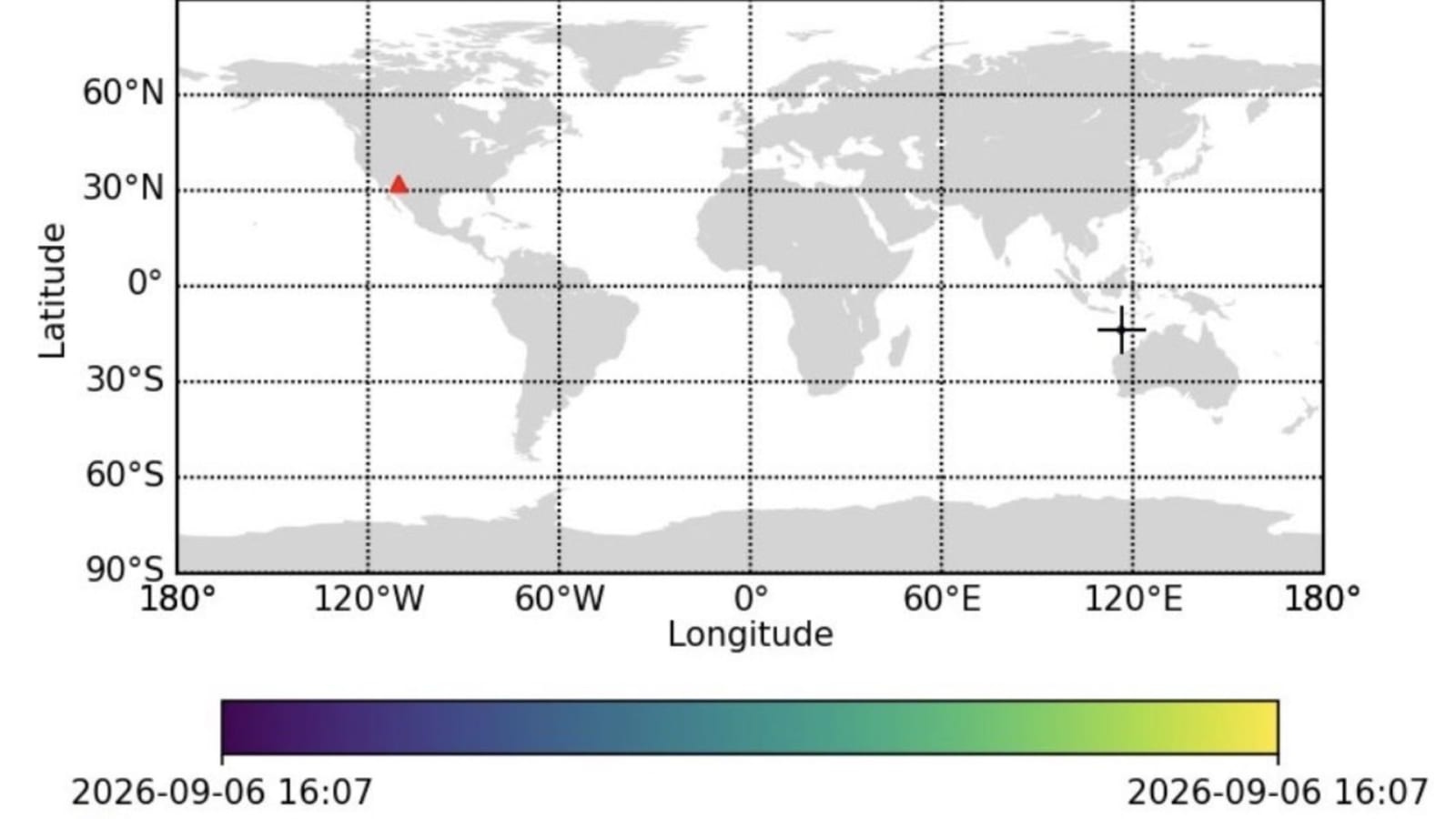
Astronomers at the Mount Lemmon Observatory on Sunday detected a tiny asteroid that was predicted to impact Earth on September 6, 2026. The asteroid, officially designated 2026 RW1 (and initially cataloged as CERNQ52), was approximately 3 feet wide (1 meter) and was estimated to slam into the Earth’s atmosphere yesterday at 12:07 PM EDT (4:14 p.m. UTC and 12:07 AM local time) over northwest Australia, per NASA. Richard Moissl, the head of Planetary Defense for the European Space Agency (ESA), had announced the discovery in a social media post on Sunday. While there has been no visual confirmation or imagery of the impact yet, the time at which it was expected to occur has now passed, so more details or visuals of the fireball are awaited.
☄️🎇INCOMING! Our systems have calculated an atmospheric entry in the timeframe between 16:00-16:30 UTC of a harmless object discovered by Mt Lemmon survey with a diameter of ~0.8 m northwest of Australia over the ocean. The impact will likely cause a bright meteor @esaoperations pic.twitter.com/3xkXbCHqSo
— Richard Moissl (@Richard_M_F) September 6, 2026
“INCOMING! Our systems have calculated an atmospheric entry in the timeframe between 16:00-16:30 UTC of a harmless object discovered by Mt Lemmon survey with a diameter of ~0.8 m northwest of Australia over the ocean. The impact will likely cause a bright meteor,” Moissl posted on X. According to him, this was the 13th asteroid discovered by scientists before it impacted our planet.
Dr. Joseph Trigo, a professor at the Institute of Space Sciences in Spain, posted on X that the asteroid was harmless and would disintegrate above the predicted region. Interestingly, 2026 RW1 might be the first Aten asteroid detected in space before impact, as all previous impactors have belonged to the Apollo class, says Adrien Coffinet, a member of the Minor Planet Mailing List, per EarthSky. Aten asteroids are space rocks whose average distance from the Sun is less than 1 Astronomical Unit (AU), but whose elongated orbits still cross Earth's path. Apollo asteroids, on the other hand, are those that orbit the Sun at average distances greater than Earth’s.
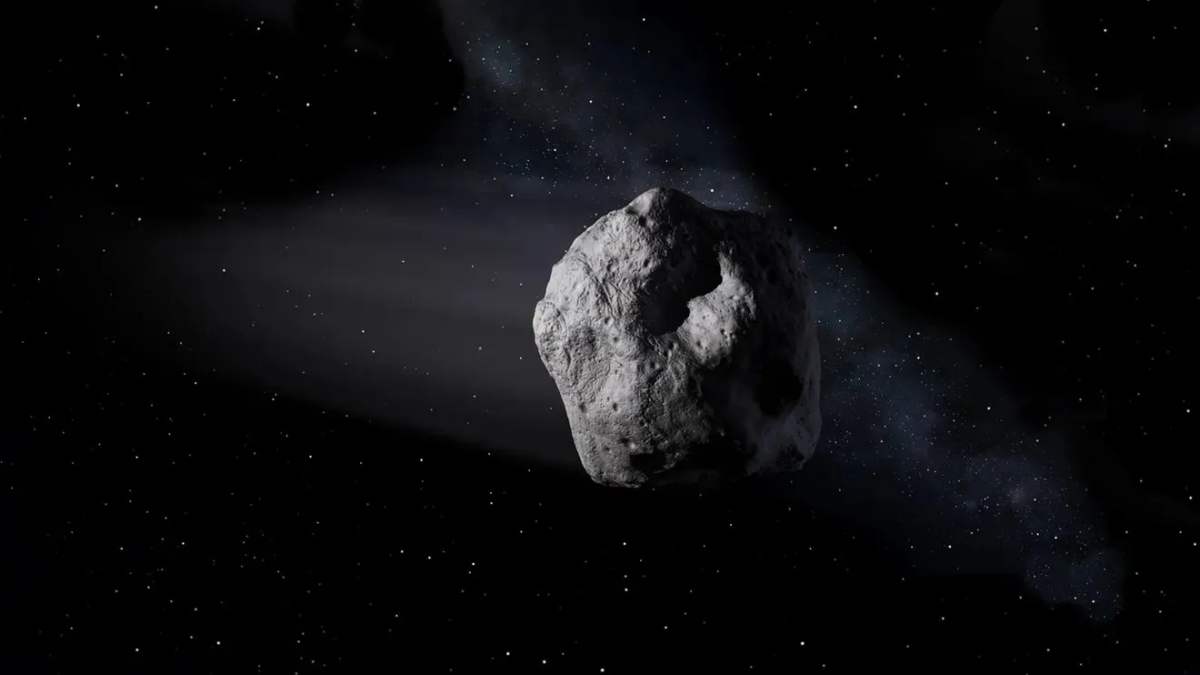
Detecting an asteroid before impact is crucial, as even a relatively tiny rock can cause significant regional damage. Early detection is necessary to determine the size, trajectory, and impact probability, which helps assess the damage it may cause and carry out evacuations of areas if necessary. Scientists are also developing methods of planetary defense via impactors, such as NASA’s DART spacecraft, which successfully tested kinetic deflection on a harmless asteroid to prepare for a future scenario involving a large-scale threat. While no known large, hazardous asteroid is likely to strike Earth for at least 100 years, there are objects that hide in the glare of the Sun and could sneak up on us, giving little time to respond.
It was a big one! Here is video of the fireball that flew over British Columbia, Canada and Washington State today August 14th 2026 near midnight local time. 266 reports so far submitted to @amsmeteors, with tons of videos. Credit: Lisa Williams, Airway Heights,WA https://t.co/2DaZUwnpx8 pic.twitter.com/VKsEgLeMVd
— Stefan Burns (@StefanBurnsGeo) August 15, 2026
Speaking about the event, NASA said that these scenarios “provide an invaluable test of our planetary defense capabilities to monitor for larger objects and predict impact threats.” Just last week, a meteor exploded over the US, putting on a show for residents in Washington and Oregon. According to NASA, the fireball was seen on the night of August 30 at 8:32 pm PDT as it slammed into the atmosphere at 47,700 miles per hour. The two US states, along with Idaho, had witnessed another meteor event in the early hours of August 14 as well, when a 170-pound rock exploded, releasing energy equivalent to 10 tons of TNT.
More on Starlust
Asteroid impacts shaped the early Earth's surface, creating conditions conducive for life
An asteroid could hit Earth with the energy of 22 atomic bombs—and NASA has a date for it