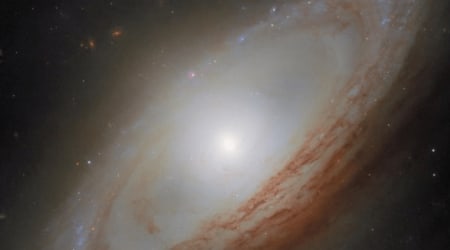
Scientists discover early-type 'runaway' dwarf galaxy wandering alone after being ejected from its group
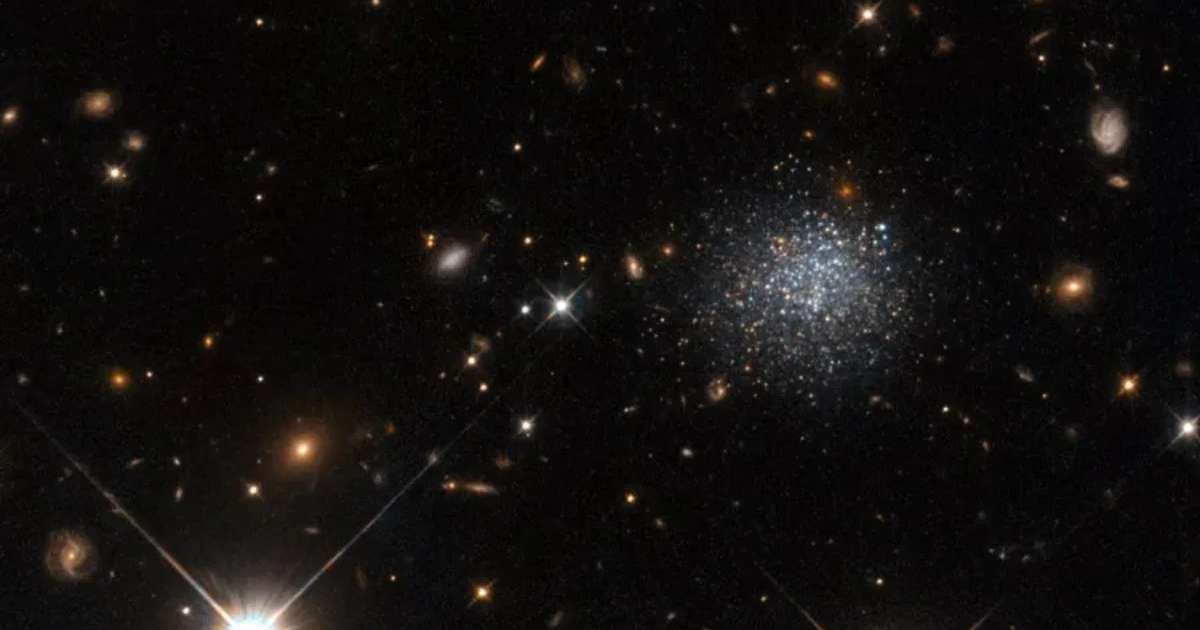
A team of astronomers, spearheaded by researchers from Yonsei University in Seoul, South Korea, has announced the discovery of a lone dwarf galaxy, which they believe was ejected from its original galactic group. The findings were detailed in a paper published on the preprint server arXiv on August 28, per Phys.org.
Typically, dwarf galaxies are small star systems containing only a few billion stars. Among these, early-type dwarf galaxies (dEs) are commonly found within clusters and groups of other galaxies. The recent detection of dEs far from any known galactic groups has led scientists to debate their origins. One leading theory suggests these are "runaway" galaxies, violently stripped of their stars during a close encounter with a larger cluster before being flung into the vastness of space.
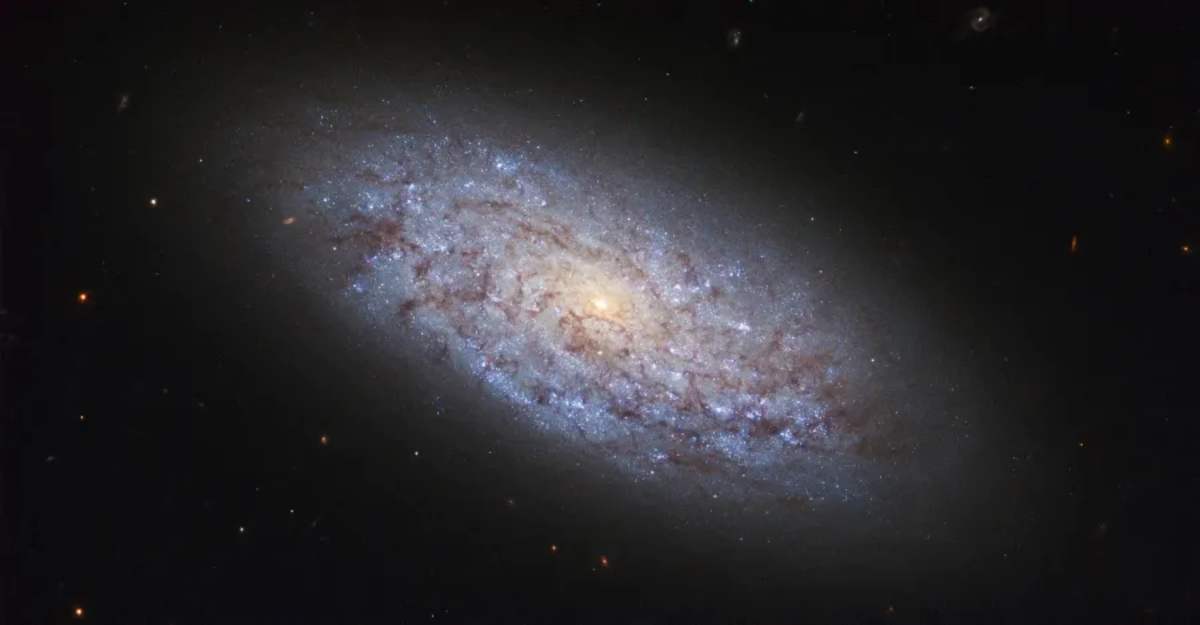
The team, led by Sanjaya Paudel, identified one such candidate, SDSS J011754.86+095819.0, using data from several astronomical surveys, including the Sloan Digital Sky Survey. The astronomers note that the galaxy, dubbed dE01+09, is estimated to be 3.9 million light-years away from its probable original host, the NGC 524 group, and is currently located in a remarkably isolated region. With a mass of about 280 million solar masses and an effective radius of roughly 3,900 light-years, dE01+09 is an inactive galaxy with an estimated age of 8.3 billion years. Its stellar population is homogeneous, showing no evidence of recent star formation.
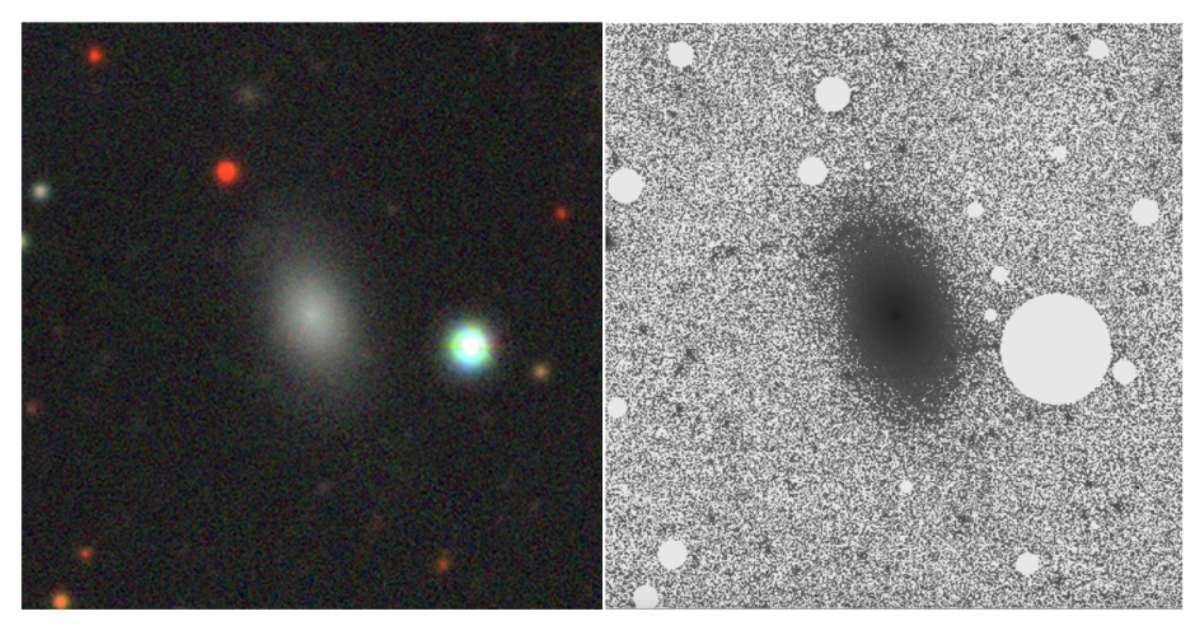
The astronomers propose that dE01+09 was once a member of the NGC 524 group. They theorize it entered the group as a star-forming dwarf several billion years ago, where its star formation was halted by its environment. They believe a powerful gravitational interaction about 3.5 billion years ago gave the galaxy a velocity close to the group’s escape speed, propelling it into its current isolated position. The discovery of a quiescent dwarf galaxy in such an isolated region is highly unusual. The researchers state that further study of dE01+09 could help unravel the nature and formation of these rare, runaway dwarf galaxies.
In a major discovery, astronomers using the Hubble Space Telescope have identified a new class of ultra-massive white dwarf, providing groundbreaking evidence that these dense stellar remnants may be far more common than previously thought. The finding, published in Nature Astronomy, details a rare white dwarf formed from the merger of two stars, not the typical evolution of a single star.
Hubble spotted an unusual star 128 light-years away.
— Hubble (@NASAHubble) August 13, 2025
With its unique ultraviolet capabilities, Hubble determined this star is a rare ultramassive white dwarf, made up of merged stars: https://t.co/2Hp1LBjUBC
Find out more about this star's intriguing atmosphere in this video ⬇️ pic.twitter.com/k5Bzy1LSE0
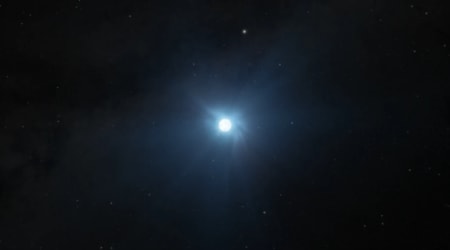
While most white dwarfs are the remnants of a single star’s death, these cumbersome counterparts, weighing more than 1.4 times the mass of the Sun, can also be the product of a celestial collision. This specific white dwarf, known as WD 0525+526, is the first of its kind to be identified as a merger remnant, distinguished by its unique ultraviolet spectrum. The discovery opens a new window into the complex and often violent life cycle of stars. Located 128 light-years away, WD 0525+526 initially appeared to be a normal white dwarf. However, a closer look with Hubble's Cosmic Origins Spectrograph revealed the presence of carbon in its atmosphere, a telltale sign of a more violent past and the product of two stars colliding and merging into one.
More on Starlust
NASA’s TESS captures two Earth-like exoplanets orbiting an orange dwarf
New study identifies hundreds of previously undocumented satellite systems orbiting dwarf galaxies