A supernova remnant may have been found near the Milky Way's central supermassive black hole
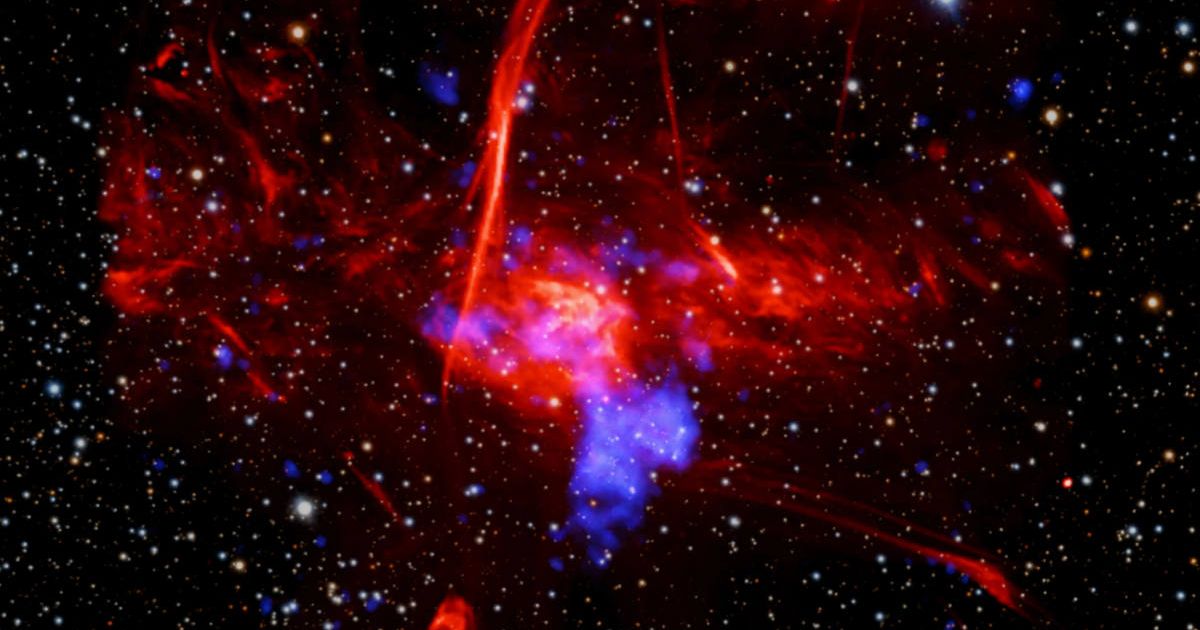
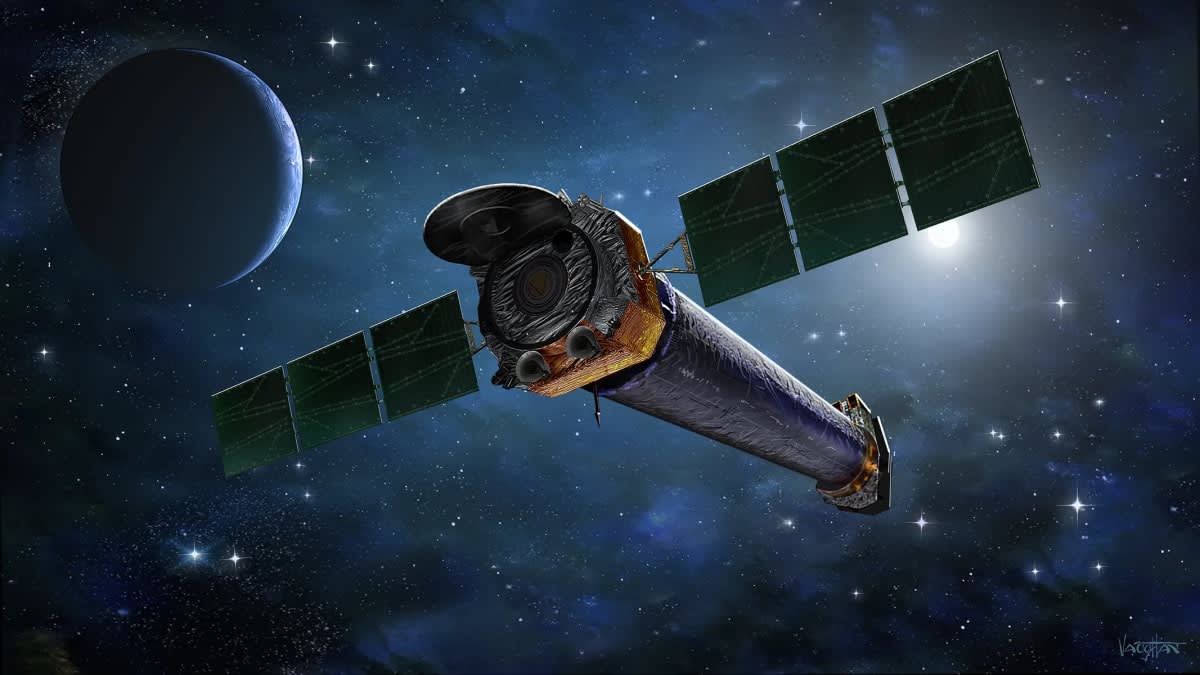
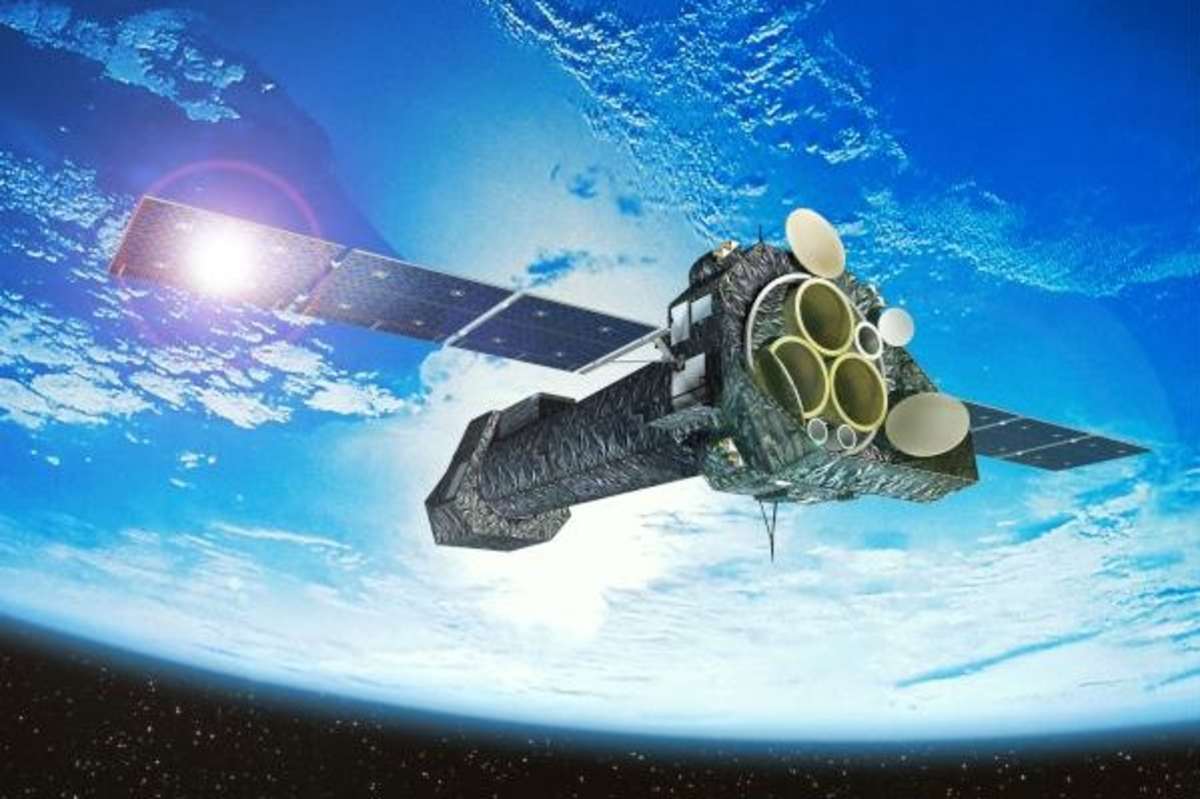
An international team of astronomers may have found the remains of a supernova that took place at least 1,700 years ago, close to the center of our own Milky Way galaxy, as per NASA. The research paper that details the study of this suspected supernova remnant was published recently in The Astrophysical Journal, and is based on data gathered by NASA’s Chandra X-ray Observatory and the European Space Agency’s XMM-Newton mission. The importance of this study stems from the fact that supernovae create heavy elements needed for planets to exist, and in turn, for life to evolve as we know it, while supernovae remnants scatter these elements across space, providing fuel for new stars and building blocks for rocky planets.
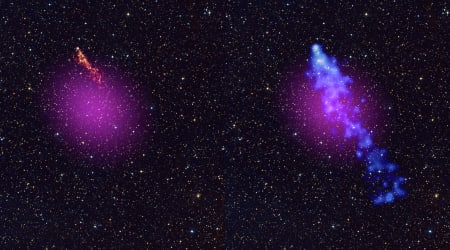
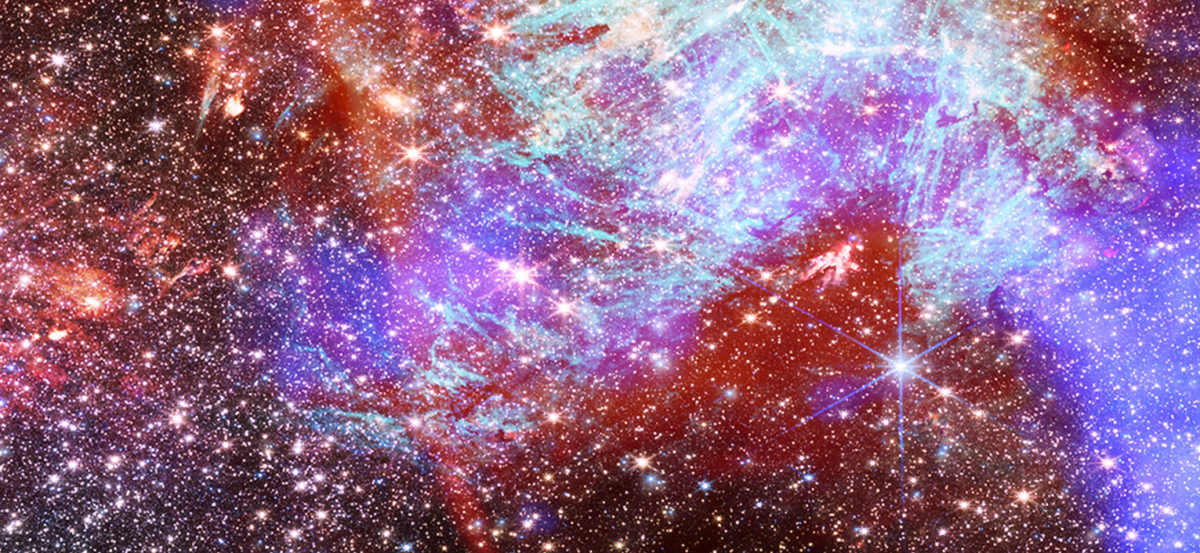
This supposed supernova remnant was found 26,000 light-years from Earth, in a bubble of ionized gas surrounding a massive, young star, a bright source of radio emission known as Sagittarius C. While analyzing data, the researchers who carried out the study noticed a rapidly expanding cloud of gas (represented in red in telescope images), amidst which a "blob" of X-ray emission was observed (shown in blue). Scientists think that it is this emission that may have resulted from a supernova, an event where a massive star explodes violently at the end of its life. The contents of the supernova remnant are said to be expanding at the rate of roughly two million miles per hour.
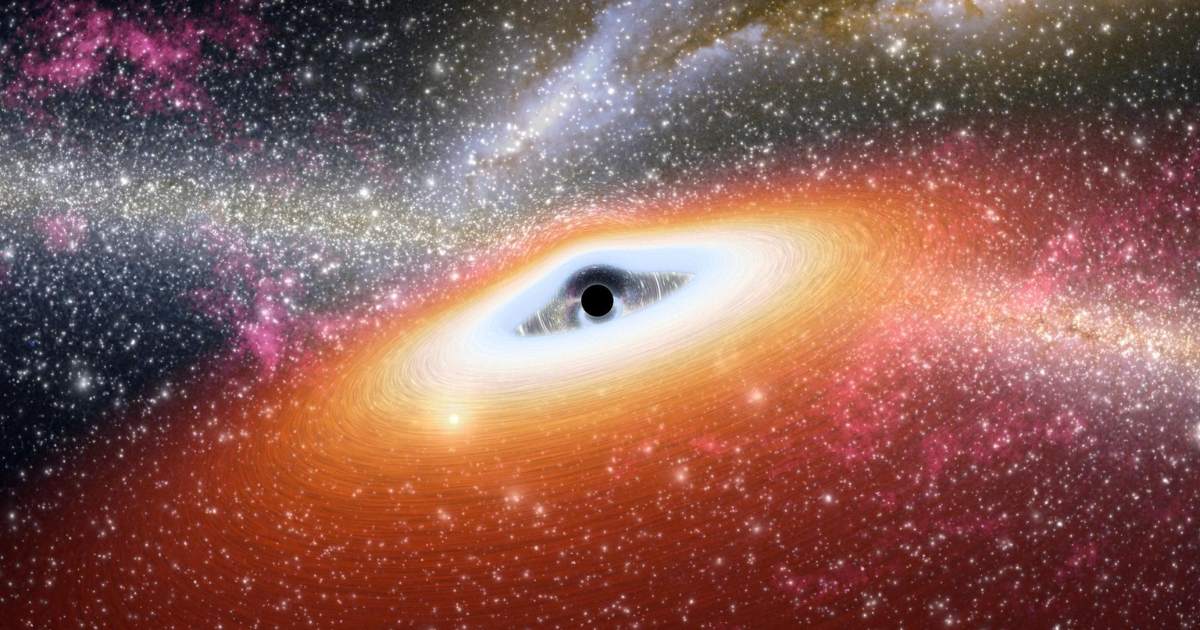
Another indication that a star exploded near the galactic center was found in the form of expanding gases around Sagittarius C, via the SOFIA (Stratospheric Observatory for Infrared Astronomy) mission by NASA, which is now no longer in operation. Should the astronomers' theories be confirmed, this discovery will also hold the distinction of being one of the supernova remnants closest to the supermassive black hole at the center of the Milky Way, Sagittarius A*. The remains of the supernova lie in a location in our galactic center that is characterized by enormous stars, long strings of magnetic fields that direct energetic particles perpendicular to the galactic plane, and dense clouds of gas orbiting the galactic center.
Scientists who are part of the study include Zhenlin Zhu and Mark Morris of the University of California, Los Angeles, Gabriele Ponti of the National Institute for Astrophysics in Italy, and Ping Zhou of Nanjing University in China. To cover all bases, the scientists considered the fact that our galactic center is a dense region with active production of stars, and that the X-ray emissions might be a result of the large stars in the region. However, given the fact that these emissions are over ten times the intensity of those coming from star clusters containing huge, bright stars, the scientists ruled this possibility out.
We already know that stars consume abundant elements in our universe, like hydrogen and helium, as fuel for nuclear fusion within their cores, which is the case for our closest star as well, the Sun. This results in the formation of heavier elements like oxygen, iron, and silicon, which are blasted into the stars' surrounding regions when they go supernova. These very elements go on to form the constituent matter for new planets. While this particular supernova remnant is quite new relative to cosmic timescales, and signs of these enhanced elements weren't immediately visible in the X-ray data (probably because they have already mixed with the gases surrounding the remnant), it could still provide crucial context to future research on the phenomenon of supernovae and the formation of the next generation of planetary bodies.
More on Starlust
NASA's Chandra discovers a unique object that may explain James Webb's mysterious little red dots
NASA’s Chandra pops the cosmic cork with a stunning view of the Champagne Cluster