Hubble discovers ultra-massive white dwarf with mysterious carbon heart, revealng violent star merger
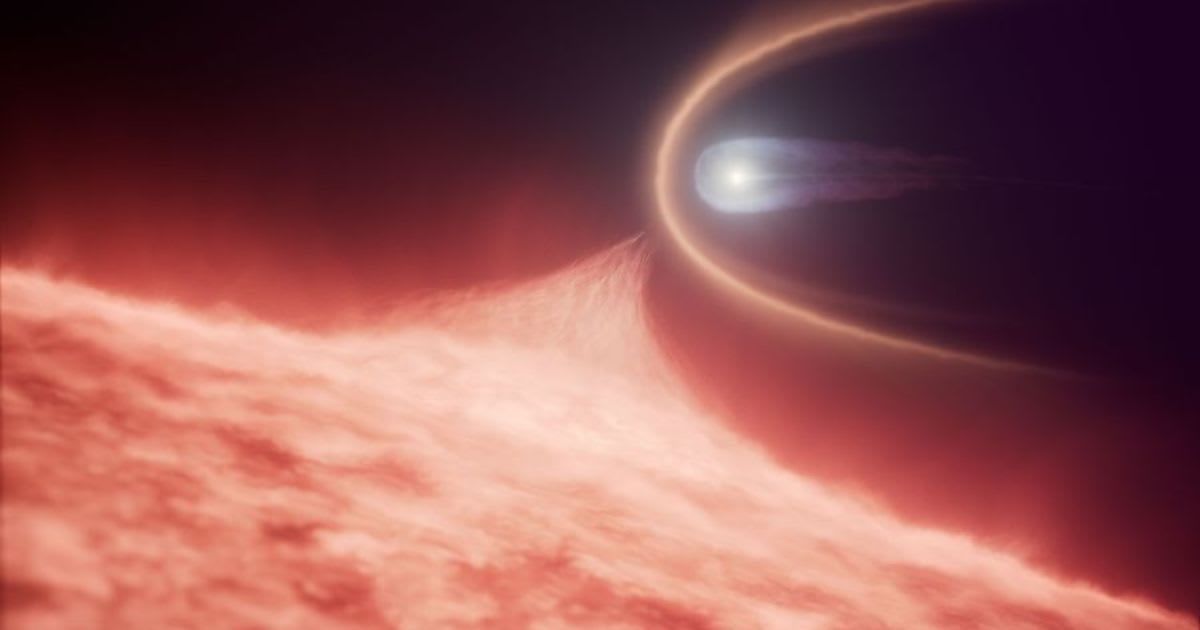
NASA's Hubble Space Telescope has identified a new class of ultra-massive white dwarf, providing groundbreaking evidence that these dense stellar remnants may be more common than previously thought. The discovery, made by an international team of astronomers, reveals a rare white dwarf formed not from the typical evolution of a single star, but from the merger of two stars, according to NASA.
Hubble spotted an unusual star 128 light-years away.
— Hubble (@NASAHubble) August 13, 2025
With its unique ultraviolet capabilities, Hubble determined this star is a rare ultramassive white dwarf, made up of merged stars: https://t.co/2Hp1LBjUBC
Find out more about this star's intriguing atmosphere in this video ⬇️ pic.twitter.com/k5Bzy1LSE0
The finding, detailed in the journal Nature Astronomy, sheds light on the formation of ultra-massive white dwarfs, which are more than 1.4 times the mass of the Sun. While most white dwarfs are formed from a singular star's death, these heavier counterparts can also be the product of a celestial collision. This specific white dwarf, known as WD 0525+526, is the first to be identified as a merger remnant based on its unique ultraviolet spectrum.
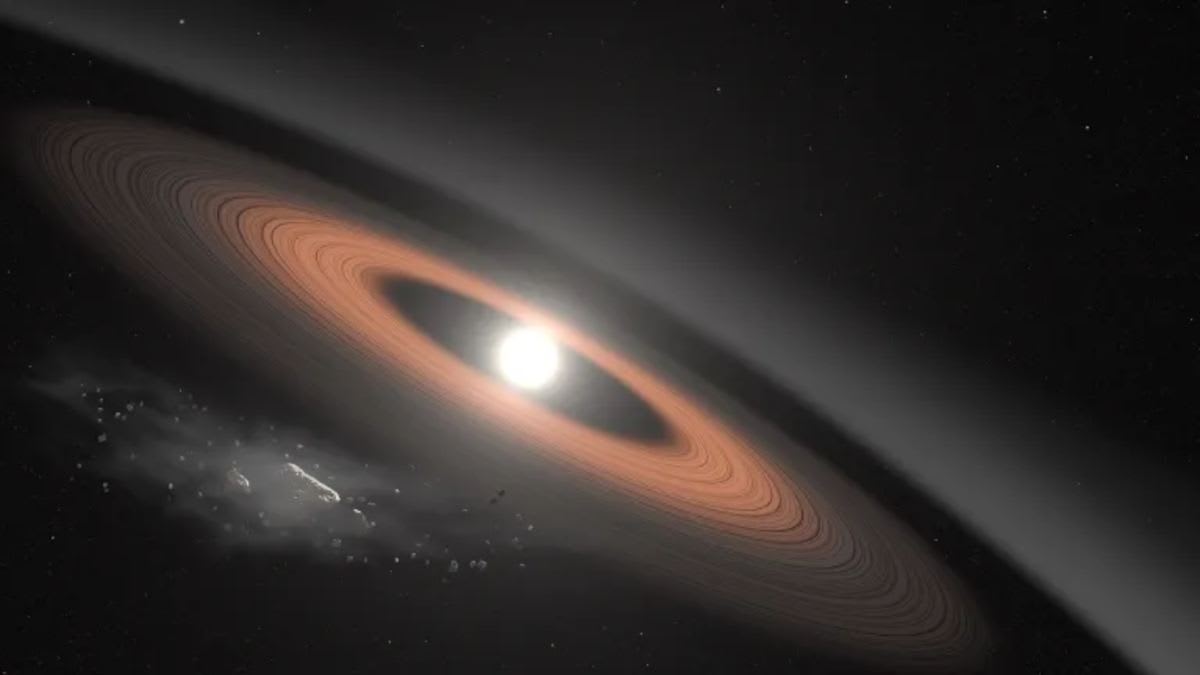
Located 128 light-years away, WD 0525+526 initially appeared to be a typical white dwarf. However, a closer look with Hubble's Cosmic Origins Spectrograph revealed the presence of carbon in its atmosphere, a telltale sign of a more violent past. Unlike white dwarfs formed from single stars, which have atmospheres of hydrogen and helium, merger remnants can have their atmospheres stripped away, allowing elements like carbon from the core to become visible.
This particular white dwarf is hotter and more massive than others in its class, with a temperature of nearly 21,000 kelvins (37,000 degrees Fahrenheit) and a mass 1.2 times that of the Sun. Its extreme temperature and low carbon abundance made it impossible to identify as a merger product without Hubble's sensitive ultraviolet detection, as the spectral lines of carbon are only visible at these specific wavelengths. "Hubble's ultraviolet vision revealed that it had a very different history from what we would have guessed,” said Boris Gaensicke, principal investigator of the Hubble program and a researcher at the University of Warwick.
This discovery opens up the possibility that other seemingly "normal" white dwarfs are also cosmic merger survivors. Researchers are now eager to explore how many more of these merged stars might be hidden among the larger population of white dwarfs, potentially changing our understanding of how these stellar systems evolve and the pathways to supernova explosions.
While this discovery focuses on a white dwarf born from a merger, a different Hubble observation in 2023 provided another significant first: directly measuring the mass of a single, isolated white dwarf, per NASA. This groundbreaking observation allowed them to directly calculate the mass of the burned-out star core, which was found to be 56% the mass of our Sun.
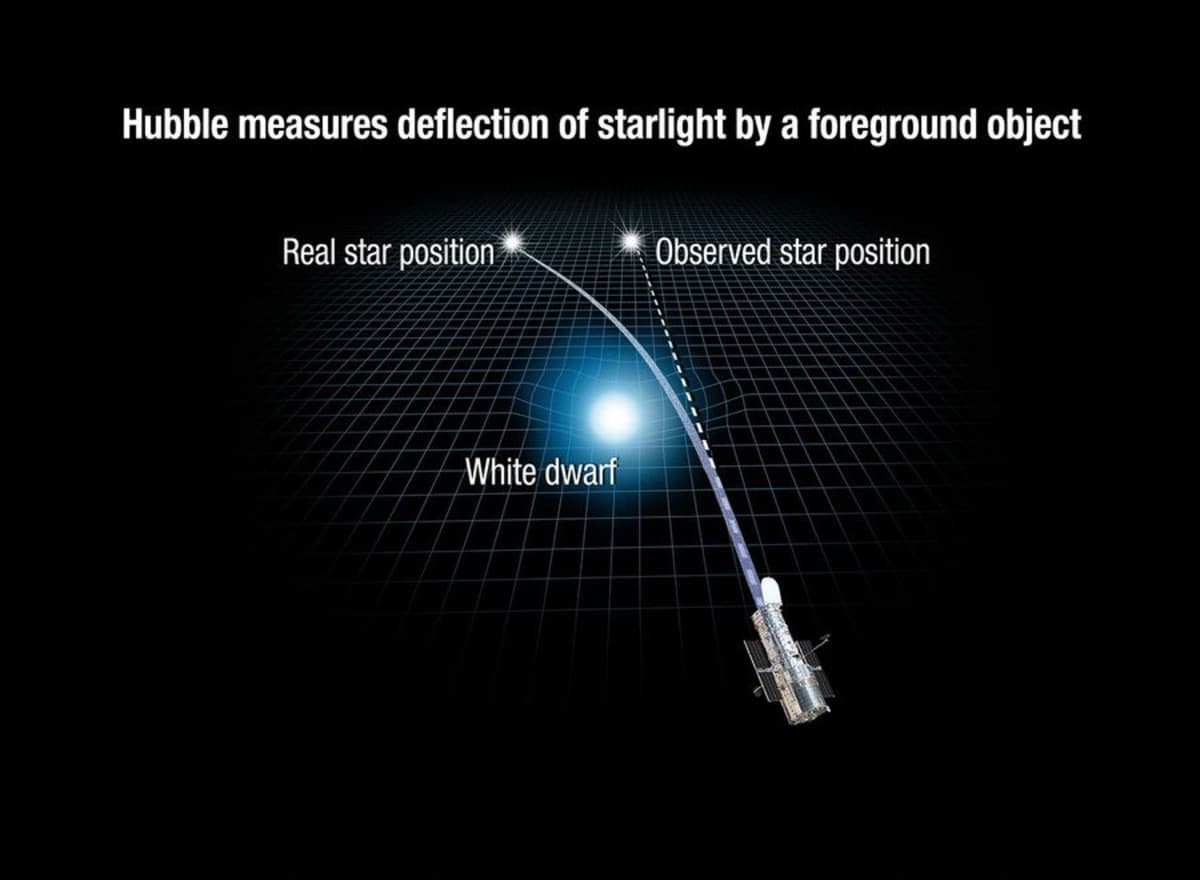
This result aligns perfectly with long-held theoretical models of how these stellar remnants form and evolve, strengthening our understanding of the typical life cycle of stars like our Sun. Previously, mass measurements for white dwarfs relied on observing them in binary star systems, where their gravitational influence on a companion star could be used to infer their mass. However, this method can be imprecise, especially for stars with long orbital periods. The ability to measure an isolated white dwarf's mass directly provides a new, highly accurate method to test and refine our theories about the structure and composition of these fascinating cosmic objects.