Peering into the cosmic dawn, MIT astronomers find earliest known flickering quasar
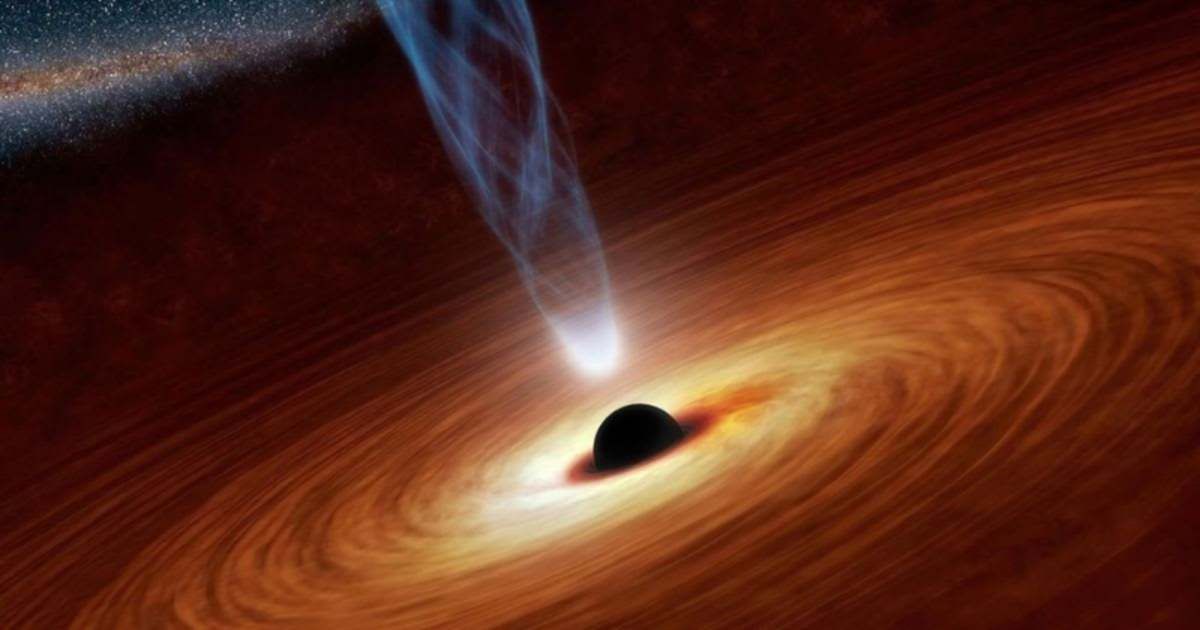
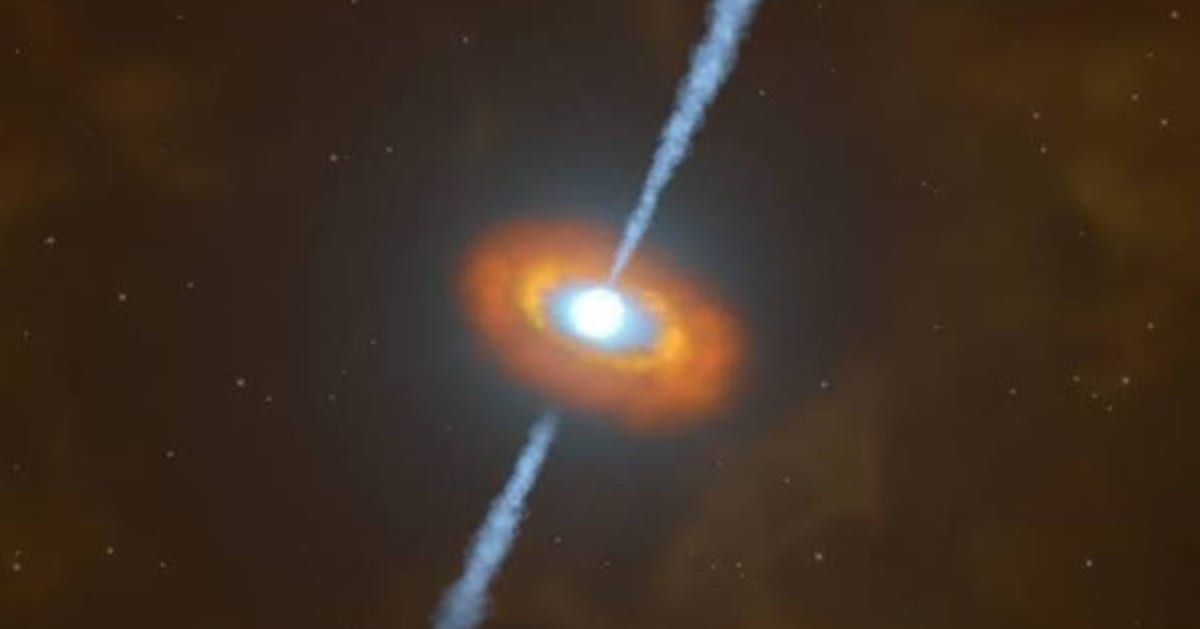
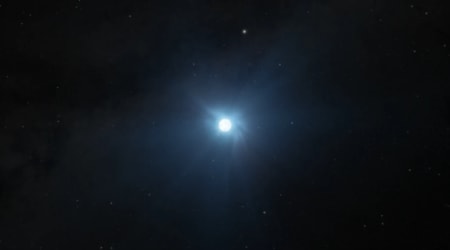
A research team at MIT detected an unusual, flickering light in data captured by NASA’s Near-Earth Object Wide-field Infrared Survey Explorer (NEOWISE). Intrigued, they followed it up and traced the light’s origin to the dawn of the universe, when it was only 850 million years old. Deeper analysis, published in the journal Nature Astronomy, reveals that the light came from a quasar. The researchers found that the quasar is powered by an energetic supermassive black hole. Most galaxies have a supermassive black hole at their centers. When such black holes voraciously devour gas and dust from their surroundings, the infalling matter shines, pouring out a huge amount of energy.
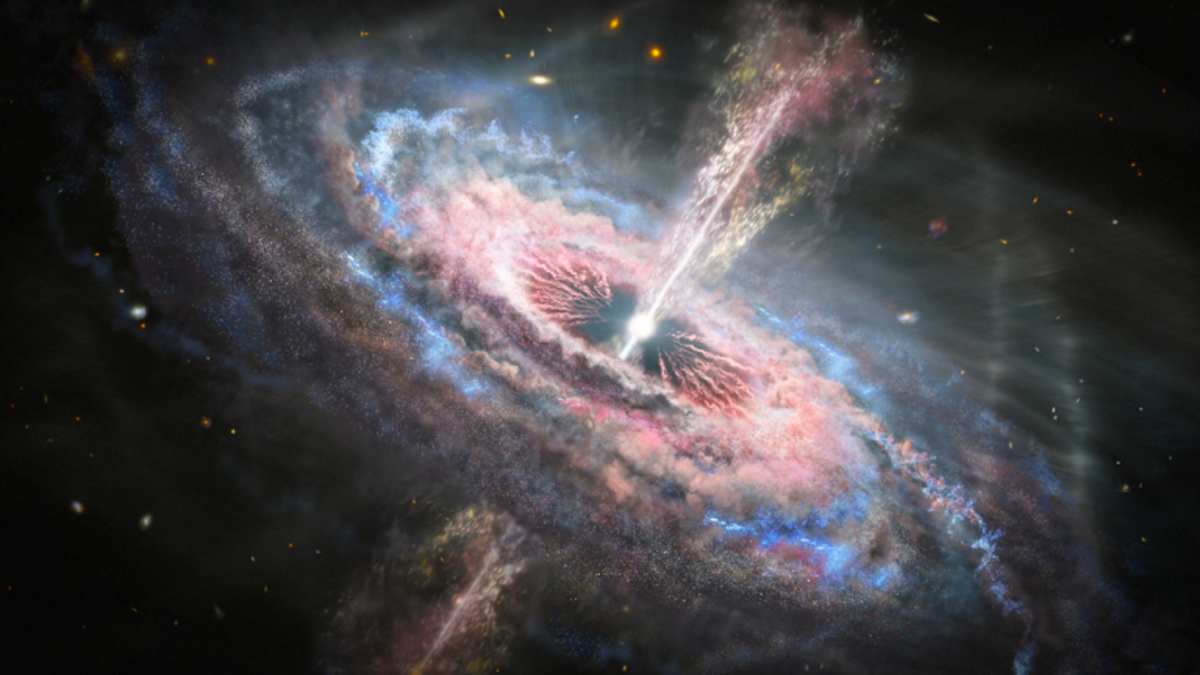
Studies have shown that while most supermassive black holes in the modern universe are relatively quiet, actively feeding ones manifest as quasars. As they swallow matter, they emit radiation that outshines all the stars in the surrounding galaxy. The pattern of emitted light from a quasar helps scientists figure out how active supermassive black holes shape the galaxies around them. The quasar detected by the MIT team is currently the earliest known flickering quasar in the universe. “Although there have been a lot of quasars found in the cosmic dawn, this is the first time we actually see one flickering,” says Gene Leung, a postdoc at the MIT Kavli Institute for Astrophysics and Space Research, in a statement.
Light from a distant celestial object gives scientists an idea of its size, temperature, mass, and chemical composition. The quasar’s flicker helped the MIT team map the shape of its accretion disk. They found that the disk, made of gas and dust, resembled a flat pancake, structurally similar to the mature disks of modern-day quasars. Their results also added to a long-standing puzzle: why do we find such massive supermassive black holes at the cosmic dawn? A flat accretion disk indicates that the black hole was already mature and stable. Theoretical physicists previously predicted that newborn black holes would possess unsettled systems and their disks would look puffier and more chaotic. This new finding deepens the mystery: how did supermassive black holes grow and mature within such a short cosmic timeframe? “I think what this suggests is that all the messy, very rapid growth phases that we expect all black holes to go through at some point happen very, very early on, before we see them as these very bright luminous quasars,” says Anna-Christina Eilers, assistant professor of physics at MIT. “That’s the picture that’s emerging.”
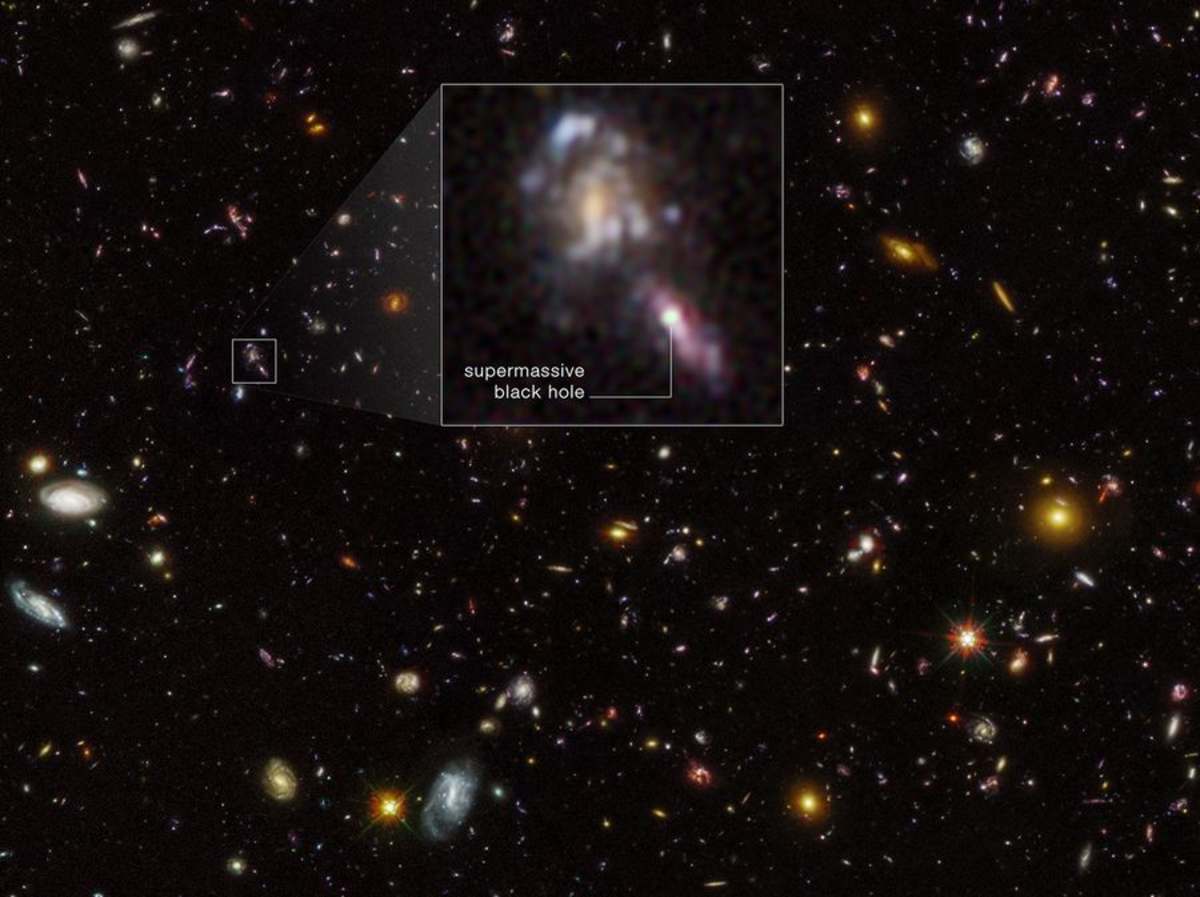
A supermassive black hole, billions of times more massive than the Sun, doesn’t just swallow matter; it shapes a galaxy’s star formation and growth. “Without supermassive black holes, no galaxy would look the way it does today,” Eilers says. “Black holes play a major role in shaping how galactic ecosystems look.” Astronomers originally thought that the first galaxies took more than a billion years to settle and mature. They never expected to find supermassive black holes so early in the universe. But things started to change in the 2000s. Scientists began to detect supermassive black holes in the universe’s first billion years. They gave off such immense radiation that it became possible to spot them even from Earth, almost 13 billion light-years away. The earliest quasars showed up as pinpricks of light, indicating the existence of a supermassive black hole at early times. But such light signals are not enough to describe the black holes and their surrounding environments. To do that, astronomers needed to image and analyze a quasar’s flicker.
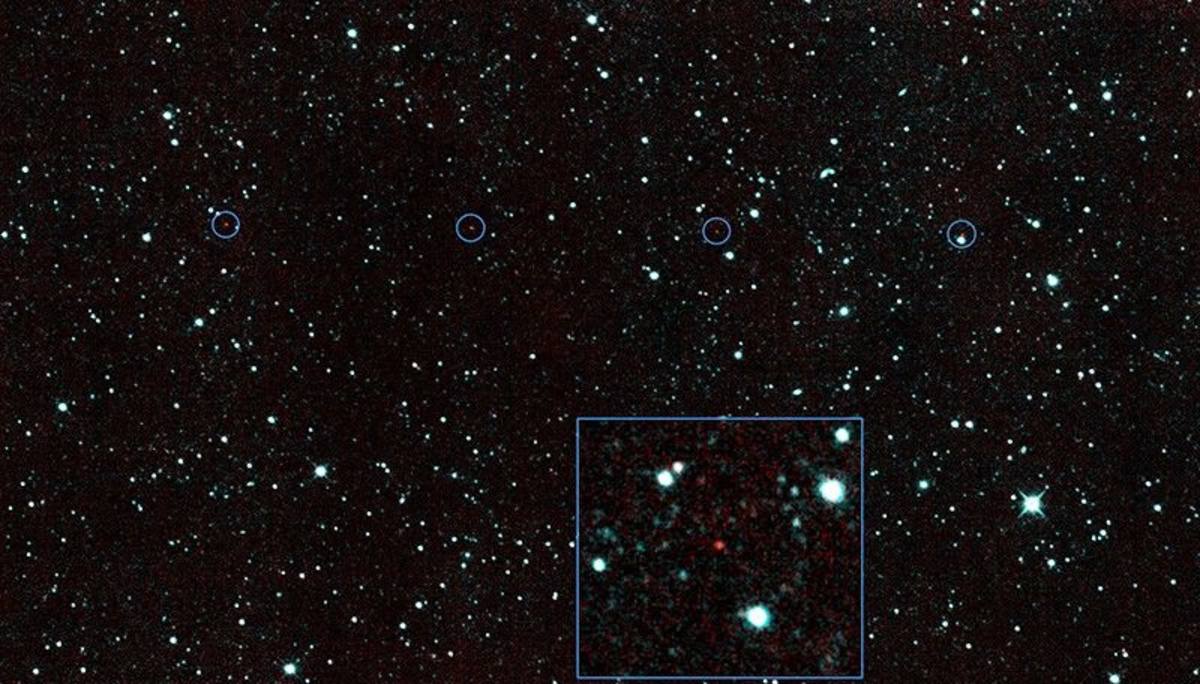
“People have known that quasars in the nearby universe can flicker,” Leung says. “The flickering comes from fluctuations in the way the gas is being fed into the black hole. And how a quasar flickers tells us something about the structure of a black hole’s accretion disk, and the kind of ‘bites’ that the black hole is eating.” To catch a glimpse of the flicker, the team needed to scan the distant universe at redder wavelengths, specifically in the infrared spectrum. “This was the technical challenge we had to overcome,” Eilers says. “We needed data at longer, infrared wavelengths taken repeatedly over very long timescales.” Their search for the coveted flicker ended when they detected one in data collected by the NEOWISE mission. Based on re-processed data from NEOWISE by former MIT postdoc Kishalay De, the team zeroed in on the signal that came from the earliest known flickering quasar. “We saw the quasar flickering randomly over the 14-year period, much like a candle’s flame flickers without a fixed pattern,” Leung notes. The quasar was found to be 12 trillion times brighter than the Sun. But it is flickering by about 20 percent, suggesting that its light fluctuates up and down, by a brightness of about 2 trillion suns.
The team measured the different wavelengths of the quasar’s flickering light. The wavelength of light tells astronomers the temperature of the material that is giving off the light. Analysis reveals that the closer material is to the black hole, the hotter it gets. Because different temperature zones emit different wavelengths of light, astronomers can use this thermal gradient to map the shape and structure of the material in an accretion disk around a black hole. “This provides direct evidence that the same feeding processes and structures observed in the nearby universe were already in place at very early times, despite very different cosmic environments, which had never been seen before,” Eilers says. In the next phase of research, the team wants to peer further back in time to glimpse how a quasar behaves at its embryonic stage. This will enable them to understand the cosmic conditions that helped form the first supermassive black holes in the early universe.
More on Starlust:
53 massive quasars found blasting out jets 50 times the diameter of the Milky Way
A strange 'crystal' in spacetime could be all it takes to form a tiny black hole, study hints