Why aliens probably aren't visiting Earth, even if they exist
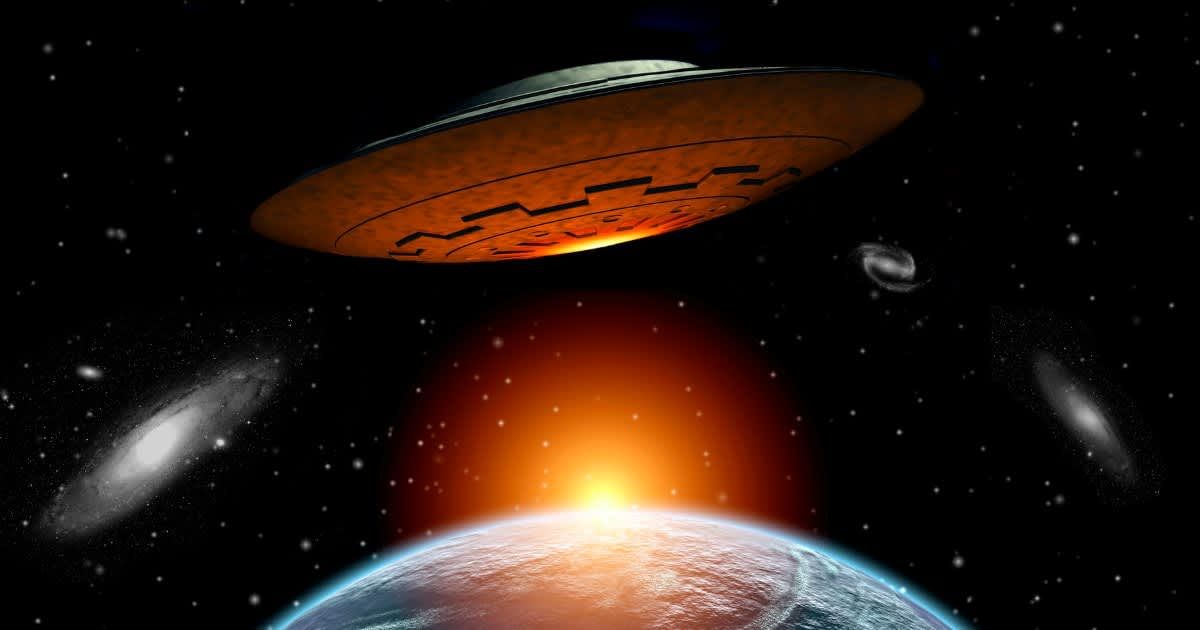
The US government has recently made public hundreds of previously classified UAP (Unidentified Anomalous Phenomena) files covering incidents from the 1940s to the present day. The files have given new momentum to a belief that says aliens are actively visiting Earth. But scientists studying astrobiology and the physics of space travel are not convinced. While the universe is almost certainly large enough to contain other forms of life, getting here is an entirely different problem. According to renowned astrobiologist Nathalie Cabrol, the search for alien life requires us to “expect the unexpected,” a mindset that encourages scientists to consider radically different possibilities for what alien life might be and where it might exist. That doesn't mean visitors are showing up in our skies. In fact, according to researchers at UNSW Sydney, there are three reasons why that's probably not the case.
Getting here would take thousands of years, even at the best speed
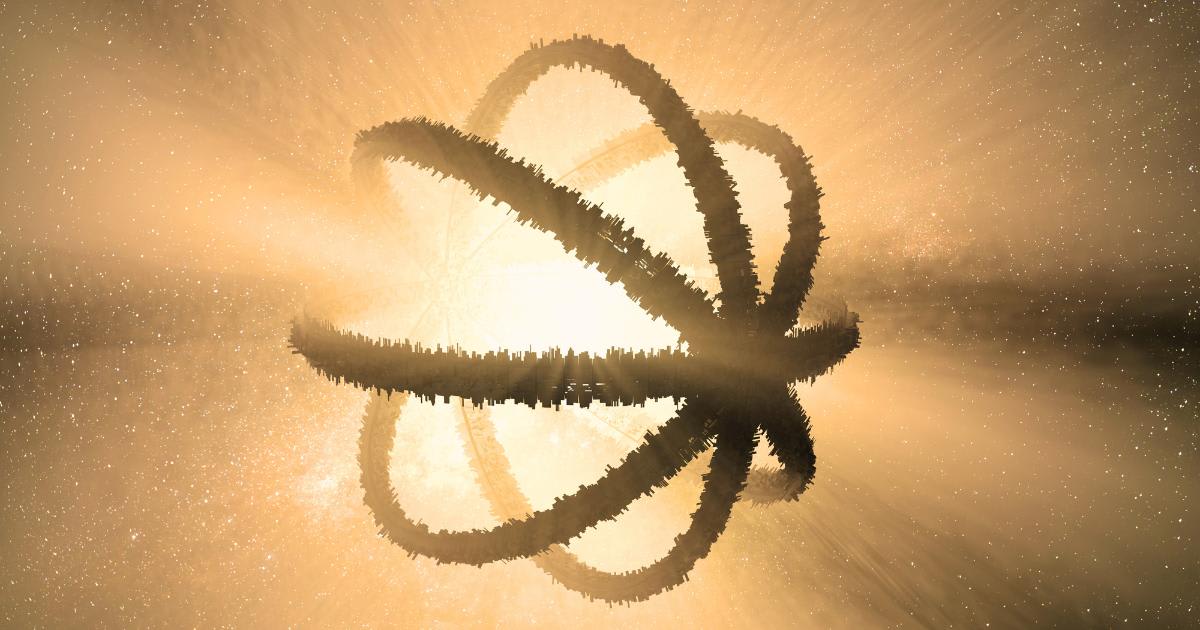
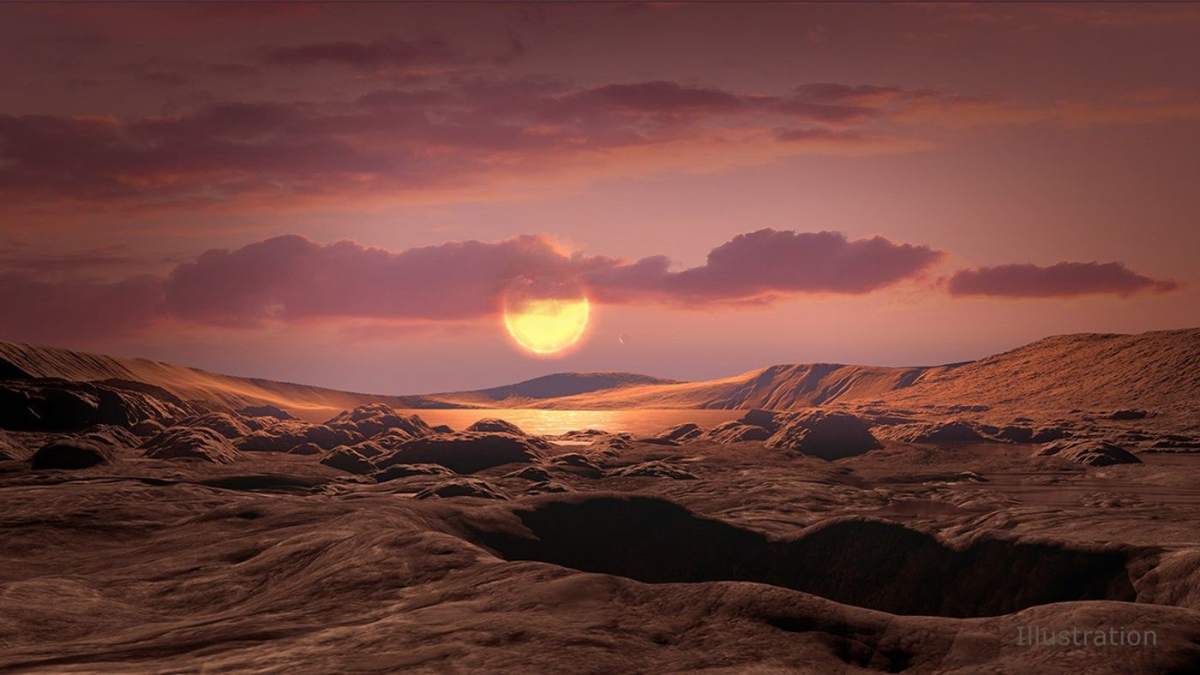
The distances between stars are staggering. The closest star beyond our Sun, Proxima Centauri, is about 40 trillion kilometers away. If we take the Parker Solar Probe, the fastest spacecraft ever launched (with a speed of roughly 191 kilometers per second), a trip to our closest star would take roughly 6,650 years. On the other hand, Kepler-452b, often considered one of the most physically similar Earth analogs, is situated approximately 1,400 light-years away. This distance is so enormous that reaching it is impossible with any technology consistent with the laws of physics as we know them.
But if an alien civilization managed to build a spacecraft capable of traveling near light speed, the universe would still be a difficult place to cross. And if they managed to do that, they would still have to face time dilation. Albert Einstein, through his equations, proved that time doesn't pass at the same rate everywhere and NASA astronaut Scott Kelly experienced this first-hand when he returned from a year aboard the International Space Station (ISS). He came back a few milliseconds younger than his identical twin. For aliens traveling from a distant star system at near-light speed, this effect would be far more pronounced: by the time they returned home, their planet could be centuries or even millennia older than when they left it, depending on how far they travel. They would then become “time exiles,” strangers in their own world.
The energy needed to get here is physically impossible
The energy needed for interstellar travel presents an issue. At the speed of light, the kinetic energy required to move a spacecraft with mass would become infinite. Physicist Miguel Alcubierre has argued that space travel that includes speeds faster than light is theoretically possible. But this comes with its own set of energy demands that are, by current scientific understanding, unachievable. On the other hand, space is filled with hydrogen atoms that spread thinly across the vacuum. While traveling at such a high speed, they strike the ship like intense, high-energy particle radiation. That heat would eat through a spacecraft's hull over time and eventually tear it apart completely.

There's also a simpler question: why would they bother? Any civilization that could actually pull off interstellar travel would, by definition, be extraordinarily advanced. Stephen Hawking, whose views were discussed in a separate study, warned that broadcasting Earth's location into deep space could have disastrous consequences. But for species that are far more advanced than humankind, they would have no reason to make the long journey to travel to Earth. The reason for this is that anything Earth has to offer, they would already be able to produce on their own planet.
Earth's atmosphere may be hostile to alien biology
Even if an alien civilization somehow cleared the above-mentioned hurdles, they'd still have to deal with Earth’s environment. The oxygen we breathe is highly reactive. For life that didn't evolve breathing it, exposure could be deeply corrosive. Researchers point out that any visitors would almost certainly need some kind of protective equipment just to step outside. This is similar to how astronauts use protective spacesuits during deep space missions. Yet there are no reports of an alien encounter that has ever described beings wearing anything of the sort.

The possibility of life beyond our planet still remains entirely open. There are more than 6,200 confirmed exoplanets across more than 4,700 star systems, though none of them mirror Earth. Plus, the Milky Way has over 100 billion stars. Most are thought to have at least one planet orbiting them. Closer to home, Mars, Europa (a moon of Jupiter), and Enceladus and Titan (moons of Saturn) are all considered to have potential microbial life, past or present. While no evidence has yet been found, a 1959 paper in the journal Nature noted that if we stop looking for alien life entirely, the chance drops to zero.
More on Starlust:
JWST spots the edge of cosmic dawn and the universe's first stars may lie just beyond
Summer Solstice 2026: All about the longest day of the year and the science behind it