Hubble Telescope reveals ultra-diffuse galaxy F8D1 shut down star formation nearly two billion years ago
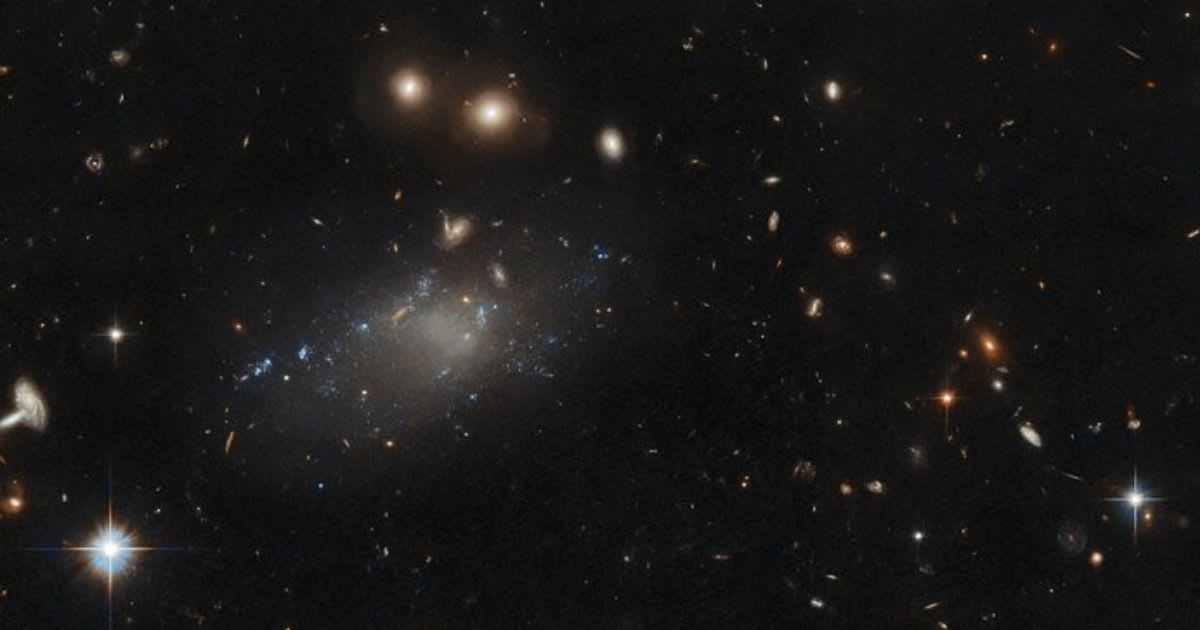
New observations from the Hubble Space Telescope are providing unprecedented detail into the star formation history of F8D1, a nearby ultra-diffuse galaxy (UDG). The findings, released July 17 on the arXiv preprint server, offer critical insights into these enigmatic, low-density stellar systems, as reported on Phys.org. The study revealed that F8D1 shut down star formation nearly two billion years ago among other findings.
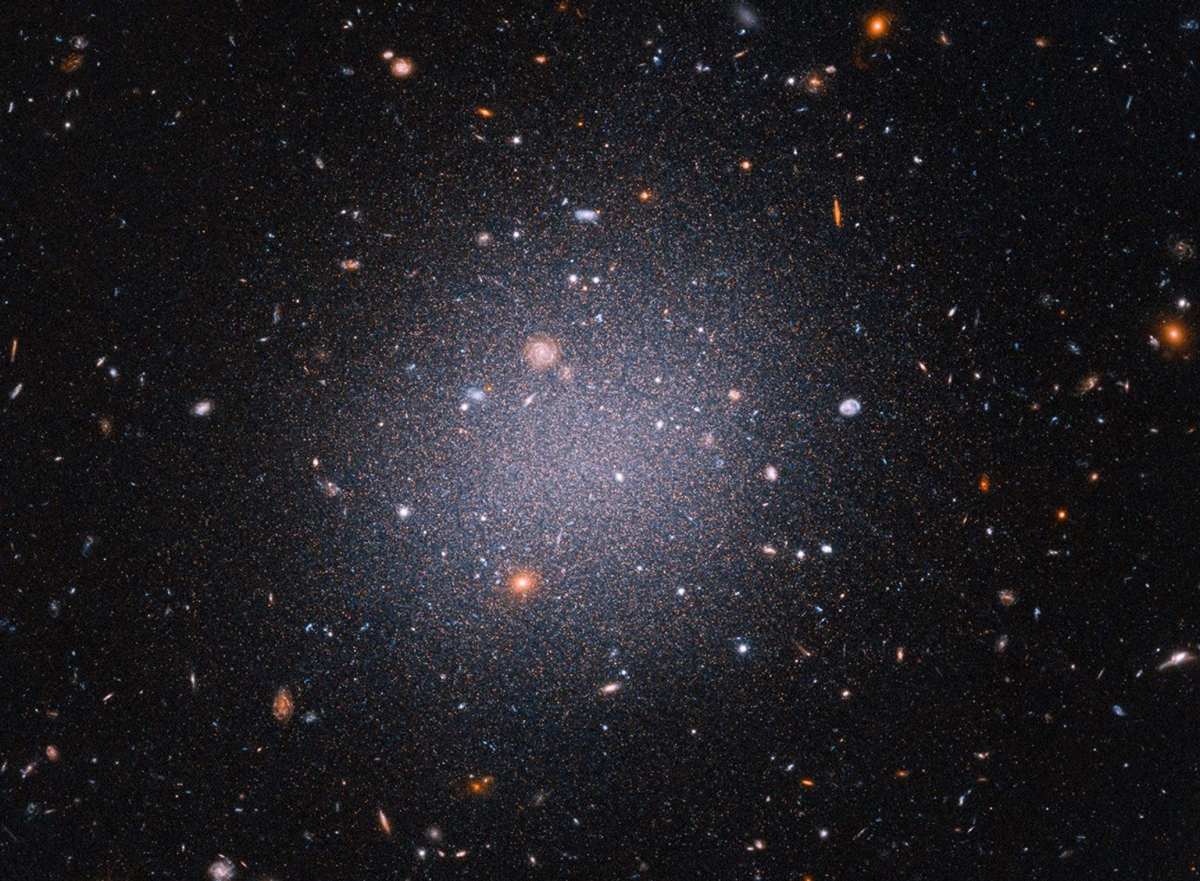
UDGs are characterized by their remarkably low luminosities, sparse stellar populations, and minimal ongoing star formation when compared to typical galaxies of similar size, as mentioned on Harvard & Smithsonian. Often observed within galaxy clusters, UDGs exhibit a diverse array of forms, ranging from the smooth, round appearance of dwarf elliptical galaxies to distorted shapes indicative of past tidal disruptions. Their total masses can reach an astonishing one hundred billion solar masses. Beyond their intrinsic appeal, these diffuse structures hold significant value for astronomers. Their unique characteristics are crucial for models designed to unravel the mysteries of dark matter halos, invisible envelopes of dark matter that are thought to primarily bind these galaxies together and constitute the bulk of their mass.
A team of astronomers, led by Adam Smercina of the Space Telescope Science Institute in Baltimore, utilized Hubble's Wide Field Camera 3 (WFC3) and Advanced Camera for Surveys (ACS) to scrutinize F8D1. Discovered in 1998 as a satellite of the M81 galaxy group, F8D1 is considered a prime example of a UDG, exhibiting properties distinct from other galaxy types, as per Phys.org.
"We have used new HST observations to infer the star formation history of the nearby UDG, F8D1, over the past six billion years," the researchers stated in their paper, emphasizing the ability to resolve individual stars in both the galaxy's central and outer regions. This detailed examination of F8D1's main body and stellar stream marks one of the most comprehensive UDG case studies to date. The Hubble observations precisely delineated three discrete periods of star formation within F8D1, painting a clearer picture of its stellar evolution. The earliest and most prolific phase occurred six billion years ago, a foundational event during which approximately 80% of the galaxy's stars came into existence. This initial burst established the vast majority of F8D1's stellar population.
Following this, a second significant burst of star formation took place roughly 2 to 2.5 billion years ago, contributing a notable 11% of stars in the central regions and a more substantial 39% in the galaxy's outer fields. More recently, around 500 million years ago, a smaller yet crucial burst occurred, marking the formation of F8D1's nuclear star cluster and adding a final, albeit minor, percentage to the galaxy's overall stellar complement.
Intriguingly, the data also indicate a global cessation of star formation in F8D1 less than two billion years ago, encompassing both its core and an extensive tidal stream stretching 42,400 light-years. This suggests the entire galaxy was actively forming stars just two billion years ago. The study estimates F8D1's progenitor mass at 133 million solar masses, with a significant 25-40% of its stellar mass currently dispersed within its vast tidal stream. The presence of substantial late-stage star formation, coupled with a typical globular cluster population, offers vital clues regarding F8D1's origins. These findings challenge the "failed galaxy" hypothesis, which posits that some UDGs are stellar remnants from early, violent star-forming episodes that depleted their gas reservoirs prematurely.