Two massive gas clouds collided head-on in Milky Way—it then triggered active star formation
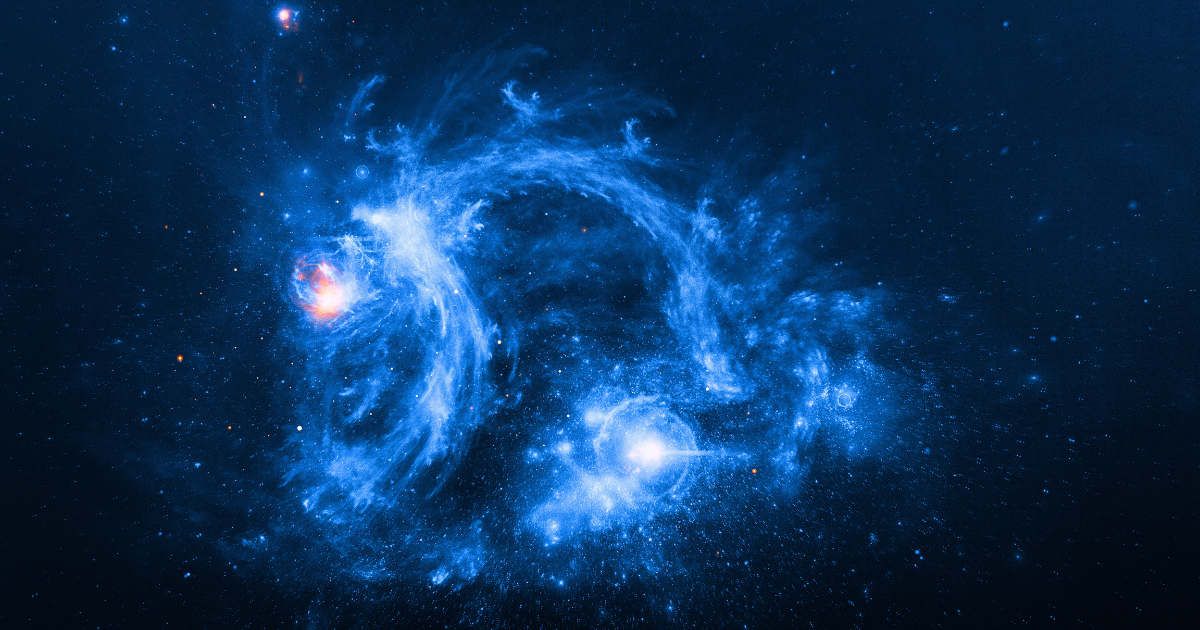
A recent study has provided new evidence that a violent collision between cosmic gas clouds can catalyze the birth of new stars. Researchers, led by Ph.D. student Dilda Berdikhan of Xinjiang Astronomical Observatory (XAO), have discovered that a cloud-to-cloud collision is behind the active star formation observed in the molecular cloud designated G013.313, according to the Chinese Academy of Sciences.
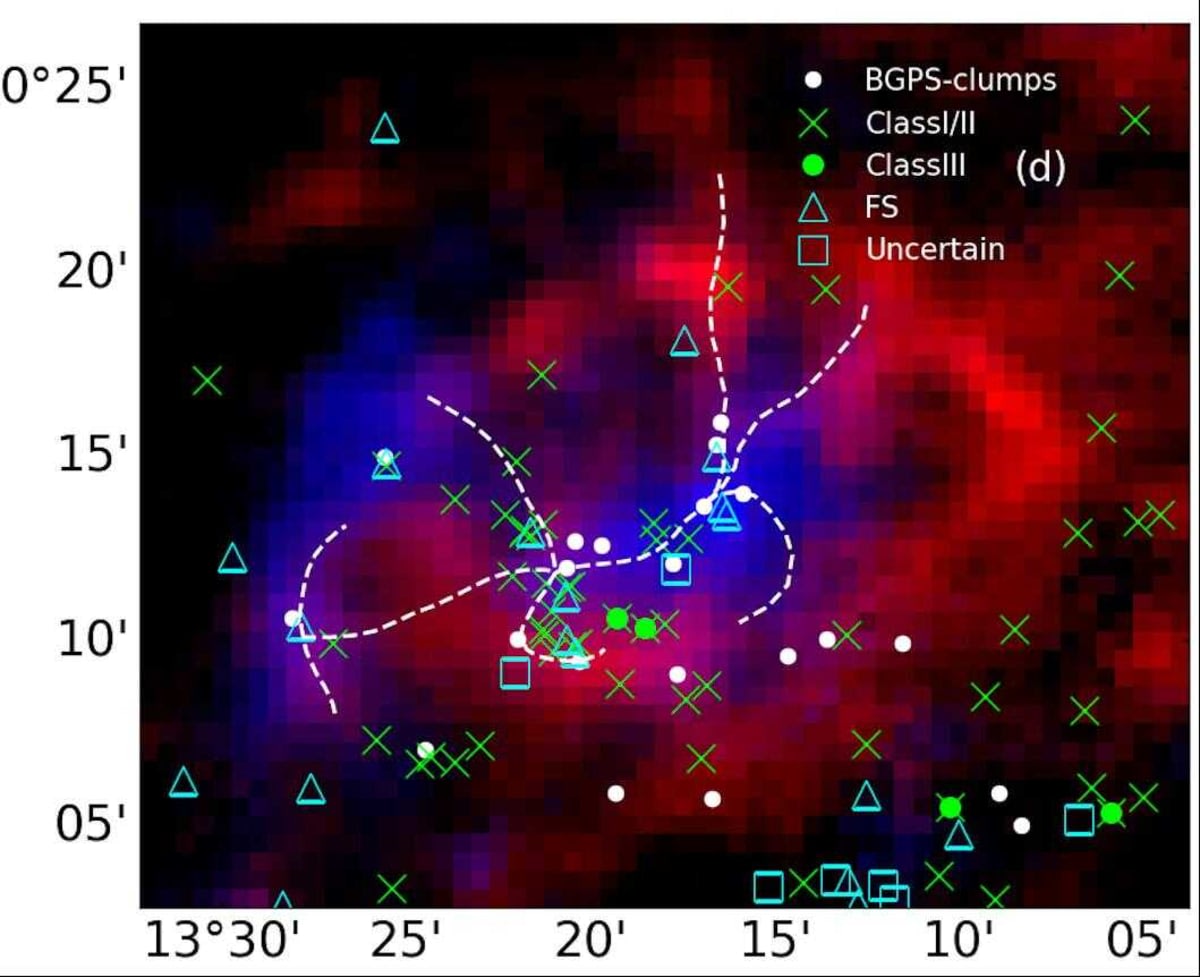
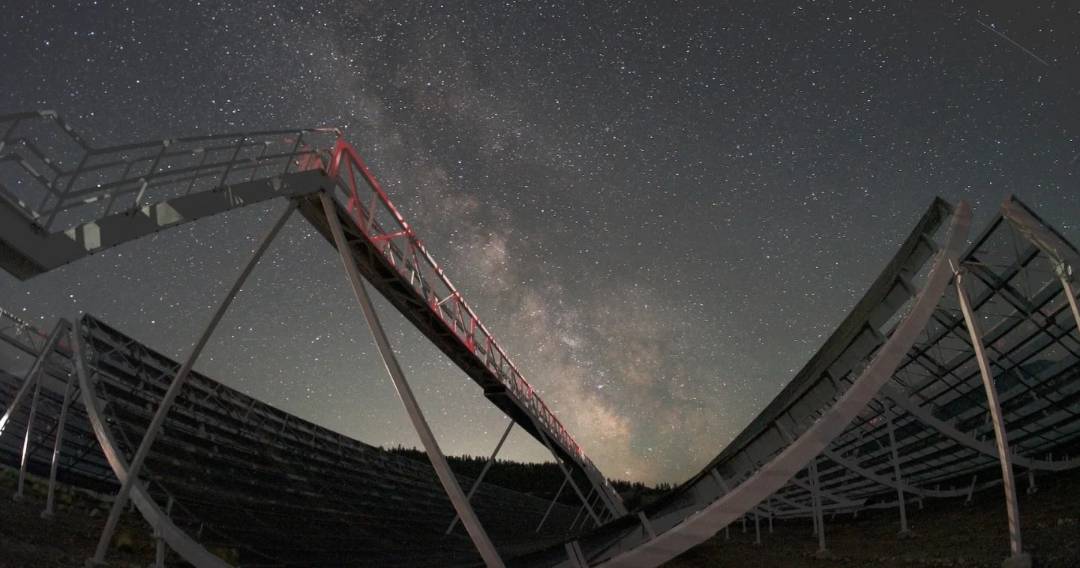
The findings, published in the journal Astronomy & Astrophysics, were based on data from the NanShan 26-m Radio telescope and the Delingha 13.7-m millimeter-wavelength telescope. The team's analysis revealed the dynamic conditions within the G013.313 region, offering crucial observational support for the theory that these celestial crashes are a major trigger for massive star formation.
Star formation is a fundamental process in the evolution of galaxies, but the specific mechanisms that trigger it are still being unraveled. While collisions between molecular clouds have long been considered a plausible explanation for the creation of massive stars, direct evidence has been limited. The research focused on the G013.313 cloud, located on the Galactic plane, which exhibits a highly complex molecular environment. Using velocity data, the scientists identified two distinct clouds, dubbed G013.313-blue and G013.313-red, moving at different speeds. Their spatial arrangement showed complementary "U-shaped" and "S-shaped" structures, along with "bridge" features in velocity space, all of which are classic signs of a recent collision.
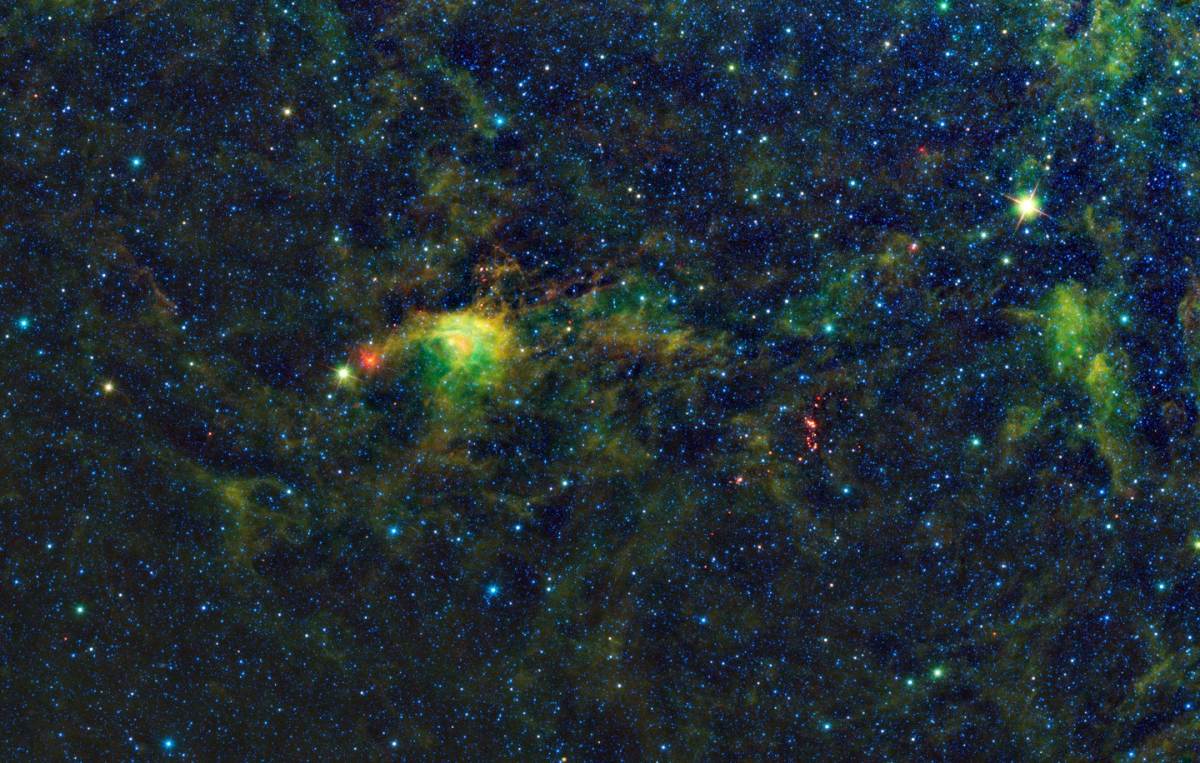
The team estimated the crash occurred between 0.35 and 1.03 million years ago, a timeline that aligns with the ages of young stars in the area, strongly suggesting the collision was the trigger. The collision also compresses gas into a hub-filament system, a dense network where multiple filamentary structures converge. This configuration provides the ideal high-density conditions needed for massive stars to form. The presence of 21 dense clumps and 94 young stellar objects further confirms that the G013.313 region is a vibrant stellar nursery. This study not only strengthens the case for cloud-cloud collisions as a star-formation mechanism but also highlights the critical role of hub-filament systems in the process. The findings offer valuable new insights into how massive stars and star clusters are born within our galaxy.
Extending their reach to the distant fringes of our galaxy, a separate team of XAO is exploring how stars are born in the Milky Way's outskirts, as per CAOS. These regions, with their low-density gas and reduced metal content, provide a unique "laboratory" for studying star formation under conditions very different from the solar neighbourhood. However, due to their distance and faintness, these outer-edge clouds have historically been difficult to observe, leaving their properties a mystery.
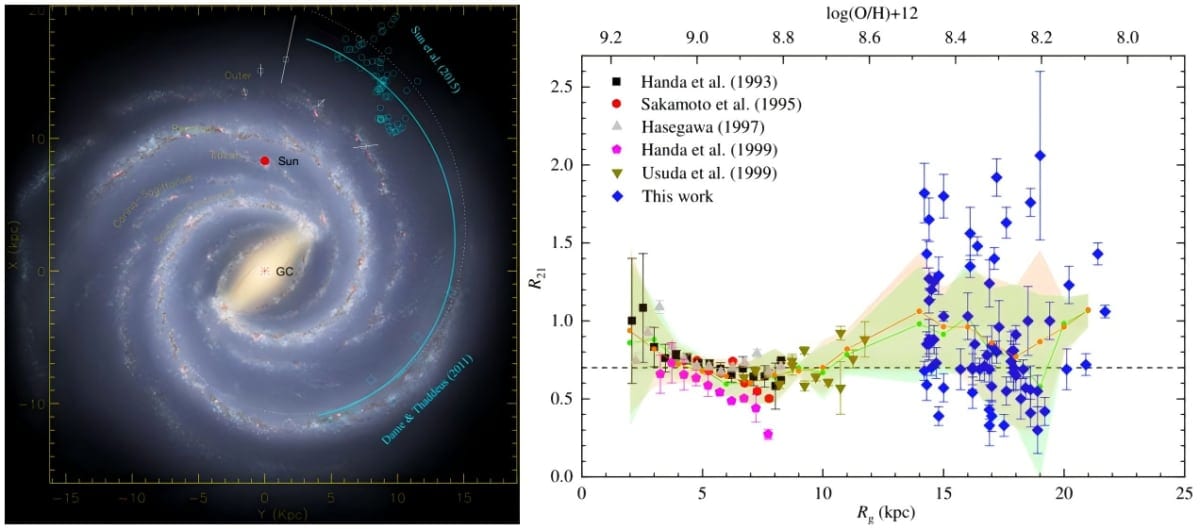
The researchers used the IRAM 30-meter telescope in Spain, combined with data from the "Milky Way Imaging Scroll Painting" project, to analyze a large sample of these distant molecular clouds. Their findings, published in Astronomy and Astrophysics, revealed a key difference: the CO (2-1)/(1-0) line ratio (R21) in these outer-edge clouds is significantly higher than in the inner galaxy. This is a crucial observation, as it aligns with what is seen in other galaxies with low metal content. The study also found a strong correlation between these high R21 regions and areas with dense gas and active star formation.