NASA’s TESS captures two Earth-like exoplanets orbiting an orange dwarf
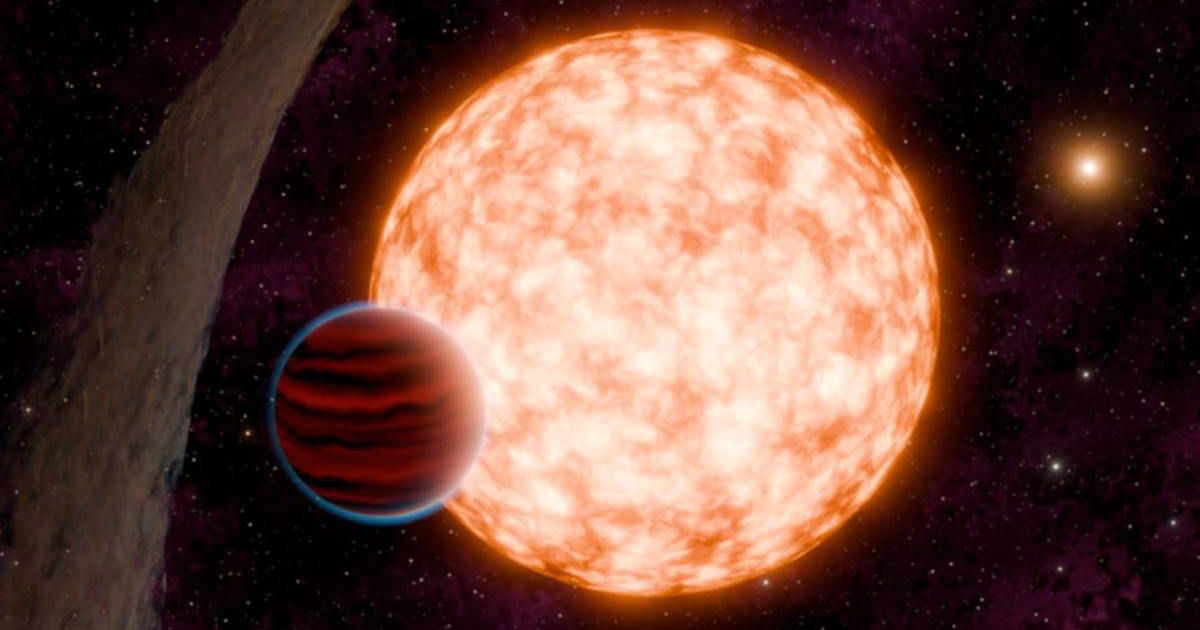
NASA's Transiting Exoplanet Survey Satellite (TESS) found two exoplanets in orbit around a K-type star, known as TOI-2322. In its mission of studying 200,000 of the most luminous stars near the sun, TESS has already identified 7,600 exoplanets since its launch in 2018. The newfound star's light curve was observed to identify transit signals, confirming the detection of exoplanets. However, variations caused by stellar surfaces are known to mimic planets and hide planetary signals, as published on the arXiv pre-print. This detection is being studied to confirm and categorize the exoplanets that were discovered by the satellite’s mission.
![TESS target pixel file for TOI-2322 for sector 27. The target star is labeled as 1 and marked by a white cross. [Credit: arXiv (2025). DOI: 10.48550/arxiv.2508.18094]](https://de40cj7fpezr7.cloudfront.net/6d286737-26aa-4ab0-8de1-d3017aa048c1.jpg)
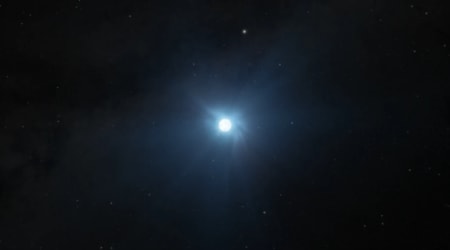
TOI-2322, also known as TIC 300812741, was discovered at a distance of about 195 light years away from Earth, as per Phys Org. TESS observed the star many times between 2018 and 2023, and has classified it as a star of spectral type K4. Once the transit signals confirmed exoplanets, the data was further analyzed by a team of astronomers led by Melissa Hobson of the University of Geneva in Switzerland. Together, they confirmed the signal’s planetary nature. "We confirm and characterize these planets using radial velocities and activity indicators from the Echelle SPectrograph for Rocky Exoplanets and Stable Spectroscopic Observations (ESPRESSO)," the researchers wrote in the paper.

The exoplanet closer to TOI-2322 is dubbed TOI-2322 b, and is the size of Earth. The mass of this exoplanet is estimated to be less than 2.03 Earth masses. Both exoplanets have slow periods of orbit, with TOI-2322 b orbiting the star every 11.3 days, at a distance of about 0.09 AU. The equilibrium temperature of the exoplanet is estimated to be 603.1 K. The outer planet is slightly larger in comparison, with a radius of around 1.87 Earth radii, and is designated as TOI-2322 c. This planet, at 0.13 AU from the host star, is around 18 times bigger than Earth.
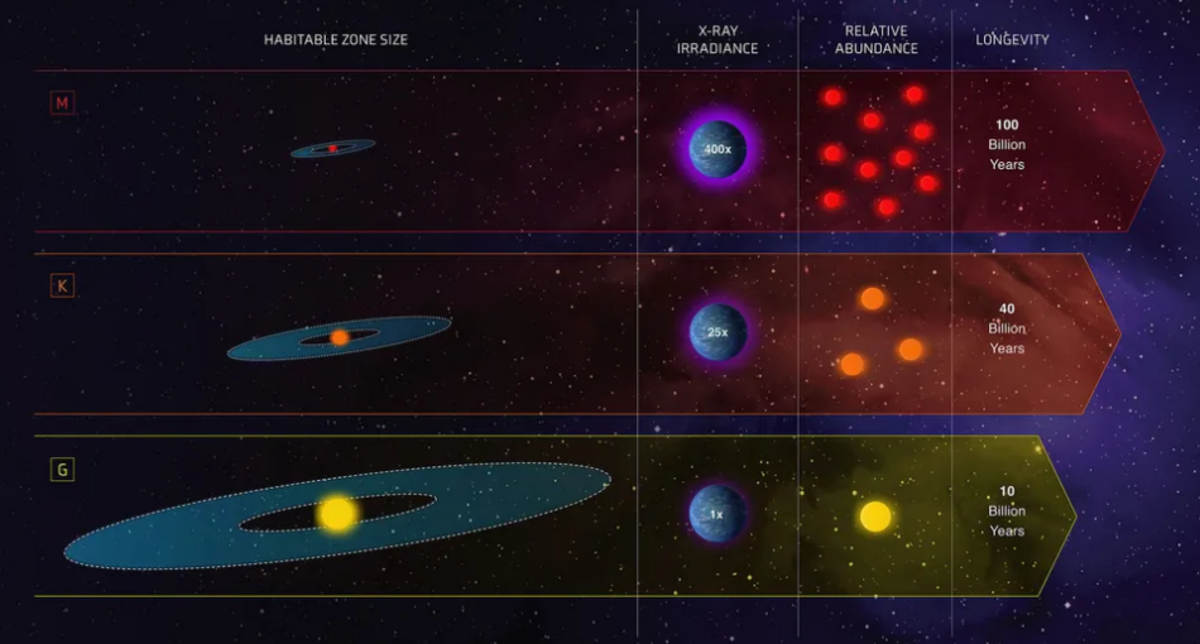
The orbital period of TOI-2322 c around the star 20.2 days, and it has an equilibrium temperature of almost 500 K. The characteristic features of TOI-2322 b and TOI-2322 c indicate that they are rocky short-period exoplanets, with the latter boasting an internal structure that is similar to that of Earth. This makes the exoplanet one of the biggest planets to have an Earth-like composition. The host star TOI-2322 is around 30% smaller, with a temperature of 4,664 K. The metallicity of the star is at a level of -0.12 dex, and it is estimated to be 3.9 billion years old.
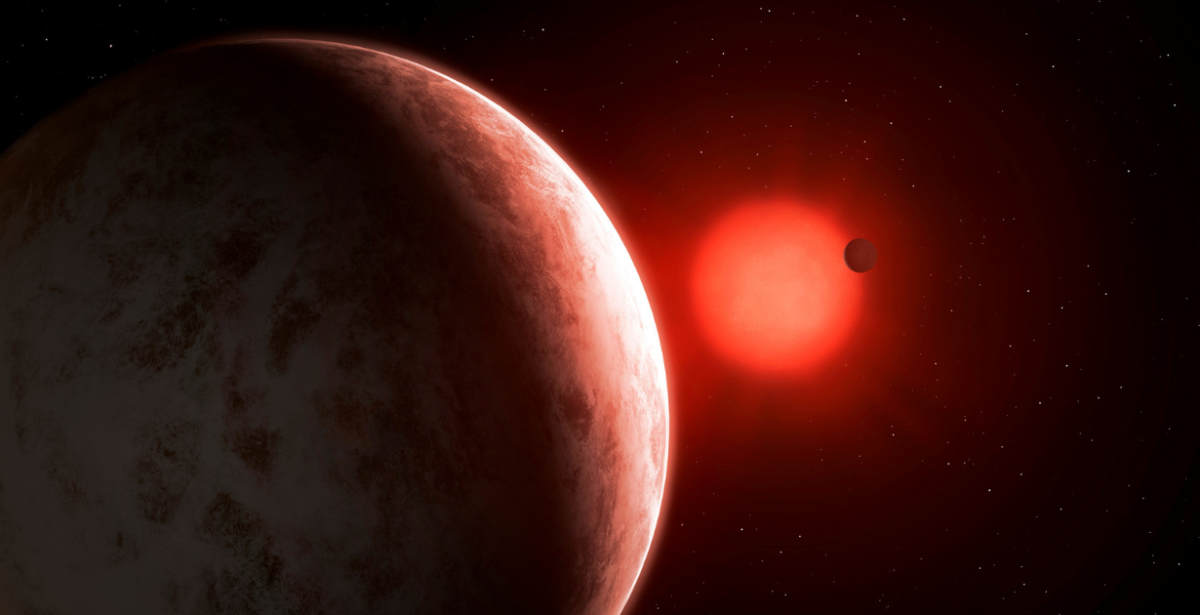
The TOI-2322 system, hence, becomes an extraordinary testing ground. These characteristics help us test "methods of disentangling" various signals in radial velocity measurements. The TESS mission is a step forward in the study of exoplanets and understanding the various worlds that exist in space. Exoplanets are of great interest to astronomers, as they add to our search for more habitable worlds across the galaxy. Humans were preparing to set out into space, hoping to colonize possible grounds. These exoplanets help recognize similar processes across systems and narrow down possible targets.
More on Starlust
NASA Chandra discovers 'baby' exoplanet shrinking under attack from its host star
Scientists stunned after discovering a massive exoplanet hidden in the dusty disc of a 'lonely' star
Astronomers unveil exceptionally powerful high-resolution spectrograph to find red dwarf planets