Astronomers have finally solved the mystery of how galaxy-killing winds formed in the early universe
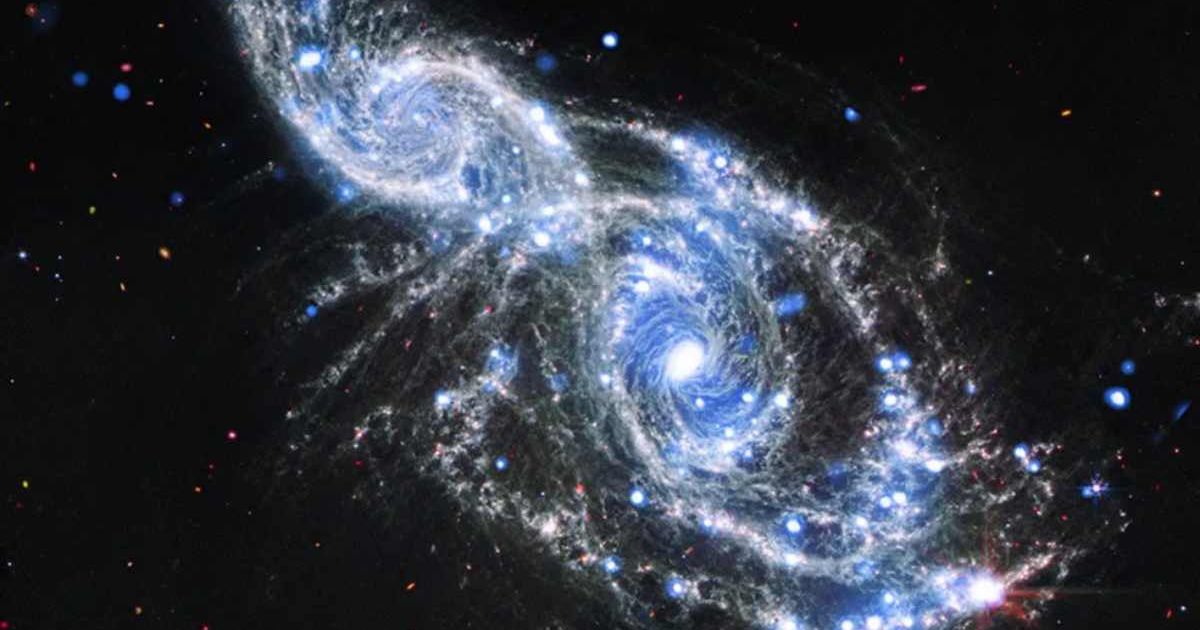
Massive, "dead" galaxies floating around in the early universe have long puzzled astronomers. Now, a research team at Swinburne University of Technology in Melbourne has helped solve this riddle. They have discovered a “galaxy-killing wind” that strips a galaxy of its star-making fuel, pushing it to the brink of death. The study, published in the Monthly Notices of the Royal Astronomical Society: Letters, reveals that such catastrophic winds are born when galaxies collide with each other. "Dense regions of the universe are like very active cities," said lead author Dr. Rebecca Davies, who carried out the study with Associate Professor Deanne Fisher, in a statement.
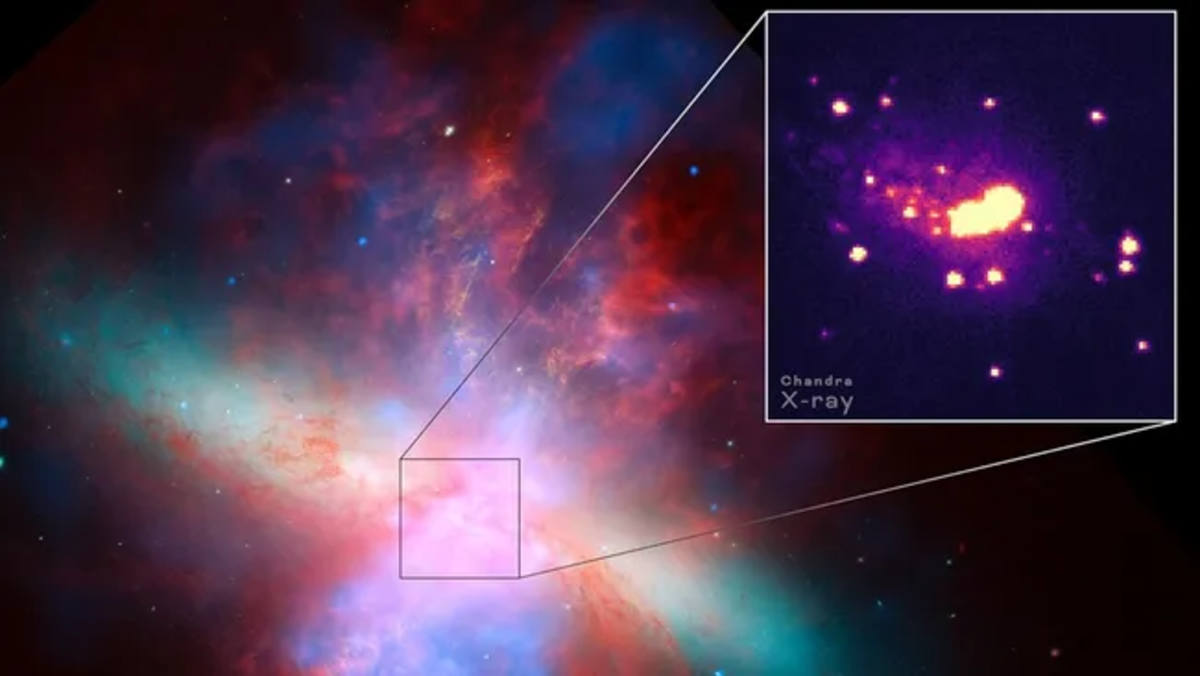
“Galaxies collide and undergo frenzied bursts of star formation. But when the biggest stars burn out, they explode as supernovae, launching powerful winds that blast away the very gas galaxies need to keep forming stars,” Dr. Davies explained. This mechanism is elegant and simpler than other explanations proposed since 2022, when the James Webb Space Telescope (JWST) gave astronomers unprecedented snapshots of the early universe. Among those older theories, one proposed that dark energy might have been much stronger in the early universe than standard models predict, influencing galaxies to grow and die faster.
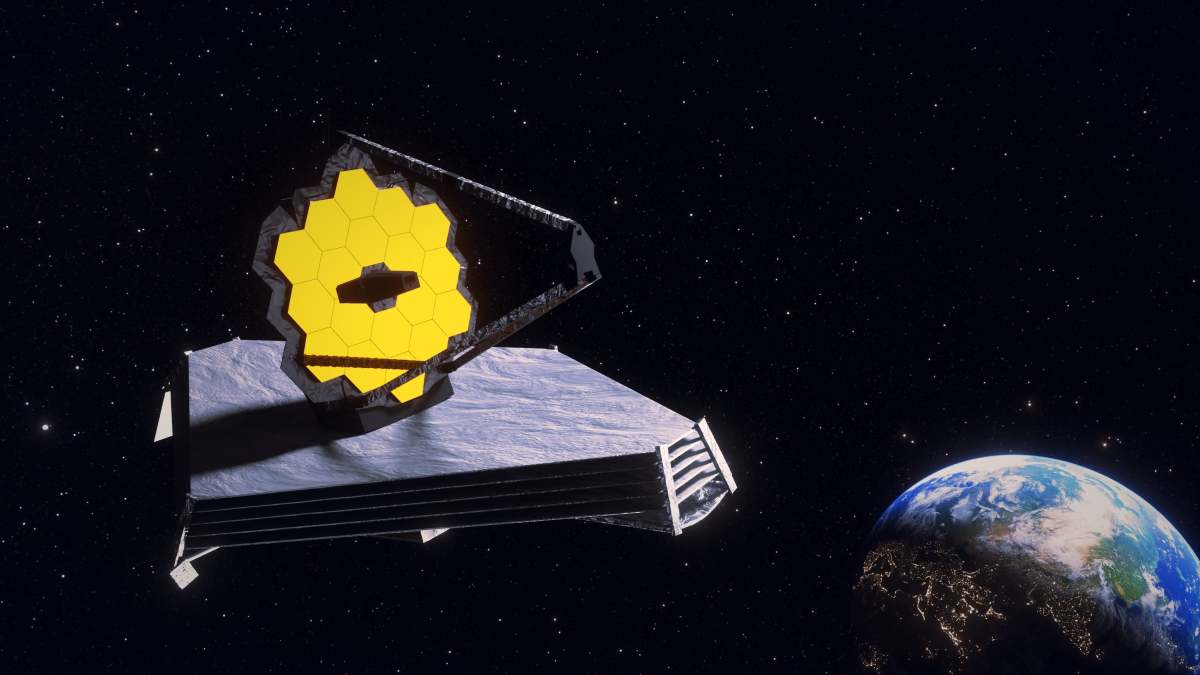
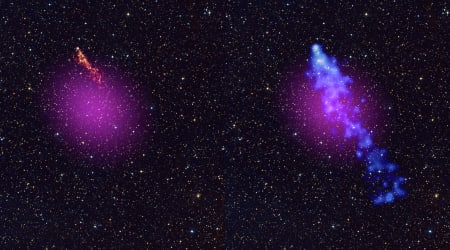
Astronomers have long suspected that galactic winds might play a central role in the deaths of massive galaxies, but they lacked the observational evidence to prove it. Things didn’t change until the team combined the infrared power of JWST and the Atacama Large Millimeter/submillimeter Array (ALMA) radio telescope to image a galaxy 1.1 billion years after the Big Bang (at a redshift of z = 5.3). When imaged, the galaxy was growing rapidly. The galaxy, called CRISTAL-02, is making stars twice as fast as other galaxies of similar size. Furthermore, they detected a huge plume of cold gas stretching far from the galaxy. This plume is almost as long as the entire galaxy itself, and it indicates that vital star-forming gas is being violently driven outward. "The galaxy has a powerful wind that is ejecting material twice as fast as the galaxy forms stars," Dr. Davies added. "If this rapid blowout continues, the galaxy could be dead in less than 50 million years, explaining the origin of the mysterious massive dead galaxies in the early universe."

CRISTAL-02 is not a solitary galaxy whose death is imminent, but rather a system of multiple galaxies currently in the final stages of a cosmic collision. Such collisions send massive amounts of gas toward the galaxy centers, accelerating star formation. The researchers think that this represents a universal life cycle: a frenzied burst of star formation is inevitably followed by strong winds that usher in a galaxy's death. "Almost half of early massive galaxies are interacting with other nearby galaxies, suggesting this isn't a quirk but a widespread cosmic phenomenon," Davies said. "If many early galaxies collide and experience rapid growth, then it may not be surprising that we see so many dead galaxies in the early universe. CRISTAL-02 offers a natural solution to the mystery of why these massive galaxies live fast and die young," she added.
More on Starlust:
Hubble captures images of M88 on its collision course with M87 in the Virgo Cluster
Peering into the cosmic dawn, MIT astronomers find earliest known flickering quasar