JWST spots the edge of cosmic dawn and the universe's first stars may lie just beyond
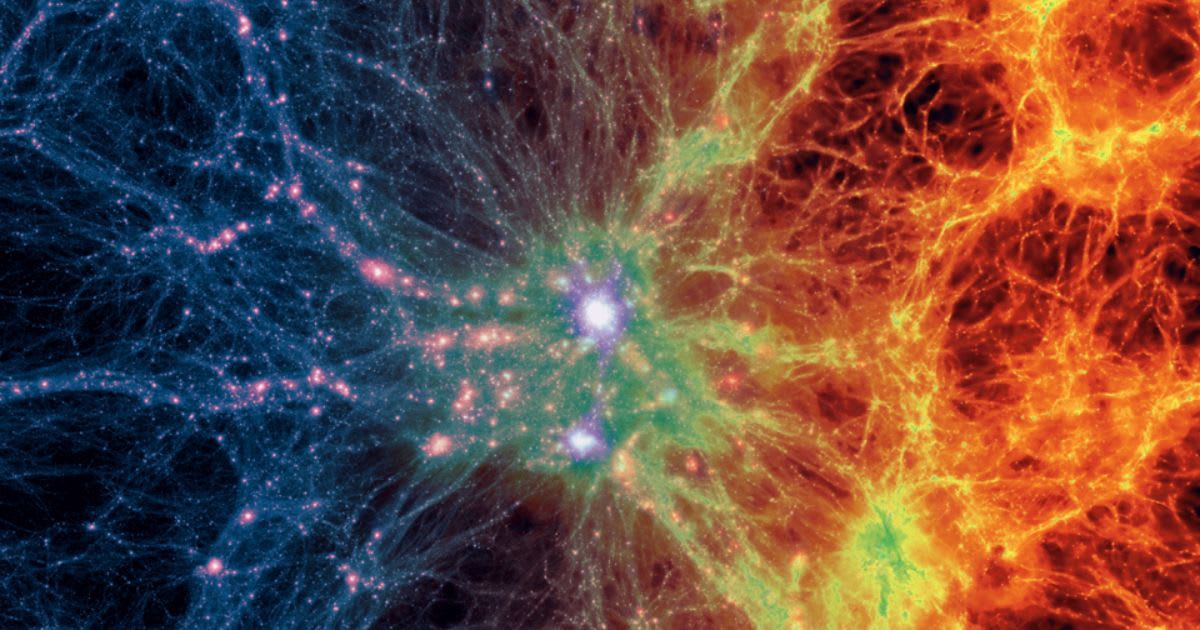
For millions of years after the Big Bang, the universe had no stars or galaxies, but expanded and cooled into vast, unlit clouds of hydrogen and helium gas. This cosmic 'dark age' ended only when the first stars and galaxies emerged, an event astronomers often refer to as the "cosmic dawn." However, when exactly this happened has remained difficult to pinpoint, and scientists have spent decades trying to solve this cosmological mystery. Now, a new study using NASA's James Webb Space Telescope (JWST)—published in the Monthly Notices of the Royal Astronomical Society—has pushed this search further than ever, with new data showing a sharp drop in galaxy formation 150 to 200 million years after the Big Bang, a boundary that scientists believe marks the break between the cosmic dark age and the cosmic dawn.
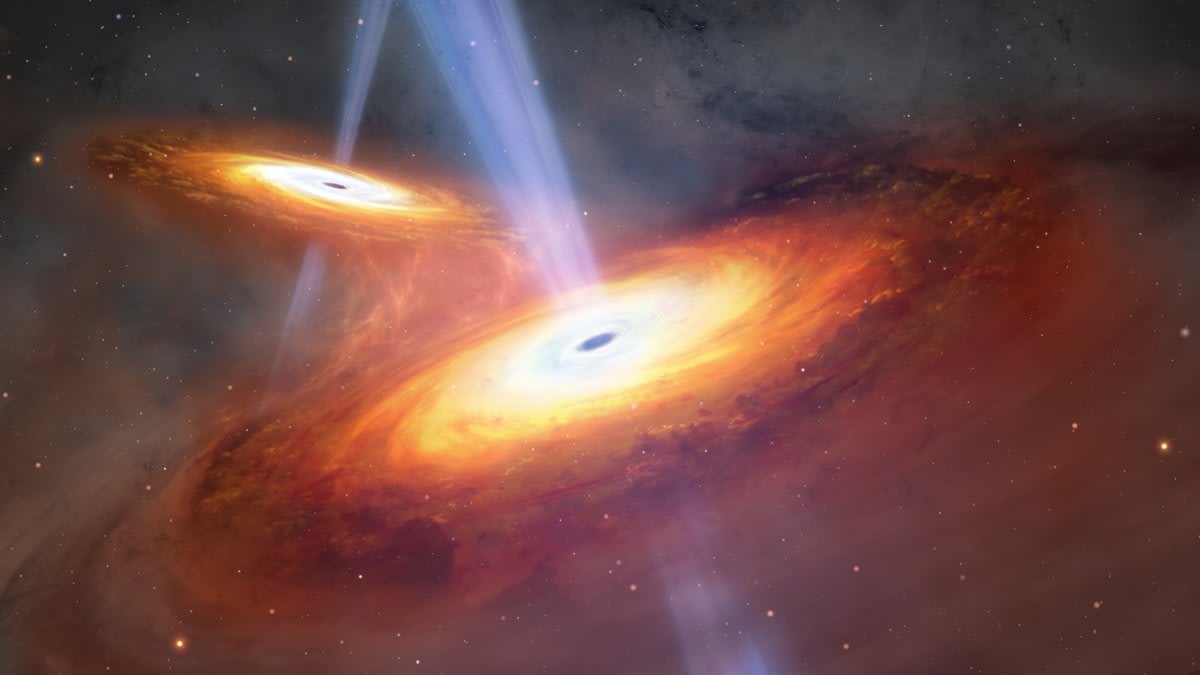
"We've pushed the frontiers back to when the universe was only 200 million years old and learned so much about how the universe evolves," Richard Ellis, a professor of astrophysics at University College London (UCL) and one of the authors of the study, said in an interview. "We're beginning to see the glimpse of what we call cosmic dawn, the moment when the very first galaxies emerge from darkness."
Why do the universe's very first stars matter to us today?
First, let’s understand what scientists are actually looking for. The very first stars (called Population III stars) were made entirely of hydrogen and helium, and had none of the heavier elements that exist today. Because they were incredibly massive, they lived short lives before dying in spectacular supernovae that scattered these newly forged heavier elements across space, thereby permanently polluting the pristine clouds of hydrogen and helium gas that existed before. This enriched gas circled the next generation of stars, which in turn may have formed planets with conditions suitable for life. "We are made of the material that is synthesized in stars; the chemistry that ultimately led to us began at cosmic dawn," Ellis added. "So, in some sense, it's almost as important as the Big Bang." Finding where those first stars formed answers a crucial cosmological question, and without it, scientists are missing the opening chapter of astrobiology.
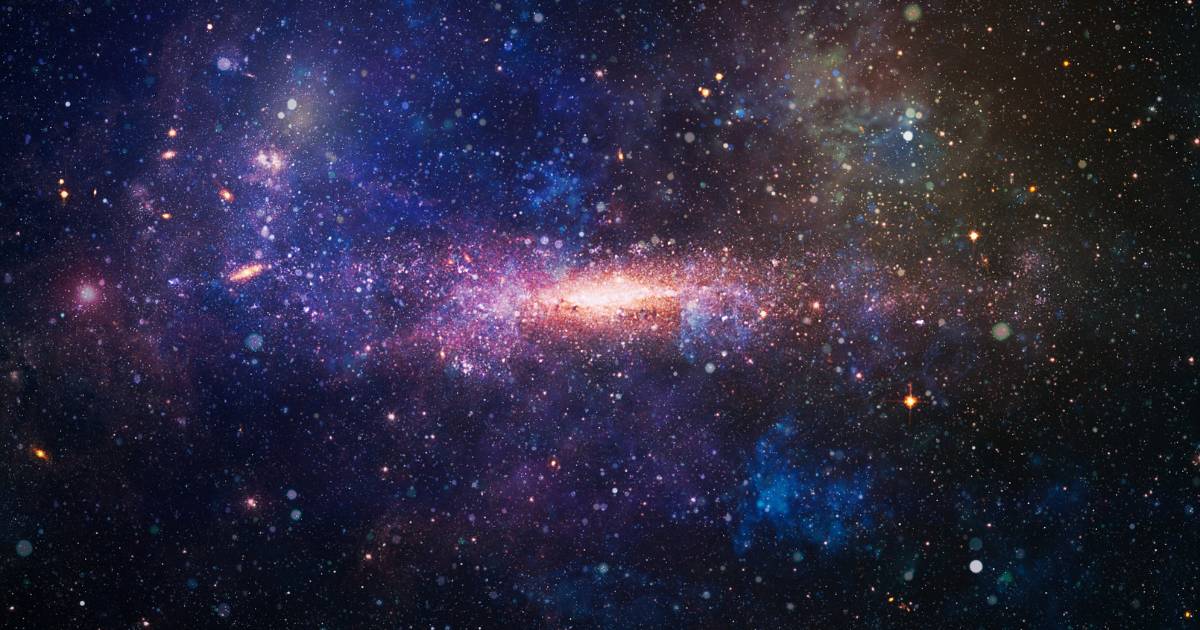
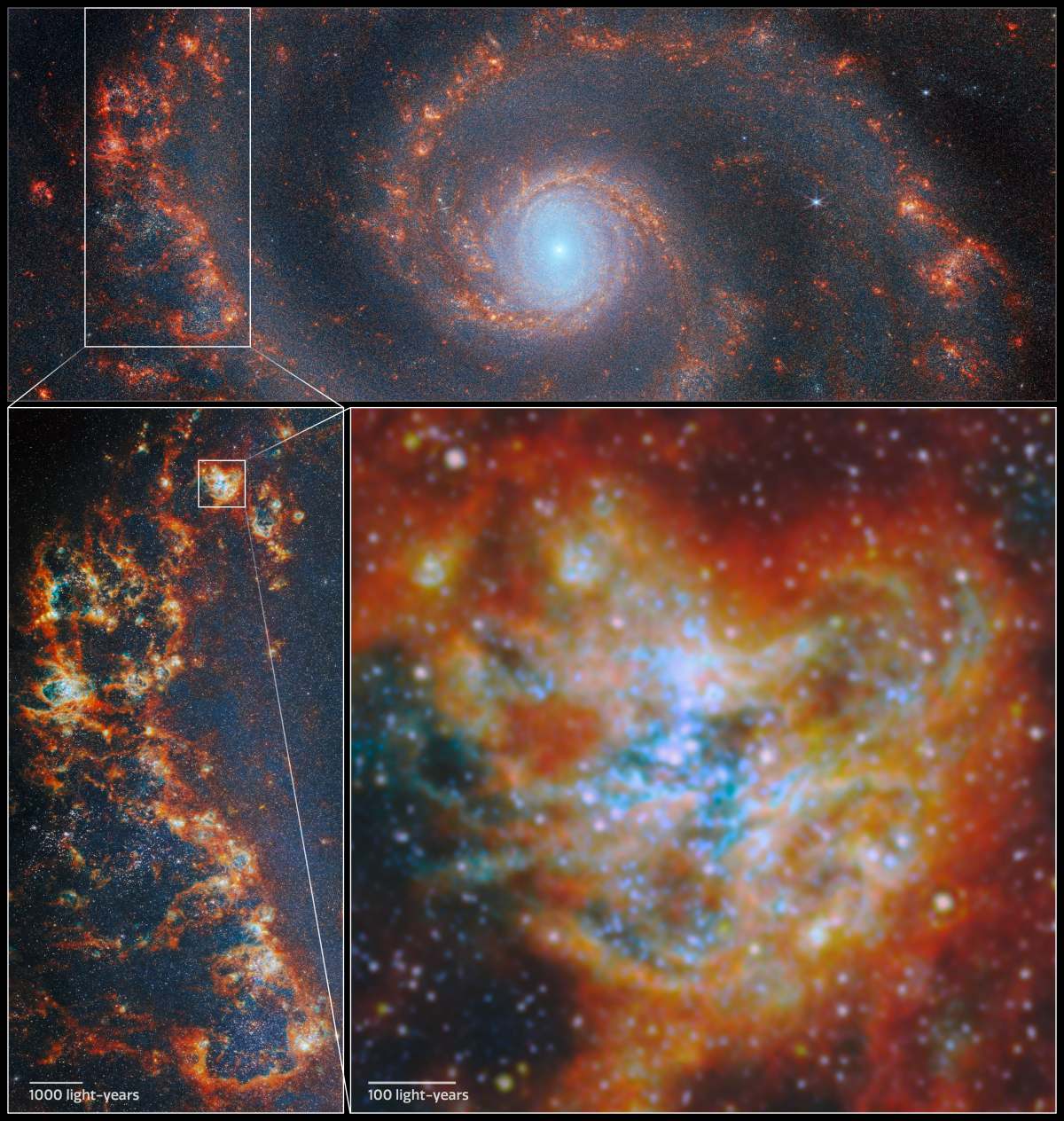
The JWST survey examined thousands of objects across a small patch of sky—about three times the apparent area of a full moon—using 150 narrow sight lines. The data revealed a steep drop in the number of galaxies forming once you go far enough back in cosmic history, specifically beyond 150 to 200 million years after the Big Bang. That drop-off marks the point beyond which astronomers believe the very first galaxies were only just beginning to form. The galaxies detected near this boundary are astonishingly small. Measuring only 60 to 70 light-years across, they are closer in scale to a globular cluster (a tightly packed ball of stars) than a full spiral galaxy like our Milky Way, which measures roughly 100,000 light-years in diameter.
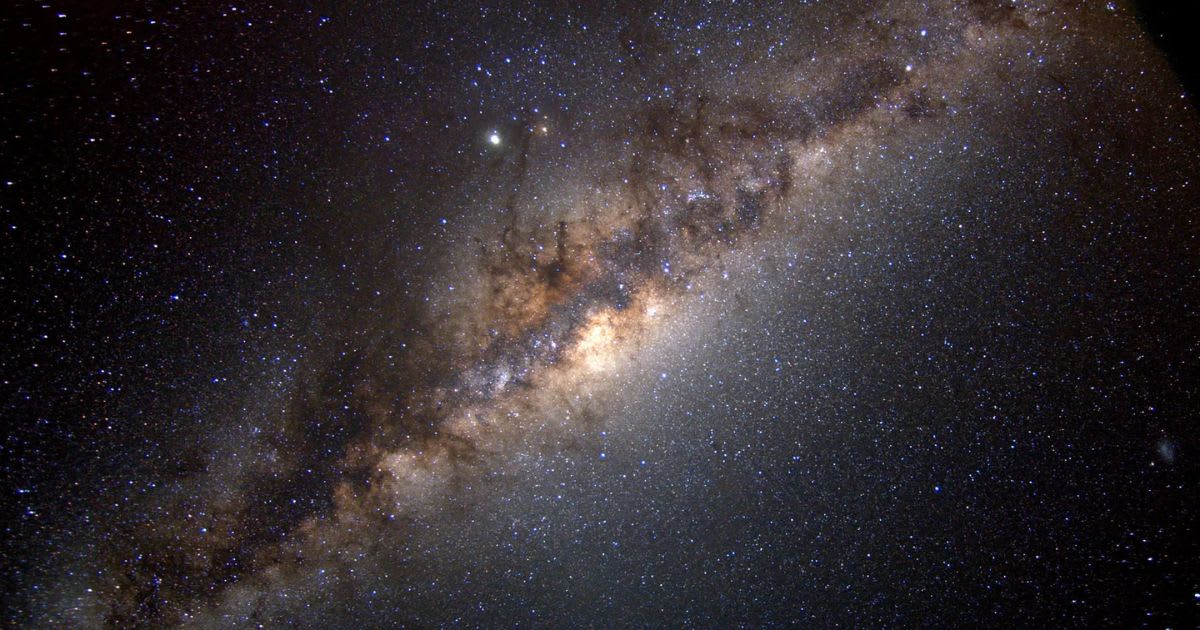
Yet, despite their miniature size, they are forming stars at a staggering rate. "Although they are physically very small, they're producing stars 20 times faster than the Milky Way. So, they're being seen at a remarkably youthful and energetic period in their activity," Ellis added. Astrophysicists believe that the neutral hydrogen gas clouds that filled the early universe first collapsed around concentrations of dark matter and only then grew hot enough to ignite nuclear burning, switching on the very first stars. For context, dark matter is invisible matter that doesn't interact with electromagnetism but exerts a powerful gravitational pull.
What scientists are looking for next?
Locating this boundary is a massive step, but confirming what lies beyond it requires new layers of evidence. Astronomers are currently pursuing three approaches. The first is finding galaxies that are completely free of heavy elements, which would signal they formed before any stars had exploded and polluted the surrounding gas. "This is very challenging as you must unequivocally demonstrate the absence of oxygen emissions," Ellis says. The second approach tracks how the ratio of elements like oxygen to hydrogen decreases the further back in time you look; Ellis calls this the most promising route, though it requires far more high-resolution spectral data than currently exists. The third traces the declining abundance of star-forming galaxies at increasing distances, looking for the point where that decline becomes a sheer drop.
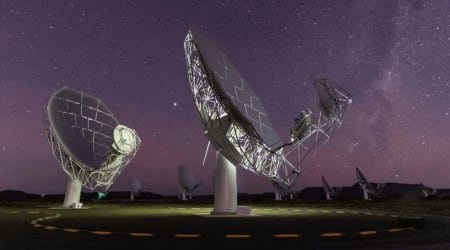
Beyond these efforts, the forthcoming Square Kilometre Array (SKA)—a massive radio telescope network being built in Western Australia—offers a revolutionary fourth route. When the first galaxies lit up, they heated the surrounding gas clouds, emitting ultraviolet radiation called the Lyman alpha line. This radiation fundamentally altered the spin temperature of the neutral hydrogen gas. It is this specific physical change that allows the SKA to detect a related hydrogen signal called the 21cm line, redshifted into the radio spectrum and observed against the Cosmic Microwave Background (CMB). By mapping this signal, the SKA will give astronomers a completely different radio-wavelength window to study the cosmic dawn.
More on Starlust:
Astronomers have finally solved the mystery of how galaxy-killing winds formed in the early universe
Hubble captures images of M88 on its collision course with M87 in the Virgo Cluster