Hear the sound of a dying star with the sonification of Crab Nebula's Pulsar heart
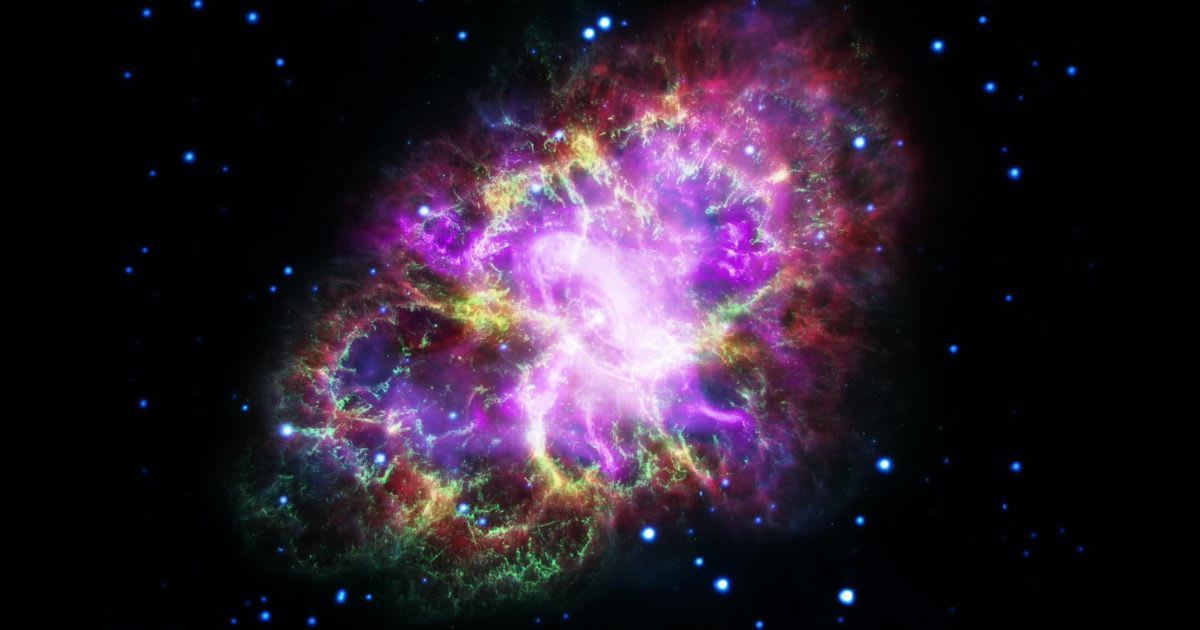
Astronomers have converted X-ray data from the Crab Nebula's rapidly spinning pulsar into an auditory experience, offering a unique "sonification" of the remnants of a titanic stellar explosion. This innovative project allows the public to "hear" the cosmic lighthouse-like rotation of a neutron star located 6,500 light-years away, according to NASA Chandra.
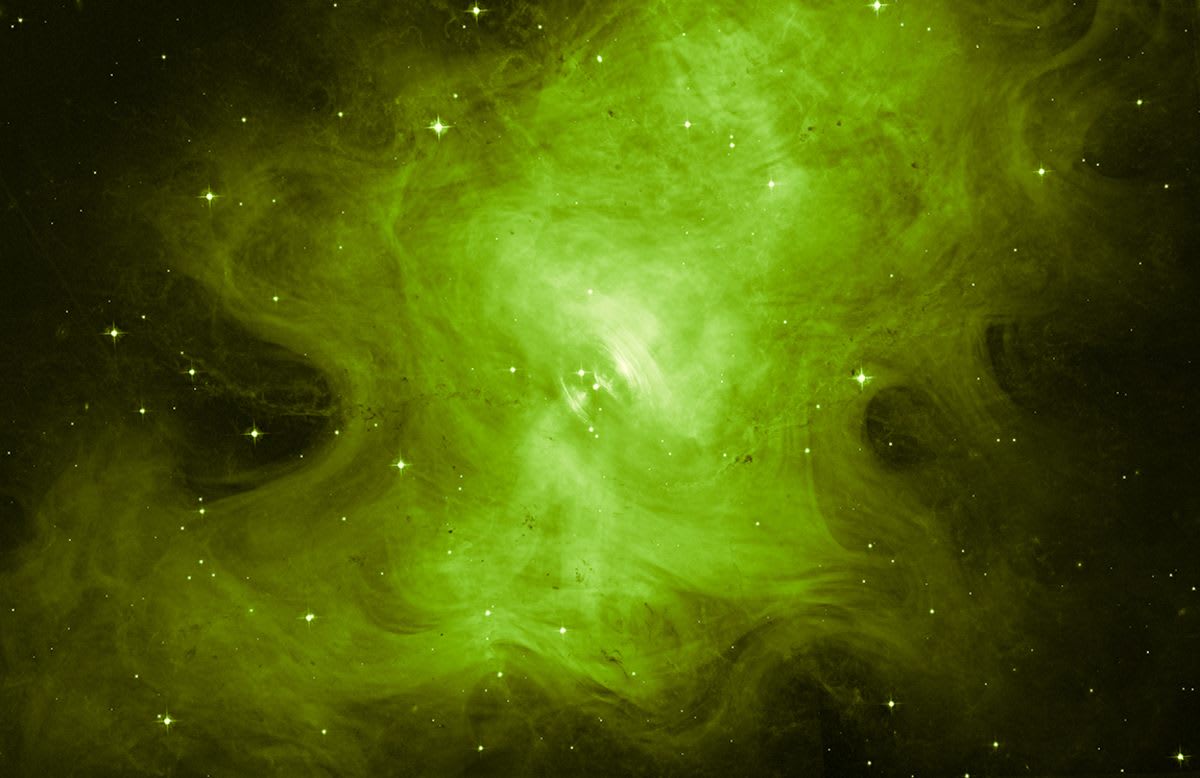
The Crab Nebula, also known as Messier 1, is the spectacular aftermath of a supernova observed by astronomers in 1054, as per NASA. At its core lies a super-dense neutron star, the collapsed core of the exploded star, which completes approximately 30 rotations every second. Each rotation sweeps a beam of radiation across Earth, much like a celestial beacon. This sonification translates X-ray information captured by NASA's Chandra X-ray observatory and the Nuclear Spectroscopic Array (NuSTAR) telescopes into sound. As a virtual scan progresses from left to right across the nebula's image, the intensity of the X-ray data directly influences the volume of the generated sound.
Different methods were employed to determine the pitch for each telescope's data. For NuSTAR, distinct musical pitches were assigned to various color-coded regions within the X-ray image, with lower notes corresponding to red and progressively higher notes for yellow, purple, blue, and white. In contrast, the Chandra data utilizes the brightness of detected X-rays to dictate both pitch and volume, with brighter X-rays producing higher-pitched sounds. A distinct bell-like tone marks the precise locations of the pulsar, the inert core left behind after the star's catastrophic collapse.
This innovative technique of data sonification has also been applied to the Vela Pulsar, another rapidly spinning neutron star located significantly closer to Earth, at a distance of about 1,000 light-years. This pulsar is the direct result of a supernova explosion that occurred roughly 10,000 years ago. For the Vela Pulsar's sonification, experts translated its data into a radar-like scan that moves clockwise from the midnight position of the image. Here, the pulsar's brightness dictates the volume of the sound, while its distance from the center of the image directly correlates with the pitch; objects farther away produce higher-pitched audio.
"And if you gaze for long into an abyss, the abyss gazes also into you." — Nietzsche 💀
— Chandra Observatory (@chandraxray) October 31, 2024
This Vela Pulsar sonification is just one of many sounds that will send shivers down your spine on @NASA's Sinister Sounds playlist at SoundCloud: https://t.co/zZEAmmSrIo Happy Halloween!🎃 pic.twitter.com/XpTYeQjYYj
The Chandra X-ray data from Vela revealed a bright inner region, depicted in violet, which was mapped to a low-synth sound. This sound incorporates 11 Hz oscillations, aligning with the pulsar's prominent jets, which were rendered with a wind-like sound. Listeners can discern the long upper jet approximately four seconds into the composition, with a shorter, brighter lower jet becoming audible around the 20-second mark. Furthermore, Hubble Space Telescope data depicting stars within the Vela Pulsar's field were also incorporated. These stars were mapped to notes played on a plucked-type synthesizer. Brighter stars register as louder notes, and those situated at a greater distance from the center of the image are represented by higher-pitched sounds.
Beyond the scientific insights they provide, projects like the Crab Nebula and Vela Pulsar sonifications highlight the growing importance of data sonification in astronomy. This process translates complex digital information, such as cosmic imagery and observational data, into auditory experiences. Sonification serves as a powerful medium for communicating the vastness and intricate details of the cosmos by engaging a sense beyond sight. This approach significantly broadens the audience for astronomical discoveries, making celestial events and telescope data accessible to blind and visually impaired individuals.