Water near supermassive black hole? James Webb makes stunning discovery about dying Milky Way star
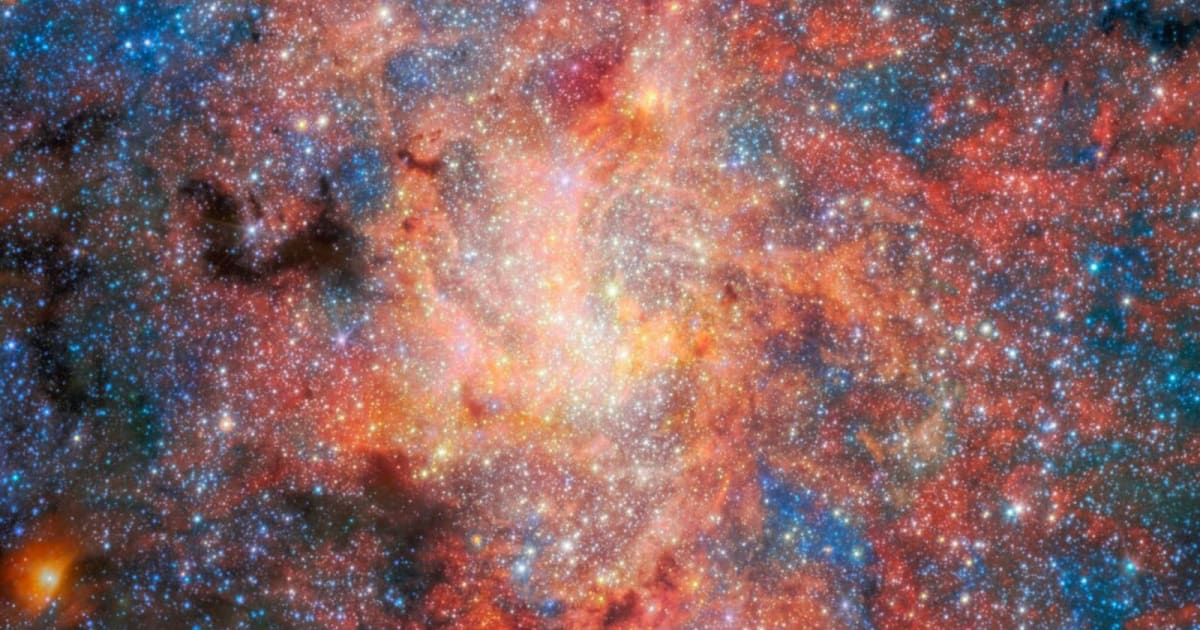
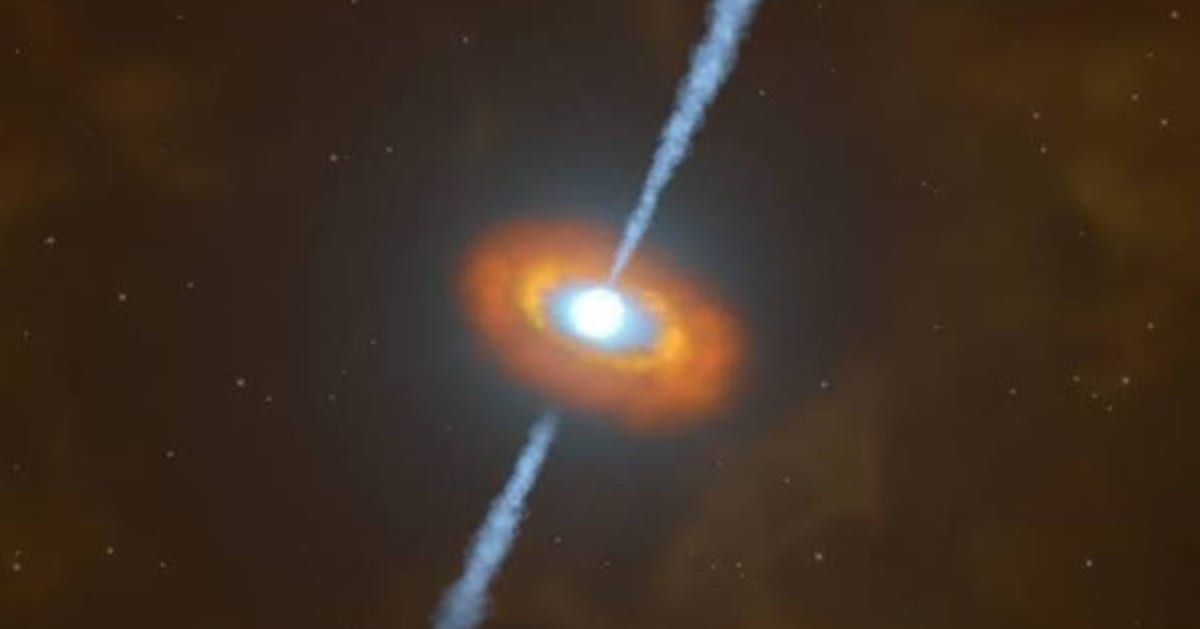
For the first time ever, scientists have discovered water near a star lying close to a supermassive black hole. The huge, cool, and luminous star, named IRS 3, is located just 0.55 light-years from Sagittarius A*, the supermassive black hole at the center of the Milky Way, and is nearing the end of its life. Using the mid-infrared instrument (MIRI) onboard the James Webb Space Telescope, an international team of astronomers has found that IRS 3 is shedding huge amounts of dust rich in oxygen, and there’s evidence of water in the envelope surrounding it.
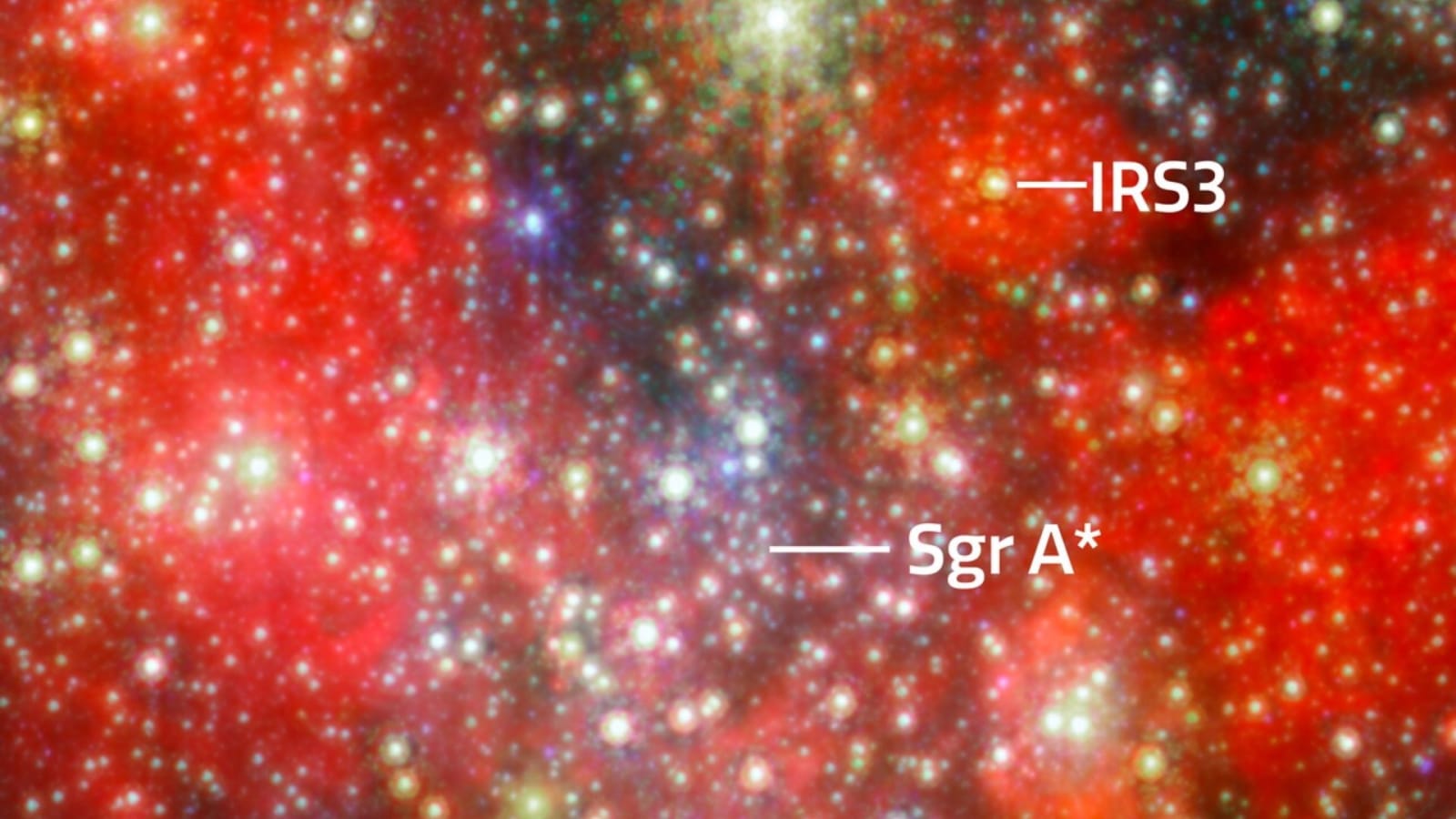
Estimates suggest IRS 3 has a mass of approximately six times that of the Sun, and it’s around 72 million years old. It is said to be in the asymptotic giant branch phase, wherein evolved stars shed gas into space with their powerful stellar winds. While this cast-off stellar material is one of the important seeds of cosmic dust, it was unclear if it could survive so close to a supermassive black hole. In the data obtained by Webb, scientists found two strong infrared signatures of silicate dust, which is composed of silicon and oxygen. This disputes previous studies that suggested that the star was carbon-rich.
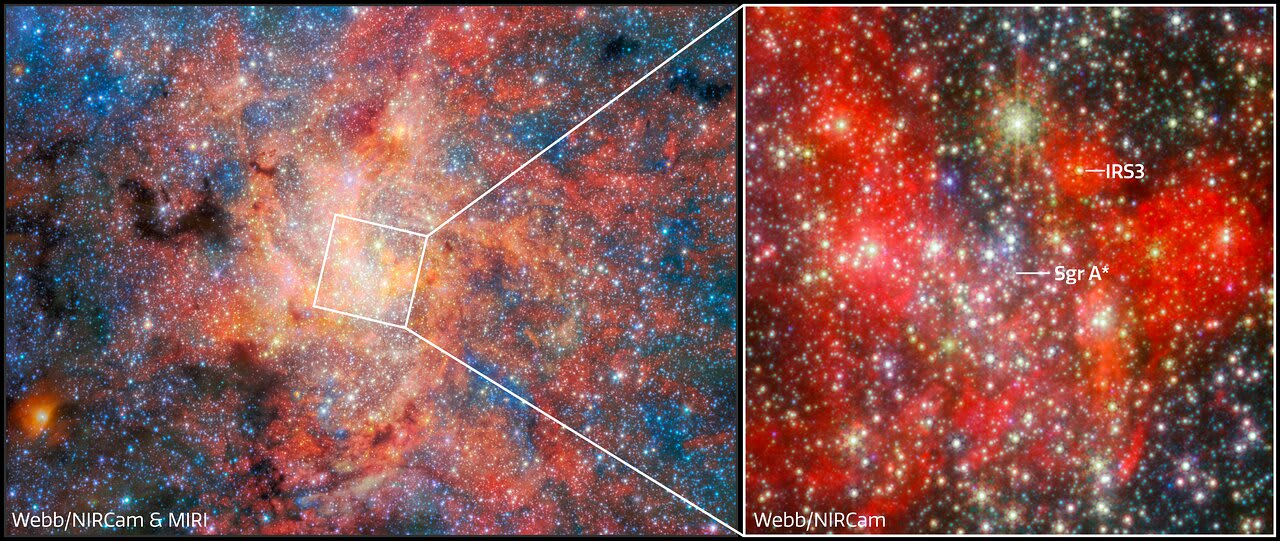
“This discovery was possible because of Webb’s highly capable infrared instruments,” European Space Agency’s Macarena Garcia Marin, a co-author of the study published in Astronomy & Astrophysics, said in a statement. “This is the first time a continuous mid-infrared spectrum has been collected for this star, allowing us to detect the features from the silicate dust and uncover the star’s true chemical identity.”
The dust released from the star has extended roughly 10,000 astronomical units, i.e., 10,000 times the distance between the Sun and the Earth. Moreover, there’s an extreme variation in temperature of the dust close to the star and in the outer regions, ranging from 1200 Kelvin to around 100 Kelvin. It was in this wide, dusty envelope that astronomers found the presence of water molecules. “The detection of water is especially exciting because it shows that molecular material can survive in an environment dominated by intense radiation,” Garcia Marin said. “This tells us that even close to a supermassive black hole, stars can continue contributing material back into their surroundings.”

This discovery provides more insights on how an evolved star can enrich its surroundings and supply material for the formation of more stars and planets in a harsh environment like a galactic center, which has extremely intense levels of radiation. “Galactic centers are among the most extreme environments, so understanding whether stars can continue enriching their surroundings there is an important question. With Webb, we can directly observe how stars behave under these conditions and see that dust production remains remarkably resilient,” said lead author Florian Peißker of the University of Cologne in Germany.
More on Starlust
Neutron star mergers produce gold and platinum—and scientists may now know why