NASA's Hubble and Webb spot the first of a star cluster's 10,000 missing black holes
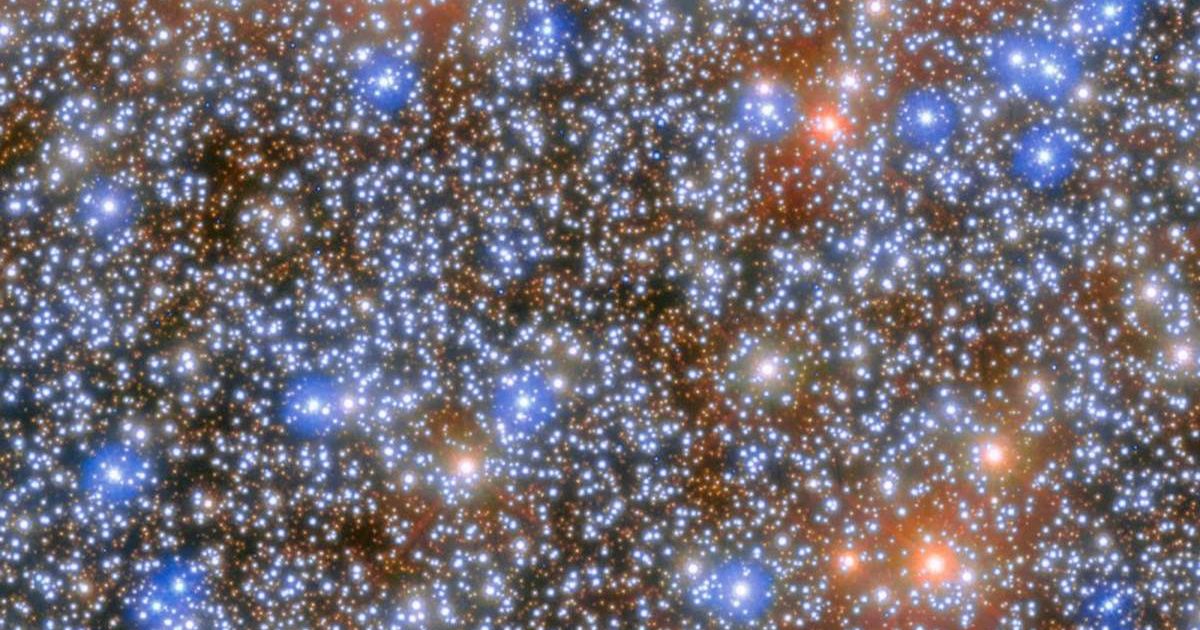
Astronomers have been trying to solve the mystery of the globular star cluster Omega Centauri for decades. This cluster should be filled with black holes left by exploding stars, but there’s not much evidence of them. Now, for the first time, astronomers have detected a stellar-mass black hole inside this massive star cluster. These observations were made with the help of archived data from NASA's Hubble Space Telescope and observations from the James Webb Space Telescope. The findings have been published in The Astrophysical Journal Letters.

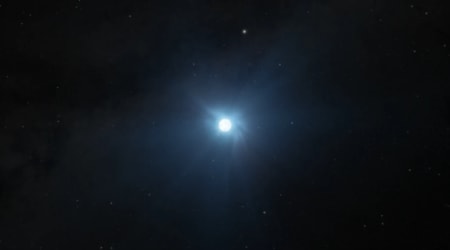
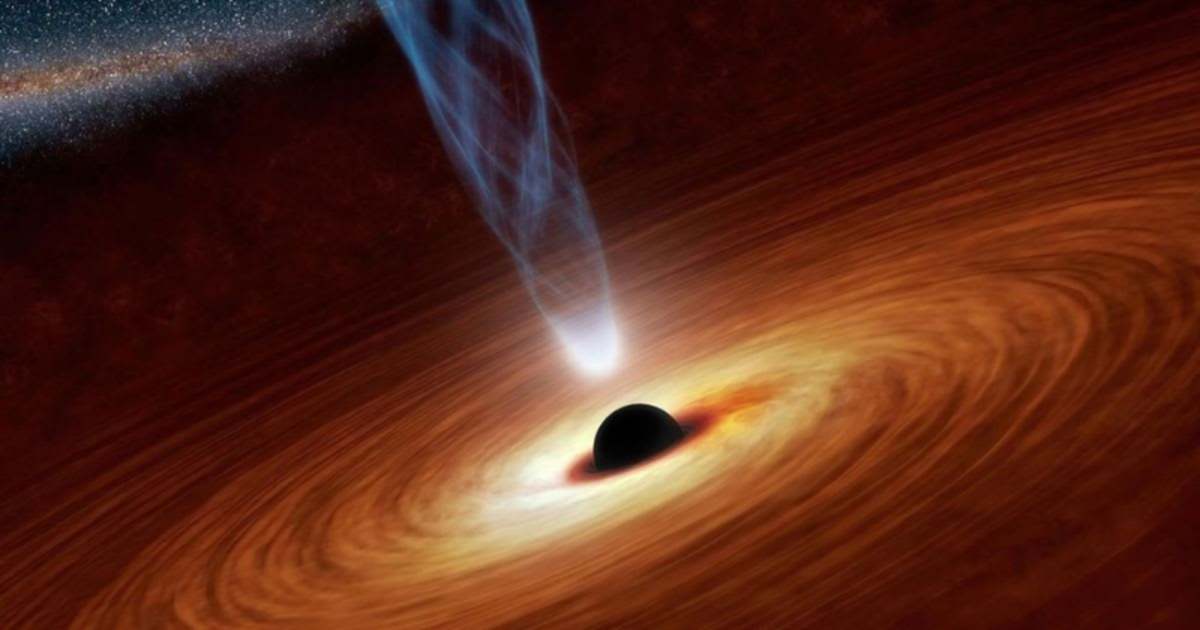
The black hole, dubbed oMEGACat BH-2, has a visible star companion that orbits it every 94 years, making the duo the longest-period black hole binary ever detected. This also suggests that the star and black hole didn't form together but instead crossed paths inside the cluster and became gravitationally bound afterward. Researchers estimate this pairing will likely be torn apart by encounters with nearby stars in under a billion years, which is a short window compared to the cluster's age of roughly 12 billion years.
What the researchers did differently this time
Omega Centauri contains roughly 10 million stars packed together by gravity. Researchers had already used Hubble to find evidence of an intermediate-mass black hole sitting at the cluster's center. Models also predicted that about 10,000 smaller, stellar-mass black holes should be scattered throughout the cluster. But scientists hadn't been able to confirm this population, since earlier studies relying on the radial velocity method or searches for radio and X-ray emission had failed to detect them.
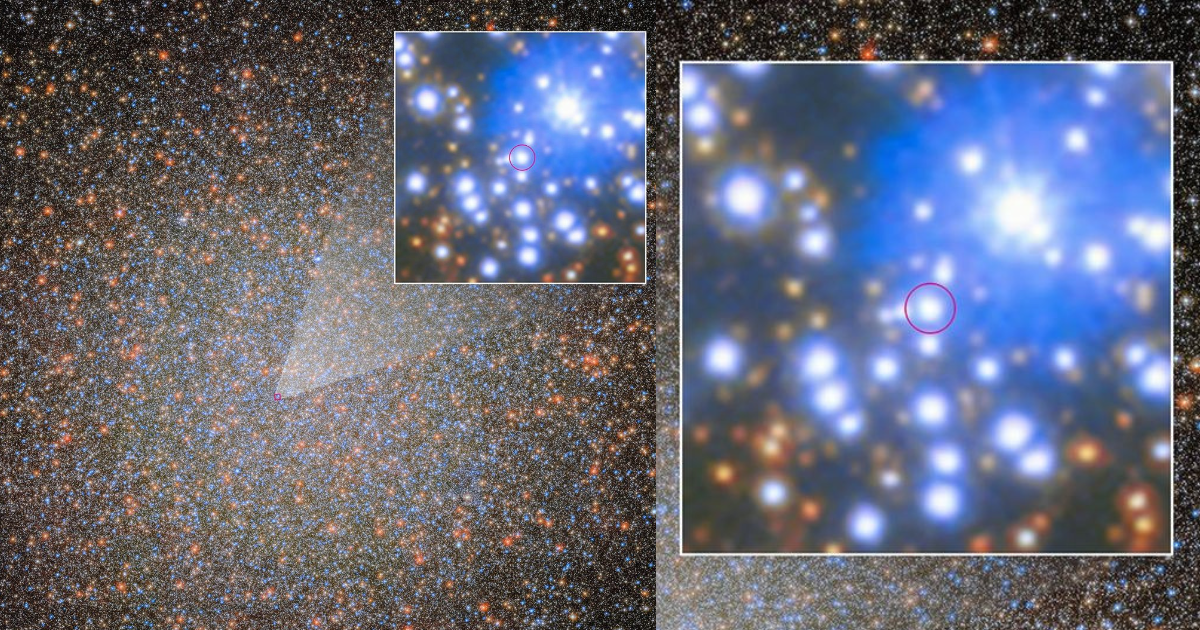
To solve this, lead researcher Matthew Whitaker of the University of Utah and his team used a technique called astrometry, which measures extremely small shifts in a star's position over time. They used more than 20 years of archival Hubble data dating from 2002 to 2023 with newer near-infrared data from Webb. This combination revealed a star being tugged by something massive and invisible, a clear sign of a black hole. Commenting on the findings, Whitaker said, "With Hubble and Webb data, we were able to see the motion of the visible main-sequence star that is part of this binary, which is about 18,000 light-years away in the dense environment of Omega Centauri. The precision of these measurements is incredible, down to a fraction of a pixel on Hubble's and Webb's detectors. It would not have been possible to find this black hole without these two space telescopes."
How the discovery refined a previous study
An earlier study by a different team of researchers had proposed that the star's hidden companion might actually be a neutron star rather than a black hole. By refining the mass calculations with the expanded dataset, the team determined the companion weighs 4.46 times the mass of our Sun, which means it is too heavy to be a neutron star. "While we already knew that the star was 0.78 solar masses, we can now calculate the black hole's mass, which is 4.46 solar masses and therefore too heavy to be a neutron star. However, its mass is much lower than would be expected in a metal-poor environment like Omega Centauri. This is surprising and exciting," said Anil Seth, a co-author of the study. "We now know that a metal-poor star is able to form a black hole like this, and we need to figure out how that happens. This detection is providing some data to those who do that kind of modeling."
The team now aims to work through Omega Centauri and other clusters for similar hidden pairs, and they're counting on NASA's upcoming Nancy Grace Roman Space Telescope to help speed that search along. Commenting on what’s ahead, Whitaker said, "With Hubble and Webb, we can continue to look at Omega Centauri and expand our search for similar systems within other clusters. We're also very excited for the launch of NASA's Nancy Grace Roman Space Telescope because it will image the crowded galactic bulge, including the galactic center, very regularly with Hubble-like resolution and with a much wider field of view. We're hoping we'll be able to find black hole binary systems like this one because of the regular cadence of Roman's observations."
More on Starlust
Could a world trapped in endless day and night still host life? Here's what scientists found
Rare, long-lasting black hole outburst is giving scientists a better look at the early universe