A Jupiter-sized planet miraculously survived the death of its host star—James Webb finds how
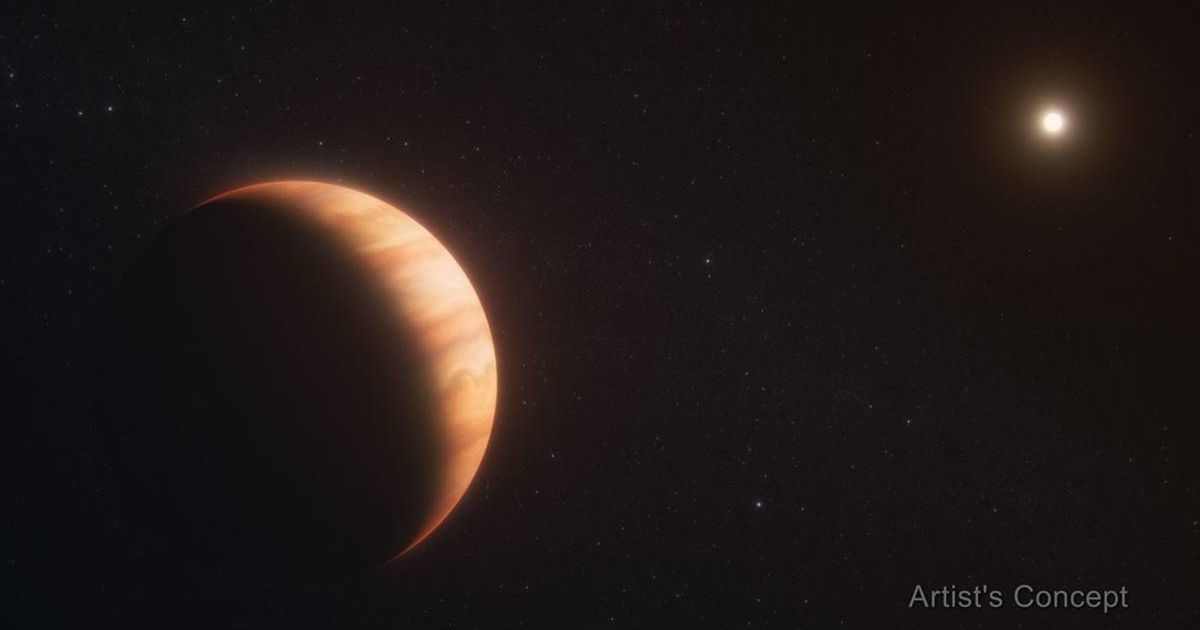
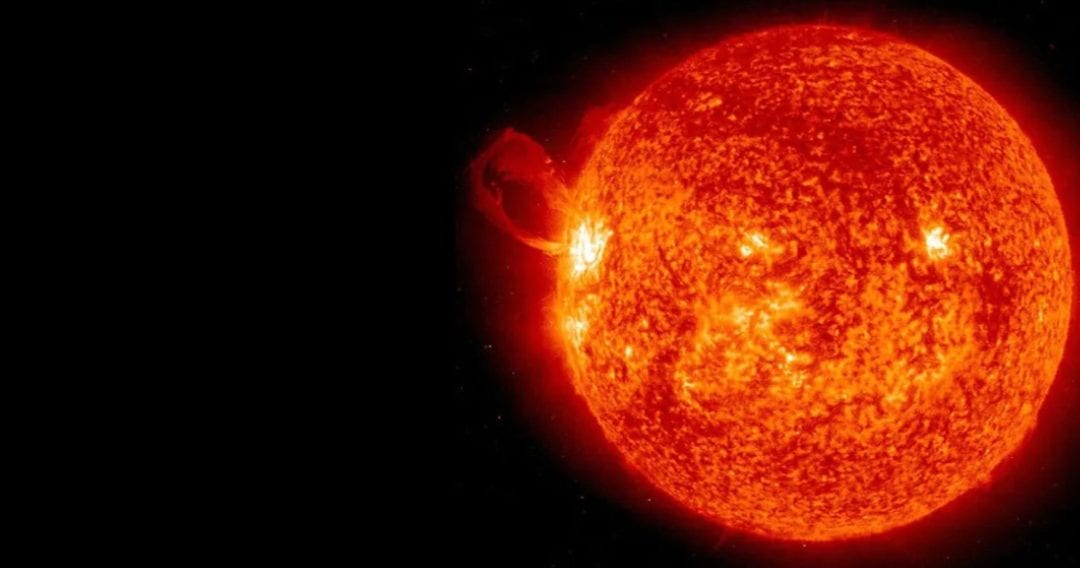
In about five billion years, the Sun will run out of hydrogen fuel and die. When that happens, the planets closest to it, such as Mercury, Venus, and possibly Earth, will be swallowed up as it swells into a red giant (more than 100 times its current size). But what happens to the outer planets, like Jupiter and Saturn? We don’t know for certain yet, but a new study offers some insight. Using NASA's James Webb Space Telescope (JWST), an international team of astronomers studied how a Jupiter-sized planet managed to survive the death of its own host star. Their findings are now published in the journal Nature.
What exactly did Webb find?
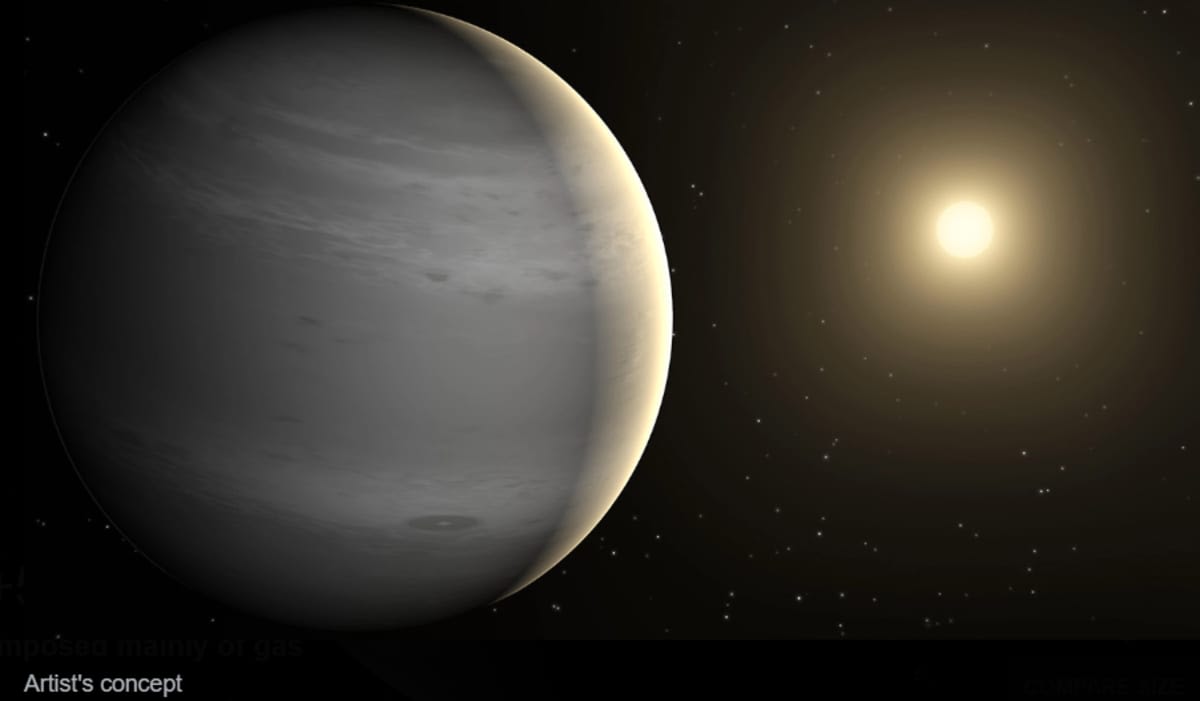
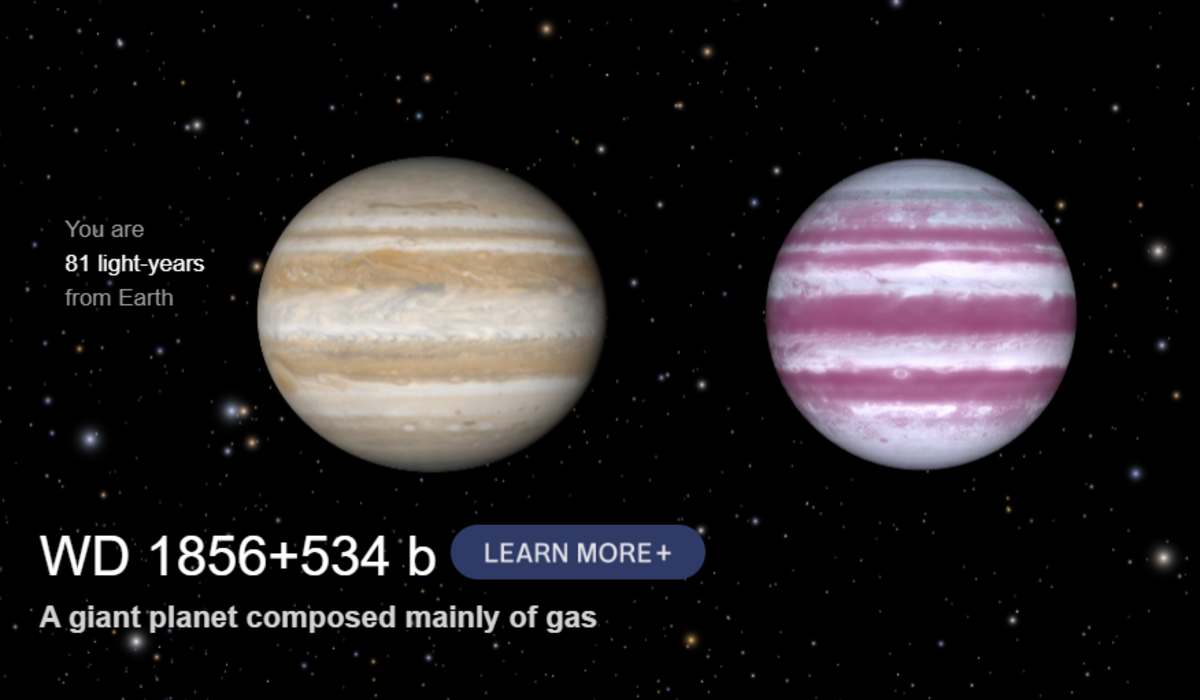
For this, astronomers studied WD 1856 b. It’s a giant planet that was first spotted in 2020 using data collected by NASA's TESS mission and the now-retired Spitzer Space Telescope. This planet orbits a white dwarf called WD 1856+534 and completes a full lap every 34 hours at a distance nearly 50 times closer than Earth is to the Sun. Explaining the findings, lead author Ryan MacDonald of the University of St. Andrews said in an official statement, “The planet is about the size of Jupiter, but the white dwarf it orbits is the size of Earth, so the planet is seven times larger than its star." The research team used JWST’s observations of the planet passing in front of its star (a specific configuration known as a grazing transit) to help determine its mass. While standard transits typically only measure a planet's physical size, a grazing transit allows telescopes to probe the uppermost layers of a planet's atmosphere. This atmospheric data enabled the team to calculate the planet's surface gravity and, consequently, its mass, which turned out to be somewhere between four and 11 times that of Jupiter. They also found that the planet is far warmer than it should be (around 260° Fahrenheit), given how little heat the white dwarf gives off today.

Where is this heat coming from?
The team, including co-author Christopher O'Connor of Northwestern University, reasoned that the heat must be left over from an event long in the planet's past. He noted, "The big question is how WD 1856 b ended up where it is today, and there are two theories. One is that the planet was swallowed by the host star as it was dying, and managed to survive on the inside. The other is that migration took place due to the gravitational effect of other objects in the system. The white dwarf is part of a triple star system, and the companion stars could have influenced WD 1856 b's orbit." By studying how planets like WD 1856 b cool down over time and comparing that with the temperature measured by the JWST, scientists found that the planet was most likely heated 3 to 5.5 billion years after its star became a white dwarf.
So, how did the planet survive?
According to the researchers, WD 1856 b likely began on a wide, safe orbit, far enough out to avoid the star during its red giant phase. It could have migrated inward afterward. If the planet had originally been orbiting this close to its star, it would have been destroyed during the red giant phase. Its current tight orbit is only possible because it arrived there after the danger had already passed. O'Connor said, "As the planet moved inward, its interactions with the strong gravity of the white dwarf will have caused it to warm up considerably, and it has been cooling ever since." Commenting on why this research matters, MacDonald said, "We're used to looking back in time when we use telescopes, but this is the first time we have been able to look forward to what might happen to the outer planets around the remnant of a Sun-like star. It's like using a time machine to peer into the distant future of our solar system."
More on Starlust:
NASA's TESS telescope found a planet 40,000 light-years away and it wasn't even looking for it
Scientists witness a black hole's point of no return for the first time ever