Meet Lumina—a comprehensive model of the early universe that will put our theories to the test
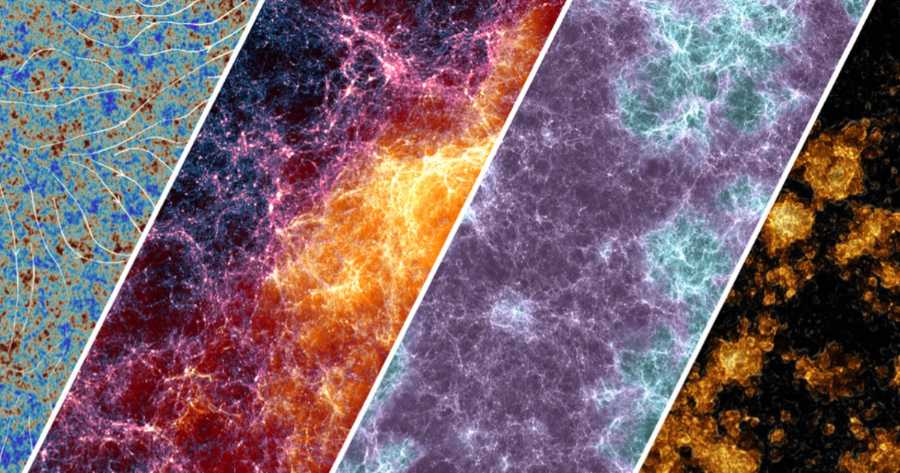
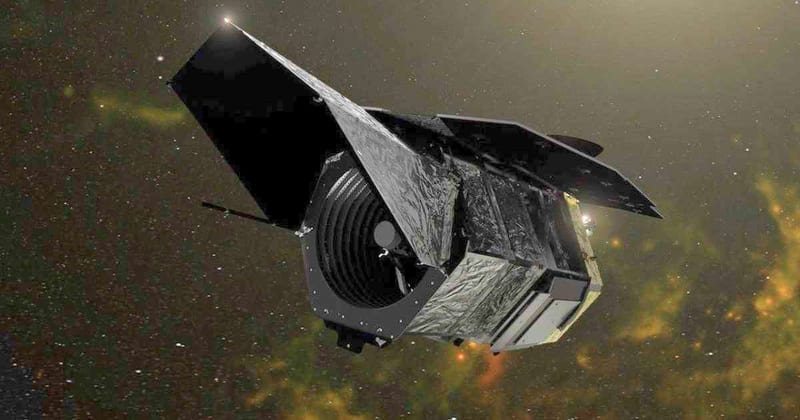
Researchers have created a model of the early universe called Lumina that covers over 100 times the volume simulated by comparable models. Detailed in a paper published in the Monthly Notices of the Royal Astronomical Society on October 26, 2026, Lumina will serve as a tool for astronomers to verify existing theories about how the cosmos came to be. Using Lumina, scientists will also be able to come up with new theories where necessary by being able to piece together any new observations from the James Webb Space Telescope (JWST) and the Nancy Grace Roman Space Telescope that do not quite fit our current predictions.
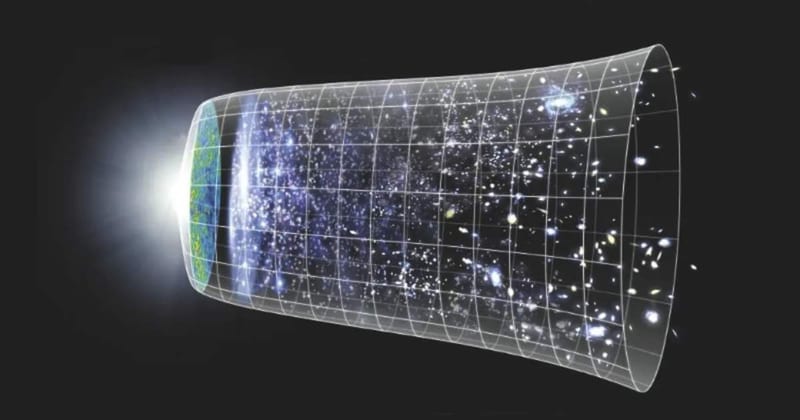
According to researchers at Massachusetts Institute of Technology (MIT) and the Center for Astrophysics | Harvard & Smithsonian, Lumina is the largest cosmological radiation-hydrodynamics simulation ever created. What this means is that the simulation used supercomputing to create a detailed 'movie' of how light (radiation) and matter (gases like hydrogen and helium) mixed together and affected how the universe has turned out. It is understood that the universe, in its early days, was a hot and dense 'soup' of electrons and subatomic particles. As the newly formed universe expanded and cooled down, the primordial particles slowed down and were able to form bonds to create hydrogen (a milestone known as recombination), marking the start of the 'cosmic dark ages'. Eventually, the first stars and galaxies emerged, and their intense radiation ionized and cleared this dense hydrogen fog—a transitional period scientists call the Epoch of Reionization. Being able to see this theory play out as a part of the simulation, for example, and comparing it with actual observations will help astronomers fill gaps that may have persisted in our understanding.
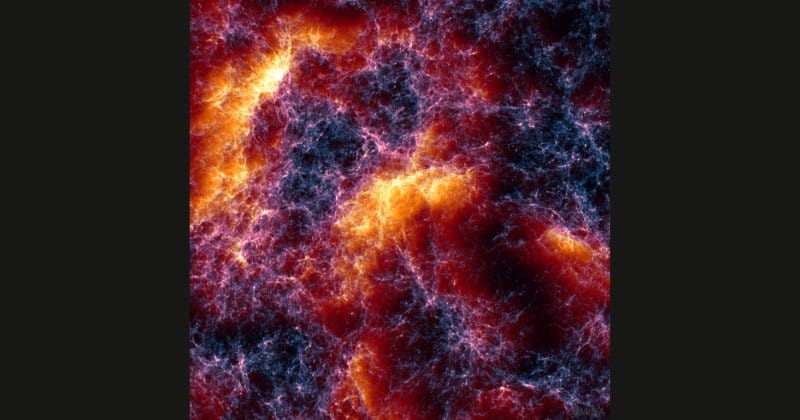
"We feel incredibly fortunate to be building simulations like Lumina,” said Aaron Smith, one of the authors of the paper and an assistant professor of physics at the University of Texas at Dallas. “For the first time, we can follow along as both hydrogen and helium changed into their modern form across such an enormous volume of the universe, while still resolving the galaxies and other luminous objects driving that transformation,” added Smith. The model spans a cubical part of the early universe which has sides measuring about 1.6 billion light-years.
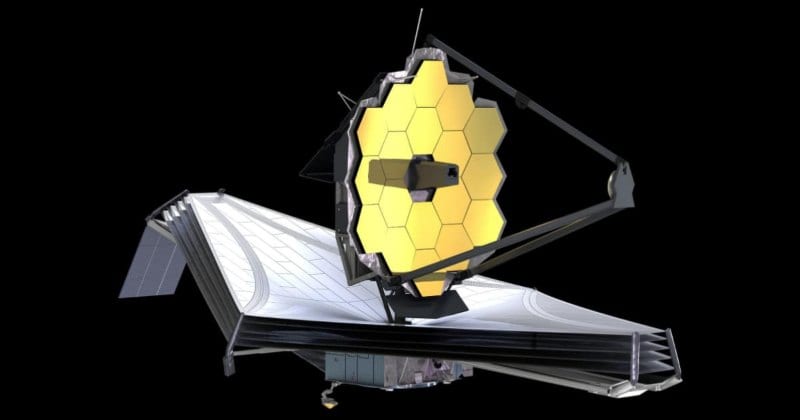
Lumina recreates what happened in this portion of space beginning from about 45 million years (while the dark ages were still ongoing) to about 2 billion years after the Big Bang. Because space telescopes like Webb are able to look at light from very early on in the universe, this model can help check where our existing theories might have skewed from what actually happened. "With JWST, the early universe has become an exciting new frontier in astrophysics. To understand what we are seeing with this telescope, we need to translate our theories into detailed predictions,” explains lead author of the paper Oliver Zier, who is an Institute for Theory and Computation (ITC) Fellow at the Center for Astrophysics | Harvard & Smithsonian.
To create Lumina, the researchers used an existing model called IllustrisTNG, which had been developed in part by MIT. Its code was then adapted to enable the new simulation to be as detailed as possible but over a much larger space. Building Lumina needed over 15,000 graphics processing units running on Frontier, which clocks in as one of the fastest supercomputers in the world. It is operated by Oak Ridge National Laboratory in Tennessee, a U.S. Department of Energy facility. Thanks to its sheer power, Lumina could be conceived with the aim of creating a platform for future cosmological research to be verified. This will include how gases moved from one galaxy to another, the evolution of dark matter, and how radiation from the Big Bang affected how the universe was eventually shaped.
More on Starlust
What happened to black holes from the Big Bang? Study says they might be alive today as white holes
Scientists find a new way to probe dark energy, thanks to a faint radio glow from the early universe