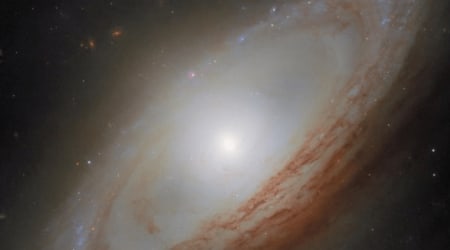
NASA's James Webb makes first discovery of three supermassive black holes in a single galaxy
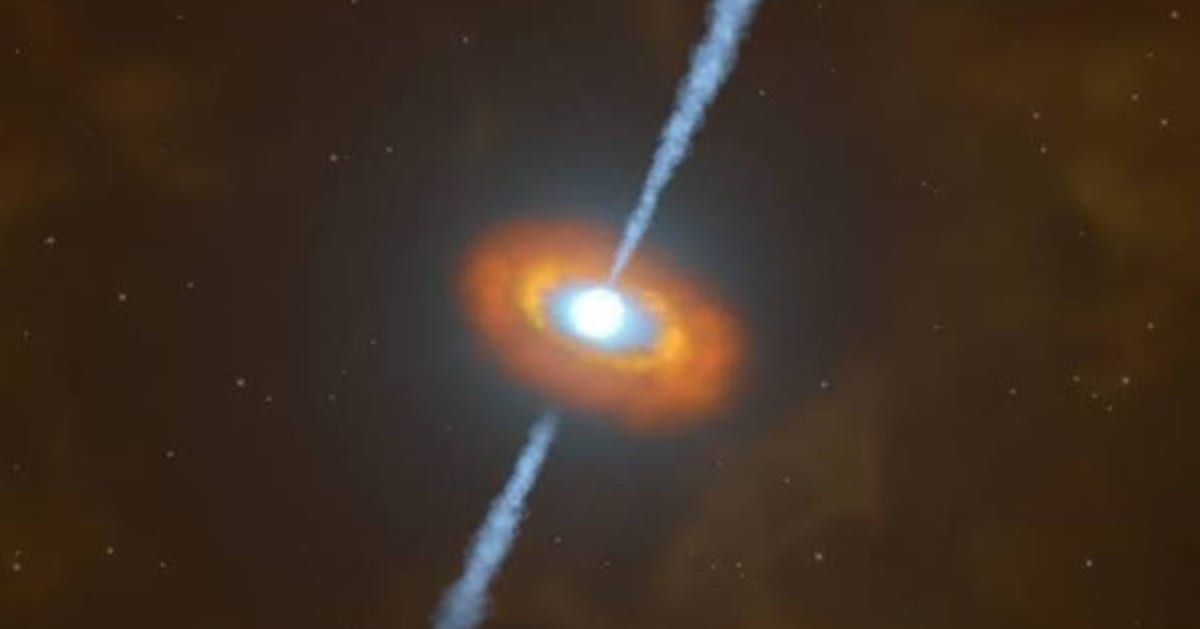
![An AI-generated visualization of a distant galaxy, containing, besides dust, gas, and young stars, three massive, active black holes with bright accretion disks. [Representative Cover Image Source: MPE (generated with AI)]](https://d3hedi16gruj5j.cloudfront.net/814116/uploads/91229820-9ace-11f1-a6f0-9545af1c9a8f_1200_630.jpeg)
In a breakthrough discovery, an international team of astronomers, using the James Webb Space Telescope, has found evidence of three active supermassive black holes in a distant galaxy. And they might collide with one another to form a cosmic behemoth.
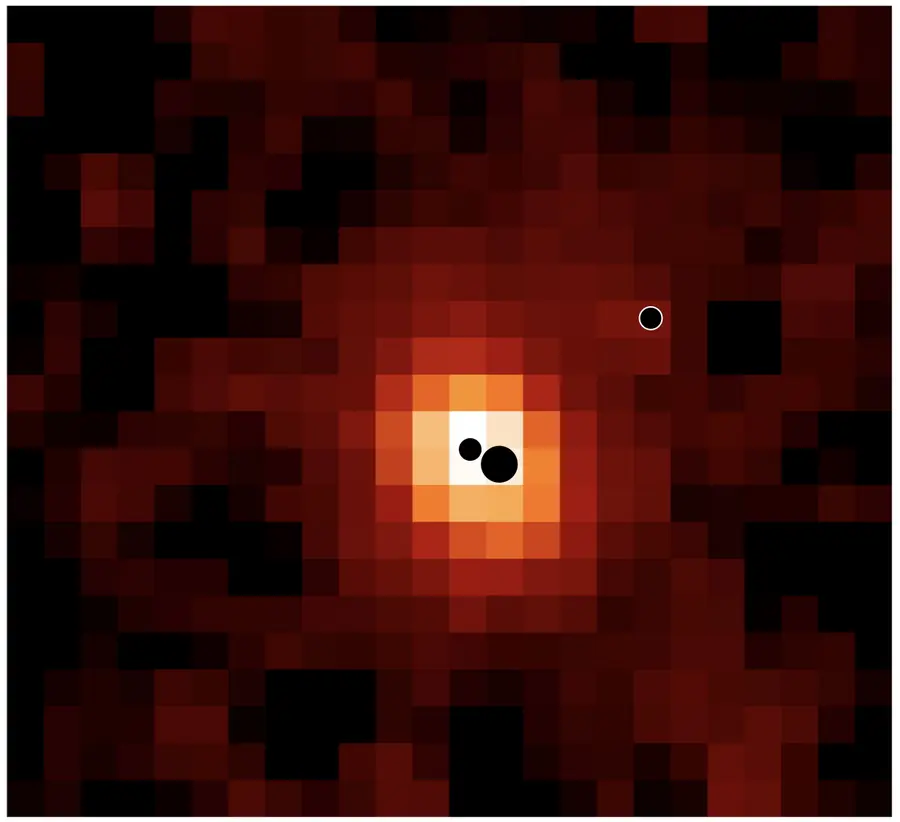
“This is the first evidence of three active black holes in a single galaxy in the distant Universe,” says Hannah Übler, the research group leader at the Max Planck Institute for Extraterrestrial Physics and the lead author of the study, in a statement. Übler's team found these black holes in the galaxy J0148-4214, which is located more than 12.5 billion light-years from Earth. That means the researchers saw the galaxy as it appeared only about 1.3 billion years after the Big Bang.
Of course, it wasn't possible to see the black holes directly. The discovery was made using the Integrated Field Spectroscopy unit on Webb, which measured the signatures of the high-velocity motion of hydrogen atoms in the accretion disks surrounding the black holes. Interestingly, the central region exhibited a complex signature that could only be explained by the presence of two black holes just 620 light-years apart. The signature for the third, meanwhile, was found in the outer region around 5,500 light-years from the center.
"The JWST data allowed us not only to identify the three black holes, but also to estimate their masses, accretion rates, and the stellar mass of the galaxy," said Dr. Giovanni Mazzolari, the second author of the study and researcher at MPE. Analysis suggests that the largest of the three black holes, which is about 80 million times the mass of the Sun, is accreting material at a lower rate than the nearby black hole, which is about 0.6 solar masses. The latter is, in fact, accreting material at a rate exceeding the maximum predicted by basic theories of black hole growth (the Eddington limit). As for the black hole located in the outer region, it is about 2 million times the mass of the Sun.
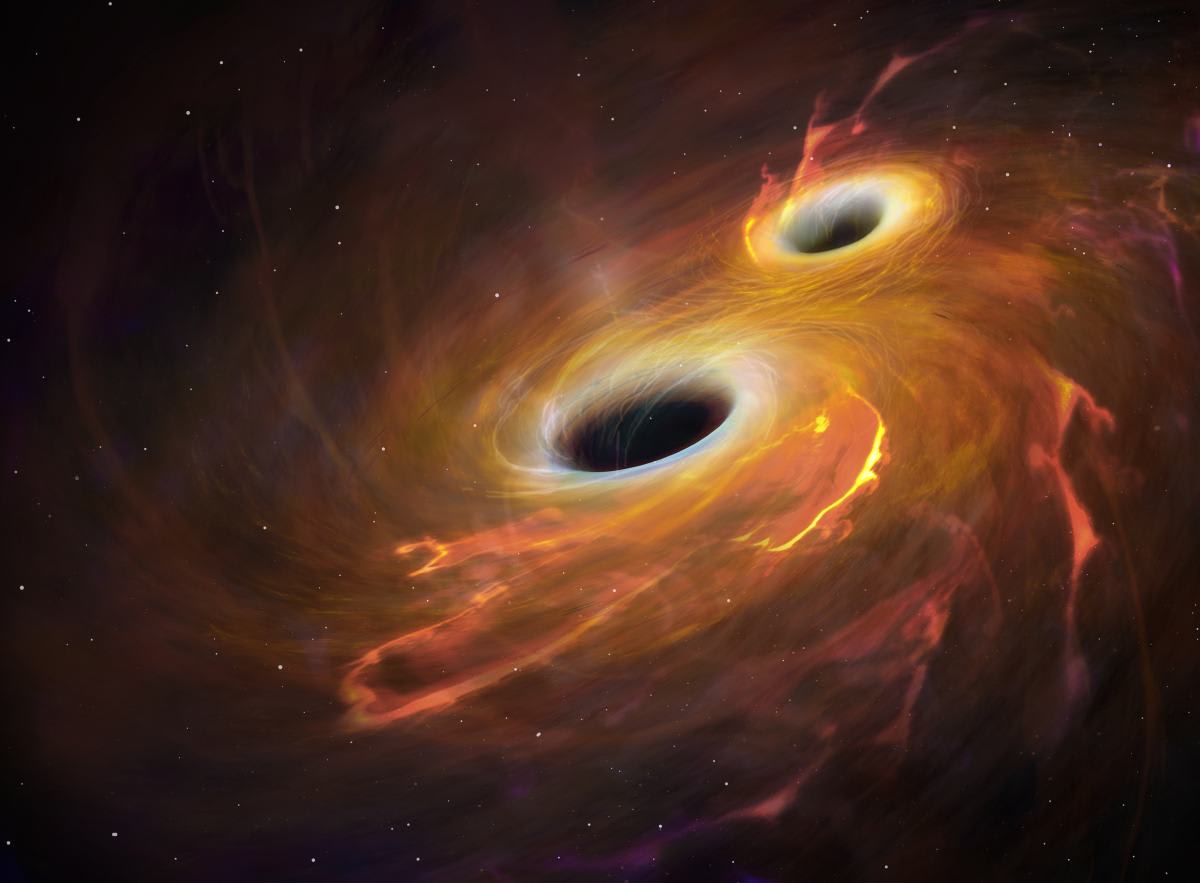
The discovery of three black holes in a single galaxy has major implications for the study of galactic evolution. After all, theories suggest that galaxies in the early universe often came close to one another and merged. This, in turn, resulted in mergers of black holes at their centers, which gave rise to even bigger black holes in the middle of the merged galaxies.

The researchers think that the two central black holes in J0148-4214 will also merge in the next few hundred million years, while the third one, itself likely a remnant of a previous merger, may also be migrating inwards. “These results are extremely exciting,” explained Roberto Maiolino, a professor at the University of Cambridge and co-author of the study. “They suggest that black hole merging may be an additional, fast route for their rapid growth in the early universe.”
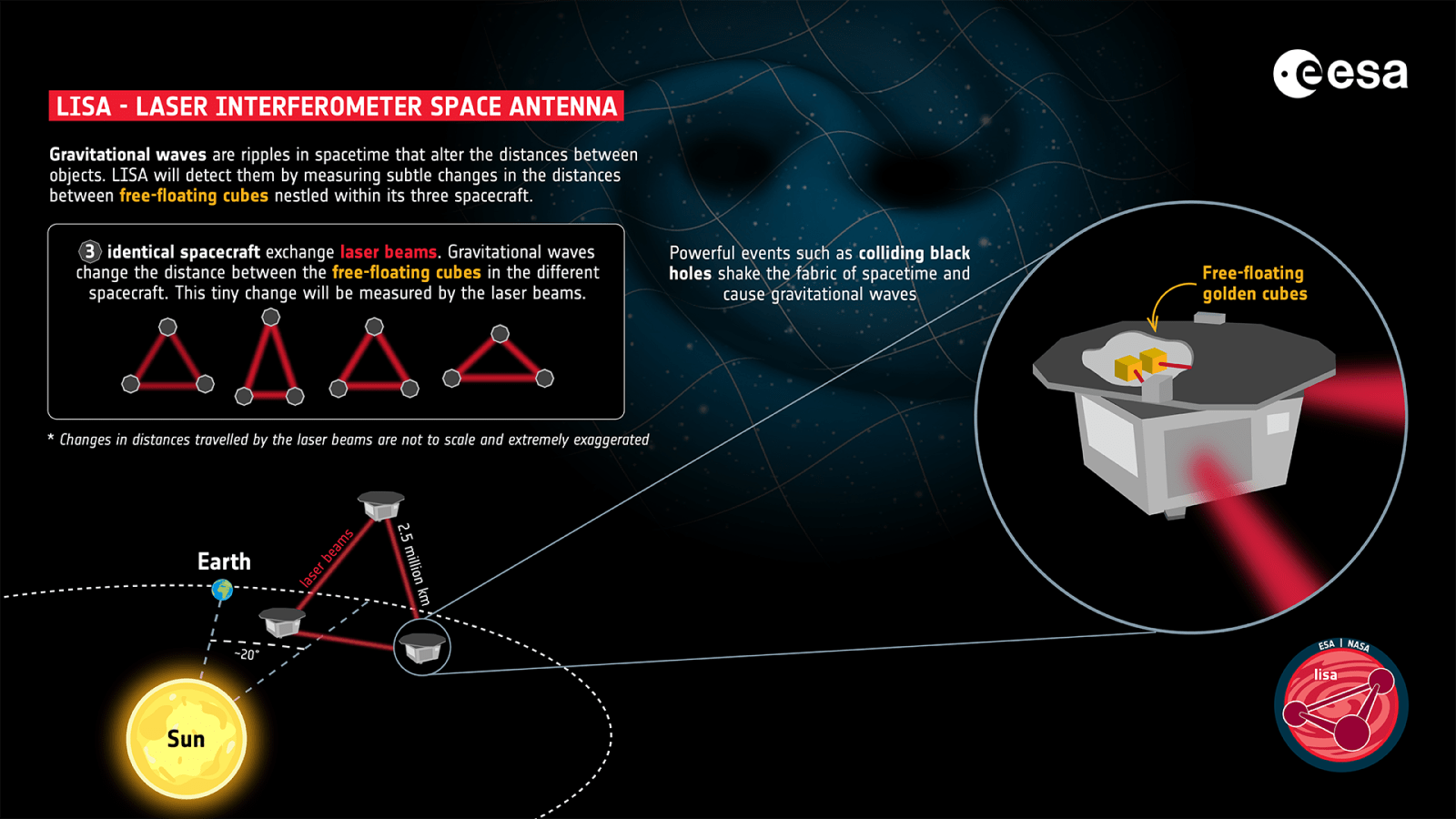
The researchers hope to detect the gravitational waves from such mergers using the European Space Agency's (ESA) Laser Interferometer Space Antenna (LISA), which is expected to launch by the mid-2030s as the first gravitational wave detector in space. LISA will feature not one but three spacecraft, which will fly in a triangular formation 2.5 million kilometers apart and exchange laser beams. Thanks to this huge distance that the beams will travel, LISA will be able to detect gravitational waves of lower frequencies than what is possible for Earth-based detectors, thus uncovering mergers from as far back as the dawn of time.
More on Starlust
Astronomers confirm first 'black hole star,' explaining Little Red Dots seen by James Webb Telescope
Water near supermassive black hole? James Webb makes stunning discovery about dying Milky Way star