New James Webb Space Telescope data challenges one of dark matter's strongest pieces of evidence
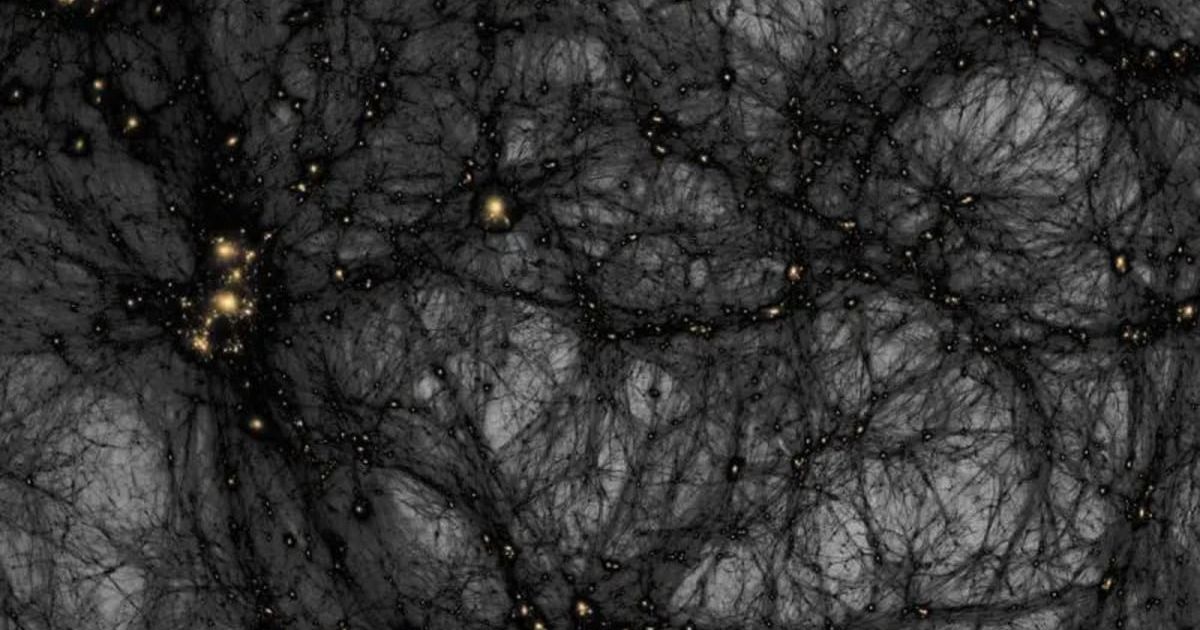
Astronomers have studied cosmic events as proof that dark matter is real, even though no telescope has ever actually seen it. So far, the key evidence has been the Bullet Cluster, a violent collision between two groups of galaxies that has long been considered one of the clearest fingerprints of invisible mass in the universe. But that proof is now being questioned. A new study based on data from the James Webb Space Telescope suggests the Bullet Cluster's strange gravity may not require dark matter at all, and that ordinary matter astronomers simply hadn't accounted for could explain what's really going on.
Commenting on the findings, the study co-author Pavel Kroupa from Helmholtz Institute of Radiation and Nuclear Physics at the University of Bonn said, "This observation has so far been considered evidence of the existence of dark matter. The remnants of massive stars take on the role of dark matter to a certain extent in the MOND scenario. Even in the standard model, which assumes the existence of dark matter, its postulated quantity would have to be significantly reduced – by around half." The study has now been published in the journal Physical Review D.
What is a Bullet Cluster?
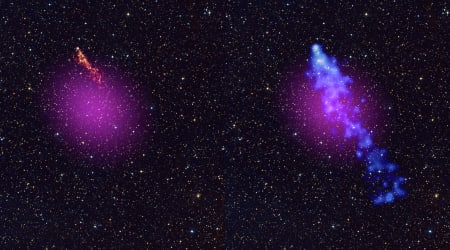
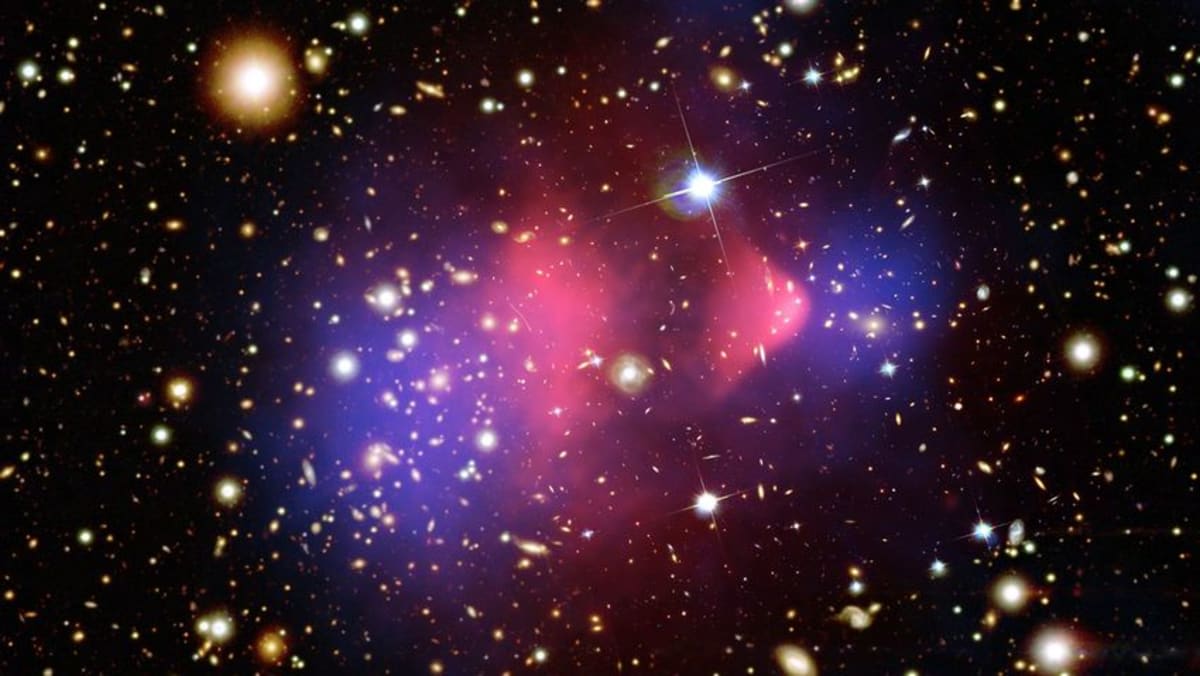
The Bullet Cluster formed around four billion years ago, when two massive clusters, each packed with hundreds of galaxies, slammed into each other at more than 2,500 kilometers per second. Stars within those galaxies are spaced far apart, so they mostly sailed past one another untouched. But the gas drifting between those stars didn't get off so easily. When the two clouds of interstellar gas crash through each other, friction slows them down and heats them to the point where they glow brightly in X-ray light. This forms two separate patches trailing behind the galaxies. That separation between the fast-moving galaxies and the left-behind gas is why this collision has drawn so much attention from astronomers studying dark matter.
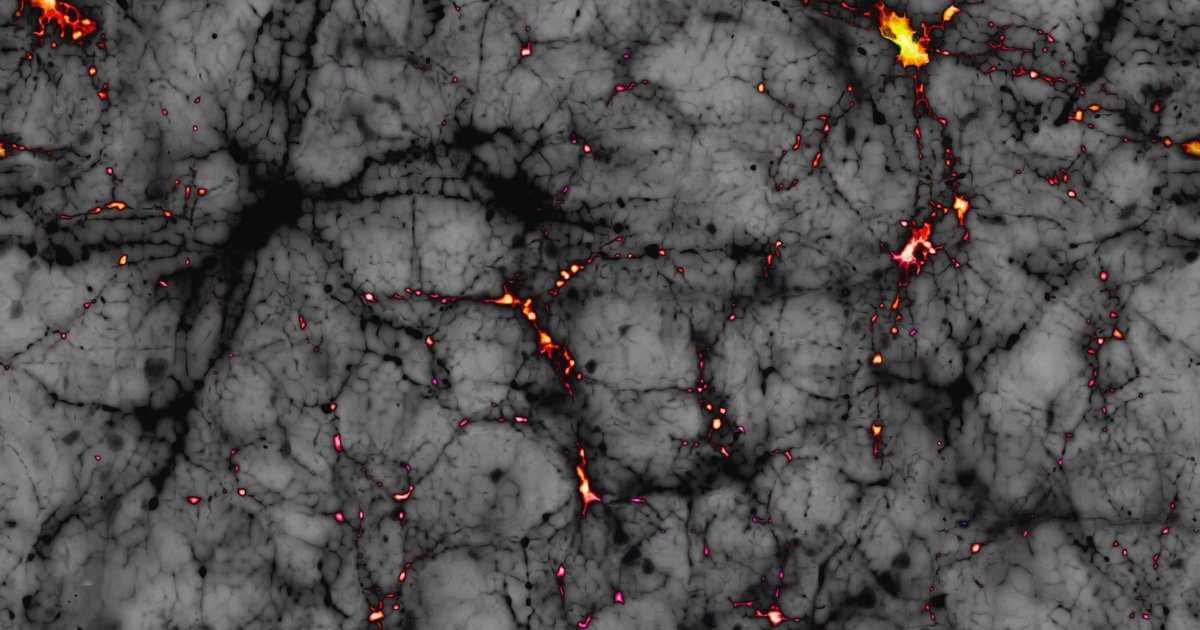
Astronomers study how it distorts light from more distant background galaxies through a process called gravitational lensing. The strongest bending shows up around the two galaxy clusters, even though the gas holds most of the visible material in the whole system. That mismatch has been attributed to dark matter, since it interacts with everything else only through gravity and would have sailed through the collision right alongside the galaxies rather than getting dragged along with the gas. The Bullet Cluster has also been the reason MOND, short for Modified Newtonian Dynamics, got written off as a theory. MOND points out that instead of invisible matter adding extra gravity, gravity itself might work a little differently at massive scales.
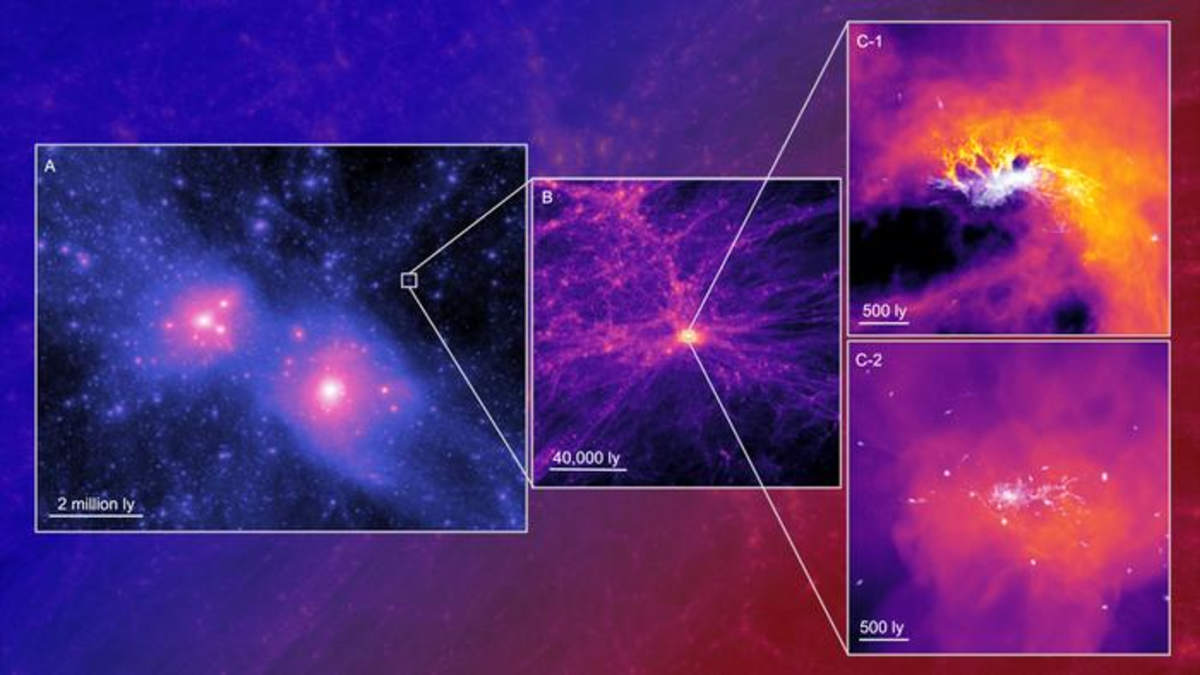
"However, we show in our study that, on the contrary, the Bullet Cluster is actually particularly consistent with the MOND scenario,' said lead author Dong Zhang. Explaining the reasoning behind it, he added, 'If massive stars eventually burn up, they become neutron stars or black holes. Like dark matter, both are invisible and can only be detected by the huge gravitational forces that they exert." It's important to note that this study doesn’t deny the existence of dark matter. It challenges the evidence scientists used to support it.
More on Starlust
Scientists witness a black hole's point of no return for the first time ever