Astronomers confirm first 'black hole star,' explaining Little Red Dots seen by James Webb Telescope
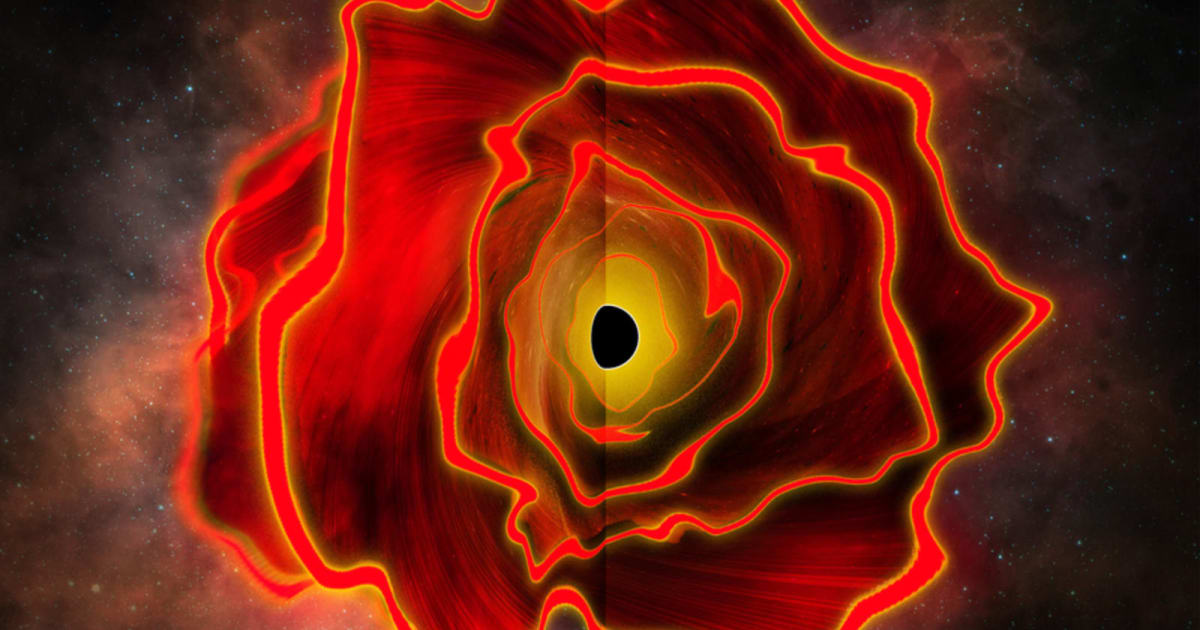
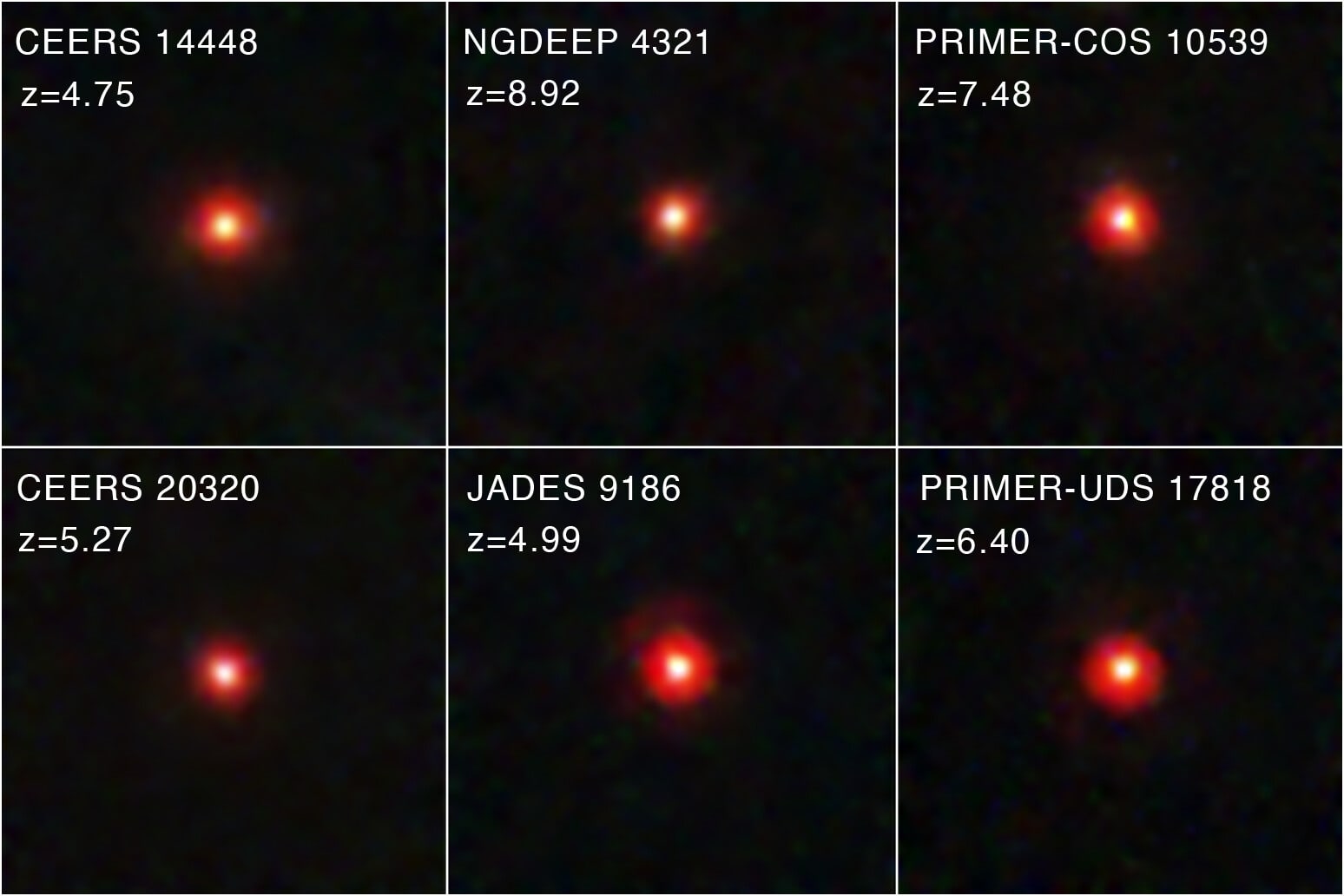
The James Webb Space Telescope (JWST), since it became operational in 2022, has helped astronomers glean unprecedented insights into the universe. Yet, nearly every time JWST has looked into the early universe, it has found compact, luminous points of light astronomers referred to as 'Little Red Dots' (LRDs). Initially thought to be redshifted early galaxies or heavily obscured active galactic nuclei, LRDs defied classification: on the one hand, they were found to shine with a light similar to that of giant stars, while on the other, their brightness was typical of active galactic nuclei powered by supermassive black holes. So, if they weren't stars or galaxies, what were they? Since traditional models failed to answer the question, astronomers considered exotic alternatives, such as theoretical 'black hole stars.' Now, a landmark study published in Nature has confirmed the existence of these black hole stars, having found empirical evidence of the same.
Named MoM-BH*-1, with BH*-1 representing the first confirmed object of this kind, the black hole star was identified by a team of international researchers led by Dr. Rohan Naidu of the University of Hawaiʻi/MIT Kavli Institute using data from JWST's Mirage or Miracle (MoM) survey.
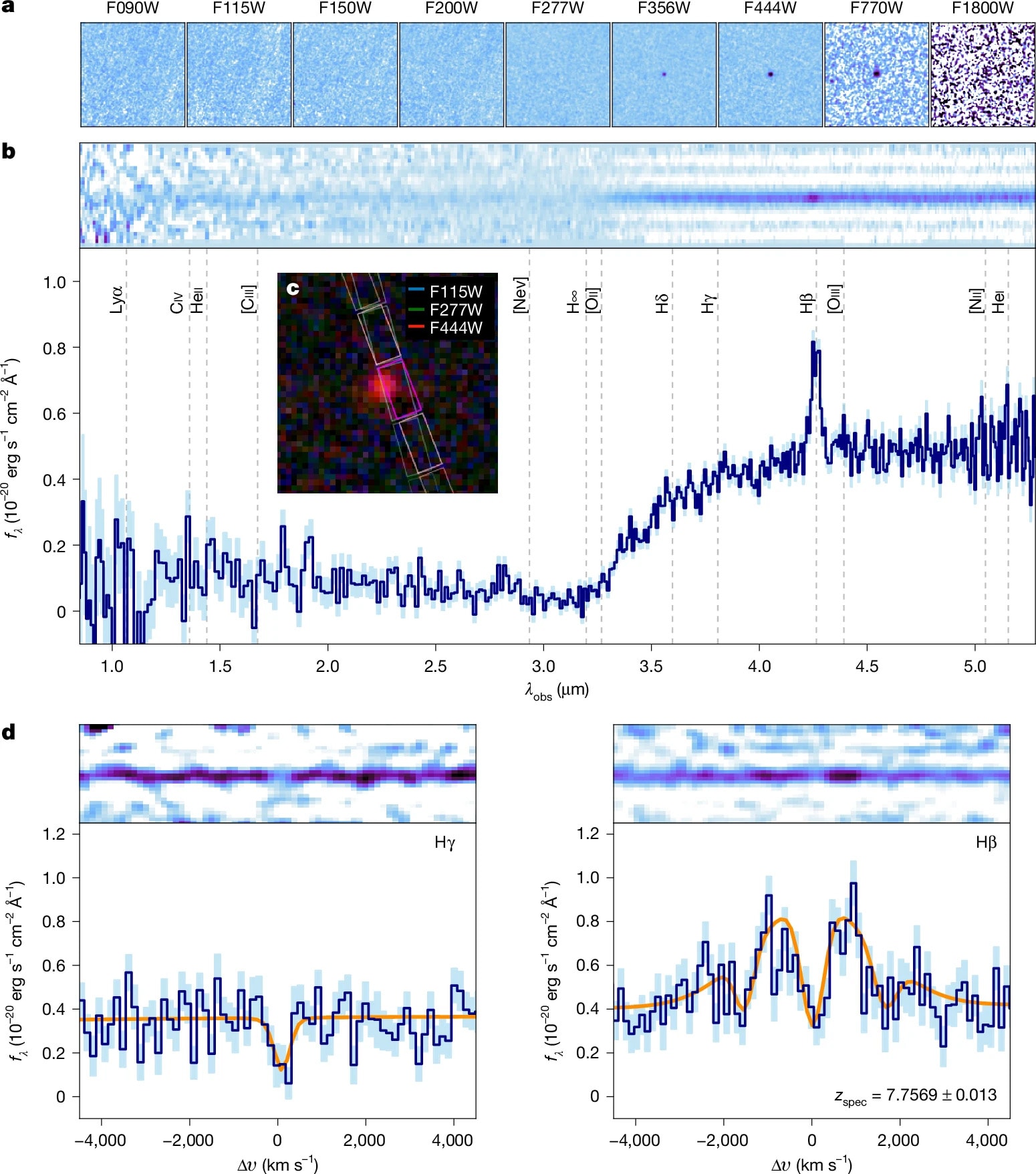
While MoM-BH*-1 is not the only black hole star candidate identified to date, it is certainly the oldest, dating back to just 660 million years after the Big Bang. Perhaps more importantly, MoM-BH*-1's signal is the cleanest astronomers have found for LRDs. Unlike earlier candidates—such as GLIMPSE-17775, whose light is heavily mixed with that of its host galaxy—MoM-BH*-1 is "naked" in an observational sense. Although it lies inside an early host galaxy, the black hole star is so bright that it completely outshines its surroundings, giving astronomers a clear look at its spectral signature without any contamination. In essence, MoM-BH*-1's discovery serves as a foundation for further research: by confirming its signature, researchers now have a benchmark against which to compare and reclassify other LRDs found in JWST observations.
![The little red dot GLIMPSE-1775 (yellow square) is located behind the Abell S1063 galaxy cluster. [Image Source: NASA, ESA, CSA, Vasily Kokorev (UT Austin); Image Processing: Alyssa Pagan (STScI); edited by Starlust staff]](https://de40cj7fpezr7.cloudfront.net/93c608ec-3728-4e61-b388-a86893761c2f.png)
“These little red dots seem to be everywhere in the early universe but essentially disappear by the present day,” explained lead author Naidu. “What exactly these objects are has been one of the most debated topics of the JWST era.”
What is MoM-BH*-1?
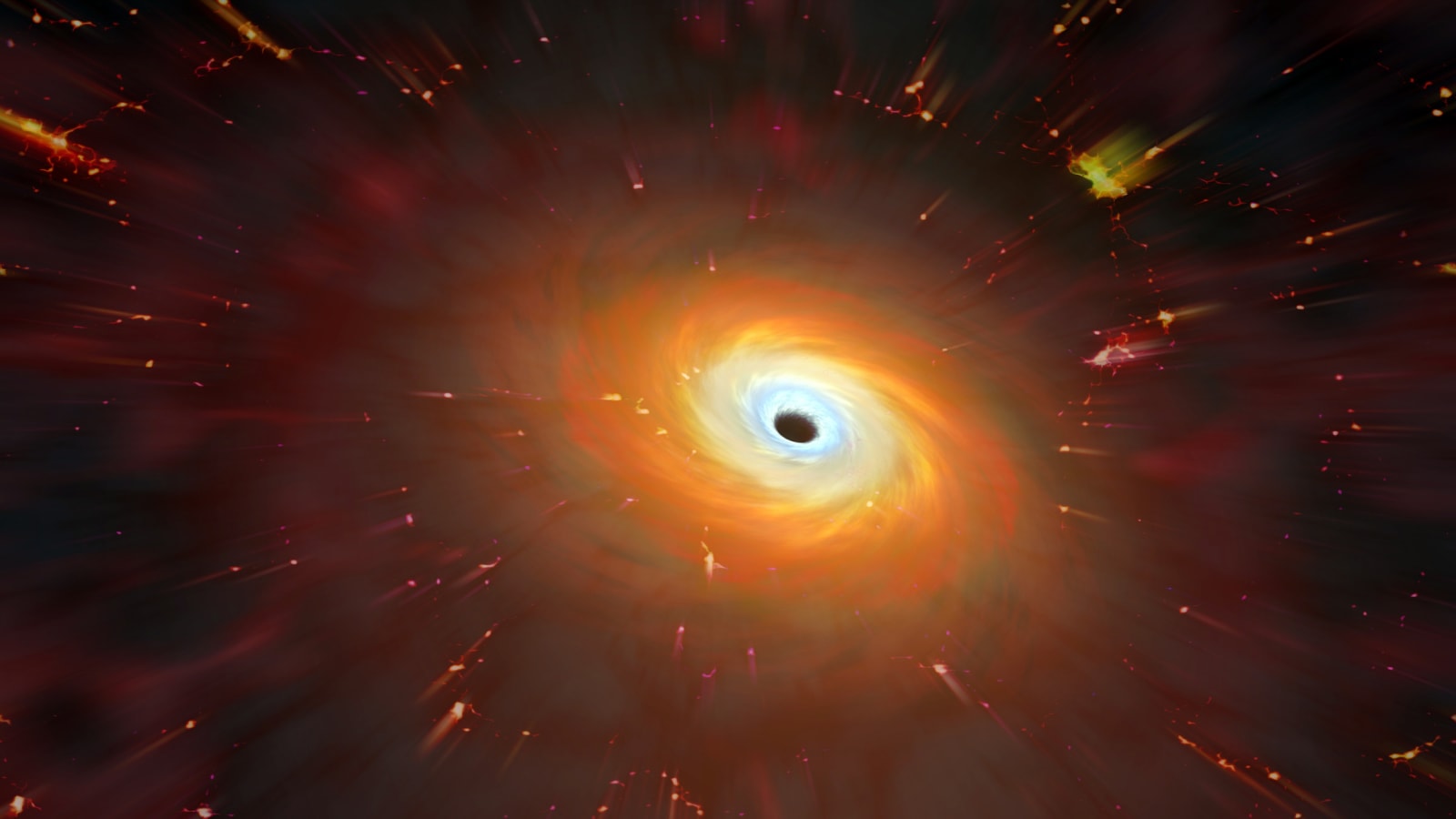
An exotic astrophysical object, MoM-BH*-1's properties are mind-boggling, to say the least. At 100,000 times the mass of the Sun, this black hole and its surrounding gas span a volume comparable to our entire solar system. MoM-BH*-1 also radiates 100 billion times more energy than a standard nuclear fusion-driven star would. "You have something that looks a bit like a star but is 100 billion times brighter. That means you can’t be powering this by nuclear fusion, which is the energy source that sits at the heart of all the stars we have," said Naidu, explaining their difficulty in categorizing the object.
To explore how this object connects to other structures we observe in the universe, the researchers simulated what the pure light of MoM-BH*-1 would look like if it were mathematically combined with the spectrum of a nearby galaxy. The resulting model demonstrated that the combined radiative signature matched the spectra obtained from scores of other LRDs observed by JWST. This strongly suggests that gas-enshrouded black holes power almost all LRDs.
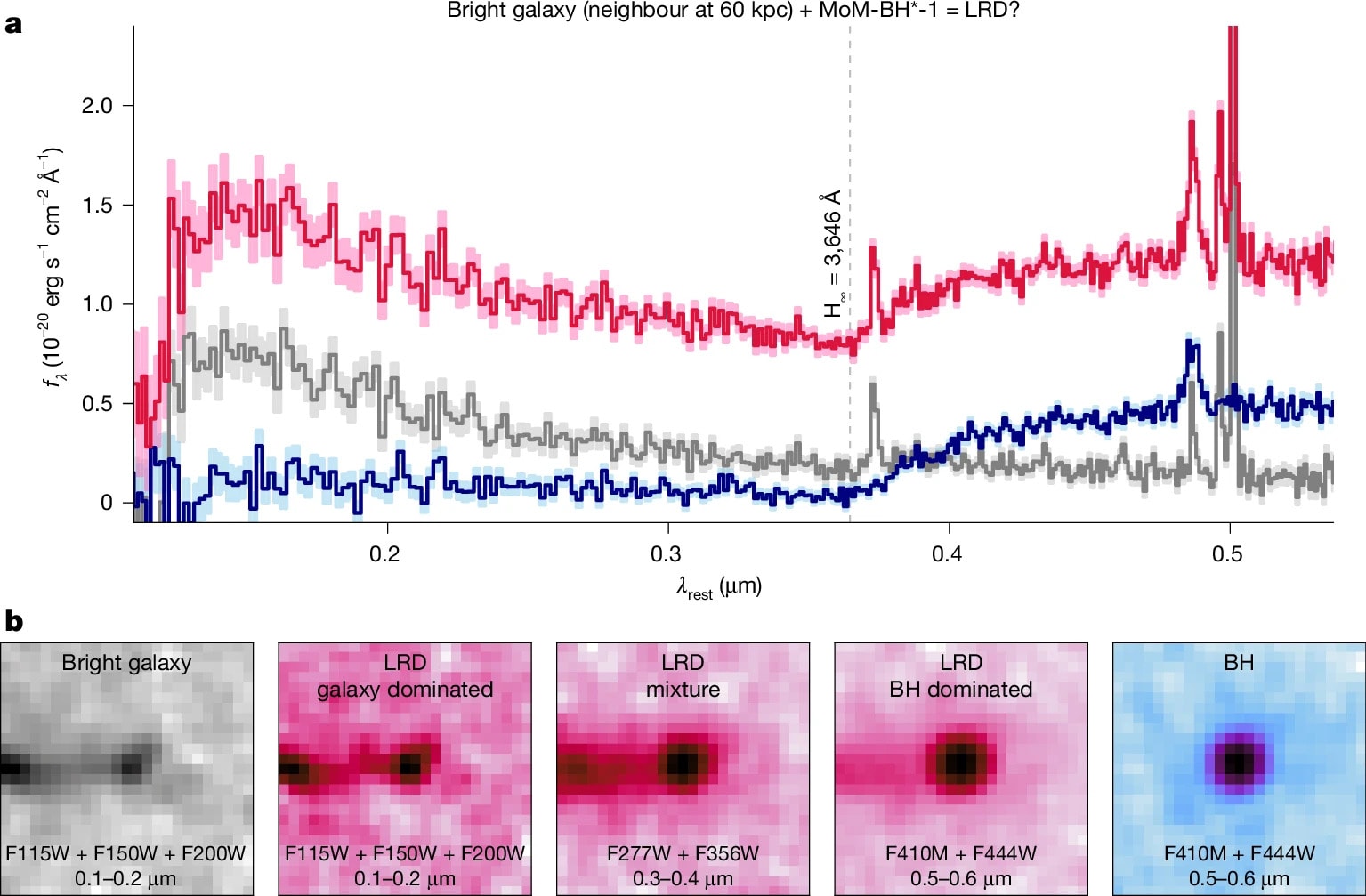
“Every little red dot is consistent with being a black hole star, embedded in a generic early galaxy,” Naidu said, adding, “But what is special about MoM-BH*-1 is, the black hole star is essentially completely outshining its surrounding host galaxy, such that we’re seeing pure black hole star light.”
Why is MoM-BH*-1's discovery important?
Currently, our models of the universe's evolution suggest that supermassive black holes form inside mature galaxies gradually over billions of years. However, JWST repeatedly spotted massive black holes existing in the universe's infancy, raising the question of how they could grow so massive without billions of years passing.

MoM-BH*-1's discovery provides a missing piece of this puzzle, proving that supermassive black holes do not necessarily need a mature host galaxy to grow to massive proportions. By showing that these objects can rapidly grow by feeding on dense, localized pockets of gas in the early universe, MoM-BH*-1's discovery reshapes our understanding of cosmic evolution.
More on Starlust
Water near supermassive black hole? James Webb makes stunning discovery about dying Milky Way star