Why NASA's Nancy Grace Roman Space Telescope could change how we see the universe?
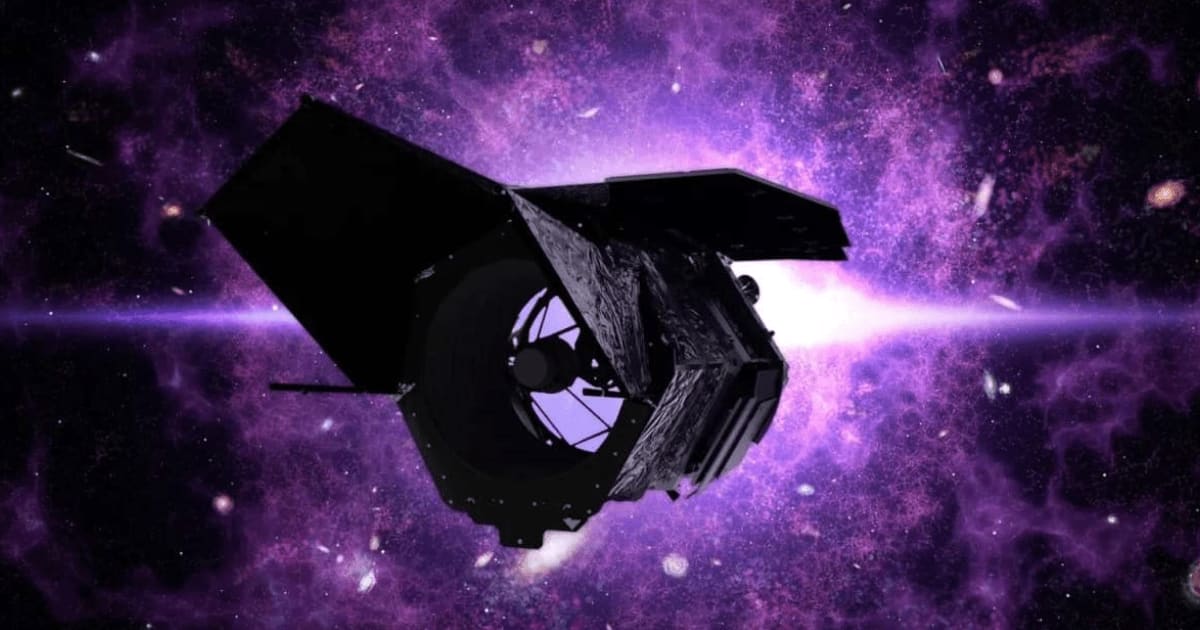
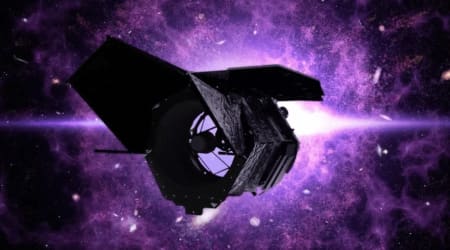
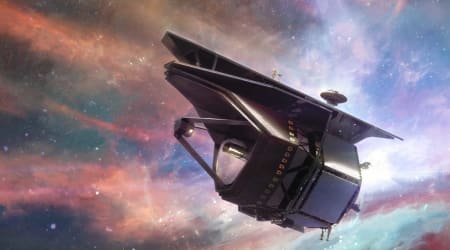
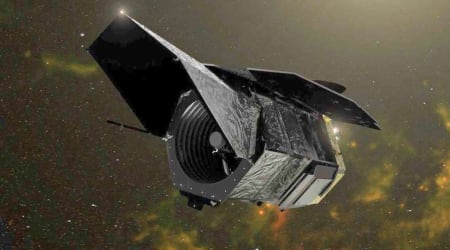
The cutting-edge technology that powers NASA's Nancy Grace Roman Space Telescope is what makes it so impactful. The 42-foot-long observatory has the ability to explore vast regions of space with remarkable accuracy and speed. Working alongside the Hubble Space Telescope and the James Webb Space Telescope, it will study billions of cosmic objects, including thousands of exoplanets, gather enormous volumes of astronomical data and settle important questions surrounding dark matter and dark energy.
Launching soon, our newest space telescope @NASARoman is equipped with tools to help it spot and study exoplanets orbiting distant stars.
— NASA (@NASA) August 21, 2026
Learn about these tools and how they work in our newest NASA's Curious Universe podcast on Roman: https://t.co/nCZCpF1MIO pic.twitter.com/sXisT3J98c
An up-close look at Roman technology: The Primary Mirror
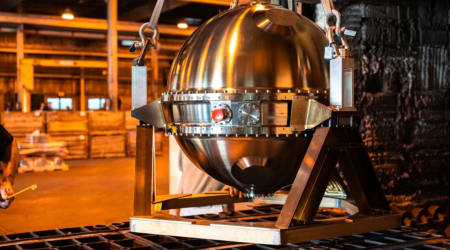
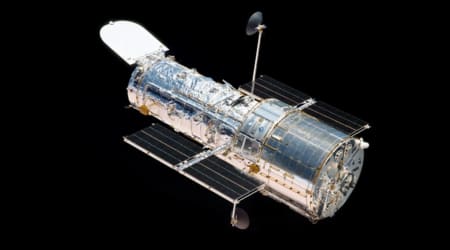
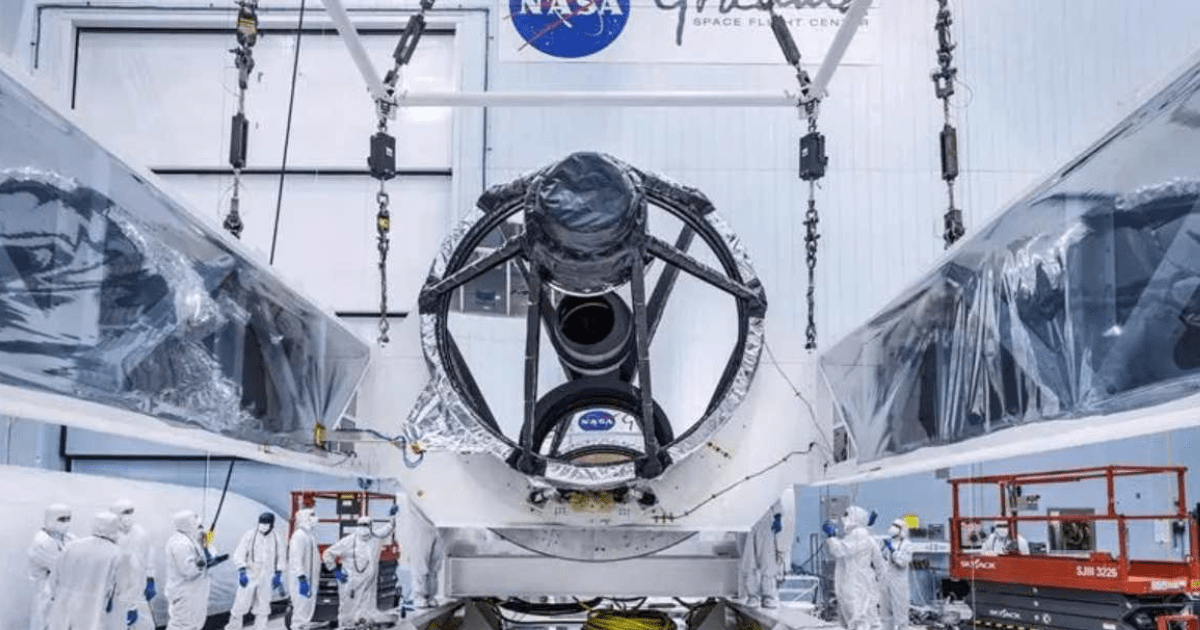
Roman's primary mirror, built at L3Harris Technologies, is around 7.9 feet in diameter. While it is the same size as Hubble's main mirror, it is also less than one-fourth its weight at 410 pounds (186 kilograms). This mirror will capture and focus light from cosmic objects, both near and far, allowing the observatory to capture stunning imagery of the cosmos.
The Wide Field Instrument
What really sets Roman apart from both Hubble and Webb is its Wide Field Instrument—a massive 300-megapixel infrared camera equipped with 18 next-generation detectors. These detectors are essentially little cameras in themselves that have 4,000 by 4,000 pixels packed inside a couple of square inches of area. That means the space between each pixel is just about a fraction of the width of a human hair strand. For perspective, the detectors on Hubble are 1,000 by 1,000 pixels, and those on Webb are 2,000 by 2,000. Thanks to these improved detectors, each image taken by the WFI will cover an area 100 times larger than Hubble and 50 times larger than Webb. In fact, the WFI will be sensitive enough to detect infrared light from farther away in the cosmos than any previous telescope.
Owing to its remarkable resolution and sensitivity, scientists plan to use Roman to explore vast areas of the sky for cooler planets, which cannot be as easily detected as hot gas giants. This can be done using two techniques: Using the transit technique, they aim to unearth around 100,000 novel planets as they travel in the vicinity of their star and generate a small but measurable dimming of the star's light. Additionally, using the microlensing method, they aspire to detect an additional 1,000 exoplanets.
It’s almost time!
— NASA (@NASA) August 26, 2026
Yesterday, @NASARoman arrived at @NASAKennedy's @SpaceX hangar, where it will be joined to a Falcon Heavy rocket—the telescope’s chariot for its journey to orbit. Roman is scheduled to lift off on Sunday, Aug. 30. https://t.co/5HIvoPOXuT pic.twitter.com/WCQQqPgtT9
The Coronagraph Instrument
Another potent instrument at the disposal of Roman is the Coronagraph Instrument (CGI), which can perform direct imaging of exoplanets that are already known and study them. This instrument applies unique masks to shield bright host stars so that fainter celestial objects around them can be revealed. These solar systems are located really far, and hence, the imaged planets seem like minutely sized dots next to their host star, which is obscured by the coronagraph.
The Antenna
The observatory also has a massive 5.6-foot-wide antenna, which is as tall as a refrigerator. Roman can deliver a terabyte-and-a-half of raw science data per day using the antenna. On the whole, over the course of its five-year mission, Roman will acquire more than 20,000 terabytes of data.
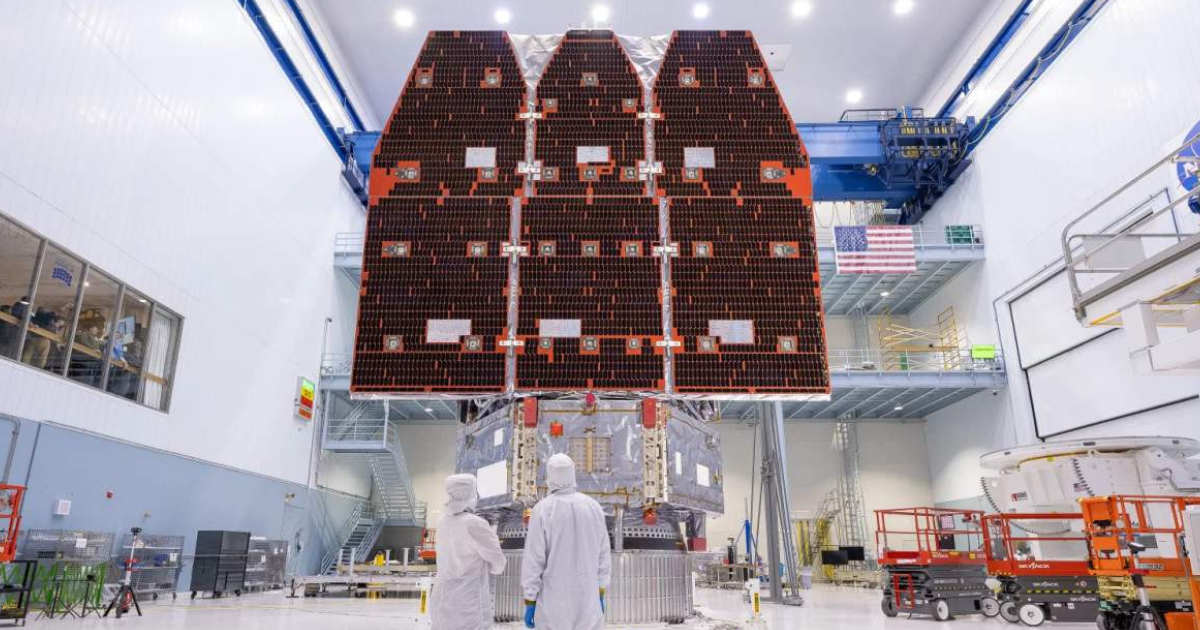
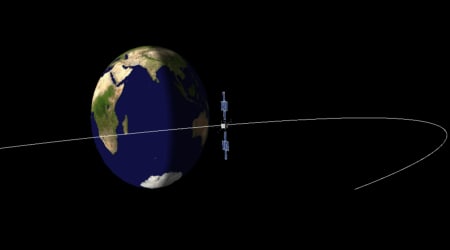
Roman is on track to be launched on August 30, 2026, at 7:26 a.m. EDT aboard a SpaceX Falcon Heavy rocket from Launch Complex 39A at NASA's Kennedy Space Center in Florida. Once it separates from the rocket in space, it will travel to the second Sun-Earth Lagrange point (L2), about 932,000 miles (1.5 million kilometers) from our planet. The unobstructed view of the sky that it will have from there will shape our understanding of the cosmos in the years to come. As Mark Melton, mission systems engineer for Roman, says, "Roman will probably be known for something 20, 30 years from now for something that we have—answering a question we haven’t even thought to ask yet, which is kind of crazy to me."
More on starlust
Who was Nancy Grace Roman—the ‘Mother of Hubble’ NASA’s brand new space telescope is named after?