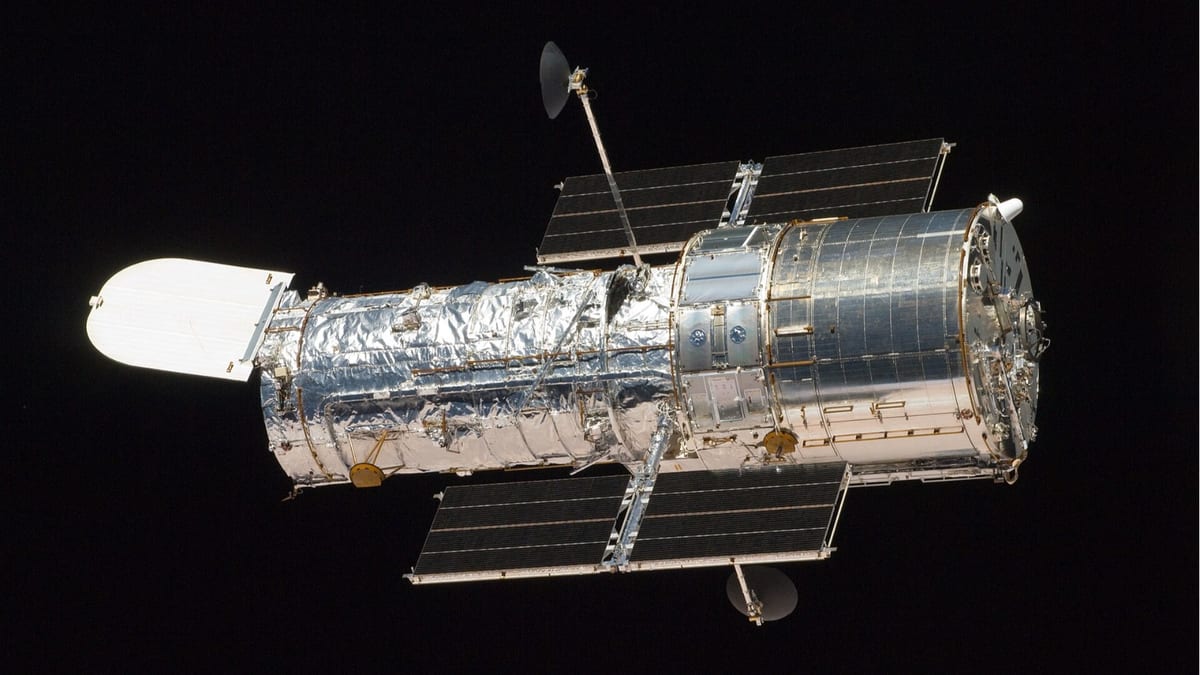
Hubble Space Telescope

Hubble Space Telescope

The Hubble Space Telescope (HST), launched by NASA on April 24, 1990, revolutionized observational astronomy. Named after astronomer Edwin Hubble, the space telescope is one of NASA's Great Observatories, and is capable of observing ultraviolet, visible, and near-infrared light. Over more than three decades of operation, Hubble has provided groundbreaking insights into the universe—confirming the age of the cosmos, the presence of supermassive black holes at the centers of all major galaxies, and the accelerating rate of the universe's expansion are just some of its achievements. Hubble also pioneered the chemical analysis of exoplanet atmospheres and helped map the 3D distribution of dark matter. To this day, it remains one of humanity's most capable observatories.

Who is Stephen Cash? NASA's iconic Marshall Space Flight Center gets new director
NASA's iconic Marshall Space Flight Center—a key contributor to the Apollo program, the ISS, and Hubble—has a new director. Here's all you need to know about Stephen Cash.
Updated: Oct 17, 2026  |  By Shiladitya Ray

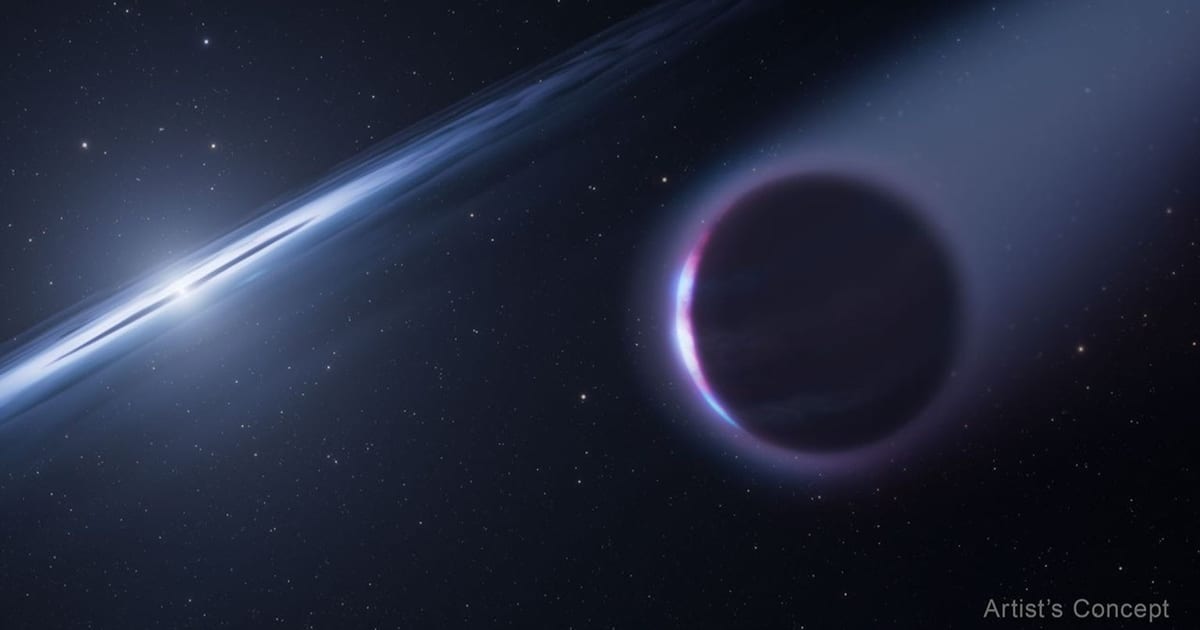
A breakthrough Hubble discovery shows signs of a planet forming after its host star's death
"What Hubble is showing us in this white dwarf system is something we haven’t seen before," said astronomer Jamie Williams.
Updated: Oct 7, 2026  |  By Pranjal Pranit

Five billion miles and 200,000 orbits around Earth: NASA's Hubble Space Telescope completes milestone
According to NASA, Hubble has made over 1.7 million observations since its launch in 1990.
Published: Sep 24, 2026  |  By Harsh Vardhan

NASA's Hubble images another spiral galaxy—but this one is an oddball

It's one of the few known spiral galaxies with a central bulge that extends from its disk at a right angle.
Published: Sep 21, 2026  |  By Lakshmi Kola

NASA's Webb and Hubble reveal how tiny objects beyond Neptune still preserve their ancient origins
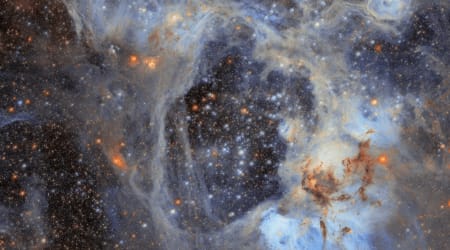
Hubble and Webb have been used simultaneously to uncover secrets of 27 tiny objects beyond Neptune.
Published: Sep 11, 2026  |  By Purva Muley

NASA's Hubble images 'superbubble' in Milky Way satellite galaxy—and it's helping study how stars are born
The superbubble is gigantic, measuring around 210 by 140 light-years across.
Published: Sep 9, 2026  |  By Lakshmi Kola

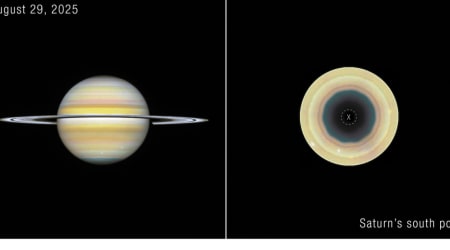
NASA's Hubble Telescope spots mysterious 10-sided structure around Saturn's south pole. What is it?
"We've never seen anything quite like this in Saturn's southern hemisphere," said Amy Simon, the principal investigator on Hubble’s Outer Planet Atmospheres Legacy (OPAL) program.
Published: Sep 4, 2026  |  By Lakshmi Kola

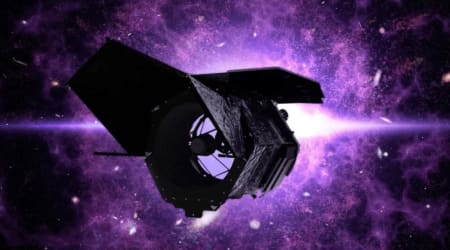
Why NASA's Nancy Grace Roman Space Telescope could change how we see the universe?
While Roman will complement Hubble and Webb, it represents a huge upgrade over its predecessors.
Published: Aug 27, 2026  |  By Lakshmi Kola

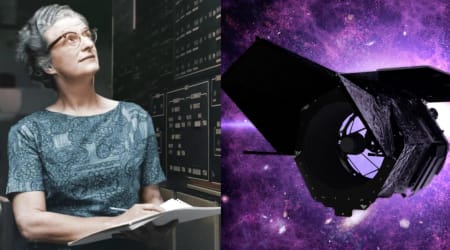
Who was Nancy Grace Roman—the ‘Mother of Hubble’ NASA’s brand new space telescope is named after?
It was Nancy Roman's efforts that brought the revolutionary Hubble Space Telescope into existence.
Published: Aug 21, 2026  |  By Harsh Vardhan

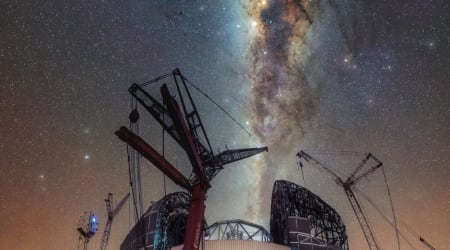
What is the Extremely Large Telescope and what makes it special? All about the most powerful telescope ever made
The massive Extremely Large Telescope (ELT) will outclass Hubble and the JWST and usher in a new era in observational astronomy.
Published: Aug 10, 2026  |  By Shiladitya Ray

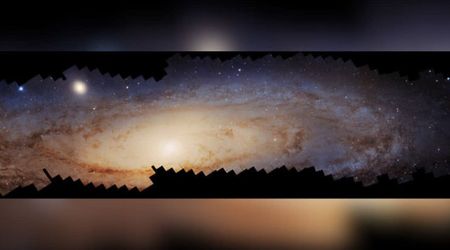
NASA's Hubble reveals star formation has been slowing down in the Andromeda galaxy
Star formation in the galaxy has been on the decline for the past 500 million years.
Published: Jul 29, 2026  |  By Biplab Das

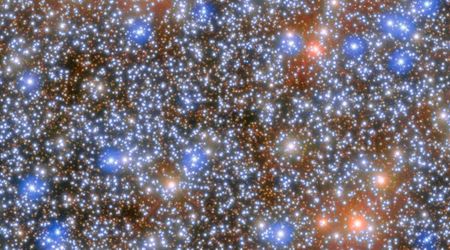
NASA's Hubble and Webb spot the first of a star cluster's 10,000 missing black holes
The black hole, dubbed oMEGACat BH-2, has a visible star companion that orbits it every 94 years, making the duo the longest-period black hole binary ever detected.
Published: Jul 14, 2026  |  By Ankita Garkoti

Hubble sees starlight from a galaxy just 1.4 billion years after the Big Bang—what did it reveal?
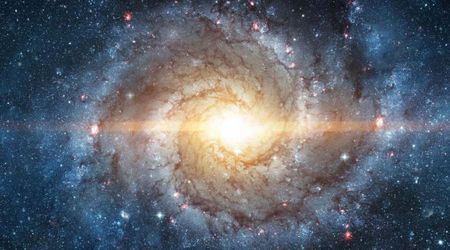
Tightly clustered young stars in an ancient galaxy ionized the early universe's opaque gas.
Published: Jun 26, 2026  |  By Biplab Das

Hubble captures images of M88 on its collision course with M87 in the Virgo Cluster

As M88 heads towards M87 through the intracluster medium, it is being stripped of star-forming gas.
Published: Jun 3, 2026  |  By Biplab Das

NASA's Hubble Space Telescope captures dwarf irregular galaxy located 23 million light-years away
The telescope operational for over 35 years has been looking at the movement of cosmic matter.
Published: May 28, 2026  |  By Pranjal Nath

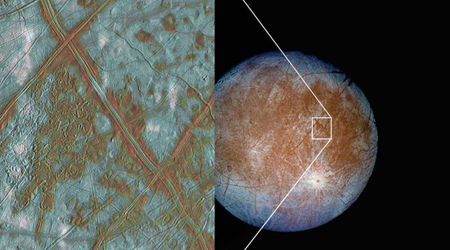
Water vapor plumes on Europa? New study questions earlier 'evidence' gleaned from Hubble data
Reanalysis of 14 years of Hubble data has weakened evidence of Europa’s hypothesized water plumes.
Published: May 20, 2026  |  By Nibedita Sen

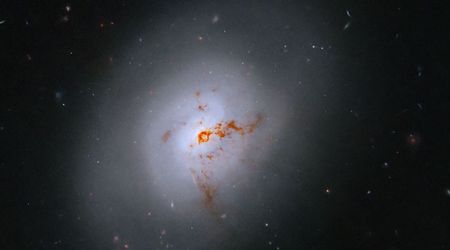
NASA's Hubble images rare post-starburst galaxy located 100 million light-years away
The galaxy called NGC 1266 is in a phase when it has gone past its burst of star formation but is yet to become a quieter elliptical galaxy.
Published: May 19, 2026  |  By Biplab Das

Massive star clusters destroy their birth clouds faster, James Webb and Hubble find
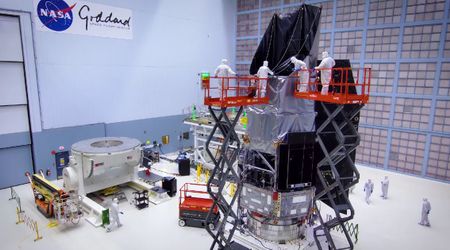
Fresh insights into star clusters advance our understanding of galaxy and planet formation.
Published: May 7, 2026  |  By Shiladitya Ray

NASA's Nancy Grace Roman Space Telescope to launch in September; will work 1,000x faster than Hubble
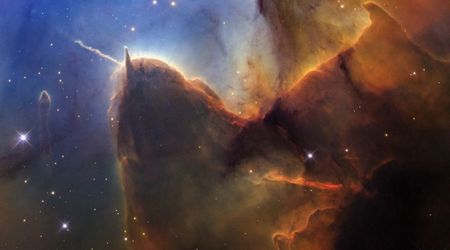
"What would take Hubble 2,000 years to process, Roman can do in a year."
Published: Apr 22, 2026  |  By Sandip Kishan

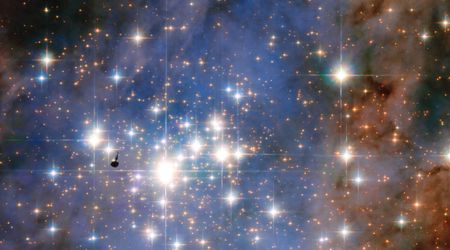
NASA's Hubble images Trifid Nebula again after 29 years, focuses on 'Cosmic Sea Lemon'

The new image of the Trifid Nebula marks the 36th anniversary of NASA's Hubble Space Telescope.
Published: Apr 21, 2026  |  By Disita Sikdar