NASA's Hubble Telescope spots mysterious 10-sided structure around Saturn's south pole. What is it?
![The 10-sided atmospheric wave at Saturn's south pole as observed by NASA's Hubble. [Cover image source: NASA, ESA, STScI, Agustin Sánchez-Lavega (UPV), Amy Simon (NASA-GSFC), Michael Wong (UC Berkeley); Image Processing: Alyssa Pagan]](https://d3hedi16gruj5j.cloudfront.net/815861/uploads/63c5d0c0-a804-11f1-b3e2-03a5dd08610a_1200_630.jpeg)
A massive spinning hexagonal wave in the clouds at Saturn's north pole has fascinated scientists since its discovery in the 1980s. Yet, no such structures were seen in the Southern Hemisphere of the planet until recently. Yes, a bizarre 10-sided, evolving wave-like structure around Saturn's south pole was spotted by NASA's Hubble Space Telescope. The observations were published in the journal Science Advances on September 2, 2026.
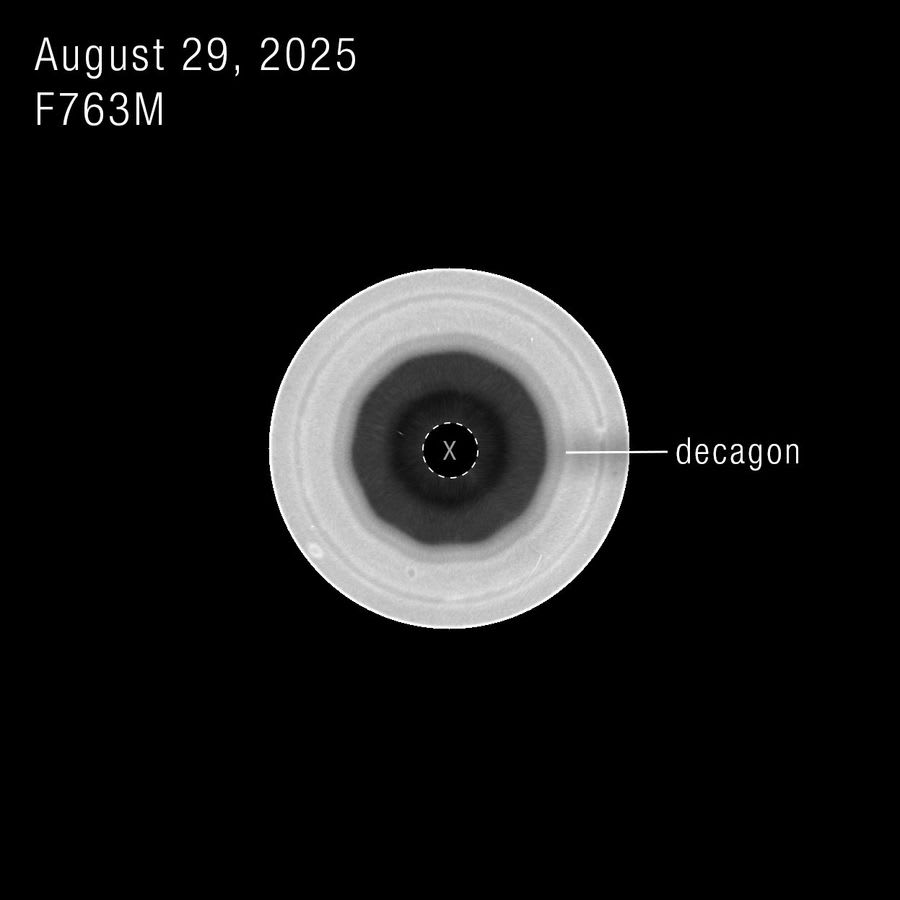
While it appears familiar to the hexagonal pattern over Saturn’s north pole that was first observed by NASA’s twin Voyagers in the 1980s, it is also different and suggests that scientists may be witnessing an altogether new atmospheric phenomenon on the planet. "We've never seen anything quite like this in Saturn's southern hemisphere," said Amy Simon, a co-author of the study, in a statement. "The northern hexagon has been there every time we've looked for more than 40 years. This feature is different—it appears to be strengthening, giving us the rare opportunity to watch a giant atmospheric pattern develop." Simon is also the principal investigator of Hubble's Outer Planet Atmospheres Legacy (OPAL) program, which has imaged the outer planets of the solar system for more than a decade.
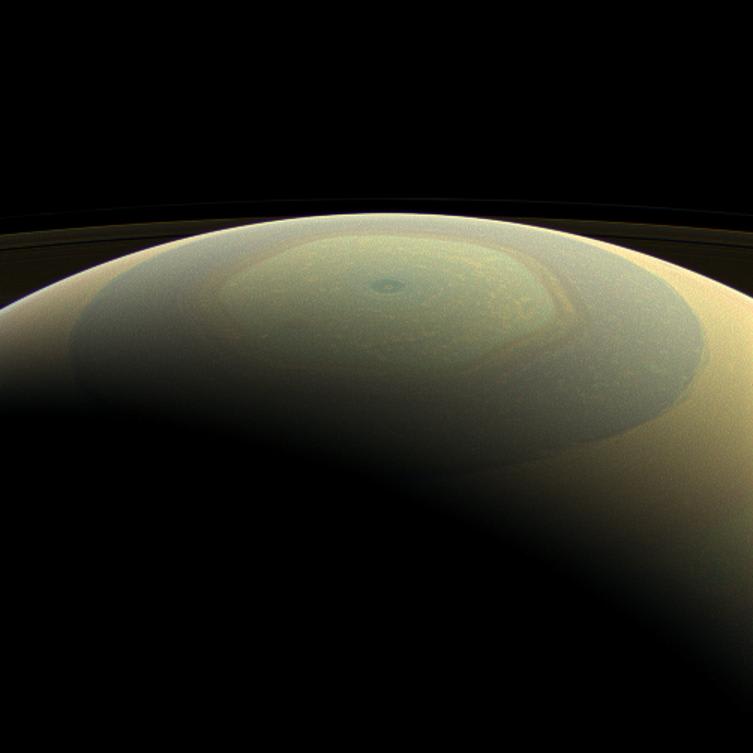
How Saturn's decagon was discovered
Although the decagon viewed recently was the first such observation from Saturn's south pole, previous observations showed subtle hits of the mysterious structure's development. For instance, images in the Planetary Virtual Observatory Laboratory, an online database that stores ground-based images of solar system planets provided by space observers, gave a subtle indication. It was in those images in 2024 that Agustín Sánchez-Lavega, lead author of the recent study, and amateur astronomers Jean-Paul Oger and Trevor Barry noticed a faint, wave-like band at Saturn's southern pole. Thereafter, additional 2025 imagery sourced from the ground suggested the presence of a decagon structure even more emphatically.
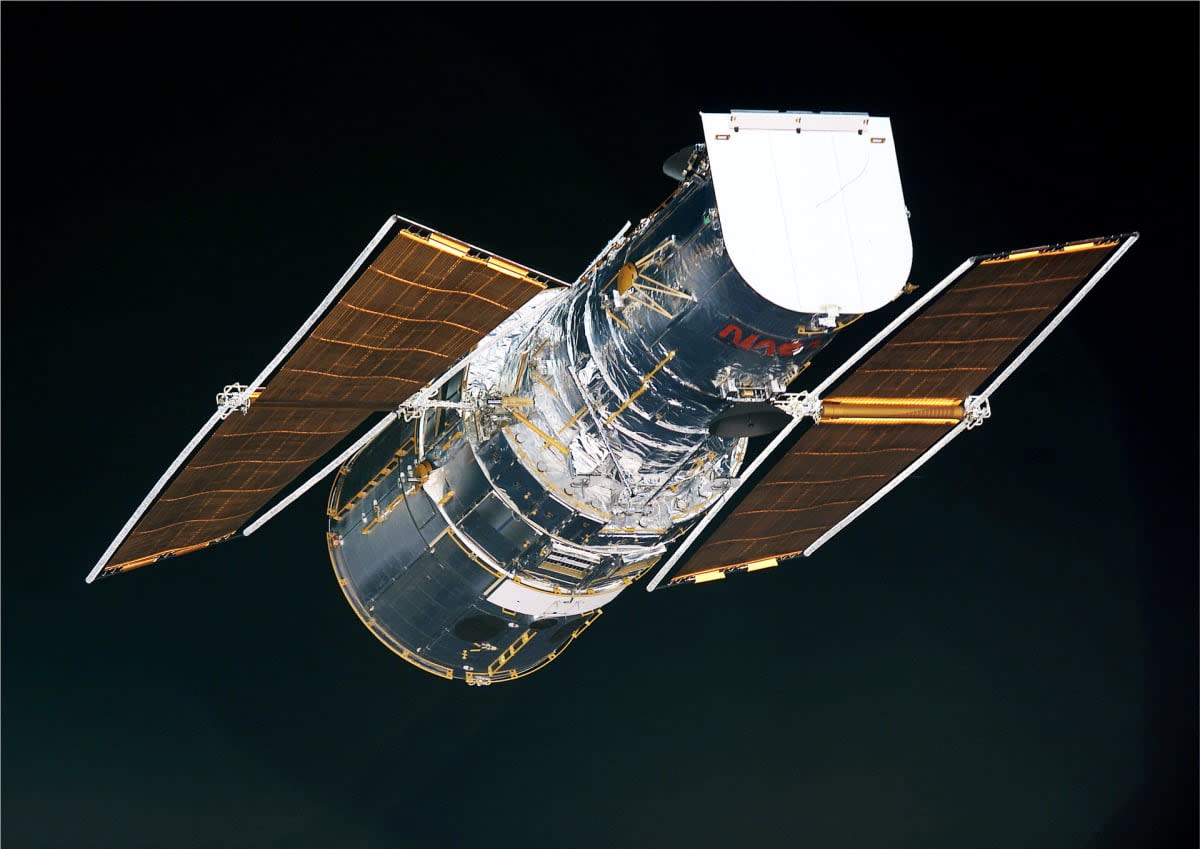
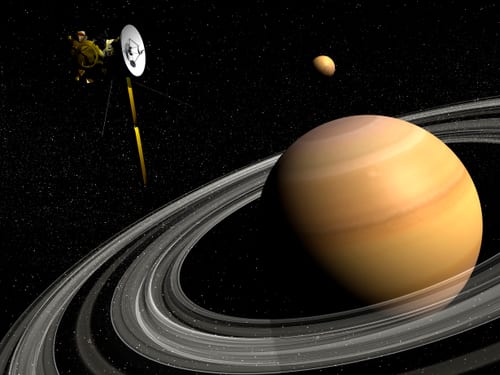
“Given Saturn’s symmetry in its north-south jet stream system, we have been searching for a counterpart to Saturn’s northern hexagon on the south pole in Hubble images since 1990,” stated Sánchez-Lavega, who's a researcher at the University of the Basque Country in Spain. “Images from NASA’s Cassini spacecraft, which orbited Saturn between 2004 and 2017, showed no inkling of a long-lived formation, either. The Hubble data confirmed the feature’s presence back to 2023.” The discovery was ultimately possible because seasonal changes on Saturn brought its south pole back into view from Earth, allowing ground-based observatories to spot it.
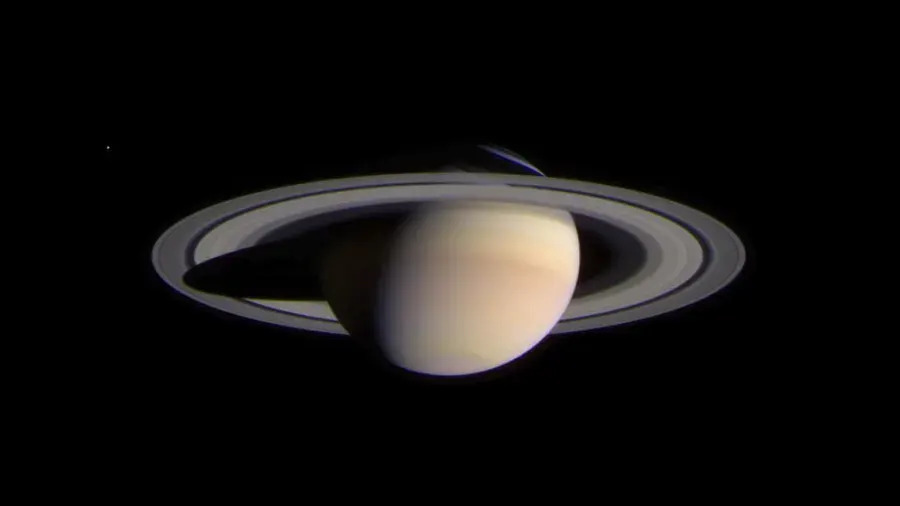
Observations revealed that the wave, sitting within one of Saturn's powerful jet streams, spans multiple layers of the planet's atmosphere. This suggests that it is not just a cloud-level feature. “The most intriguing part to me is that this seems to have just formed recently,” said Simon. “The question is, why did it suddenly form now when we haven't seen one before?”
Future studies can unmask the mystery
The origin of the decagon formation is still unknown. In order to comprehensively understand the cause behind the structure's formation, how long the structure would last, and how the decagon can be comparable to the long-observed hexagon structure at the north pole, more data needs to be collected from the Hubble and James Webb Space telescopes, along with some rigorous computer simulations. The team hopes to find out whether the decagon stabilizes and exists as a stable, long-lived configuration, similar to the hexagon in the north, or keeps on evolving further.
More on Starlust
Saturn has an asymmetric magnetic shield, unlike Earth, suggests NASA's Cassini mission data
NASA's James Webb teams up with Hubble to image Saturn's atmosphere in unprecedented detail