NASA's Hubble images another spiral galaxy—but this one is an oddball
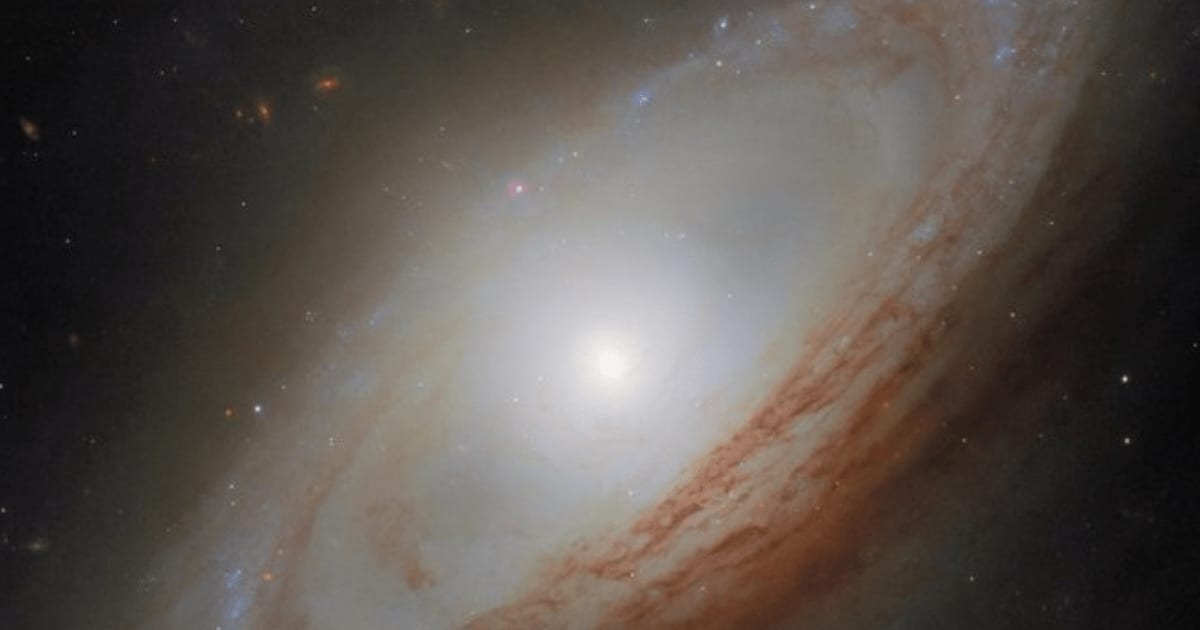
The NASA/ESA Hubble Space Telescope recently imaged a spiral galaxy called NGC 4698 that is spinning out of sync with its own disk. Located 55 million light-years away in the constellation Virgo, it is among the more than 1,000 galaxies in the Virgo Cluster, which itself is the closest large cluster of stars held together by the force of gravity. The structure of the galaxy points towards a past merger and consequent gas accretion that may have reshaped its core.
NGC 4698 is one of only a few known spiral galaxies with a central bulge that extends out from its disk at a right angle.
— Hubble (@NASAHubble) September 18, 2026
The elongation is faintly visible, with the ghostly glow of the starry bulge peeking above and below the dusty disk: https://t.co/0VSL0hDDpw pic.twitter.com/2UVWSZ3OFj
NGC 4672 is not your typical spiral galaxy
Like the Milky Way, which is also a spiral galaxy, NGC 4698 also features a thin disk containing stars, gas, and dust, with spiral arms extending across its outer regions. But unlike many typical spiral galaxies like NGC 4654, which was also recently imaged by Hubble, NGC 4698's spiral arms don't wind inward toward the center but rather form a ring encircling the bright central region.

The diffuse off-white glow in the central bulge originates from stars that are smaller, cooler, and older than the younger, blue stars that are on the galaxy's outer disk. These dense stars revolve around a supermassive black hole weighing millions of times the mass of the Sun. Scientists say this black hole is actively feeding, drawing in the surrounding gas through its gravity.

Interestingly, the central bulge extends perpendicular to its main disk—a feature that is seen in only a few known spiral galaxies, such as NGC 4672. The elongation, in fact, can be seen, albeit faintly, in the image captured by Hubble, where the light from the starry bulge is visible above and below the dusty disk. Another strange thing about the galaxy is that the stars and gas near its center are orbiting in a direction perpendicular to the rotation of the outer disk.
Why is the center spinning out of sync with the rest of the galaxy?
Astronomers have attributed the out-of-sync behavior of the stars near the center to something that lies outside the galaxy. If NGC 4698 captured gas from an external source, the newly procured gas could have created a new disk of stars and gas around the center that is tilted at an angle relative to the original galactic disk. Research into NGC 4698's past points towards a minor galactic merger in its history—something that is evidenced by the presence of a short hydrogen "tail" that trails off from one end of the galaxy.
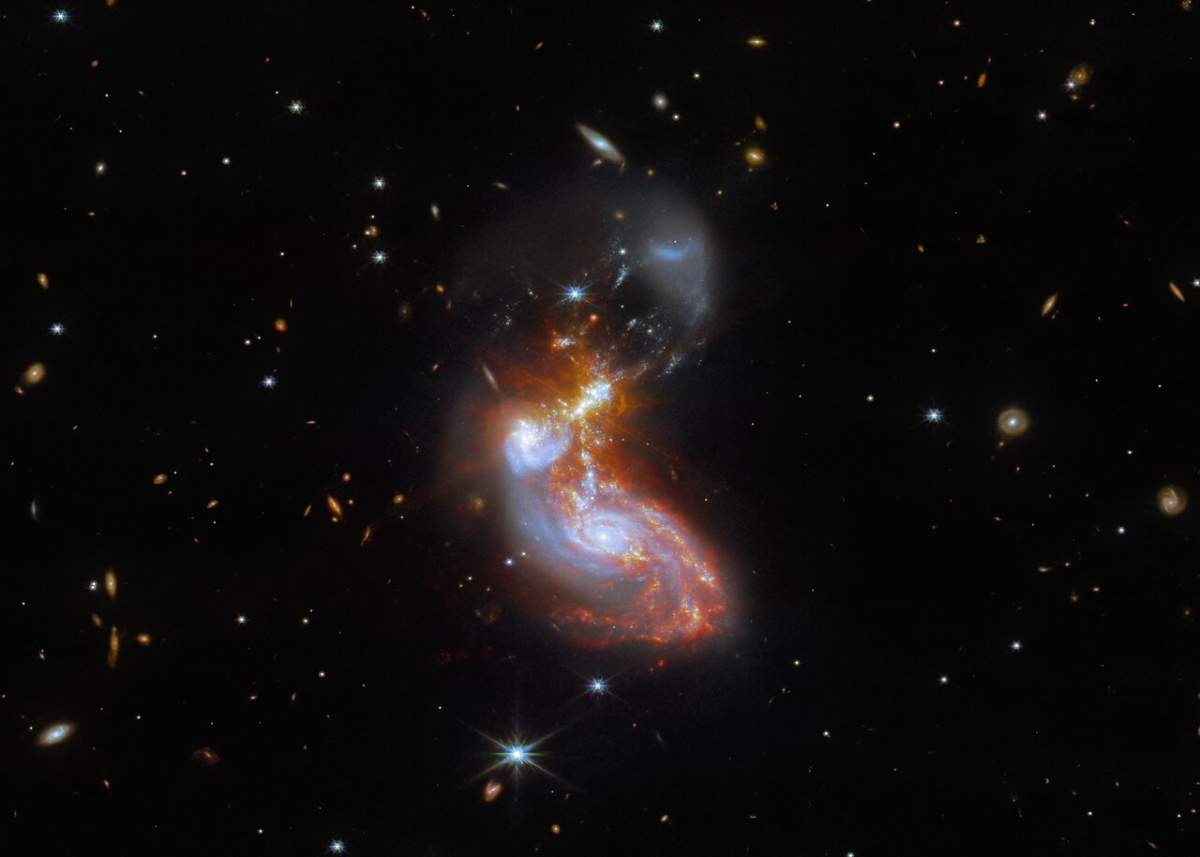
The observations that were used to create the new image of NGC 4698 are part of a broader program aimed at studying the features of relatively nearby galaxies, such as the individual star clusters and nebulae that they are housing. NASA says that using these findings, astronomers can develop an understanding of how a galaxy's journey through a cluster impacts its evolution and its capacity to generate new stars.
More on Starlust
NASA's Hubble traces a glowing 'wake,' uncovering evidence of Betelgeuse’s elusive companion star
Hubble sees starlight from a galaxy just 1.4 billion years after the Big Bang—what did it reveal?