NASA's Hubble Space Telescope captures dwarf irregular galaxy located 23 million light-years away
![HST captures the dwarf irregular galaxy ESO 490-017. [Cover Image Source: NASA | ESA | R. Tully (University of Hawaii) | Image Processing: G. Kober (NASA/Catholic University of America)]](https://d3hedi16gruj5j.cloudfront.net/804816/uploads/256c7c30-5a56-11f1-88a5-c5036a4810bf_1200_630.jpeg)
According to NASA, the Hubble Space Telescope has photographed a dwarf irregular galaxy designated the identifier ESO 490-017. It was captured as Hubble was engaged in understanding how galaxies and clusters of galaxies move from one part of the universe to another as part of the “cosmic flow." The reason this galaxy is being characterized as a dwarf is that it measures only 12,000 light-years across. To put its size into perspective, the Milky Way galaxy is about 100,000 light-years in diameter.
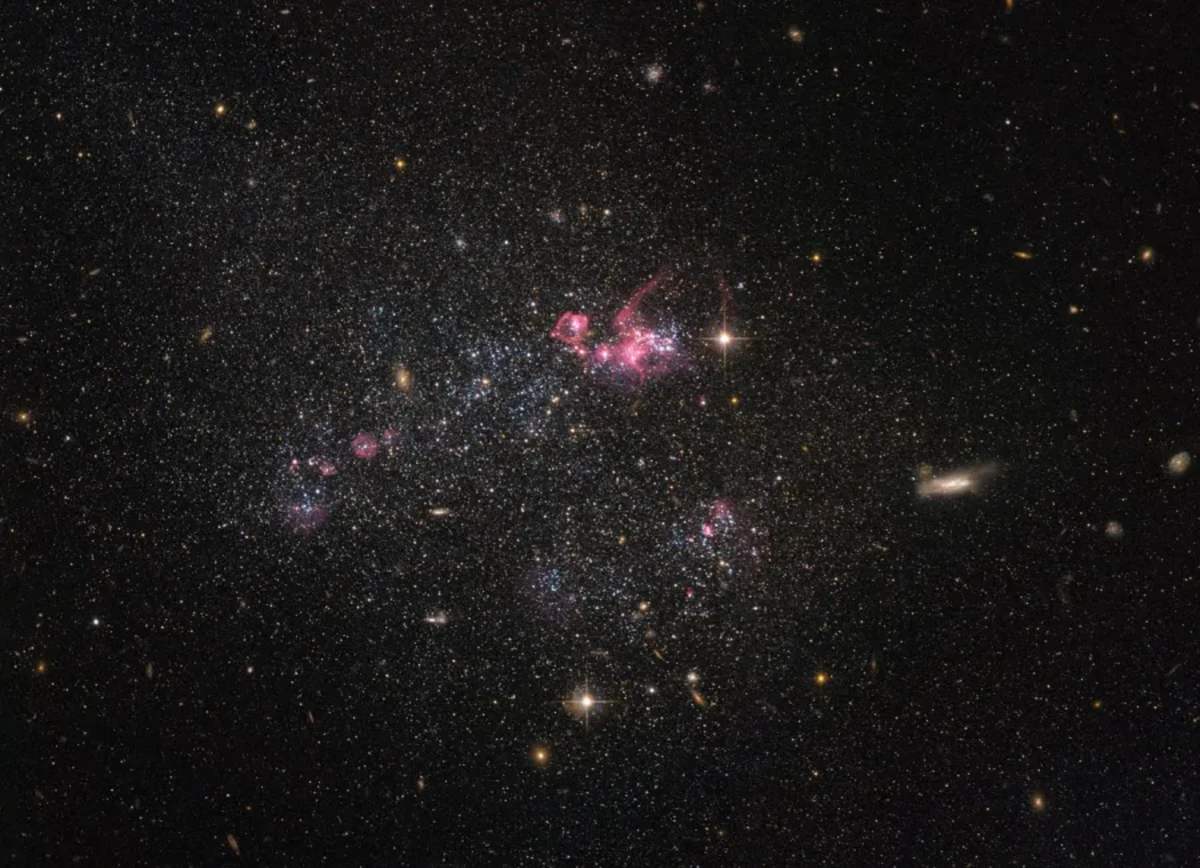
The irregularity in the shape of ESO 490-017 appears in contrast to the usual spiral structures of distant galaxies visible in the backdrop of the same picture taken by the Hubble. The galaxy appears to be nothing more than a collection of faint stars, which means it has a low surface brightness.
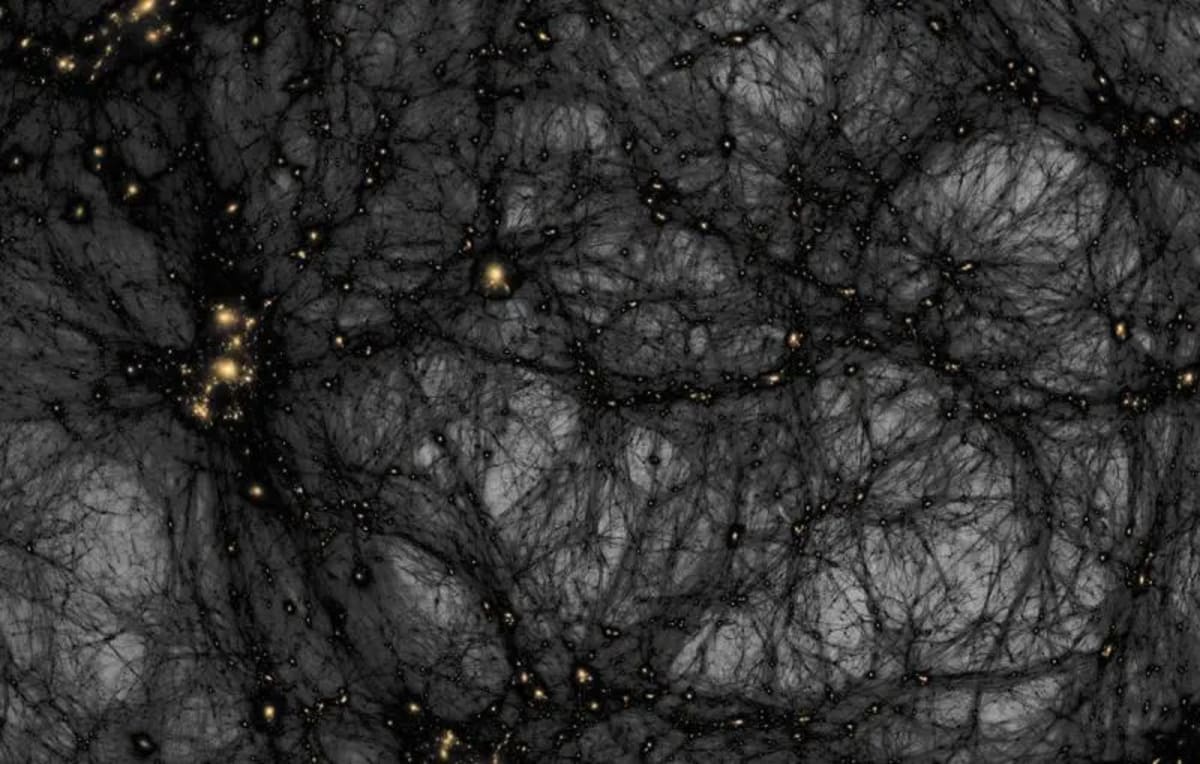
As for the aforementioned cosmic flow process being studied by Hubble, the tracking of the movement of matter towards dense parts of the universe will aid in the detection of dark matter. Due to this movement, voids in space are being created, as these places are left with no structures with mass. While data about this movement was being collected, ESO 490-017 was observed in the constellation Canis Major. It is located at a distance of around 23 million light-years away from us, which was measured with the aid of 'standard candles.' These are reference points such as low-mass red giant stars, which help in the measurement of large distances through the comparison of their absolute brightness and their apparent brightness.
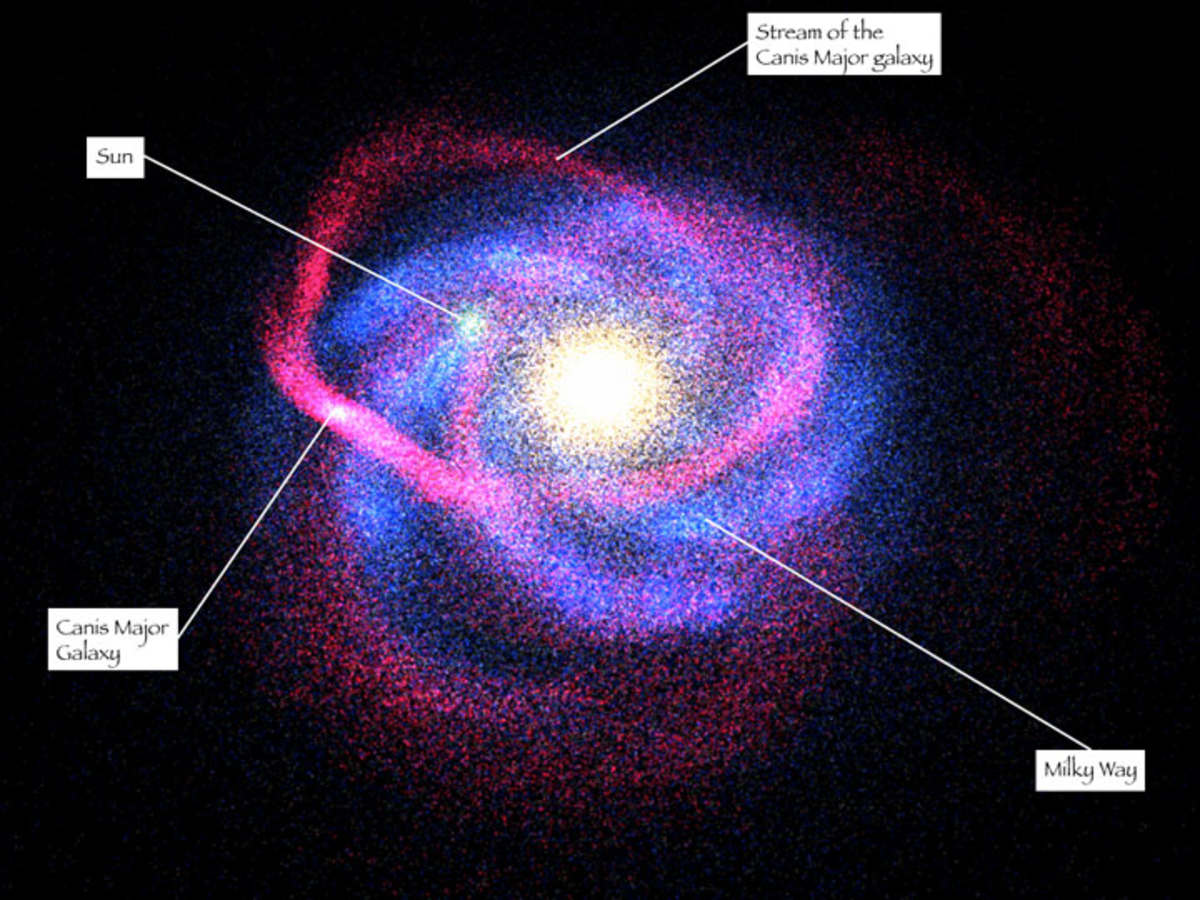
This dwarf galaxy (ESO 490-017) should not be confused with the Canis Major dwarf galaxy, which lies much closer to us at roughly 25,000 light-years and is being ripped apart by our own galaxy. This is causing it to leave a long filament of stars, gas, and dust in its wake as it orbits our host galaxy. It lies behind a thick veil of dust in the plane of the Milky Way, which is why it wasn't discovered until 2003.
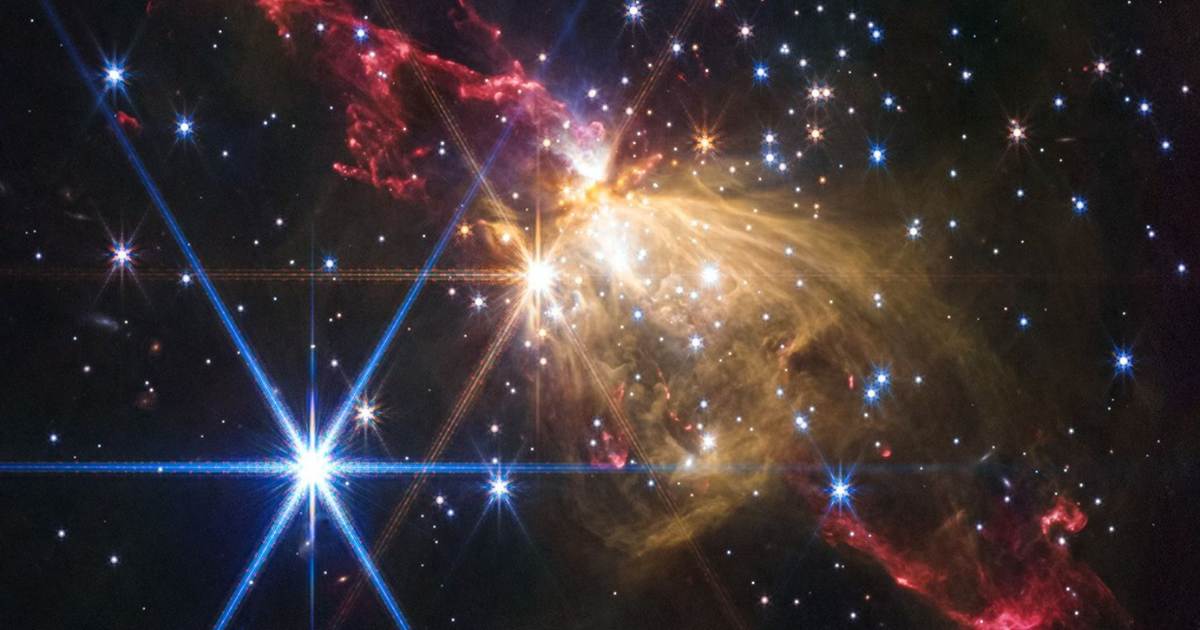
The image also features bright stars in the foreground with signature diffraction spikes that appear as bright lines emerging from a light source. NASA has explained that this happens due to the four struts on the Hubble that support its secondary mirror. Hubble is expected to operate well into the 2030s, despite initially only being designed to have a lifespan of 15 years since being launched in 1990. Its foundational work is being built upon by other space telescopes, such as the James Webb Space Telescope, and will be carried forward by the Nancy Grace Roman telescope, which launches later this year.
More on Starlust
NASA's Nancy Grace Roman Space Telescope to launch in September; will work 1,000x faster than Hubble
Hubble Telescope spots mysterious collisions in nearby star system echoing our solar system's birth