NASA's Hubble images rare post-starburst galaxy located 100 million light-years away
![This NASA Hubble Space Telescope images reveal the lenticular galaxy, NGC 1266. [Cover Image Source: NASA, ESA, K. Alatalo (STScI); Image Processing: G. Kober (NASA/Catholic University of America)]](https://d3hedi16gruj5j.cloudfront.net/803694/uploads/9b523600-5363-11f1-a362-dd52c4eec40b_1200_630.jpeg)
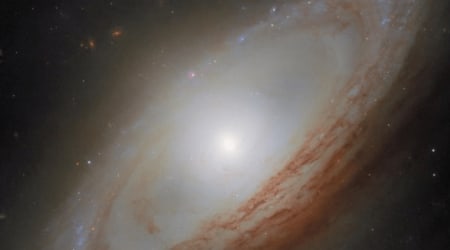
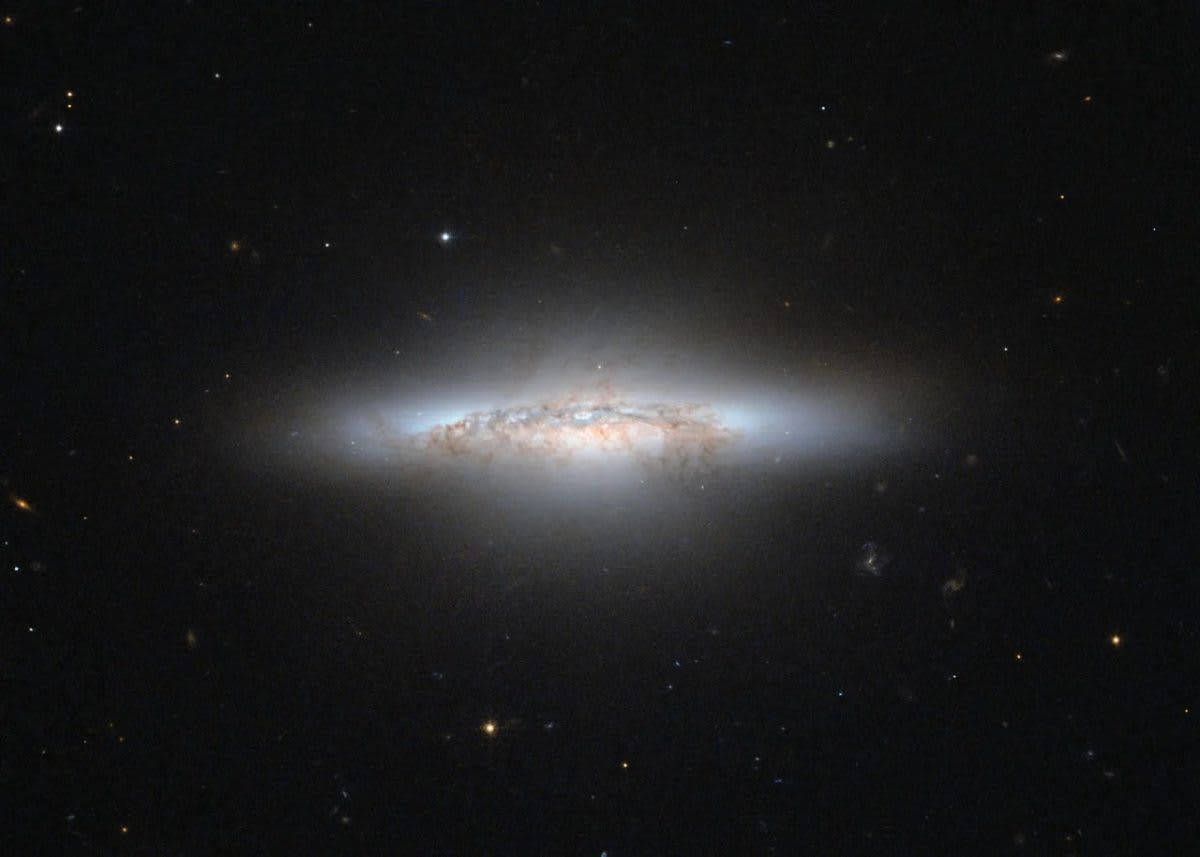
NASA has announced that the Hubble Space Telescope has imaged a mysterious, little-known galaxy that has a spiral structure but has no spiral arms like the Milky Way. The image shows its face partially obscured by reddish-brown clumps and filaments of dust, with red, blue, and orange light from distant galaxies lighting up its diffuse outer regions and dotting the inky-black background. The galaxy, called NGC 1266, is located some 100 million light-years away in the constellation Eridanus (the Celestial River).
It is classified as a lenticular galaxy, which astronomers describe as a transitional galaxy that represents an evolutionary bridge between spirals and ellipticals. Lenticular galaxies are lens-shaped. They have a bright, inflated, central region and flattened, disk-like spirals, but no spiral arms grow. The most intriguing feature of NGC 1266, however, is the fact that it is in a phase when it has gone past its burst of star formation but is yet to become a quieter elliptical galaxy. Galaxies that cross the starburst phase have a young population of stars but few star-forming regions. Roughly 1% of the local galaxy population is a post-starburst galaxy.
The galaxy has had a checkered history. Some 500 million years ago, another galaxy merged with it. The merger boosted star formation and increased the mass of the galaxy’s central region. It also ferried gas into its supermassive black hole. This sudden supply of matter made the black hole more active, resulting in the formation of an active galactic nucleus, or AGN. The black hole then generated powerful jets of gas along its axis of rotation. Eventually, the heightened star formation and the black hole’s increased activity depleted the galaxy’s reservoir of star-forming gas. What's more? The turbulence that was created as a result also prevented new stars from forming in the gas that was left.
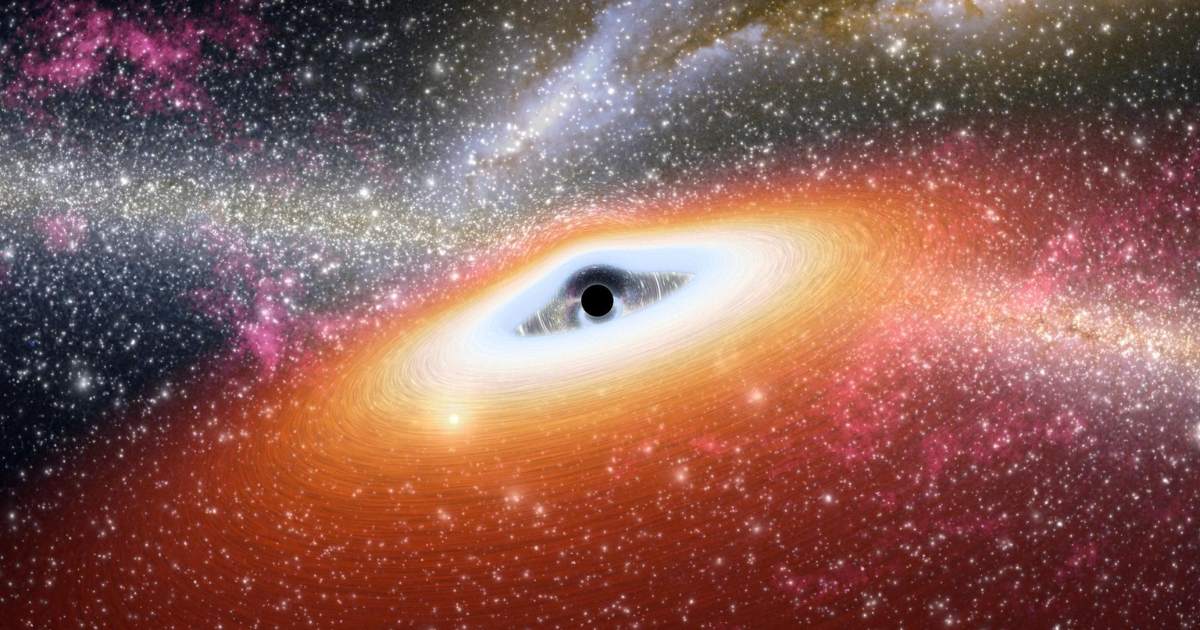
Using Hubble and other observatories, astronomers detected a strong outflow of gas from the galaxy and high disturbance in the space between its stars. In the outer regions, its star-forming gas is almost depleted. However, researchers found that stars are still being born in the core of the galaxy. Beyond the core, very little to no star formation occurs. The supermassive black hole lying at the heart of the galaxy may contribute to such a variation. The black hole prevents star birth by stripping or ejecting star-forming gas from the galaxy. This generates shockwaves that create instability, disturbing the gas and dust between stars. This is enough to prevent any remaining matter from collapsing and forming infant stars. Galaxies like NGC 1266 are ideal for astronomers to study the underlying complex processes that stifle star formation. Objects like this will help us better understand how galaxies evolve and how supermassive black holes contribute to galaxy evolution by interacting with their hosts.
More on Starlust
NASA's Hubble provides spectacular views of a barred spiral galaxy 380 million light-years away
Massive star clusters destroy their birth clouds faster, James Webb and Hubble find