Hubble sees starlight from a galaxy just 1.4 billion years after the Big Bang—what did it reveal?
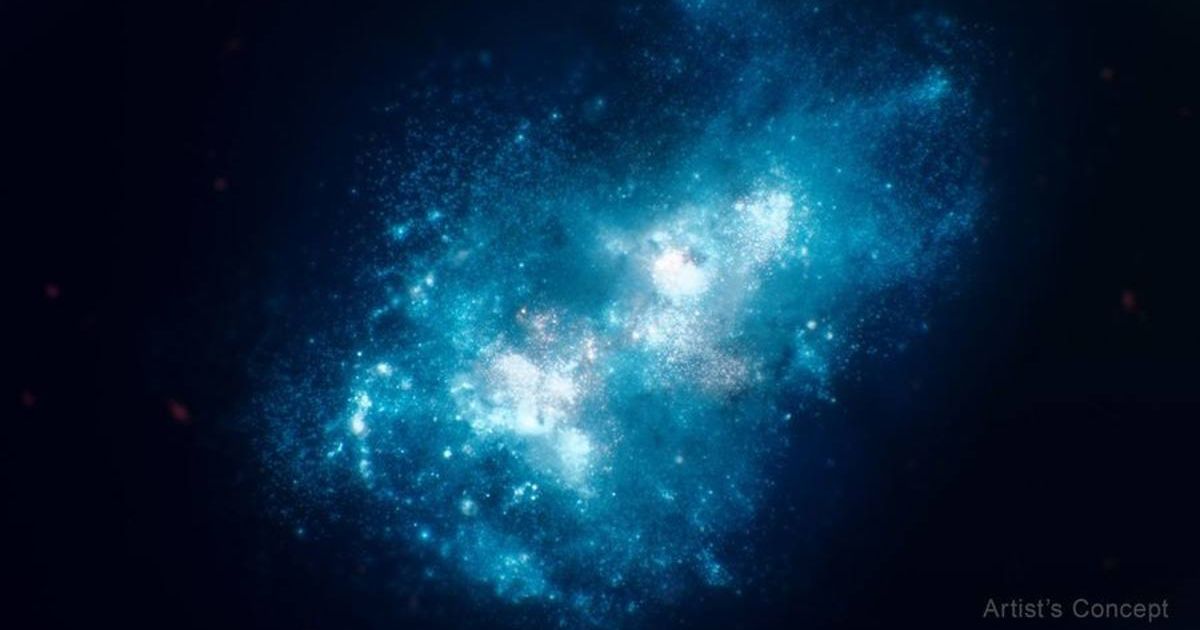
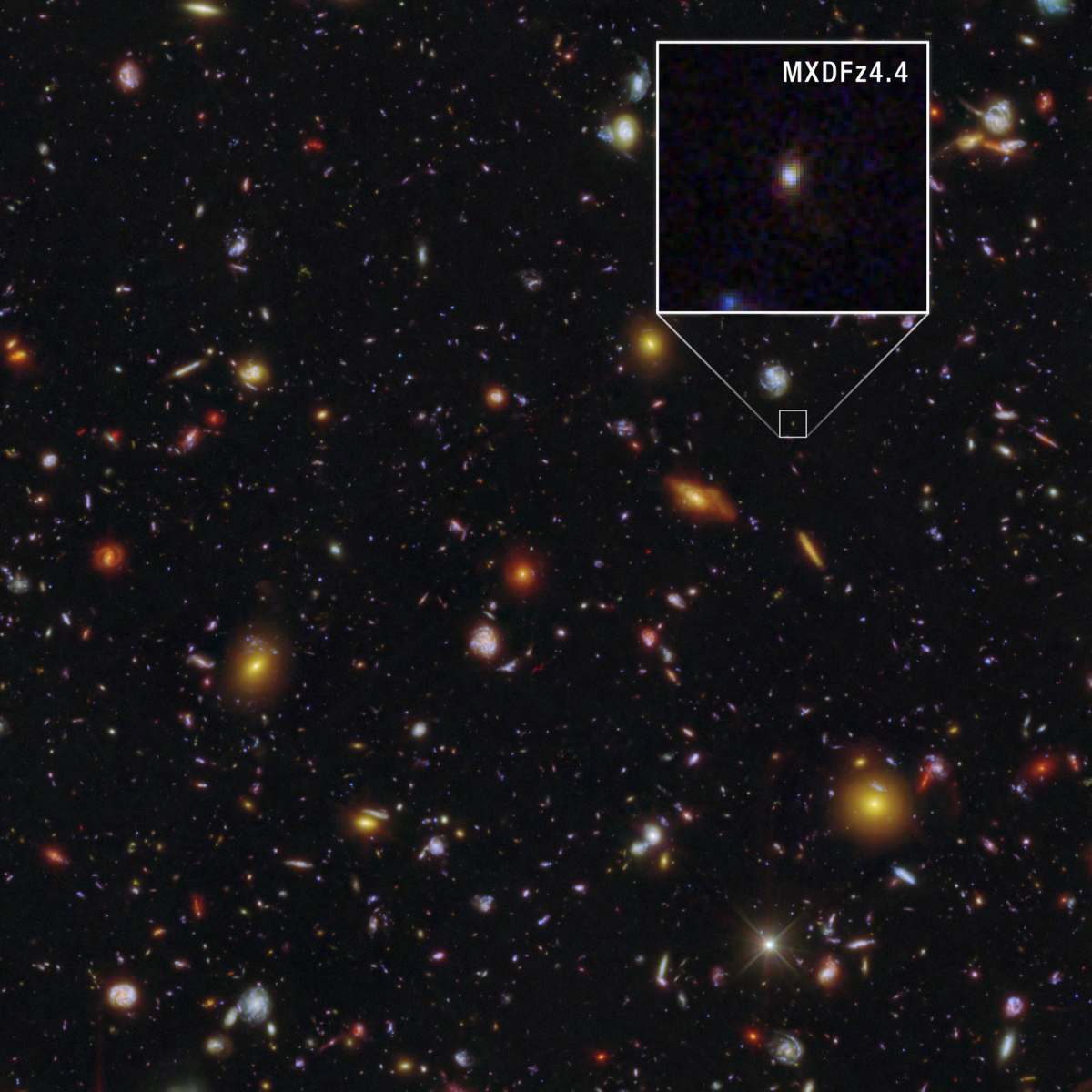
NASA’s Hubble Space Telescope has captured the signature of extreme ultraviolet light coming from a distant galaxy that existed just 1.4 billion years after the Big Bang. The galaxy is home to tightly clustered young stars that produce intense ionizing light—radiation powerful enough to transform opaque, neutral hydrogen atoms into an ionized gas, clearing the cosmic fog. The discovery, reported in a paper published in The Astrophysical Journal, centers on a galaxy named MXDFz4.4. It existed just after the close of the Era of Reionization, an age when the universe transformed from an opaque, neutral state to a transparent, ionized plasma roughly 300 million to 1 billion years after the Big Bang. Initially, the space between early galaxies was filled with neutral hydrogen gas that blocked ultraviolet light. As the first stars and galaxies began to form, they emitted ultraviolet light which stripped the electrons from hydrogen atoms, making the gas transparent and allowing starlight to pass through.
This clearing of the cosmos didn’t happen in a mere blink of an eye, but took hundreds of millions of years, and for a long time, astronomers have been trying to figure out exactly how it happened. “Observing a galaxy like this was thought to be impossible,” said lead author Ilias Goovaerts, a postdoctoral fellow at the Space Telescope Science Institute (STScI) in Baltimore, in a statement by NASA. “Researchers expected the ‘fog’ or neutral hydrogen that filled the early universe would be too thick and obscure our view of its ionizing light. Hubble not only spotted that light, but it also helped reveal incredible details about the galaxy’s characteristics,” he explained.
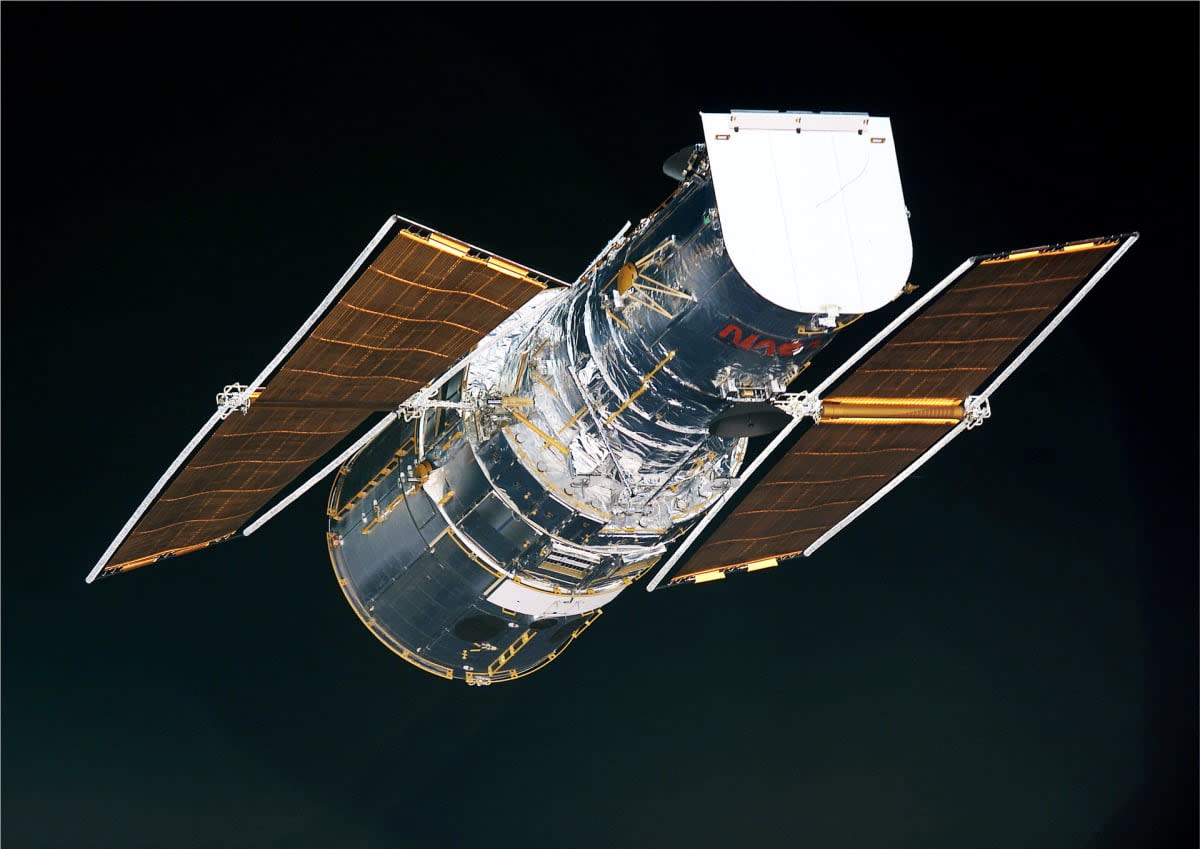
This extreme ultraviolet light, which is required to ionize hydrogen, was emitted by young, massive stars in the early universe. Because this light traveled for over 12.4 billion years to reach Earth, the expansion of space stretched—or redshifted—the light's wavelength all the way into the visible light spectrum. Orbiting roughly 335 miles above Earth away from the blurring effects of our atmosphere, Hubble captured this faint, redshifted visible light using its highly sensitive optical cameras. “Astronomers have found many galaxies that existed at this point in the history of the universe, but we haven’t detected ionizing photons from any of them, making MXDFz4.4 one of a kind,” said Marc Rafelski, a co-author and Hubble deputy mission head at STScI.
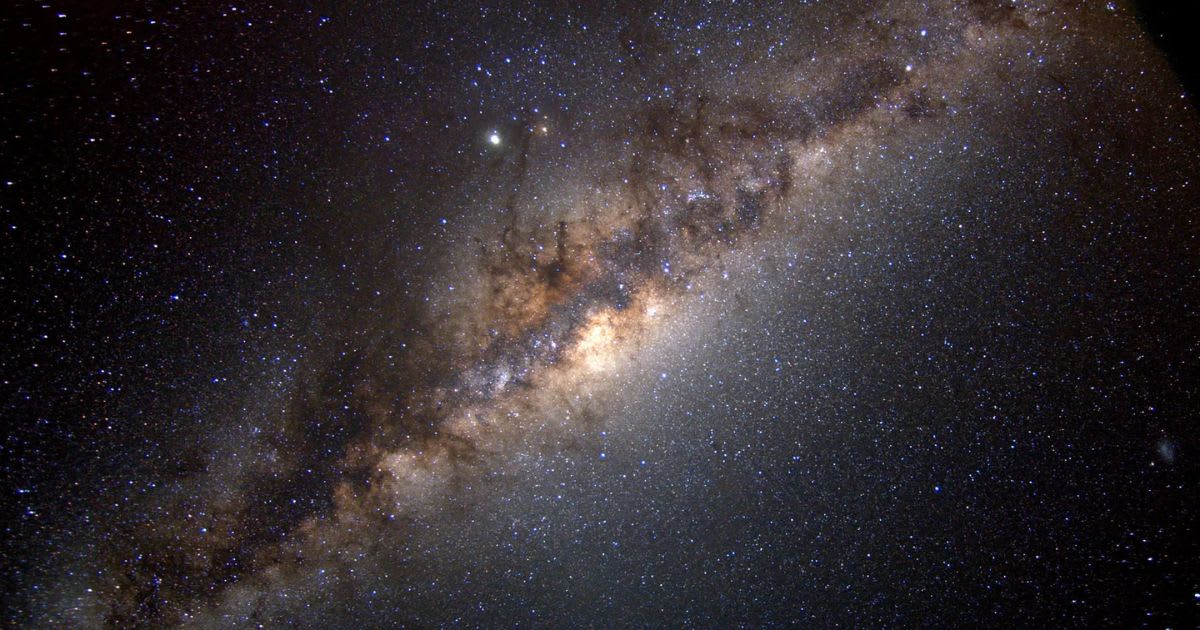
Hubble’s observations reveal that MXDFz4.4 is crammed with young, massive stars that were born within the last few million years of the galaxy's existence. These densely packed stars gave off the radiation that ionized the surrounding hydrogen, blasting open a hole in surrounding opaque gas. To put this crowding effect into perspective: the distant galaxy is about 100 times smaller in physical area than the Milky Way, yet it produces new stars 10 times faster. “A lot of young, hot, massive stars in a small space do a better job of blasting through opaque gas,” Goovaerts said. The data aligns perfectly with this theory. The researchers calculate that between 50 to 100% of the young stars’ energy-packed ionizing light is actively escaping into the surrounding gas. Because massive stars run out of their fuel quickly, they rapidly explode as supernovae, unleashing immense energy and blowing massive cavities through the gas, allowing even more light to pour out.
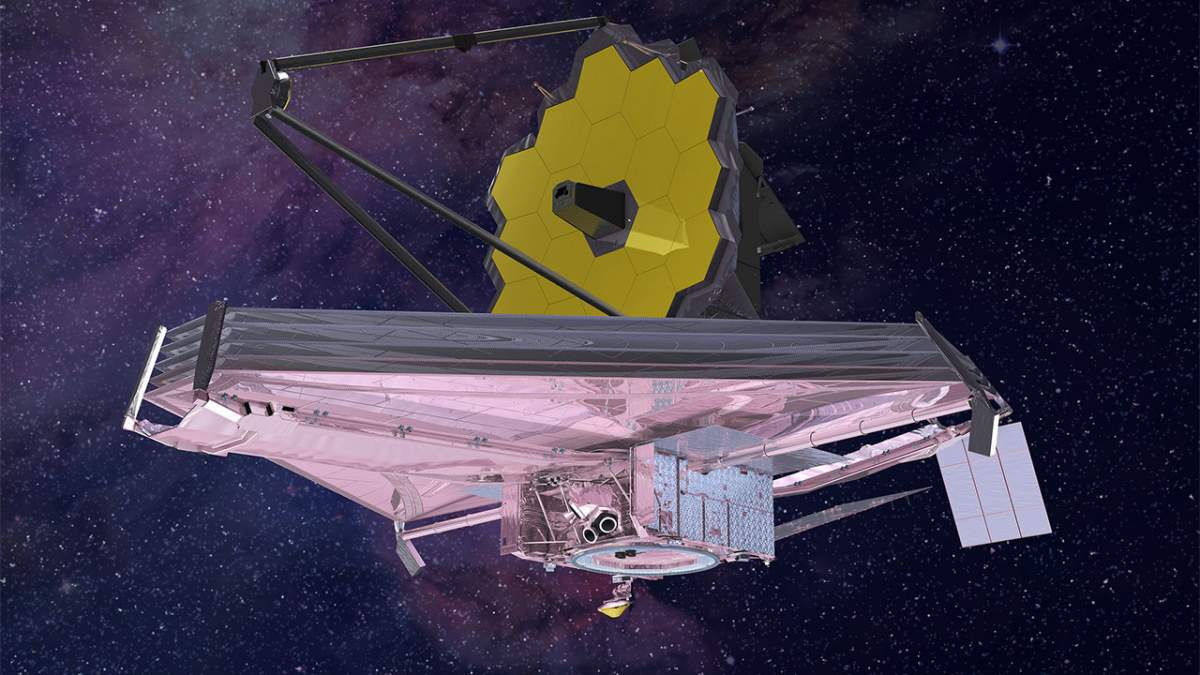
But Hubble alone couldn't paint the full picture. The discovery also relied heavily on the infrared vision of NASA’s James Webb Space Telescope (JWST), as well as the MUSE eXtremely Deep Field (MXDF)—a detailed dataset captured by the MUSE instrument on the European Southern Observatory’s Very Large Telescope (VLT). Webb’s infrared data helped the researchers determine the galaxy’s mass, analyze its older stars, and measure its star formation history. This revealed that the galaxy’s older stars are less massive and cooler, meaning they didn’t participate in clearing the fog of hydrogen gas. The team also compared Hubble and Webb data to find that recent star formation happened in sudden, intense bursts. “Without Webb to clarify what we saw in Hubble’s images, we couldn’t make these conclusions,” Rafelski said.
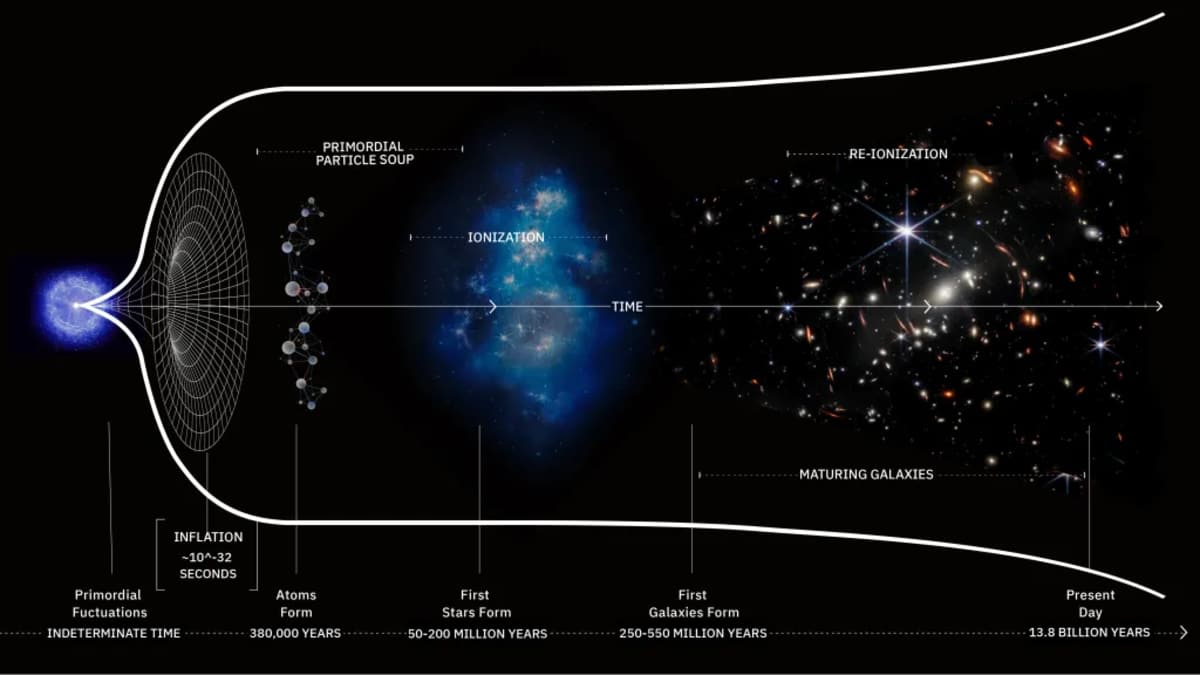
In 2023, Webb made a breakthrough by finding galaxies whose stars emitted enough light to heat and ionize the gas around them roughly 900 million years after the Big Bang, right in the thick of the Reionization Era. But astronomers still needed a galaxy like MXDFz4.4 to decipher the exact mechanics of how a galaxy changes its surrounding environment from a foggy to a completely clear state. “Hubble’s observations of MXDFz4.4 let us test our hypotheses much closer to the Era of Reionization than ever before,” Rafelski said. “Finding more galaxies, especially at slightly later cosmic times where larger samples are within reach, would let us refine these measurements and figure out what cleared our view as that era was ending,” he added.
More on Starlust:
Young stars are changing entire galaxies and scientists finally know how
NASA’s TESS mission finds two rare exoplanets with density like that of cotton candy