Massive star clusters destroy their birth clouds faster, James Webb and Hubble find
Fresh insights into star clusters advance our understanding of galaxy and planet formation.
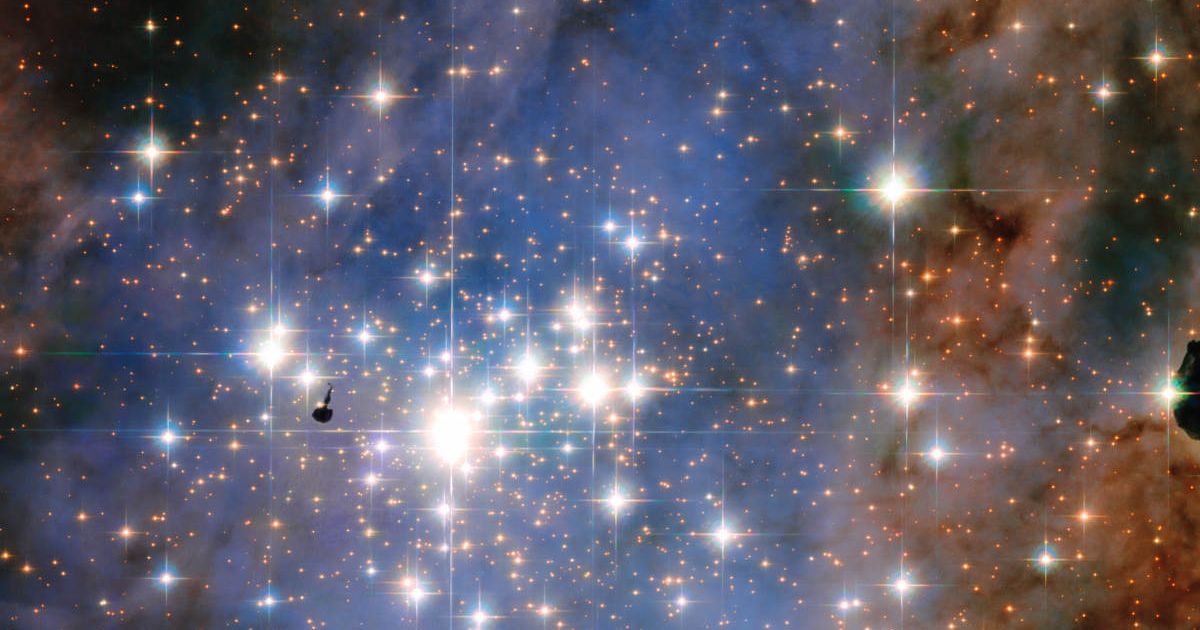
This Hubble Telescope image features the star cluster Trumpler 14, one of the largest gatherings of hot, massive & bright stars in the Milky Way. (Image Source: NASA, ESA, and J. Maíz Apellániz (Institute of Astrophysics of Andalusia, Spain)

Using the James Webb Space Telescope (JWST) and its predecessor Hubble, astronomers took a close look at thousands of young star clusters in four galaxies and studied these clusters at different stages of their evolution. They found that massive star clusters emerge more quickly from the clouds of gas they are born in, as opposed to low-mass clusters, with the findings having important implications for our understanding of star formation in galaxies, as well as, how and where planets form.
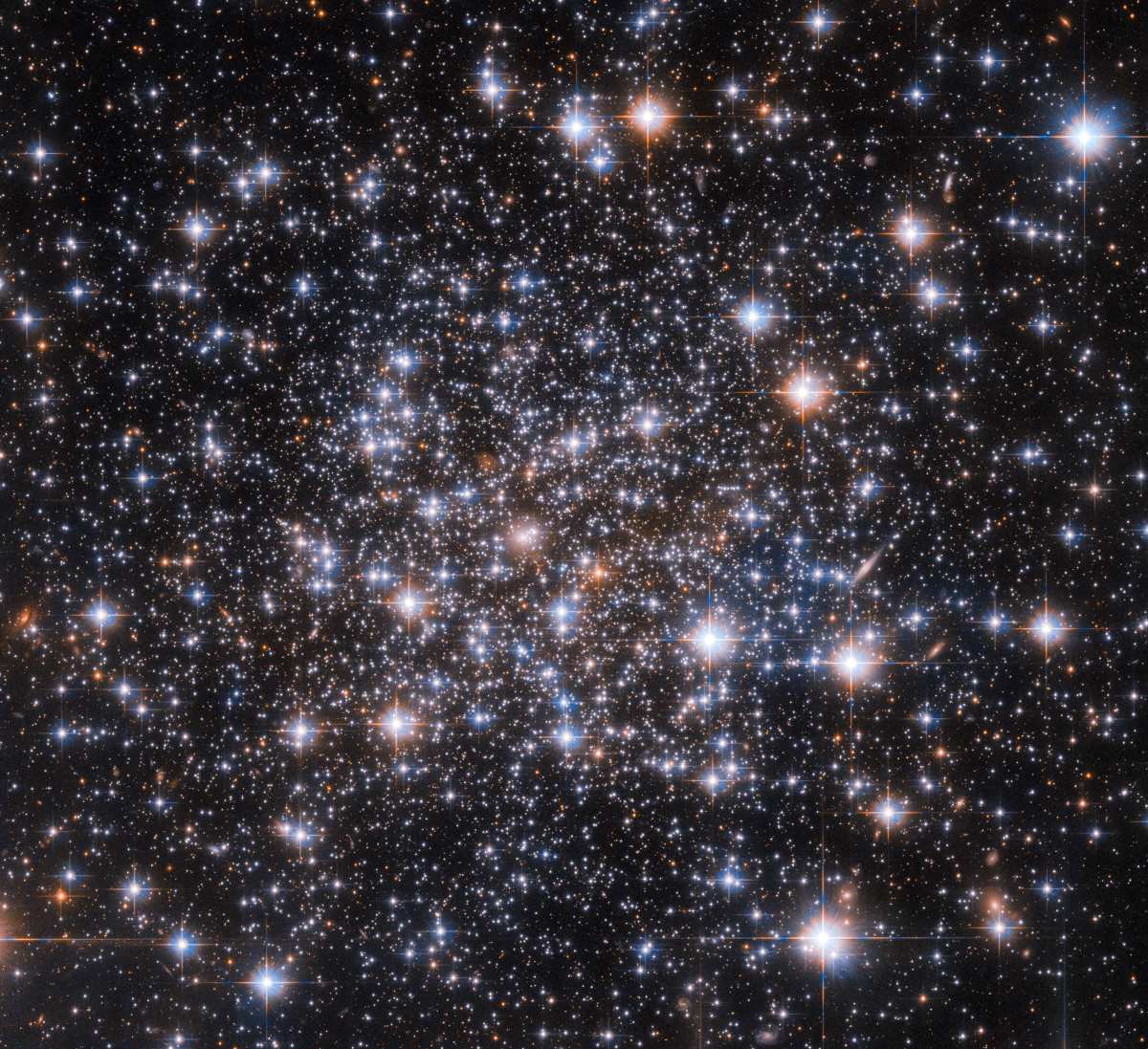
This Hubble Space Telescope Image shows the globular cluster Ruprecht 106 in the Milky Way. (Image Source: ESA/Hubble & NASA, A. Dotter)

Stars are born in clusters when clouds of gas collapse under gravity, and as the star population rises in a cluster, fierce stellar winds and intense ultraviolet radiation, coupled with supernova explosions of massive stars, eventually push and disperse the cloud in a process called stellar feedback. While this allows the light of the cluster to seep into the galaxy, it also destroys the birth cloud, leaving much of the gas that could be used for star formation unused.
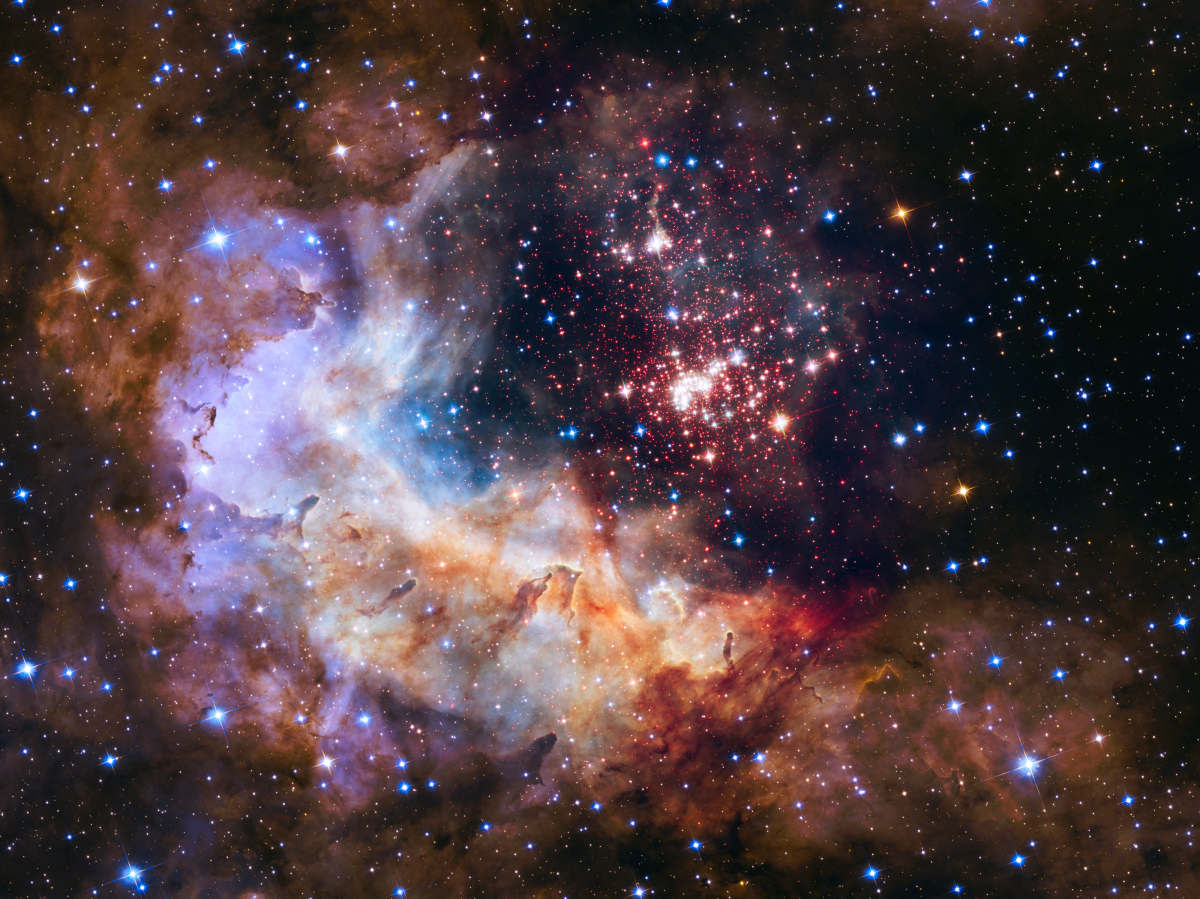
This Hubble Space Telescope image shows the star cluster Westerlund 2 in the Milky Way. (Image Source: NASA, ESA, the Hubble Heritage Team (STScI/AURA), A. Nota (ESA/STScI), and the Westerlund 2 Science Team)

While research into stellar clusters can help understand star formation at a galactic scale, observing these clusters at the earlier stages of evolution had been nearly impossible for us till now, with the thick dust of the natal cloud obscuring optical wavelengths. However, JWST and Hubble's capabilities combined have given scientists the ability to peer into these gaseous clouds, with results showing that the most massive star clusters clear away their natal clouds the fastest and begin spreading light into their galaxy the earliest.
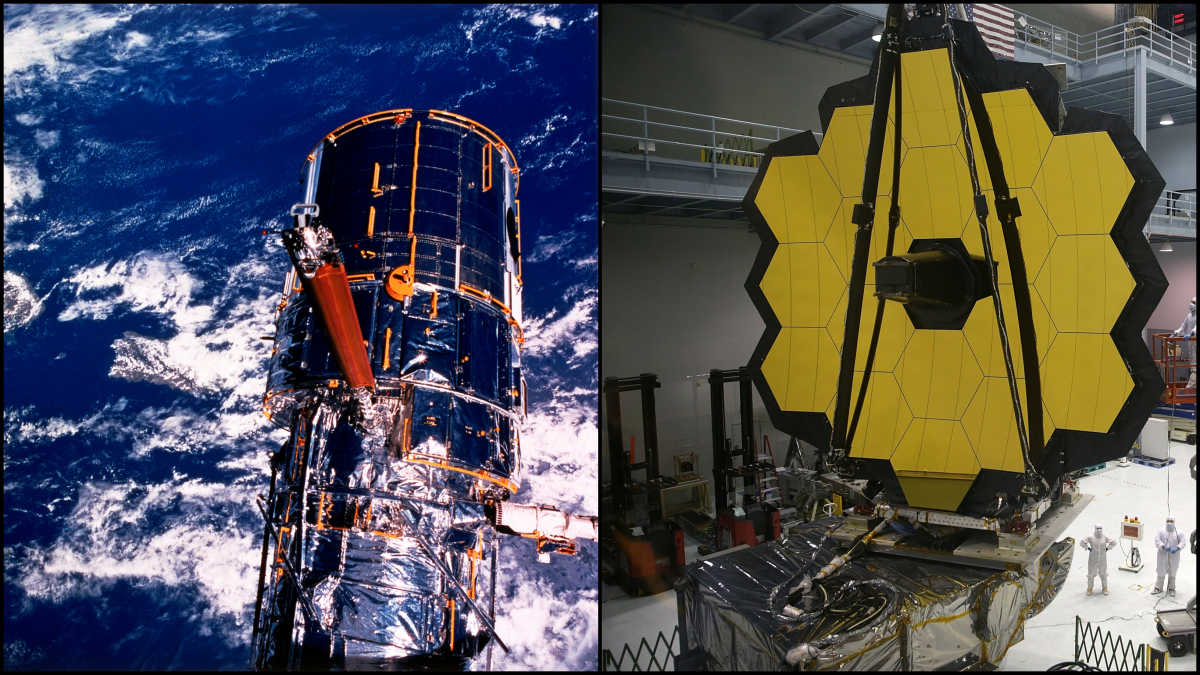
Image showing the Hubble Space Telescope (left) and the James Webb Space Telescope (right). (Image Source: Getty Images)

For the study, the team identified nearly 9,000 star clusters in four nearby galaxies — Messier 51, Messier 83, NGC 4449, and NGC 628. These clusters were found to be in different evolutionary stages: young clusters just starting to emerge from clouds of gas, clusters that had partially dispersed their natal clouds, and clusters that were fully unobstructed and visible in optical wavelengths.
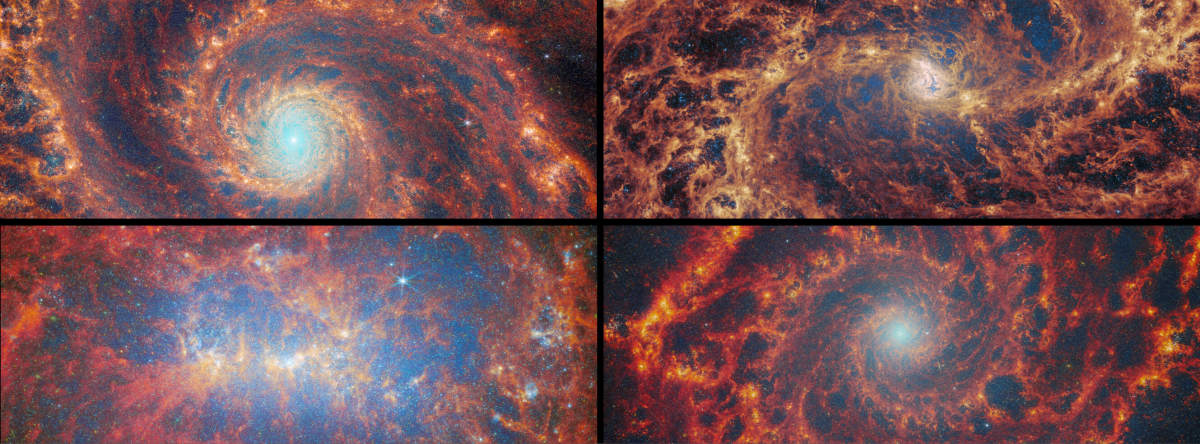
Image showing the four galaxies observed in this study: Messier 51 (top left), Messier 83 (top right), NGC 4449 (bottom left), and NGC 628 (bottom right). (Image Source: ESA/Webb, NASA & CSA, A. Pedrini, A. Adamo (Stockholm University) and the FEAST JWST team)

Studying these clusters, the astronomers found that the most massive ones — those weighing tens of thousands of solar masses — cleared their natal clouds in just five million years, while less massive clusters took between seven and eight million years to emerge from their nurseries, thereby furthering our understanding of galaxy formation.
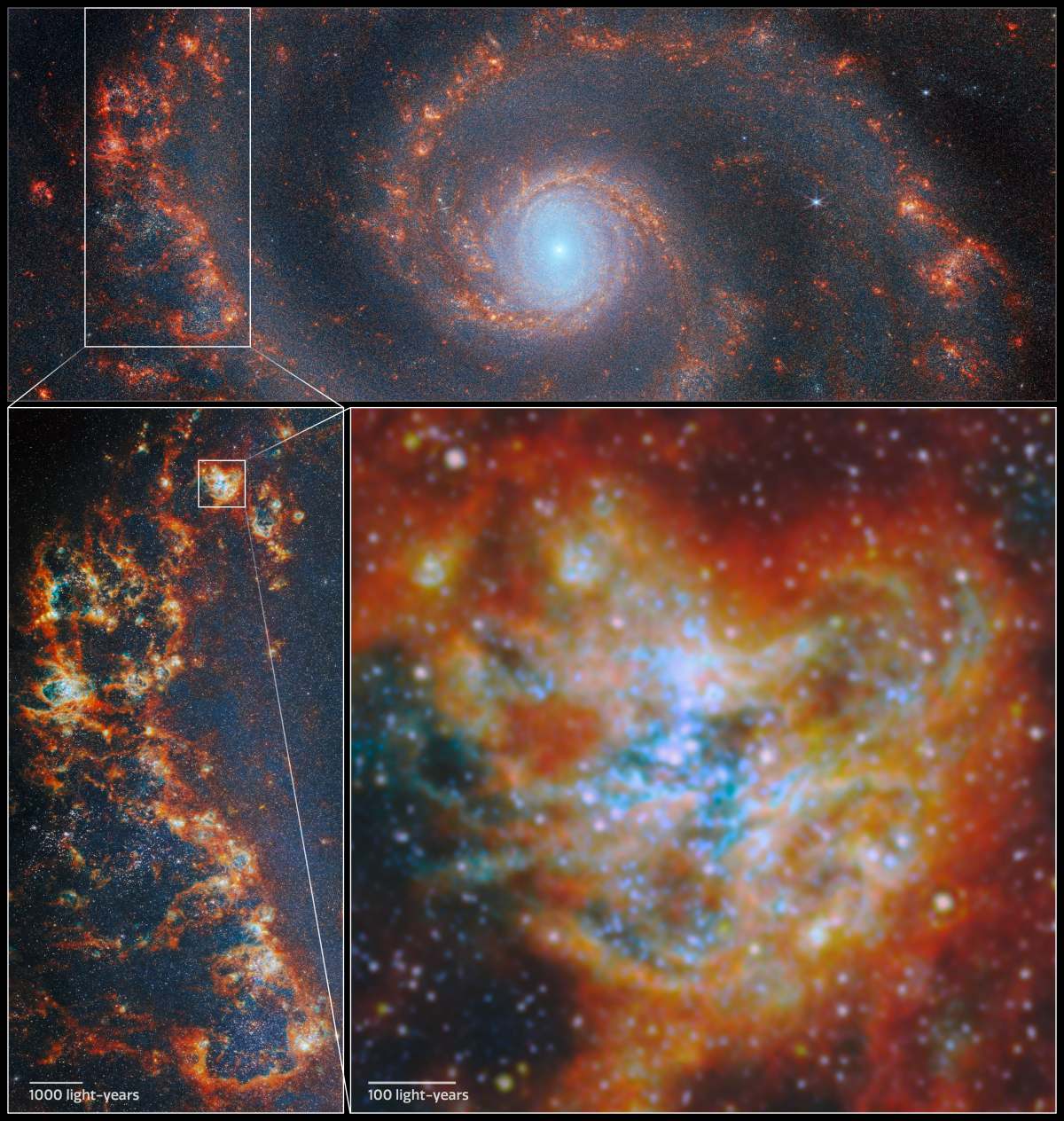
This image locates a star-forming complex in one of the spiral arms of Messier 51 (M51), measuring almost 800 light-years across. M51 is located about 27 million light-years away from Earth. (Image Source: ESA/Webb, NASA & CSA, A. Pedrini, A. Adamo (Stockholm University) and the FEAST JWST team)

Massive star clusters with thousands of hot stars naturally emit most of the ultraviolet light in any galaxy, but the new study confirms that these massive nurseries also get a head start over their low-mass counterparts on producing stellar feedback, and begin to flood their galaxies with light much quicker. The European Space Agency (ESA) also notes that knowing when and where this stellar feedback is strongest throughout the lifetime of a galaxy can help astronomers better predict the movement of star-forming fuel through a galaxy, and therefore, predict how stars and star clusters are likely to form.
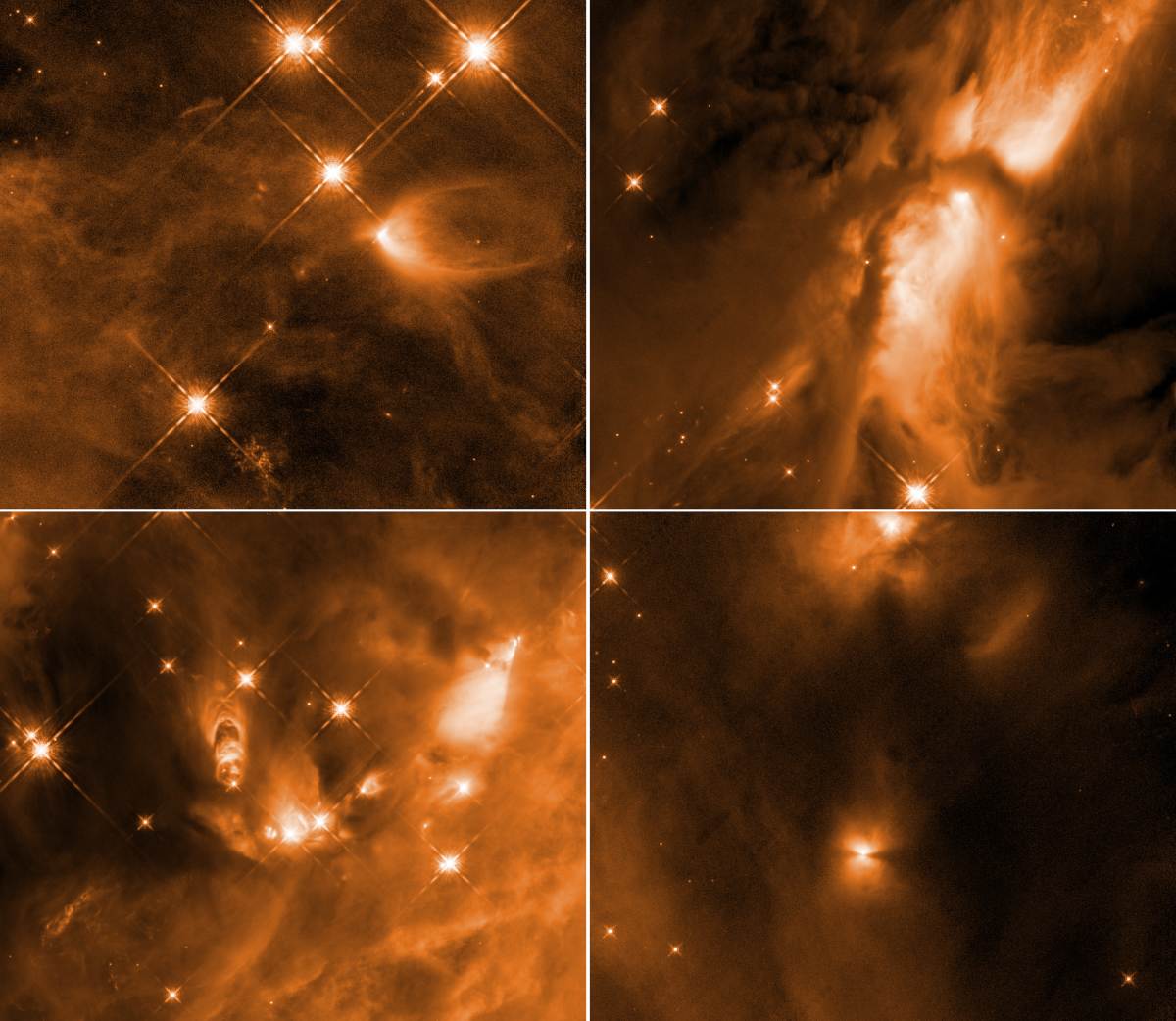
These four images taken by the Hubble Space Telescope reveal the chaotic birth of stars in the Orion complex, the nearest major star-forming region to Earth. (Image Source: NASA, ESA, STScI, N. Habel and S. T. Megeath, University of Toledo)

In addition to deepening our understanding of galaxy formation, this study also furthers our knowledge of planet formation. Planets form through the accretion of dust and gas, and the faster gas is cleared away from a star cluster, the earlier that protoplanetary discs around stars are exposed to harsh ultraviolet light from other, nearby stars. This reduces the opportunity of these discs to further attract gas from these natal clouds, and therefore reduces the chances of planets forming.
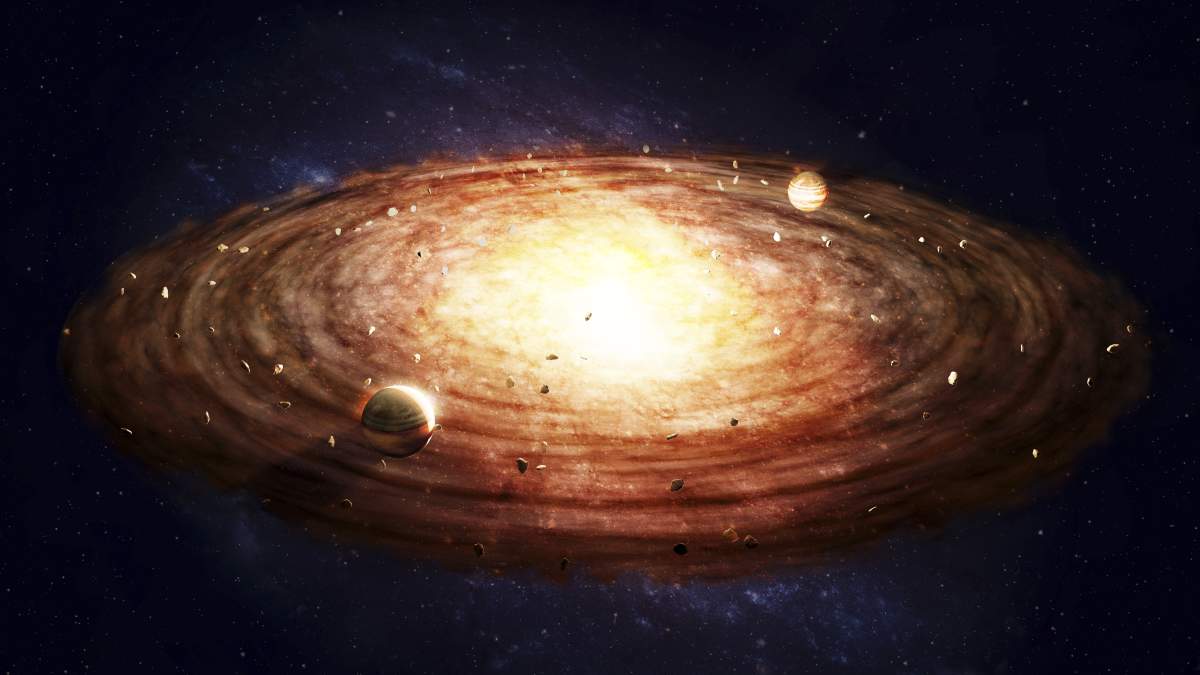
Illustration showing a disk of gas and dust around a star. (Image Source: Getty Images)

“This work brings together researchers simulating star formation and those working with observations, as well as groups researching planet formation,” said Alex Pedrini, lead author of the study from the Stockholm University and the Oskar Klein Centre in Sweden, adding, "Using Webb, we can look into the cradles of star clusters and connect planet formation to the cycle of star formation and stellar feedback.” The study has been published in Nature Astronomy.

More on Starlust.org

'A dark, hot rock': Astronomers directly study exoplanet surface for the first time using JWST

Which celestial bodies in our solar system stand out as the strongest candidates to harbor life?
MORE STORIES

The Vela Supercluster was discovered back in 2016, but astronomers just got to know about its true scale.
1 day ago
The discovery of over 1,000 winged radio galaxies vastly expands the current catalog.
1 day ago
The discovered galaxy reached a state of non-rotation when the universe was less than 2 billion years old.
2 days ago
NASA's Chandra has discovered an X-ray dot, which is tiny, red, and located at a distance of 11.8 billion light-years but also glows in X-ray, unlike the mysterious little red dots.
6 days ago
The interaction between the internal rotation and magnetic fields retards or speeds up the spin rate.
6 days ago
Stellar winds blowing away from a nearby binary star probably form the gas clouds.
Apr 27, 2026
The properties of faint dwarf galaxies around the Milky Way can reveal a lot about the conditions of the early universe, the same way crop yields can tell a lot about spring weather.
Apr 27, 2026
Rare twin quasars discovered merging in the early universe, revealing a galaxy collision and shared gas fueling supermassive black holes.
Apr 27, 2026
New laser-assisted technique may one day replace fuel-driven rocket propulsion
Apr 23, 2026
The new findings boost evidence that the Red Planet once had conditions suitable for life.
Apr 22, 2026