Five billion miles and 200,000 orbits around Earth: NASA's Hubble Space Telescope completes milestone
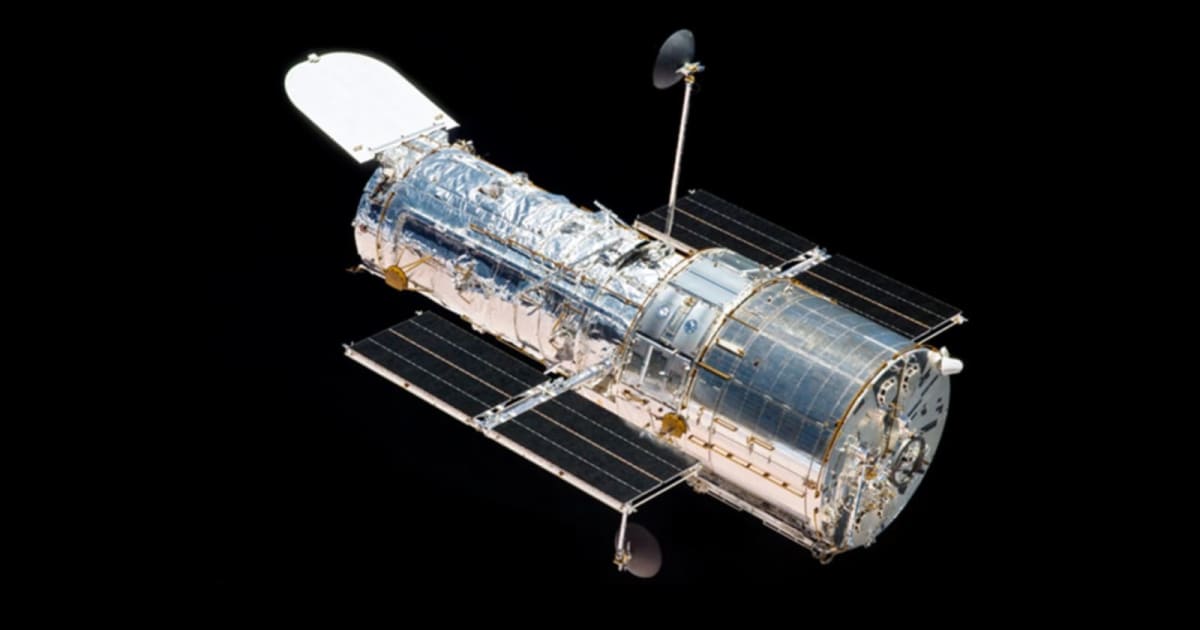
The Hubble Space Telescope (HST) reached an important milestone last week. NASA announced on Thursday that the three-decade-old observatory completed its 200,000th orbit around Earth on September 19 as it continues to serve as NASA’s eyes on the universe. Moreover, Hubble has traveled more than 5 billion miles in the last 36 years, far longer than its expected lifespan of 15 years.
200,000 orbits and counting 🌎
— Hubble (@NASAHubble) September 23, 2026
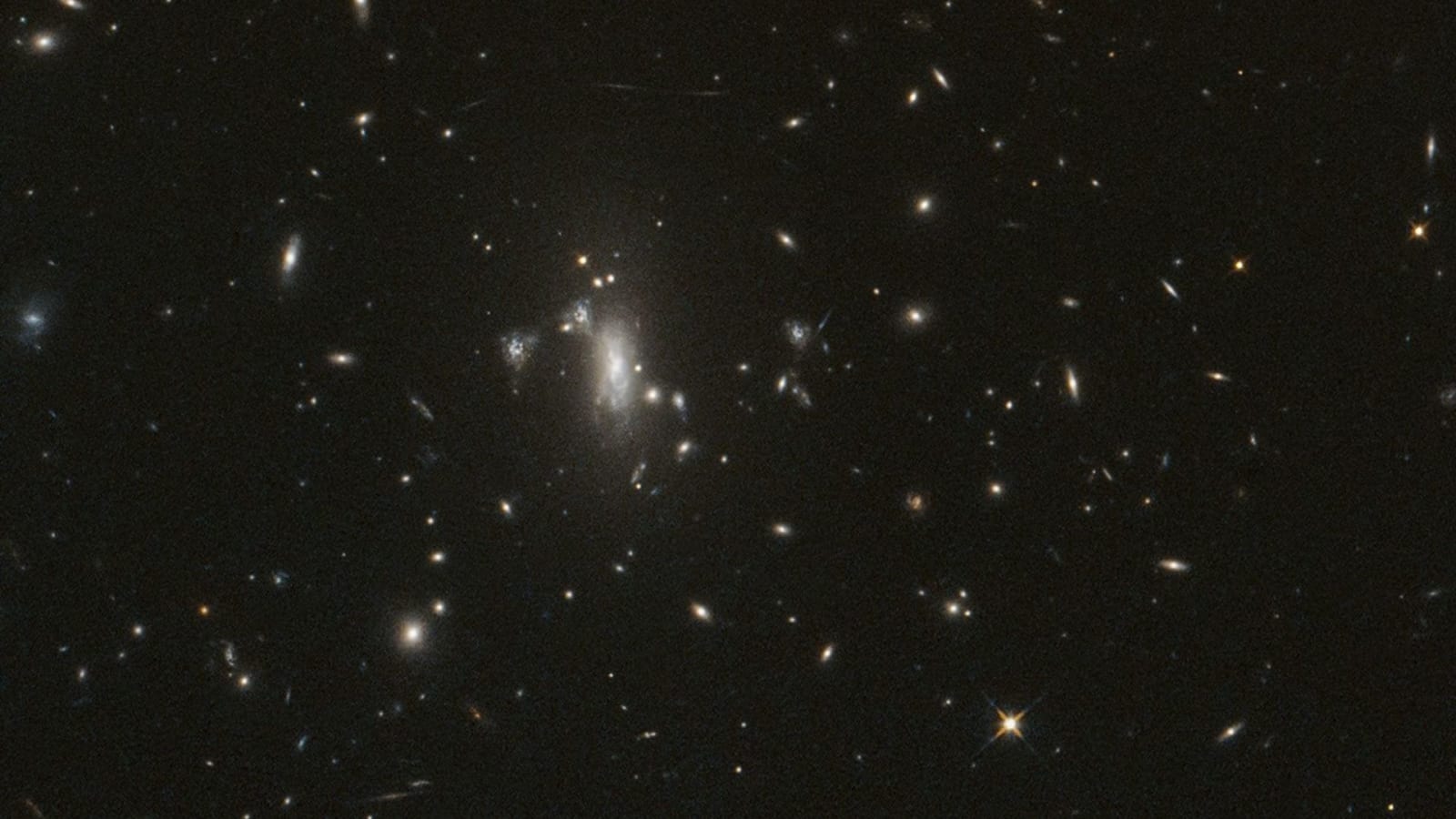
On Sept. 19, Hubble completed its 200,000th orbit around Earth — here’s an observation completed on the big day!
This image shows a cluster of galaxies called MACS J0417: https://t.co/ZhxRbn6uCn pic.twitter.com/WrTqpajnxI
“After more than 36 years in space, Hubble still is reaching new heights of scientific productivity and impact. Hubble’s unique ability to observe and analyze light in ultraviolet and visible wavelengths complements NASA’s James Webb and Roman Space Telescopes’ capabilities. As a result, demand for Hubble observing time remains high as astronomers request about seven times as much observing time as is available each year,” NASA said in a statement.

Launched on April 24, 1990, and named after American astronomer Edwin Hubble, the HST has revolutionized astronomy through its observations of the universe in ultraviolet, visible, and near-infrared wavelengths of light. According to NASA, Hubble has made over 1.7 million observations since its launch, and its achievements include discovering elements from the early universe, confirming the existence of supermassive black holes, imaging the farthest galaxy ever seen at the time, and detecting a possible moon around an exoplanet. Hubble also enabled the first precise measurement of the expansion rate of the universe, confirmed the presence of an atmosphere on an exoplanet, imaged the first-ever predicted supernova, and detected organic molecules in an exoplanet's atmosphere.
What is Hubble observing now?
On the day Hubble achieved its orbital milestone, it completed an observation of the galaxy cluster MACS J0417 located about 4.65 billion light-years away in the constellation Eridanus. Hubble is making repeated observations of this cluster because scientists are looking for the supernova Athena, discovered by the James Webb Space Telescope (JWST) in 2025. Due to a phenomenon called gravitational lensing, MACS J0417 can bend and magnify light coming from objects behind it—which makes spotting the distant supernova possible.
NASA explains that light from a supernova can reach Earth along multiple paths, causing it to appear more than once at different intervals. Supernova Athena is expected to appear again between now and early March 2027. The supernova has astronomers’ attention because it could help them measure the expansion rate of the universe. Most recently, Hubble imaged a spiral galaxy called NGC 4698, which was found to be spinning out of sync with its own disk. In spiral galaxies like our own Milky Way, the outer disk of stars rotates in the same plane as the central bulge, but in NGC 4698, its bulge extends out from the disk at a right angle, and the stars and gas nearest its center are rotating perpendicular to the rest of the disk.
Tracking Hubble's activities
With the HST now in its 36th year of service, it may be daunting to try and track what the telescope is up to. Thankfully, however, NASA maintains an extensive catalog, allowing astronomy enthusiasts to track Hubble's targets of observation in real-time. For a detailed list of Hubble's activities, click here.
More on Starlust
Hubble Space Telescope captures powerful stellar explosion lighting up nearby clouds
Hubble sees starlight from a galaxy just 1.4 billion years after the Big Bang—what did it reveal?