NASA's Hubble images 'superbubble' in Milky Way satellite galaxy—and it's helping study how stars are born
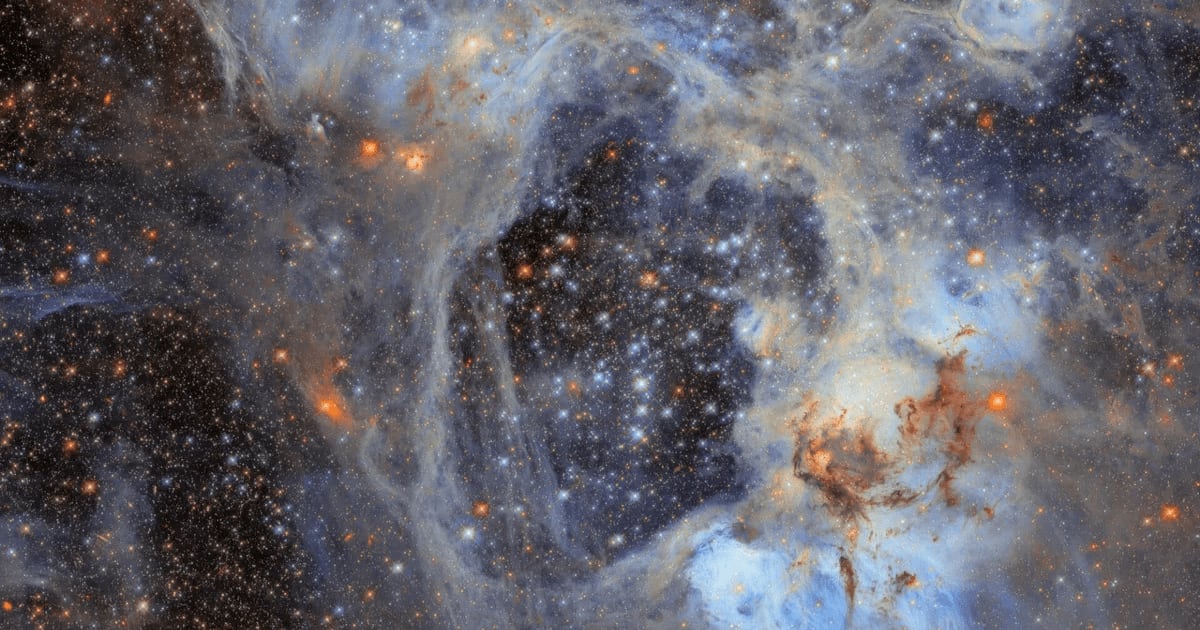
NASA's Hubble Space Telescope has captured a striking image of a nebula in the Large Magellanic Cloud—one of the dwarf galaxies orbiting our Milky Way. The nebula, named LHA 120-N44, or just N44, located just 160,000 light-years away, can give astronomers important insights into star-formation processes.
This 'superbubble' in the Large Magellanic Cloud is over 200 light-years across—and it's helping astronomers study how stars are born. More from @NASAHubble: https://t.co/NvJuk0az2R pic.twitter.com/DH2d0iQM7q
— NASA (@NASA) September 8, 2026
The photogenic nebula N44 is located in the constellation Dorado and is characterized by a huge central void, or "superbubble," encircled by an outer shell of thick, dusty gas. The giant superbubble is of staggering dimensions—measuring around 210 by 140 light-years across. One light-year is approximately 5.88 trillion miles, or 9.46 trillion kilometers.
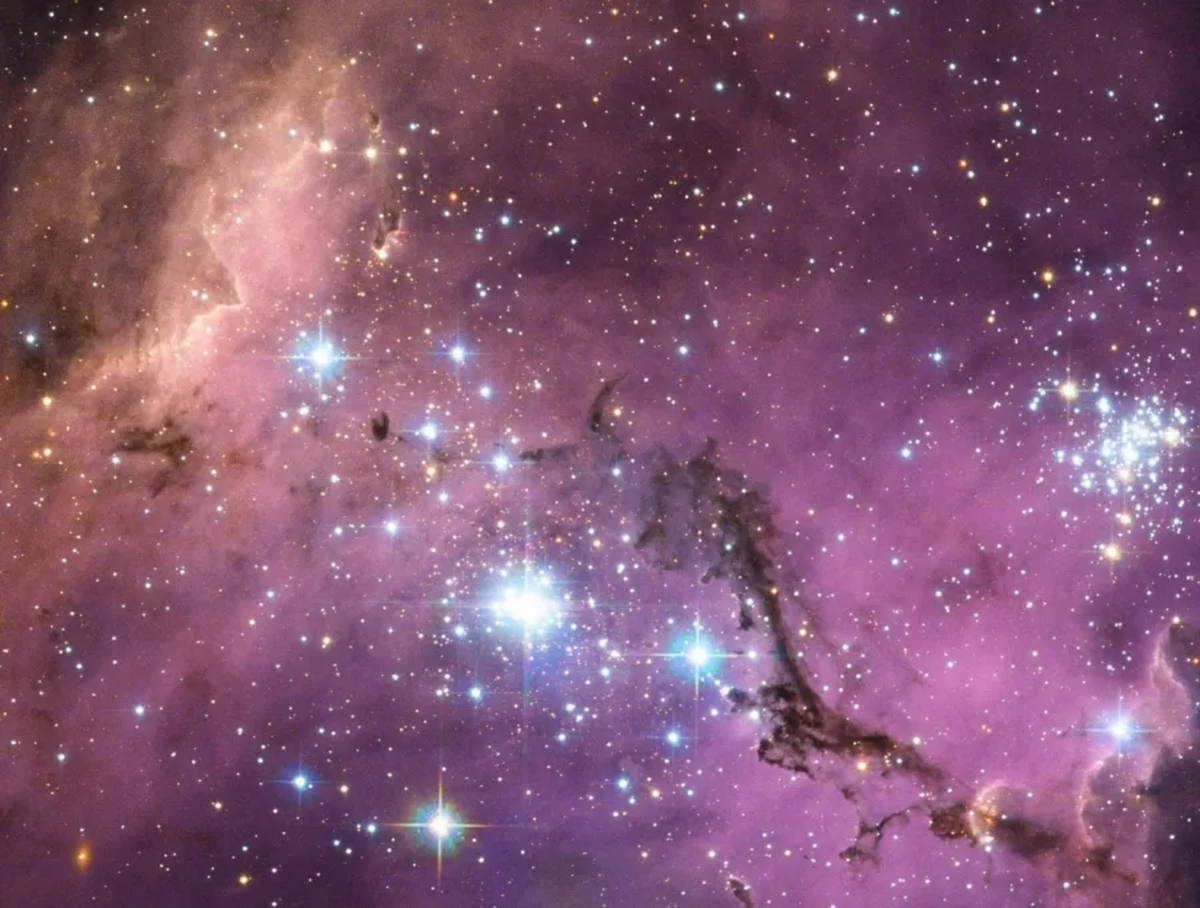
An important question: How did this giant void at the center of N44 come to be? The source of this formation is the group of sparkling stars at the center of the void. These stars expelled vast amounts of gas while undergoing supernova explosions or by releasing mighty stellar winds. The expelled gas underwent compression, creating a dense shell surrounding the superbubble. The gas shell gets energized by ultraviolet radiation from giant stars, making it glow brighter and highlighting its many unique features. This compressed gas shell became the cradle of new stars, making the N44 a fascinating target of study for astronomers. Scientists are now spying on N44 to unearth star formation mechanisms in such cosmic environments. More specifically, their goal is to find out the time taken from the collapse of gas clouds into thick knots to the stage of initiation of nuclear fusion in the heart of a newly born star.
The image was obtained from an observing program (#14689; PI: Gouliermis) that surveyed N44 and conducted a census of its stars using the Hubble telescope. The survey cataloged around half a million stars inside the cluster along with interlopers gliding in its vicinity, with around 30,000 of the surveyed stars being pre-main-sequence stars, which are yet to begin converting hydrogen into helium in their cores through nuclear fusion. NASA was able to discover this cosmic treasure of infant stars owing to the high spatial resolution and sensitivity of the Hubble observatory, which is capable of detecting dim celestial objects in crowded clusters.
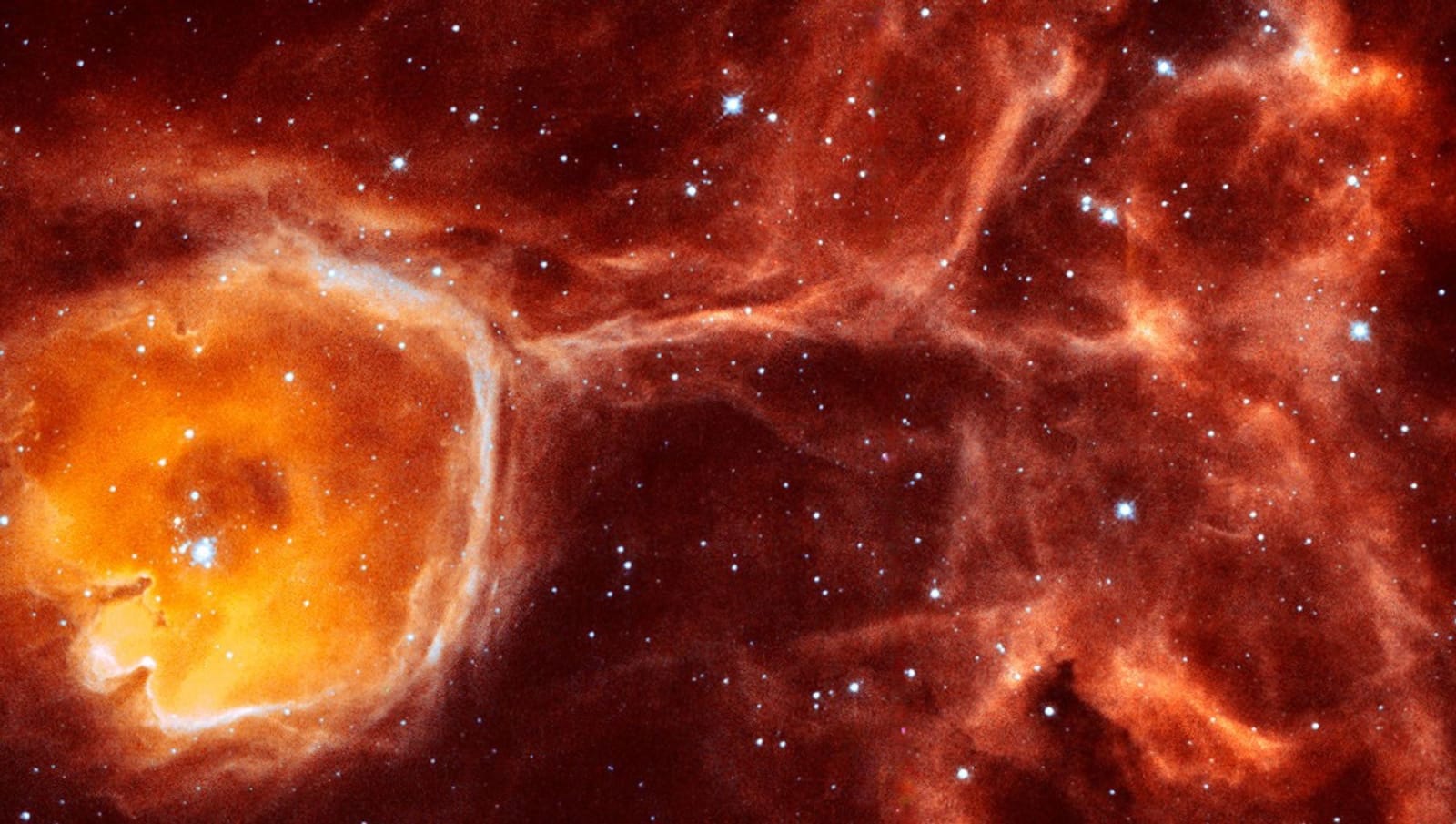
The N44 nebula has been imaged by Hubble before, as well as by NASA's Chandra X-ray telescope. Back in 2004, in fact, NASA released a close-up taken by Hubble of a smaller bubble within N44 (in the top right corner of the image). This bubble, known as N44F, is being inflated by the stellar wind from a single extremely hot star, which is losing more than 100 million times more mass per second than our Sun. NASA called it "the celestial equivalent of a geode," which is a baseball-sized hollow volcanic rock lined with crystals on the inside. In the case of N44F, the treasures in its interior are visible through the transparent bubble-like cavity of interstellar dust and gas.
More on Starlust
James Webb looks beyond Orion Nebula to image every stage of star formation
NASA's Hubble Space Telescope captures the 'clearest' image yet of Egg Nebula