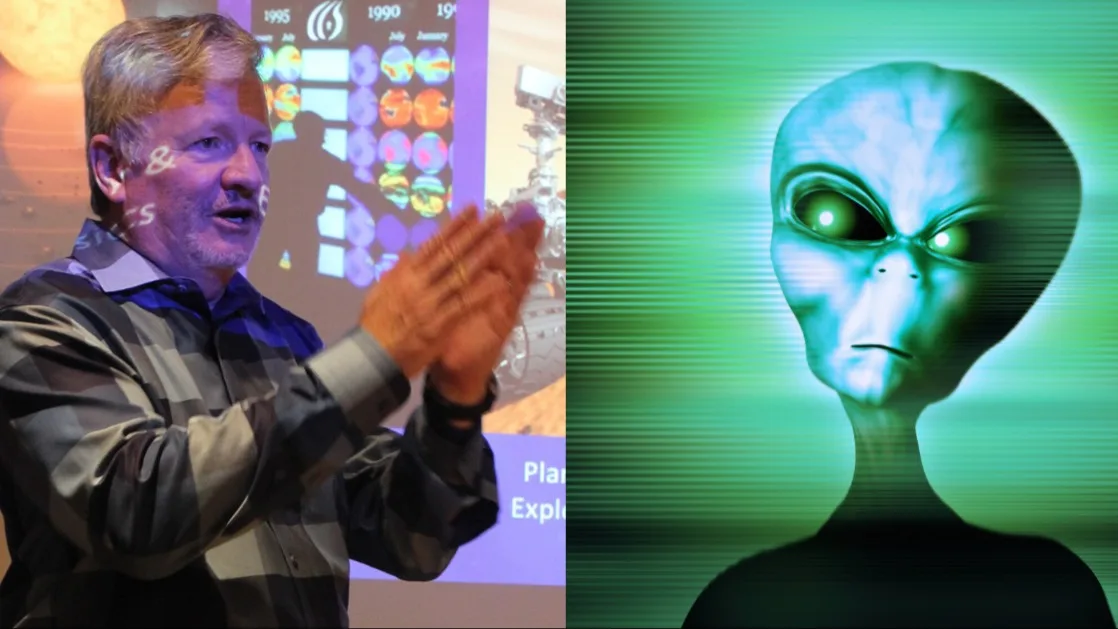
SETI chief: "I do believe aliens are real"—but they don't look like anything we imagine
Do aliens actually exist?
The question of whether we're alone in the universe has fascinated us for generations, and even a former U.S. president has weighed in. Barack Obama has said that he believes extraterrestrial life exists, though he made clear it isn't hidden away at Area 51. He also made it clear that he “saw no evidence during his presidency that extraterrestrials have made contact with us.”
Bill Diamond, president and CEO of the SETI Institute in California, agrees with that basic premise. His organization has spent decades searching for signs of life beyond Earth, and Diamond is confident about what they'll eventually find. Here’s what he has to say about it.
"Oh yes…I do believe aliens are real. Definitely.”

When asked if he thinks aliens are real, his answer was pretty clear. "Oh yes," he says. "I do believe aliens are real. Definitely… It is one of the questions we ask if you want to get a job at SETI. If you don't believe in aliens, there's probably no point having a job with us."
In one of his interviews, he also noted that “every single star in the sky has one or more planets around it…That implies the existence of tens of billions of potentially habitable worlds in our galaxy alone. So indeed, the statistical probability that we are alone in the Universe is zero. Surely there is life beyond Earth!"
Life might be everywhere, but intelligent life is a different story
He made it clear that these two are very different ideas. Basic life, he believes, is probably common throughout the universe. But complex, intelligent, technology-building life is a much bigger leap. He added, "It's when you start talking about complex organisms, intelligence and then, ultimately, technology that it becomes a different matter."
He also notes that the right combination of time and evolution needed for that kind of life is rarer than the conditions for basic cellular life.
And they don't look like anything we imagine
Diamond also says that little green men, as we see in movies, are not a realistic picture. "It's very hard for us to imagine what aliens would be like," he admits, though he points to Earth's own strange creatures, like jellyfish, as a starting point.
He also explains that aliens would likely be shaped by the physical conditions on their home planet, since gravity and energy work the same way across the universe. A planet with stronger gravity than Earth would probably produce sturdier, more robust life forms, while a smaller planet with weaker gravity could be home to thinner ones.
First contact is most likely to happen through a radio signal
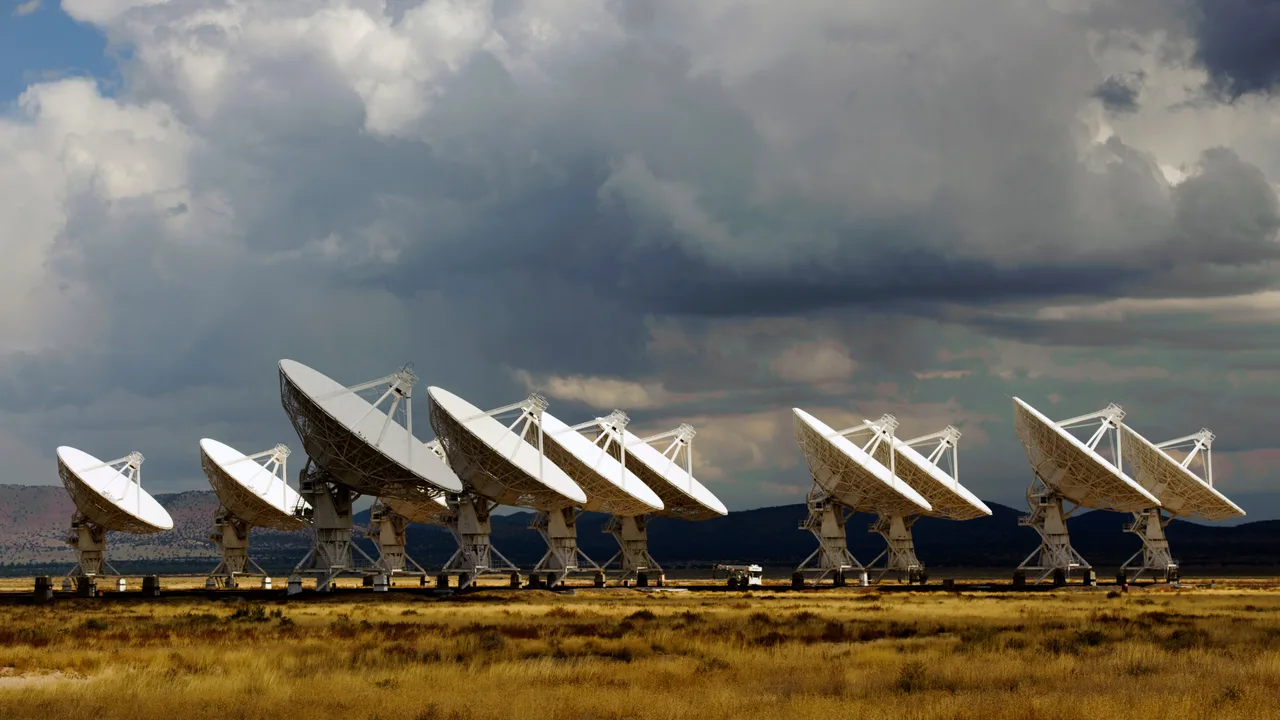
According to Diamond, it doesn't make much sense that an advanced alien civilization would communicate by leaving patterns in farmers' fields. "I think crop circles are rather unlikely," he says. Any aliens capable enough of reaching Earth would have already studied our planet, atmosphere, and even our languages before trying to communicate with us.
Instead, he expects first contact to come through a detectable phenomenon, most likely a radio transmission, since it's one of the most efficient ways to send a signal across space.
How does SETI actually search for alien life?
In the search for alien life, SETI relies on three main strategies. The first is sending instruments directly to promising locations, like NASA's Perseverance rover currently examining Mars. The second is remote observation that uses tools like the James Webb Space Telescope to study the atmospheres of planets up to roughly 1,000 light-years away.
The third is the search for extraterrestrial technology itself, the clearest possible proxy for intelligent life. Diamond says that there’s no telling when a breakthrough might happen. "A SETI discovery could happen tomorrow, it might not happen for a thousand years, we don't know," he says, "but one of the things we also say in this business is that the probability for finding life beyond Earth if you don't look for it is zero."