Did our universe begin inside a quantum multiverse? One physicist thinks so
What came before the universe?
In 1610, Galileo spotted the first-ever moons beyond our planet with just a basic lens. Centuries after that, the astronomer Edwin Hubble discovered the first-ever galaxy outside our own. And today, the James Webb Space Telescope helps us look back to the universe’s earliest days.
On top of that, the Nancy Grace Roman Space Telescope, which is expected to release its first images in early 2027, will help scientists around the world study some of the most bizarre and puzzling objects in the universe. We have come a long way, but one question still remains: What came before the universe?
Multiverse that collapsed into our reality
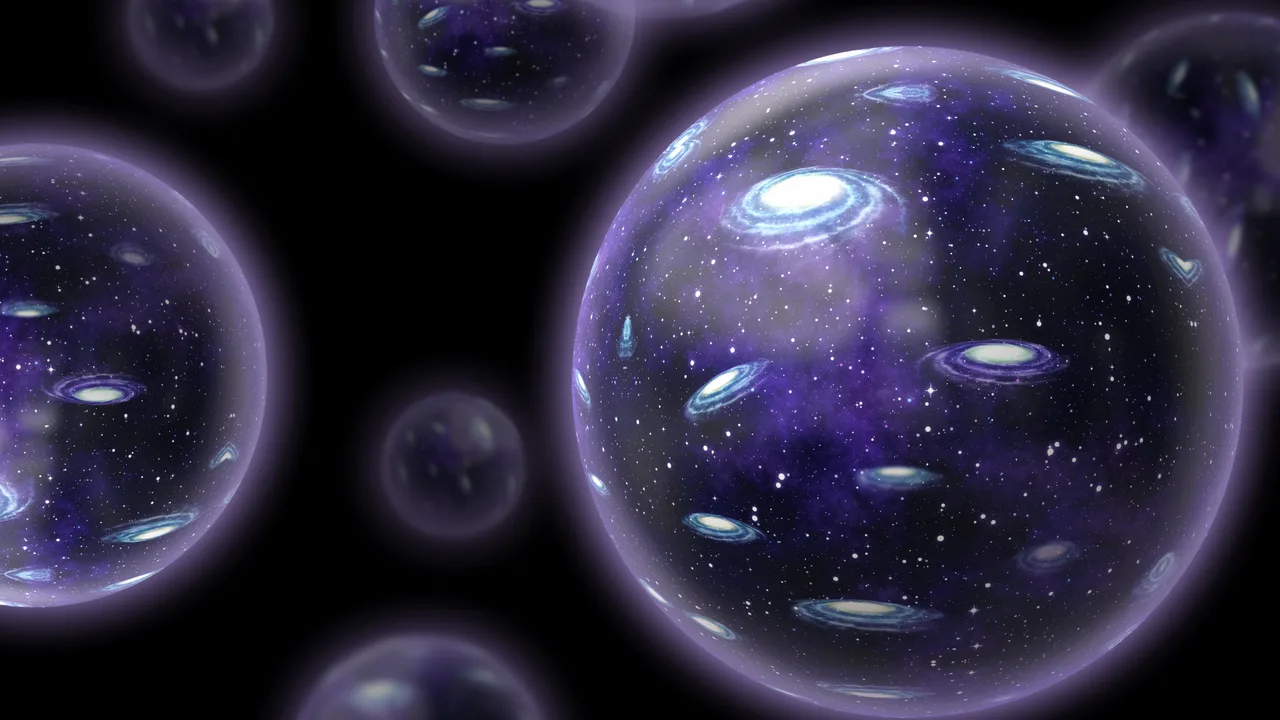
As per physicist Konstantin Zloshchastiev of the Durban University of Technology, our universe formed when a kind of "quantum multiverse" broke apart during the pre-inflationary period. This is an extremely short period of time right before the universe started its rapid expansion.
“The time preceding these [dark energy and inflation] epochs, the pre-inflationary era, largely remains a mystery, both empirically and theoretically,” He noted. We don’t know almost anything about this period, but Zloshchastiev notes that one piece of evidence from it does exist.
Before inflation, every possibility existed at once
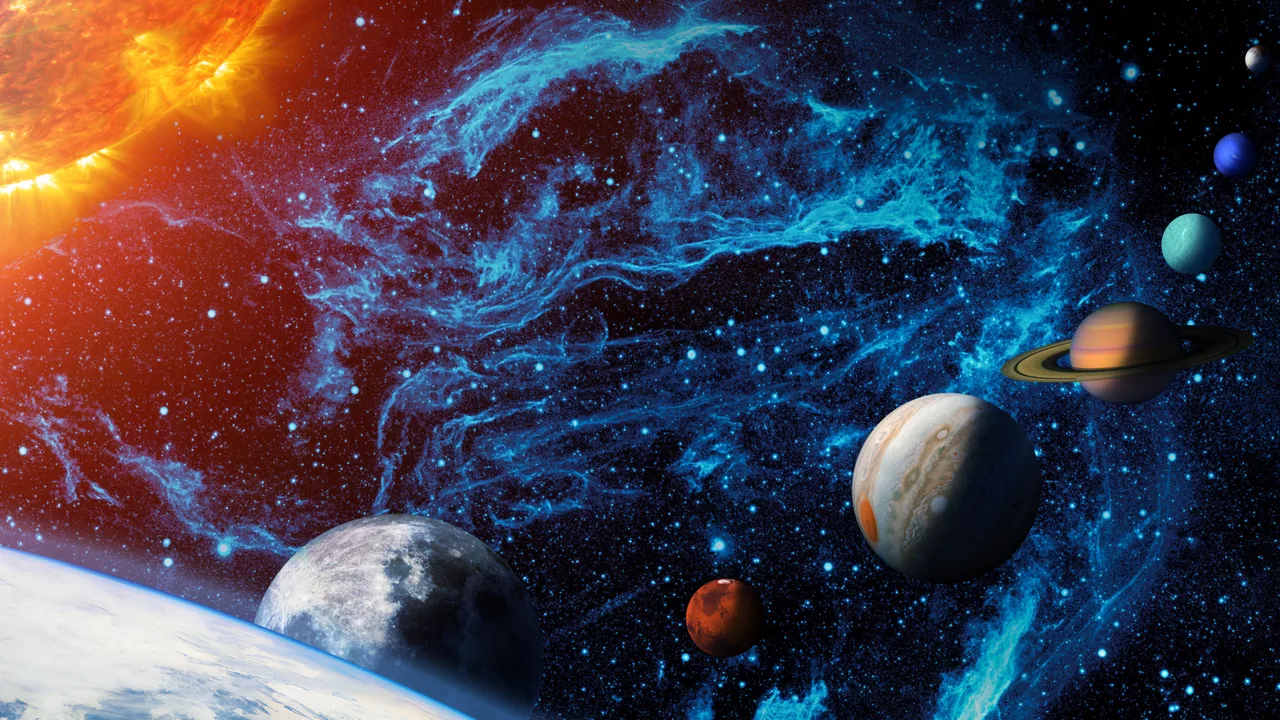
According to his theory, matter didn't exist yet in the pre-inflationary period. Instead, everything was made up of particles that couldn't be told apart from one another. These particles were all located together in what physicists call a quantum superposition.
That means that every possible version of space and time existed and didn't exist at the same time. This is similar to the classic thought experiment of a cat that's both alive and dead until someone checks. At some point, that mix of possibilities collapsed down into just one outcome, which is the universe we're part of now.
The collapse that shaped our universe
In his paper, Zloshchastiev describes this collapse as something like a measurement, which involves what's called a Shannon information transfer (named for Claude Shannon). In this process, information about which possibility was 'real' leaked out of the superposition into the surrounding environment.
And this caused the mix of possibilities to collapse into one specific outcome, instead of leaving everything undecided. Once that information transfer happened, it set off a chain of events that produced what's now called a logarithmic quantum liquid. This then gave rise to the vacuum of our universe.
And the clue may already be out there
Zloshchastiev shared that scientists and astronomers can test this idea by looking for a specific signal called vacuum Cherenkov radiation. This radiation happens when particles travel faster than light through a vacuum. So, if that kind of radiation is being generated, it could show up as extra energy coming from blazars, quasars, and fast radio bursts.
“However, one large and easily observable natural phenomenon exists, which is directly related to the pre-inflationary period. This is our universe itself, with its diverse yet quite orderly and mathematically predictable structure, allowing us to exist and rationalize our reality by assigning laws to the surrounding world,” he added.