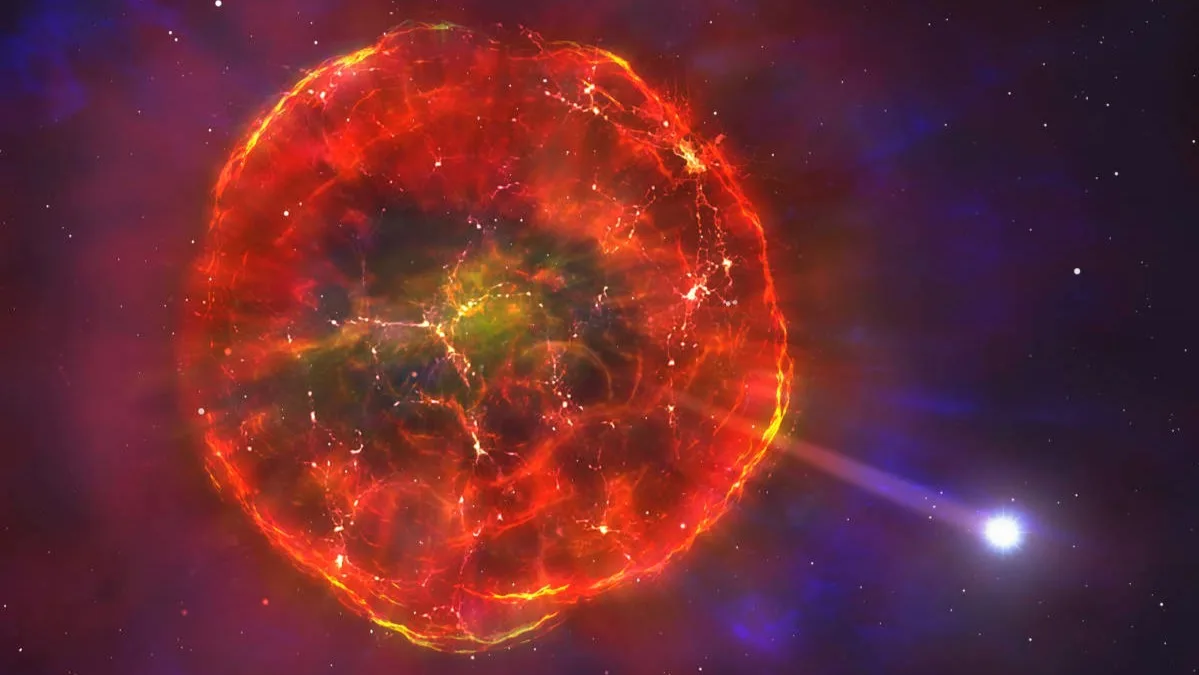
For the study, the researchers tracked the evolution of what are referred to as ‘Pop III supernovae’ using simulations. They found that these supernovae, which release more than 100 solar masses of material during a single explosion, seeded nearby gas clouds in the early universe with heavy elements. As these gas clouds came together, drawn by gravity, they formed rotating discs around young stars.
These discs were not too different from the one that resulted in the birth of our own solar system.
"In our computer simulations of the early Universe, we found one such disc around a young star about 70 percent as massive as the Sun,” said co-author Dr. Daniel Whalen from the University of Portsmouth’s Institute of Cosmology and Gravitation, in a statement published on Science Daily. This disc contained several Earth-mass worth of planetesimals—building blocks of planets—some of which were at around the same distance from the star as Earth is from the Sun.