Are we alone? Scientists reveal why they think alien life could be real
Where is everybody?
For a long time now, humans have been trying to answer the question, “Where is everybody?” Despite scientists’ repeated attempts, we have failed to detect life anywhere else in the universe. So does that mean we are all alone? Well, experts tend to believe otherwise.
Experts believe in the existence of extraterrestrial life
Back in 2024, Durham University conducted surveys. These surveys involved 521 astrobiologists giving their opinions on the existence of alien life. Surprisingly, 86.6% of them agreed with the notion that Earth might not be the only planet buzzing with life. However, the number came down drastically to 67.4% when the question was about a planet sustaining intelligent or complex life.
Why might life exist outside of Earth?
The Milky Way has approximately 100 to 400 billion stars. Additionally, NASA also confirmed that our galaxy is home to a minimum of 100 billion planets. Now, to think that the Milky Way is just a minuscule part of the entire observable universe, the chances of life outside of our Blue Planet suddenly amp up.
University of Manchester’s chair of astrophysics, Mike Garrett, said, “We now know that most stars have a planetary system. That means there are loads of places where life can arise. Besides, simple life arose so quickly on Earth. To me, that’s a key sign that it must be happening elsewhere.”
Scientists find ingredients for life across distant cosmic worlds
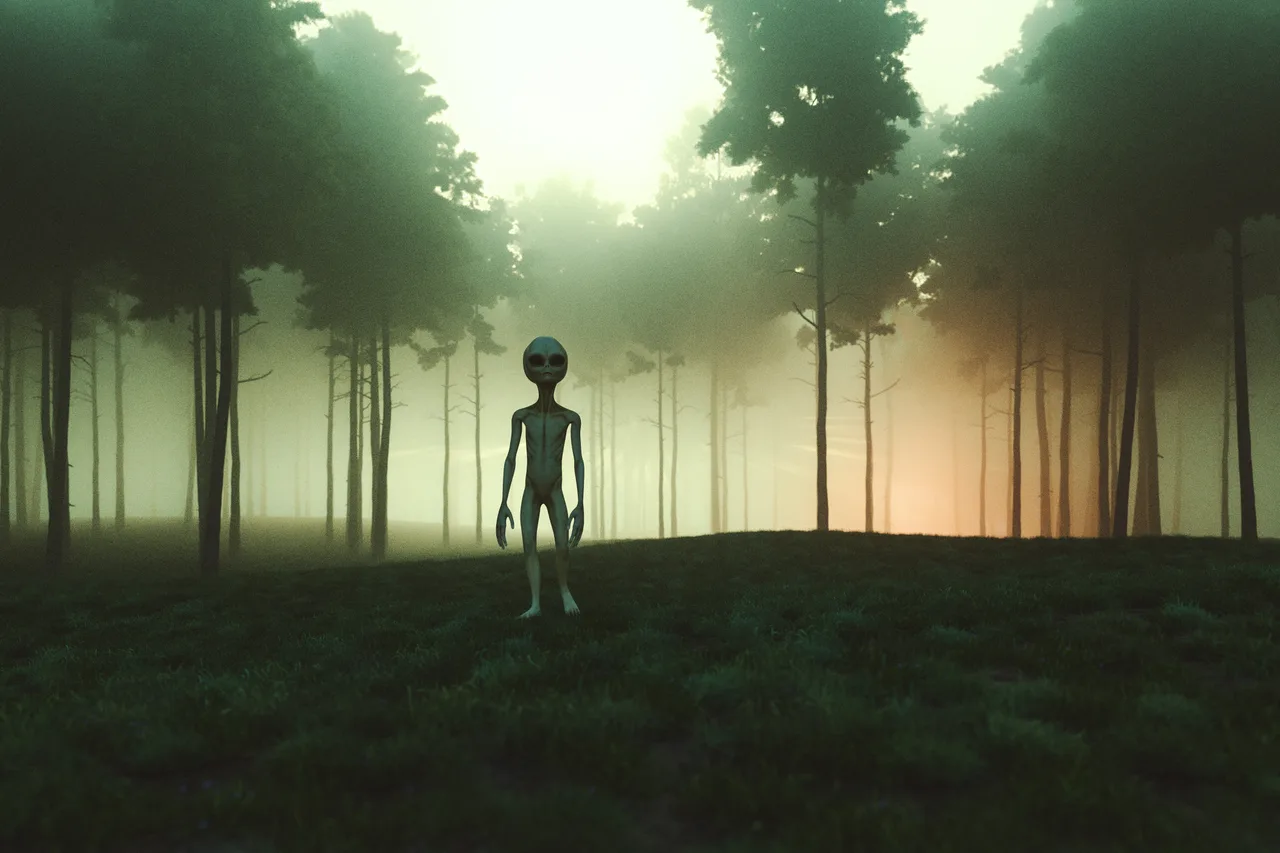
Keeping aside the numbers, scientists have also discovered some key components on other planets. Traces of nitrogen, oxygen, hydrogen, and carbon were found on distant worlds, asteroids, and comets. Surprisingly, life might also exist in ‘extreme’ conditions which might seem uninhabitable. For example, giant tube worms and other ‘extremophiles’ have been found thriving in deep-sea vents, frozen Antarctic conditions, and acidic hot springs.
Founder and president of METI (Messaging to Extra-Terrestrial Intelligence), Douglas Vakoch said, “When the Earth formed 4.5 billion years ago, at first its surface was hellishly hot. Flowing oceans of magma covered the Earth's surface, creating an inhospitable environment for life. And yet, life arose as soon as the terrain cooled. Once life arose on Earth, it spread everywhere. The same evolutionary principles that allow life to adapt on Earth should operate throughout the Universe, creating exotic alien lifeforms unlike anything that we can imagine.”
What is the mystery behind the silent universe?
So why haven’t we found life outside of Earth? It is widely believed that humans have been living on Earth for 200,000 years. Many intelligent extraterrestrial civilizations might have perished by the time humans started searching for them. In contrast, a lot of those civilizations might just be in their developmental infancy.
Speaking about finding extraterrestrial life, Pennsylvania State University’s astronomy and astrophysics professor, Jason Wright, said, “Life on Earth – especially the rise of macroscopic, complex life – required a series of extremely unlikely coincidences regarding the composition and nature of Earth and its surface. After all of that, Earth then required a series of extremely unlikely evolutionary innovations to occur. Those odds are already pretty small, but then you throw in the fact that the nearest aliens could be very far away.”