The Golden Record: When humanity sent a message specifically for aliens
The bold Voyager missions
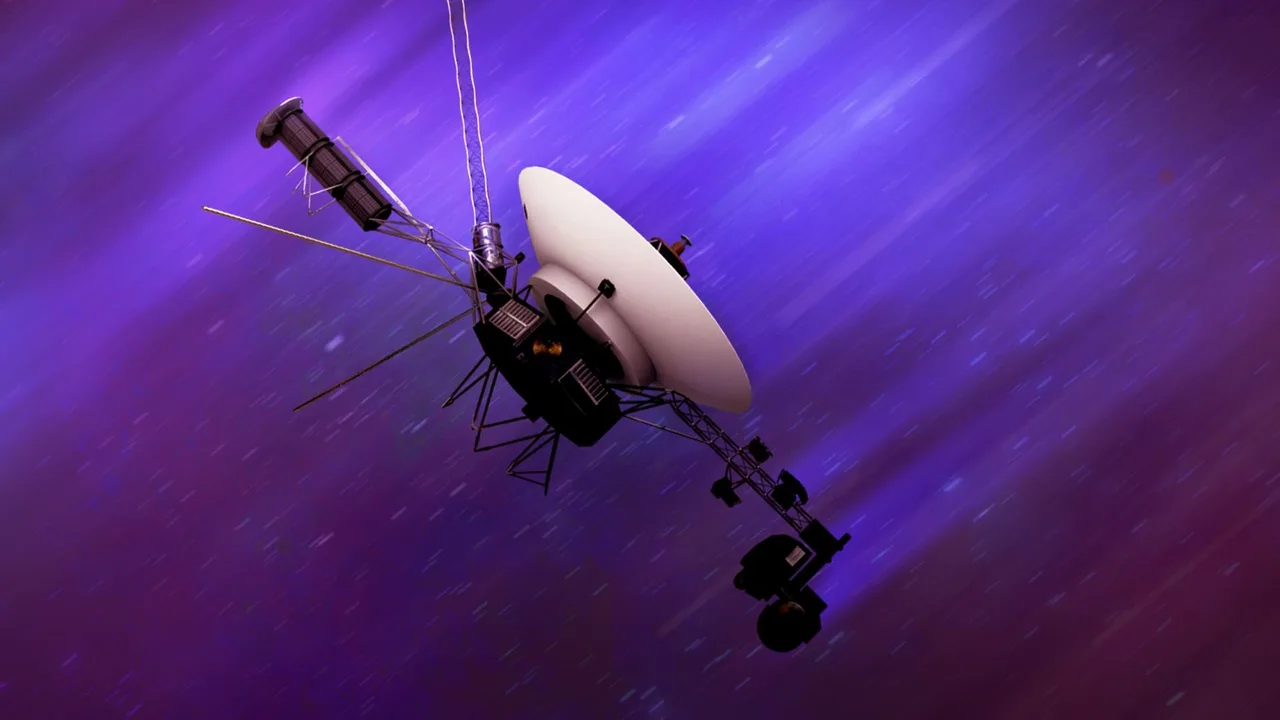
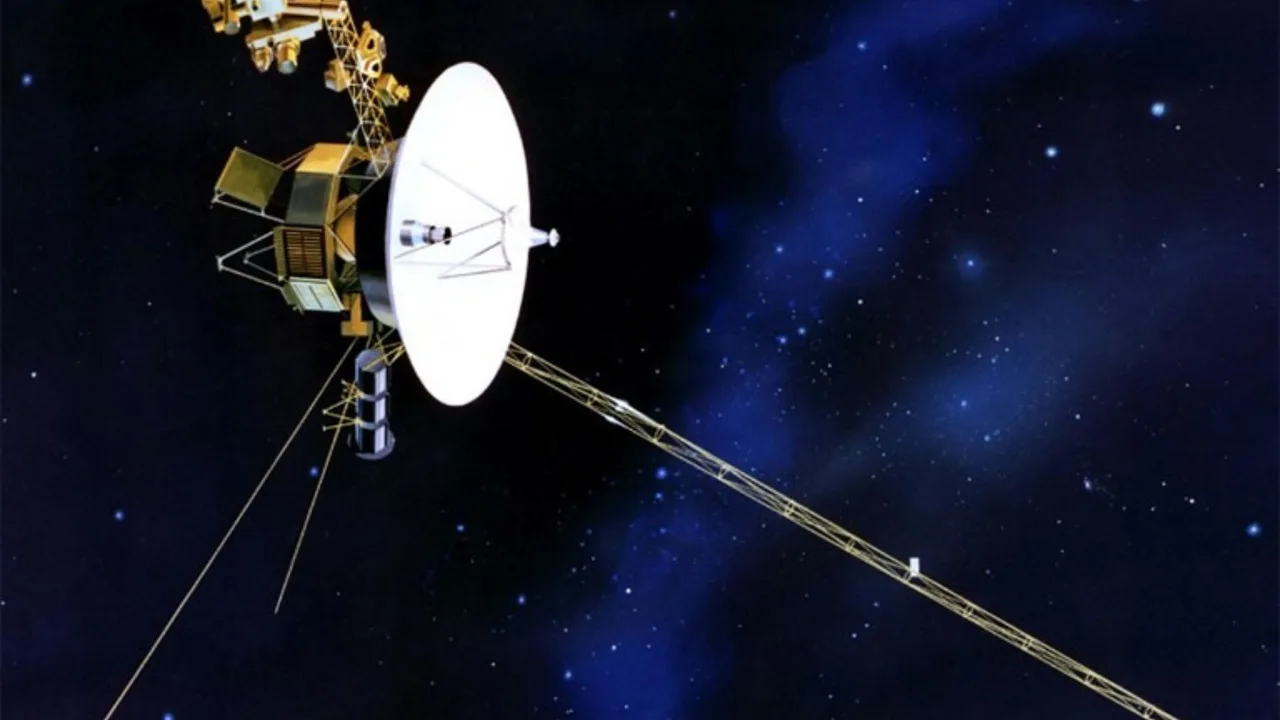
Nearly five decades ago, NASA launched two Voyager probes with the intention to investigate the outer solar system, and they are now gliding through interstellar space. Voyager 2 launched on August 20, 1977, followed by Voyager 1 on September 5 of the same year (yes, the latter launched second), and the two probes started their mission with close flybys of Jupiter and Saturn. NASA eventually decided to extend Voyager 2’s mission, and it later conducted close flybys of Uranus and Neptune, completing its 'grand tour' of the solar system. Once they were done exploring the planets as well as their moons, the probes began exploring the heliosheath—the outer layer of the heliosphere dominated by the Sun’s magnetic field and solar wind particles—before turning their attention toward interstellar space.
NASA knew that the paths the Voyager twins were on would take them out of the solar system, and they thought it would be unwise not to put evidence of our existence out there. Thus came the idea of the Golden Record, inspired by small metal plaques installed on Pioneer 10 and 11 that were also headed towards interstellar space.
What’s the Golden Record?
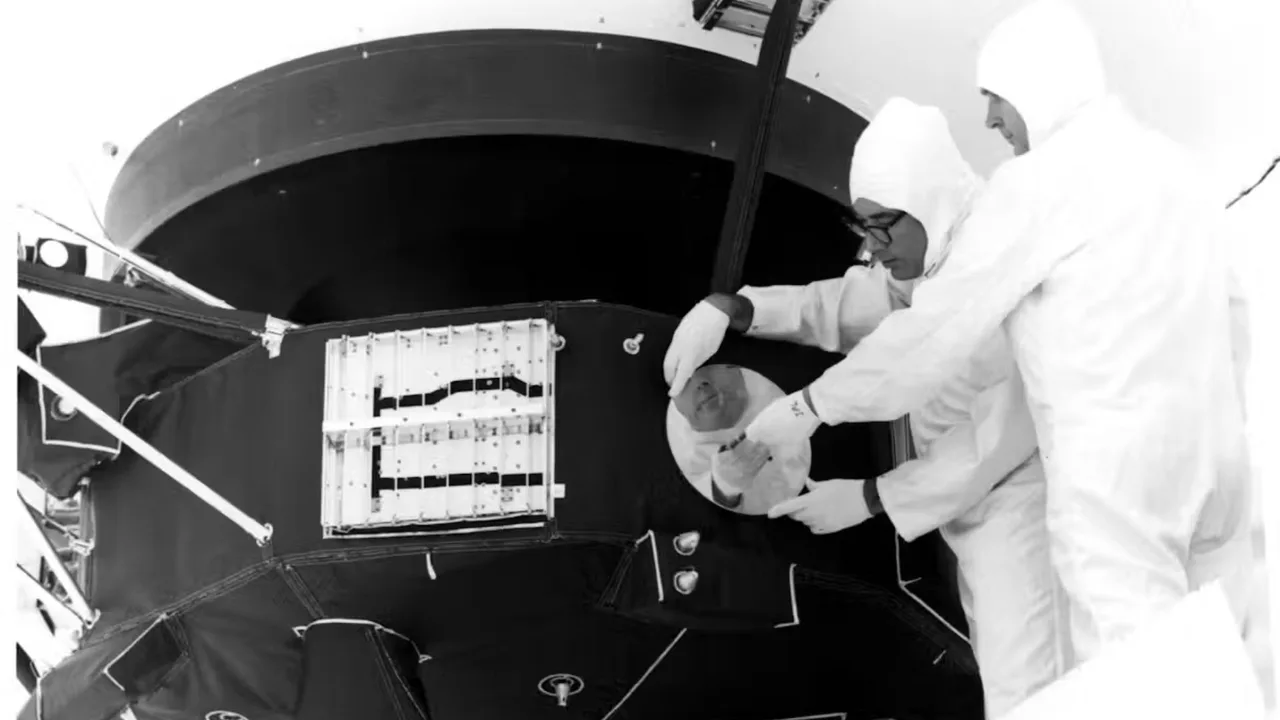
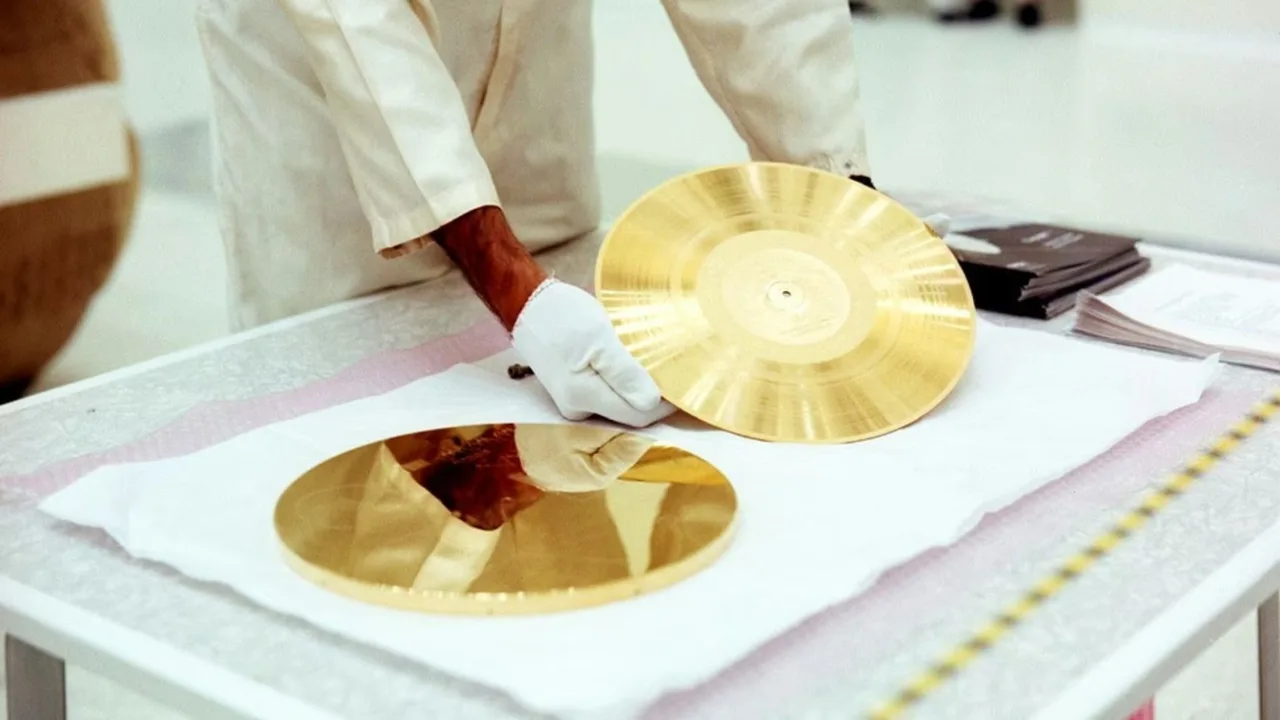
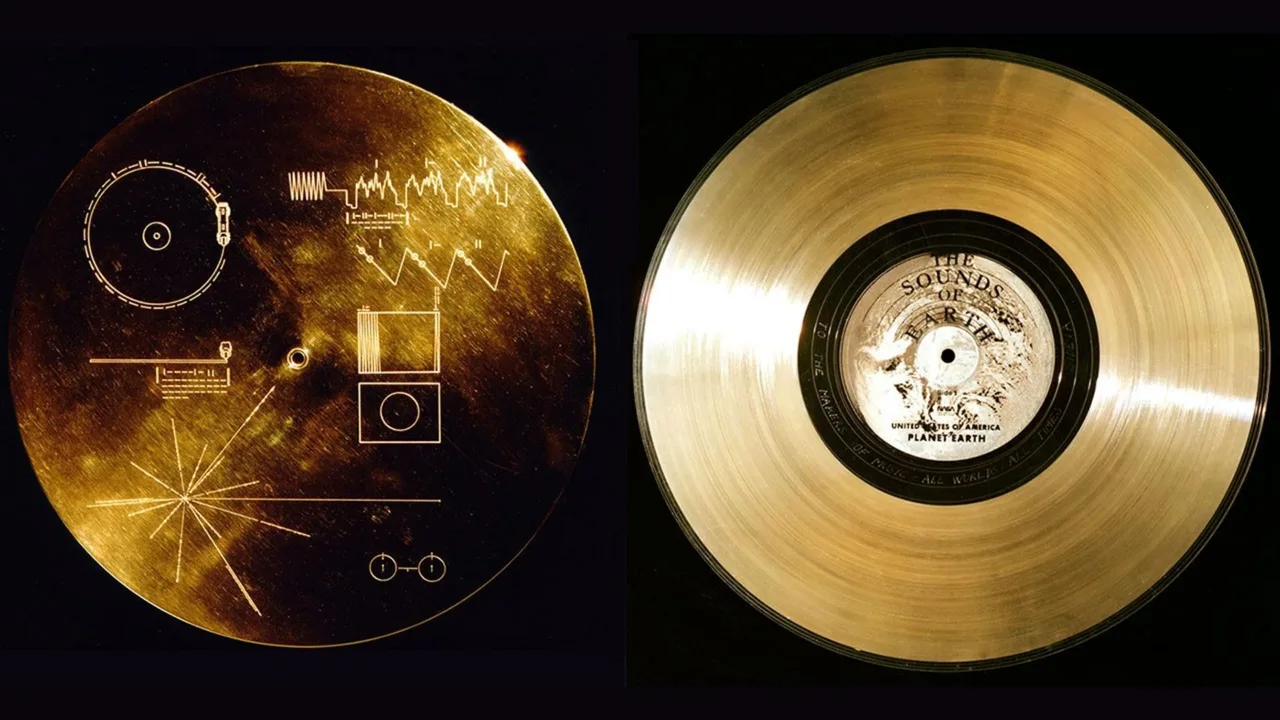
The Golden Record is a 12-inch gold-plated copper disk that has been fitted on both Voyager probes, with special messages in case an extraterrestrial happens to find it.
The two identical records have diagrams inscribed on their protective covers with instructions (for the aliens, of course) on how to play them and interpret the information. It tells the ‘recipients’ at what speed to play the records, how to calculate when the spacecraft was launched, how to reconstruct the pictures on the record, and how to locate Earth using a pulsar map engraved on the cover.
What’s inside the Golden Records?
This is perhaps the most interesting part of the records. If the extraterrestrial recipients are able to read the instructions and play the records properly, they will be greeted by humans, including ‘the children of planet Earth’, in 55 different languages. The record also has 115 images and a variety of natural sounds, such as those made by surf, wind, thunder, birds, whales, and other animals. Its contents were selected for NASA by a committee chaired by the agency’s former advisor, Carl Sagan of Cornell University.
Sagan, who was very enthusiastic about introducing humanity to advanced civilizations and thought the existence of aliens was very likely, said about the Voyager twins— “The spacecraft will be encountered and the record played only if there are advanced spacefaring civilizations in interstellar space. But the launching of this bottle into the cosmic ocean says something very hopeful about life on this planet.”
The music and languages on the Golden Records
The spoken greetings on the Golden Records begin with Akkadian, which was spoken in Sumer about six thousand years ago, and end with Wu, a modern Chinese dialect. The other major languages include Hindi, English, French, Bengali, Japanese, German, Arabic, Korean, and Persian, among others.
The records also have an interesting 90-minute collection of music from different languages and countries, ranging from Germany to Java and India to Mexico. Some noted songs in this collection are Johnny B. Goode by Chuck Berry, the Queen of the Night aria by Mozart, the Fifth Symphony by Beethoven, and Jaat Kahan Ho by Kesar Bai Kerkar.
Where are the Voyagers today?
As of September 10, 2026, Voyager 1 is nearly 16 billion miles from Earth, whereas its twin is approximately 13.3 billion miles away. Having launched 49 years ago, the probes are operating on minimal power and are expected to last a few more years. You can track their location in real-time here.
According to NASA, only two of the original 11 instruments on Voyager 1 and three on Voyager 2 are active right now—the rest, including the cameras, had to be shut down to conserve power.