Astronomers finally solve the mystery of long-period radio signals from deep space
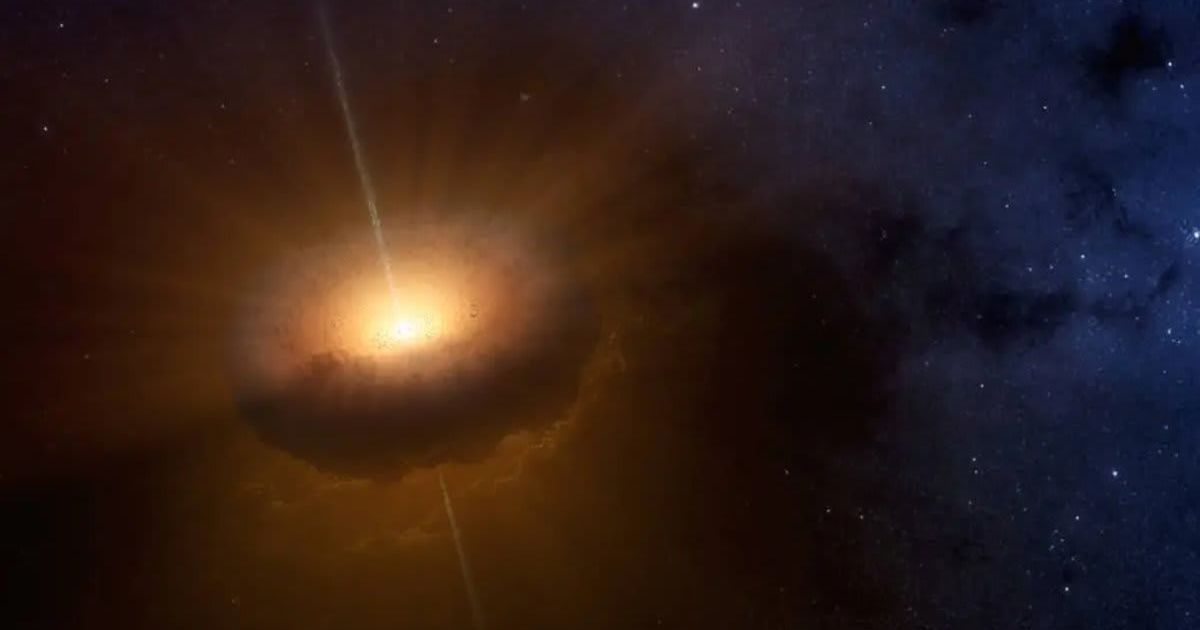
A team of astronomers from the University of North Carolina (UNC), Chapel Hill, has helped crack one of the most enduring mysteries of the universe—the source of long-period radio transients. These mysterious bursts of radio waves, which repeat over periods between a few minutes and a few hours, had puzzled astronomers for years but have now been traced to a small, dense dead star siphoning material from its companion. The findings have been reported in a paper published in Nature Astronomy.
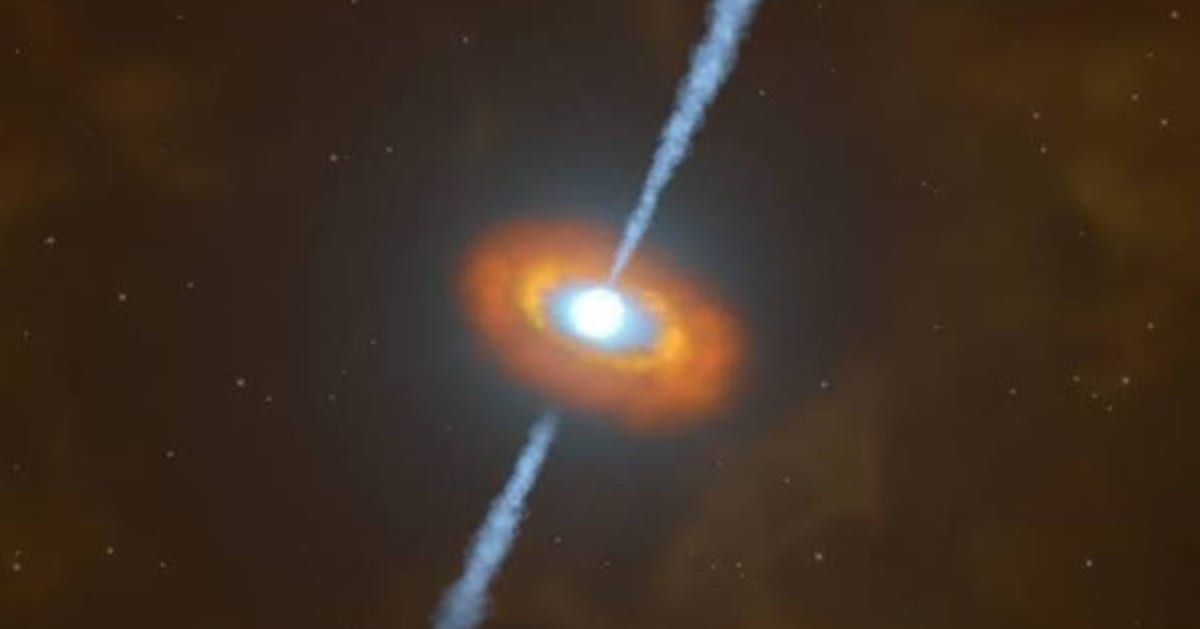
![The white dwarf star in the binary system ASKAP J1745-5051 is accreting material from the red dwarf star. [Representative Image Source: Carl Knox (OzGrav/Swinburne) and Dr. Joshua Preston Pritchard (CSIRO)] (Image edited by Starlust staff)](https://de40cj7fpezr7.cloudfront.net/3fce02ca-2879-4c69-97e8-ffbe10844441.png)
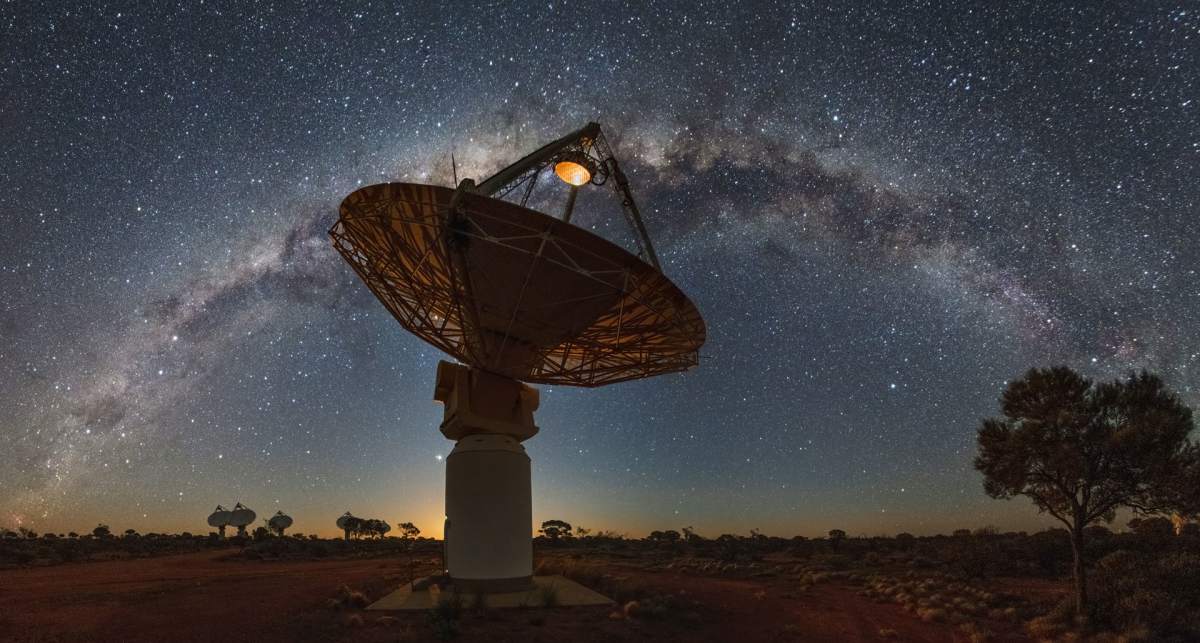
It all started with a breakthrough made by a team of researchers led by graduate student Kovi Rose at the University of Sydney, who detected powerful bursts of radio waves using the Australian Square Kilometer Array Pathfinder (ASKAP) radio telescope. The team found that the bursts were repeating every 1.4 hours. Further observations suggested that the waves were originating from a binary system consisting of a white dwarf and a red dwarf star. To probe deeper into this finding, the Carolina team secured observing time on the 4.1-meter Southern Astrophysical Research (SOAR) Telescope in Chile. “The SOAR observations were essential to the success of this project,” said Dr. Igor Andreoni, assistant professor in the department of physics and astronomy at UNC-Chapel Hill, in a statement. “Our data revealed that we were looking at two stars orbiting each other and we could measure the rotation period.”
Dr. Andreoni, teaming up with Dr. Brad Barlow and doctoral student Jonathan Carney at UNC-Chapel Hill, conducted late-night observations of the binary system. They confirmed that the white dwarf is stripping its companion star of material, thereby getting heated to extreme temperatures and releasing emissions in optical and X-ray wavelengths. “The atmosphere in the observing room that night was electric,” said Dr. Barlow, associate professor in the department of physics and astronomy at UNC-Chapel Hill. “As soon as the spectrum came up on the screen, those unmistakable emission lines told us we had something special on our hands. It’s not often you get to play a role in discoveries of this magnitude.”
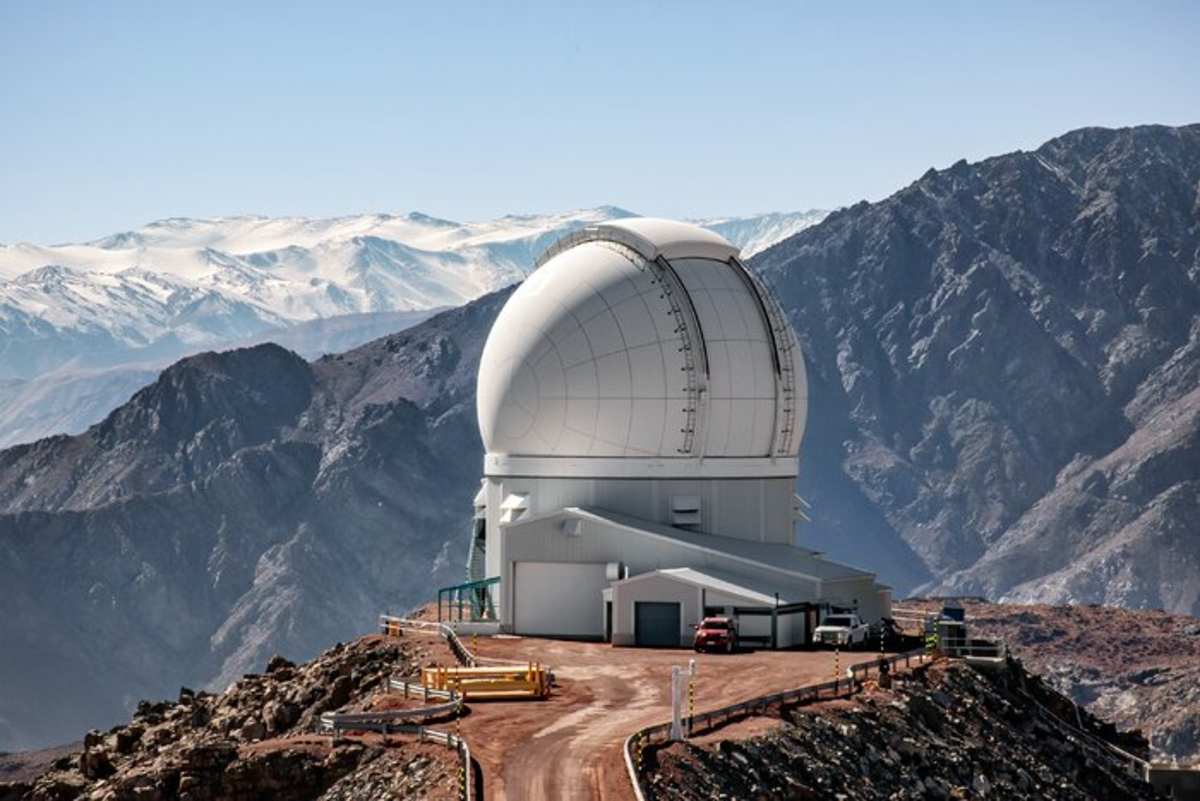
The stars in the binary system, named ASKAP J1745−5051, orbit each other so closely that they complete a full orbit in just over an hour. The low-mass red star of the binary is ten times lighter than the Sun. When the white dwarf strips material off it, the magnetic fields of the two stars interact, generating powerful radio bursts. “The resolution and sensitivity of the SOAR telescope instrumentation were key,” said Carney, a graduate student in the Department of Physics and Astronomy at UNC-Chapel Hill. "The observations were made possible in part by the Goodman spectrograph, a Carolina-designed instrument mounted on the SOAR Telescope in Chile. UNC originally initiated the SOAR Telescope project in 1987 to expand access to the southern sky for students and researchers." For years, astronomers suspected that such radio bursts probably came from slow-spinning neutron stars. The new discovery, however, puts forward the alternate explanation that such radio signals previously deemed mysterious may come from binary star systems containing white dwarfs. Such systems could help scientists study extreme magnetic fields and high-energy plasma, which are difficult to simulate in Earth-based laboratories.
More on Starlust
NASA's IXPE successfully studies a distant white dwarf star for the first time in history