What if the universe is a loop? This study suggests the Big Bang may not have been the beginning
The Einstein-Rosen bridge: What does it represent?
A study that was published in Classical and Quantum Gravity earlier this year suggests that the concept of the Einstein-Rosen bridge represents the dual nature of time.
Despite being popularly associated with the concept of wormholes (hypothetical shortcuts through space and time), the Einstein-Rosen bridge has nothing to do with it. Physicists Albert Einstein and Nathan Rosen came up with the concept in 1935 while they were looking into the behavior of particles in regions of extreme gravity. “It was not intended as a passage for travel but as a way to maintain consistency between gravity and quantum physics,” writes lead author Enrique Gaztanaga in The Conversation.
Quantum physics, for the uninitiated, is the branch of physics that deals with the behavior of particles and energy at the atomic and subatomic levels.
The Einstein-Rosen bridge as a mirror in spacetime
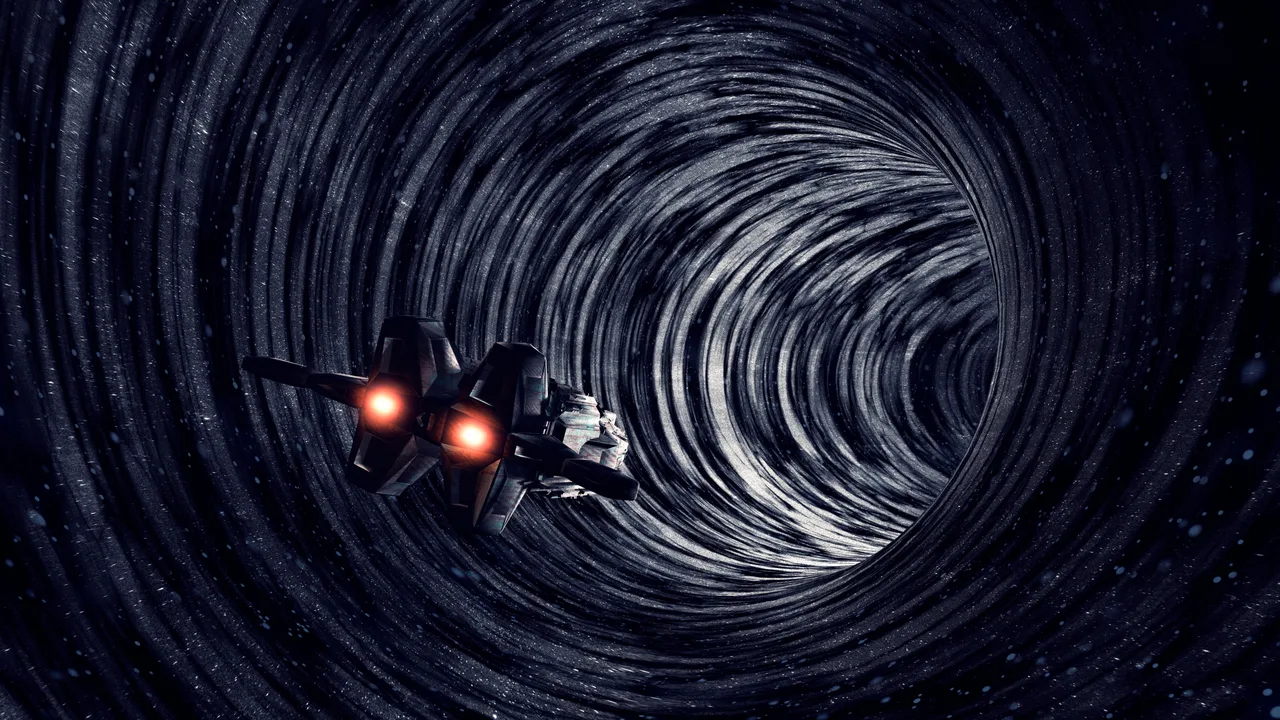
For the study in question, Gaztanaga, who is a professor of astrophysics at the Institute of Cosmology and Gravitation, University of Portsmouth, and his colleagues revisited the original concept of the Einstein-Rosen bridge. They suggest that it acts as a mirror in spacetime, connecting two arrows of time moving in opposite directions. “In one, time flows forward; in the other, it flows backward from its mirror-reflected position,” Gaztanaga explains.
This may be difficult to grasp because we experience time moving in only one direction—forward. However, on a quantum level, physics does not differentiate between past and future or left and right, for that matter. In fact, this view of time moving in two opposite directions becomes necessary for a consistent quantum picture near black holes or in expanding or collapsing universes.
A possible solution to the black hole information paradox
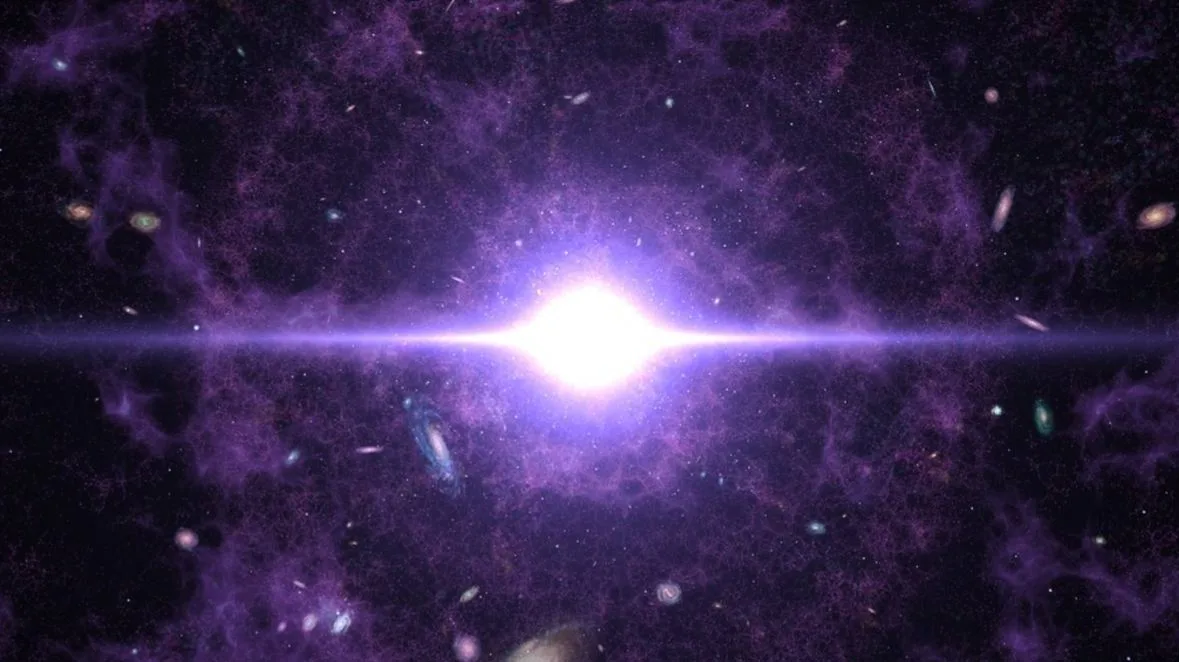
Back in 1974, Stephen Hawking proposed that any information that crosses the event horizon of a black hole is lost forever. But the study notes that this goes against the principle of quantum mechanics that says information cannot just disappear.
“If the full quantum description includes both time directions, nothing is truly lost,” writes Gaztanaga, explaining that such a description would see information enter in one time direction and exit in the opposite.
The Big Bang may not have been the beginning
Such a description of black holes as bridges between two time directions also entertains the possibility that the Big Bang may not have been the absolute beginning of the universe. Instead, it may have been a gateway “between two time-reversed phases of cosmic evolution.”
The study suggests that our universe may be the interior of a black hole that formed in another cosmos, collapsed, and began expanding after bouncing back. This also opens up the possibility of smaller black holes from the pre-bounce phase making their way to this universe after surviving the transition. They could, in theory, account for the invisible matter in the universe, which we refer to as dark matter.
Still no cosmic shortcuts
Gaztanaga warns that this reinterpretation of the Einstein-Rosen bridge should not be seen as an endorsement of wormholes that offer a shortcut across galaxies. “It offers a consistent quantum picture of gravity in which spacetime embodies a balance between opposite directions of time—and where our universe may have had a history before the Big Bang,” he explains.