In our search for alien life, a swarm of space telescopes could be the missing link

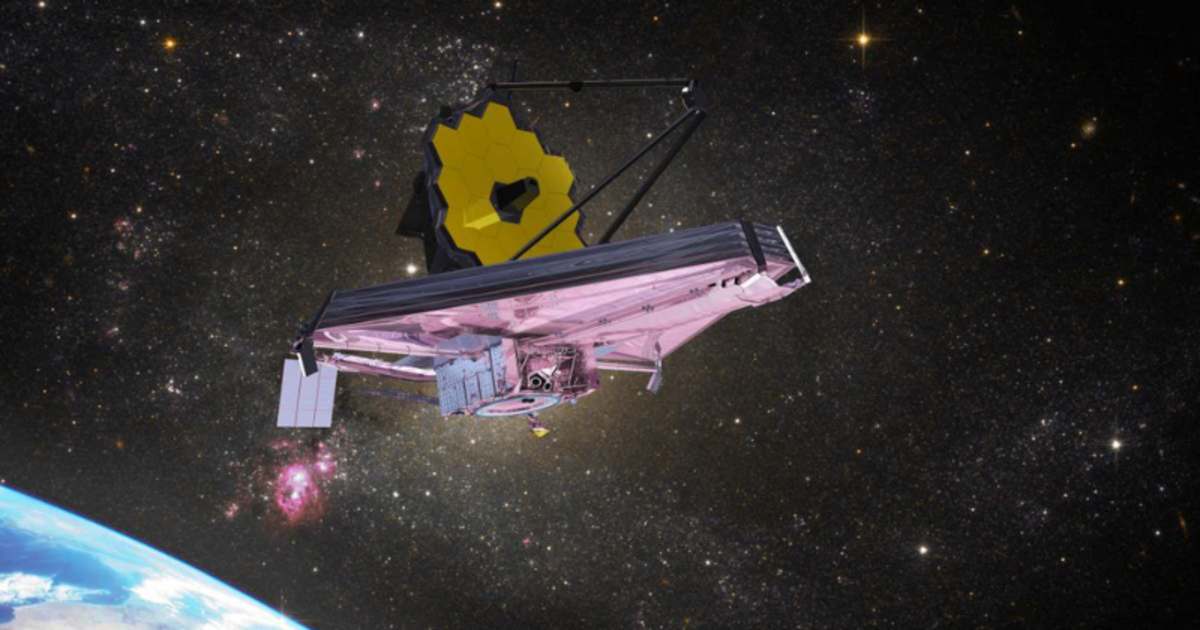
Scientists have found thousands of planets outside our solar system in the last decade, but figuring out whether any of them support life is much harder. The reason is that our telescopes don’t have the tools to collect the atmospheric data needed to look for biological signs. Even the James Webb Space Telescope (JWST), our most advanced observatory to date, has only managed to get partial glimpses of the atmospheres surrounding massive or closely orbiting exoplanets. But this may no longer be the case. A new report from the W.M. Keck Institute for Space Studies that reviewed an ambitious, European-led initiative called the Large Interferometer For Exoplanets (LIFE) mission suggests that the use of a coordinated swarm of smaller spacecraft could finally give scientists the tools needed to look for signs of alien life.
Why is spotting alien life so difficult in the first place?
When it comes to finding life beyond our solar system, the problem comes down to contrast. In the scale of the cosmos, a planet sits incredibly close to its host star, and in visible light, that star can be billions of times brighter, so picking out the planet's faint glow is incredibly difficult with the tools we currently have. NASA's upcoming Habitable Worlds Observatory (HWO) plans to get around this using a coronagraph, a device that physically blocks out starlight so the telescope can capture the dimmer light reflecting off a planet's surface. That approach works well for visible and ultraviolet wavelengths.

But scientists believe mid-infrared light, which captures the thermal heat a planet gives off rather than the light it simply bounces back, offers detailed insights. At these wavelengths, the brightness gap between star and planet shrinks considerably, allowing data to capture the fingerprints of gases such as ozone, methane, water, and carbon dioxide, whose presence in alien atmospheres could hint at biosignatures.
But why do we need a fleet of spacecraft instead of one big telescope?
To understand this, we first have to understand how mid-infrared light works. The issue is not just about capturing light, but achieving the spatial resolution required to separate a planet from its star. Because mid-infrared wavelengths are longer, images naturally become blurrier due to an effect called diffraction, and thus, to get images that are sharp enough to be discernible, we would need a telescope mirror so large that it won't physically fit inside any rocket we currently have. So, instead of working on an impossible build, the LIFE mission proposes several spacecraft flying in tight, precise formation, spaced tens to hundreds of meters apart. Each one will collect starlight and beam it back to a central spacecraft, which will then combine all the signals using a technique called formation-flying null interferometry. This will help in cancelling out a star's glare, thereby helping scientists detect the faint, isolated heat signal coming from the planet itself.
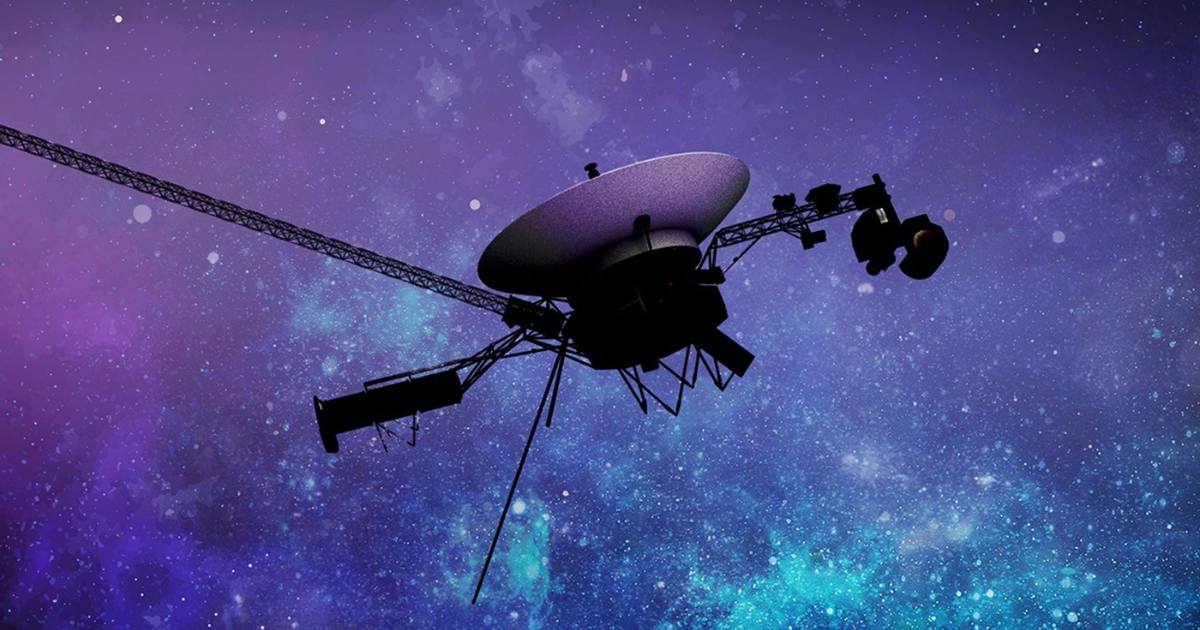
Scientists have actually thought of this method before. NASA's Terrestrial Planet Finder-Interferometer and the European Space Agency's Darwin, two earlier missions, were based on the same idea. But both got shelved, as the precision technology required for free-flying interferometry wasn't advanced enough at the time. According to the new Keck report, that's no longer the case. A few upcoming test missions (like Japan's SEIRIOS and NASA's SunRISE) will practice flying small CubeSats in tight formation and will give engineers an early shot at testing out the techniques LIFE will eventually depend on.

The report also points to LIFE and the Habitable Worlds Observatory working together as a team. While HWO will focus on visible and ultraviolet light, LIFE will measure thermal emissions to pin down a planet's temperature, size, and atmospheric makeup. Put both datasets together, and scientists gain a much stronger way to rule out false positives—cases where a chemical signal looks like it could point to life but actually comes from some sterile, non-biological process instead. Both flagship missions are aiming for a launch sometime in the 2040s, and the report findings are available on the arXiv preprint server.
More on Starlust
NOAA’s SOLAR-1 is now operational—and it's changing how the U.S. watches space weather