A 'skull' rock on Mars? The eerie formation NASA can't yet explain
Perseverance's strange discovery
NASA's Perseverance rover landed in Jezero Crater in February 2021. Since then, it has been exploring the surface of Mars. Scientists believe that this place was once an ancient lake.
While making its way down a slope on the crater rim called 'Witch Hazel Hill,' the rover came across something strange. Here, it found something strange that scientists named "Skull Hill," as it has a rock formation that looks a lot like a skull. Here’s what NASA says it is.
Meet the "Skull Hill"
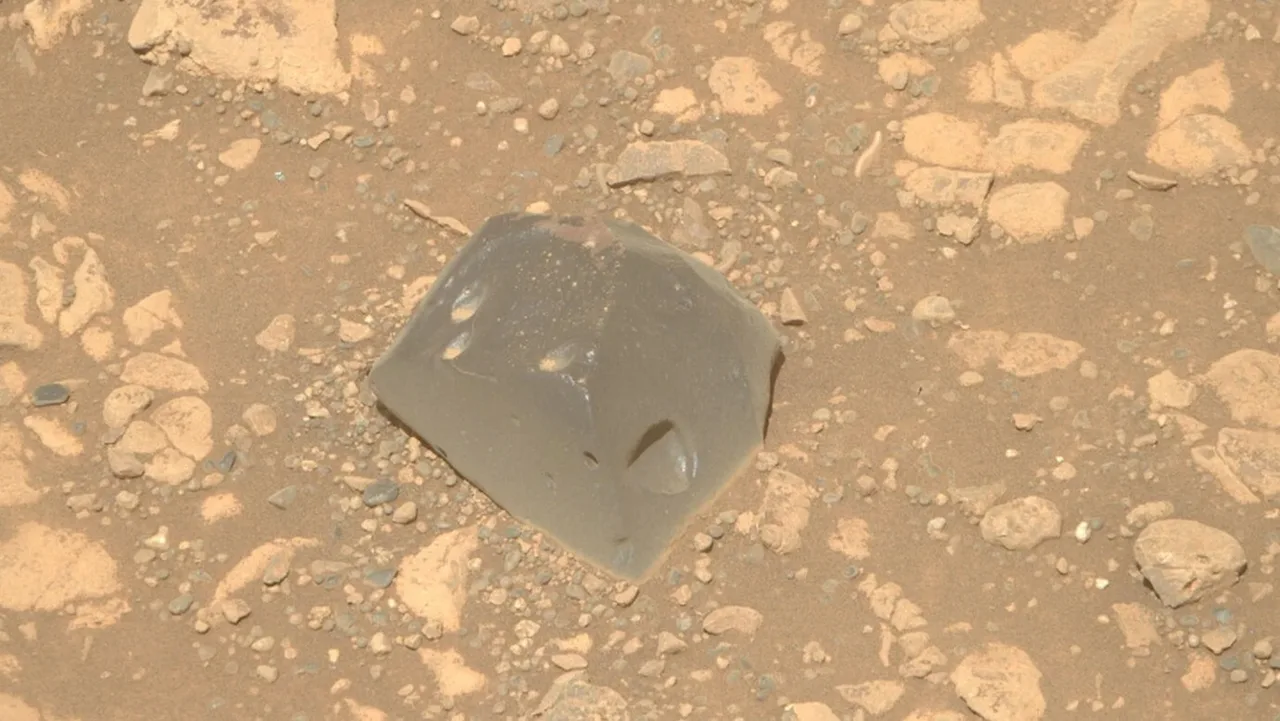
Perseverance photographed a dark and angular rock while it was working through the "Port Anson" area. This image was taken by the Mastcam-Z camera, and scientists nicknamed it "Skull Hill."
Describing this image, NASA said in a statement, "This float rock uniquely contrasts the surrounding light-toned outcrop with its dark tone and angular surface, and it features a few pits in the rock."
And it doesn't belong where it was found

The strange thing about this discovery is that the rock does not match the ground it was located on. This suggests that this rock might have formed somewhere else all along and was later moved to the current location where Perseverance captured it.
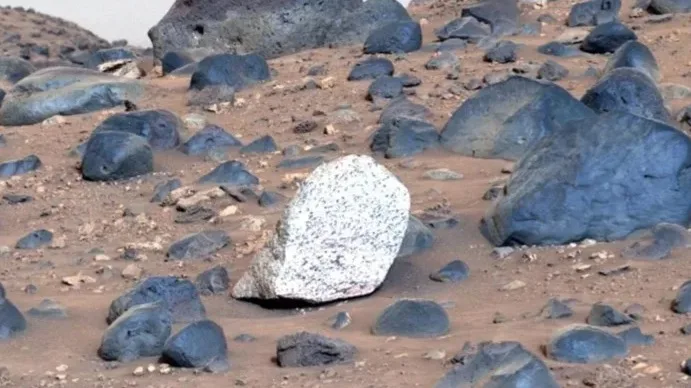
Before this, the rover had spotted other similar dark-toned float rocks on the surface of Mars, specifically in the Port Anson region. The NASA team is still working to understand how it formed and how it travelled to its current location.
Could it be a meteorite?
One guess about its origin is that Skull Hill might be a meteorite. This is because its dark color looks more like iron meteorites than the Curiosity rover has found in Gale Crater. But meteorites typically carry a lot of iron and nickel.
When Perseverance analyzed nearby rocks of similar appearance with the help of its SuperCam instrument, the readings didn't match what a meteorite should look like. So, this explanation is most unlikely.
So what exactly is it?
NASA is currently looking at two possibilities. First is that this Skull Hill could be an igneous rock, which means that it could have formed from cooling magma or lava. It’s a process that often produces dark minerals like olivine and pyroxene. Alternatively, it might have been thrown to its current spot by a powerful impact when something struck the Martian surface elsewhere.
As per NASA, “Luckily for us, the rover has instruments that can measure the chemical composition of rocks on Mars. Understanding the composition of these darker-toned floats will help the team to interpret the origin of this unique rock!”