Strange repeating radio signal from deep space case finally cracked; Here's what it is
The signal no one could explain
For years, scientists tracked a strange radio signal that came from somewhere in space every two hours. The location of this signal was expected to be the Big Dipper, and it was first spotted in the archival data. But astronomers had no idea what was causing it or where exactly it was coming from.
Now, a team of astronomers has finally cracked the case and figured out where this radio signal came from. Here’s what they found.
A pulse that showed up again and again
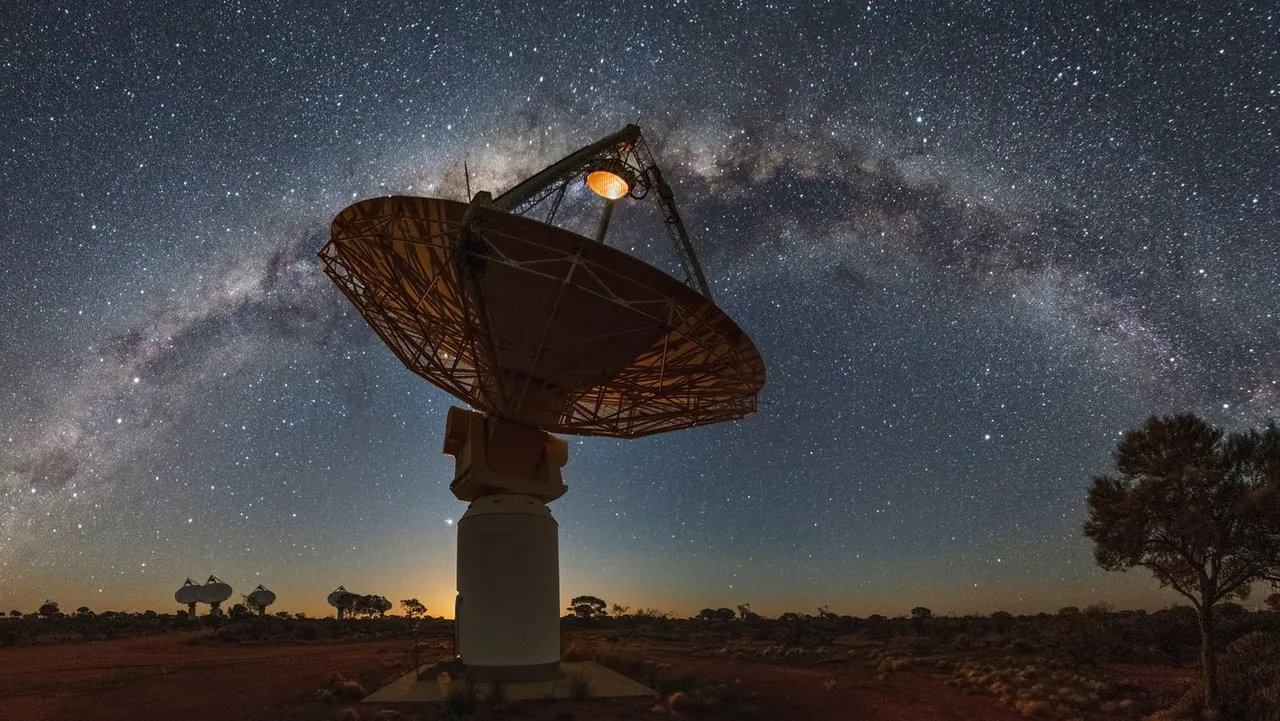
Astronomer Iris de Ruiter, from the University of Sydney, first noticed the signal in 2024. She found it while she was going through old data collected by LOFAR, which is the largest radio telescope built to catch the lowest-frequency signals detectable from Earth.
Once she found the first pulse, she noted six more from the exact same source. The pulses themselves lasted anywhere from a few seconds to a few minutes. And strangely, they kept coming back on a steady two-hour rhythm. That combination is what made this signal so puzzling to explain.
And it’s not quite like anything seen before
The pulses looked somewhat similar to fast radio bursts (or FRBs). These are a well-known type of brief, powerful radio flash from space. But there were key differences. FRBs last only milliseconds and they have a lot more energy. On the other hand, these pulses lasted for a longer duration, and they were much weaker.
Northwestern astrophysicist Charles Kilpatrick, who studied these pulses, noted in a statement, "There's still a major question of whether there’s a continuum of objects between long-period radio transients and FRBs, or if they are distinct populations."
Following the signal to its source
To figure out where the pulses were coming from, the team used two ground-based observatories. First is the MMT Observatory in Arizona, and the second is McDonald Observatory in Texas. Their observations traced the signal to a binary system about 1,600 light-years from Earth, cataloged as ILTJ1101.
The two objects in this system were found to be orbiting each other every 125.5 minutes. "The spectroscopic lines in these data allowed us to determine that the red dwarf is moving back and forth very rapidly with exactly the same two-hour period as the radio pulses," Kilpatrick said. "That is convincing evidence that the red dwarf is in a binary system."
And the hidden partner turned out to be a dead star
By measuring how strongly the red dwarf wobbled, the team calculated the mass of its unseen companion and concluded it had to be a white dwarf. Kilpatrick said, "In almost every scenario, its mass and the fact that it is too faint to see means it must be a white dwarf.”
He added, “This confirms the leading hypothesis for the white dwarf binary origin and is the first direct evidence we have for the progenitor systems of long-period radio transients." The magnetic fields of the two stars colliding as they orbit appear to be what generates the radio pulses.