'Fraction of a hair's breadth': NASA aligns optics of Roman Space Telescope ahead of arrival at L2
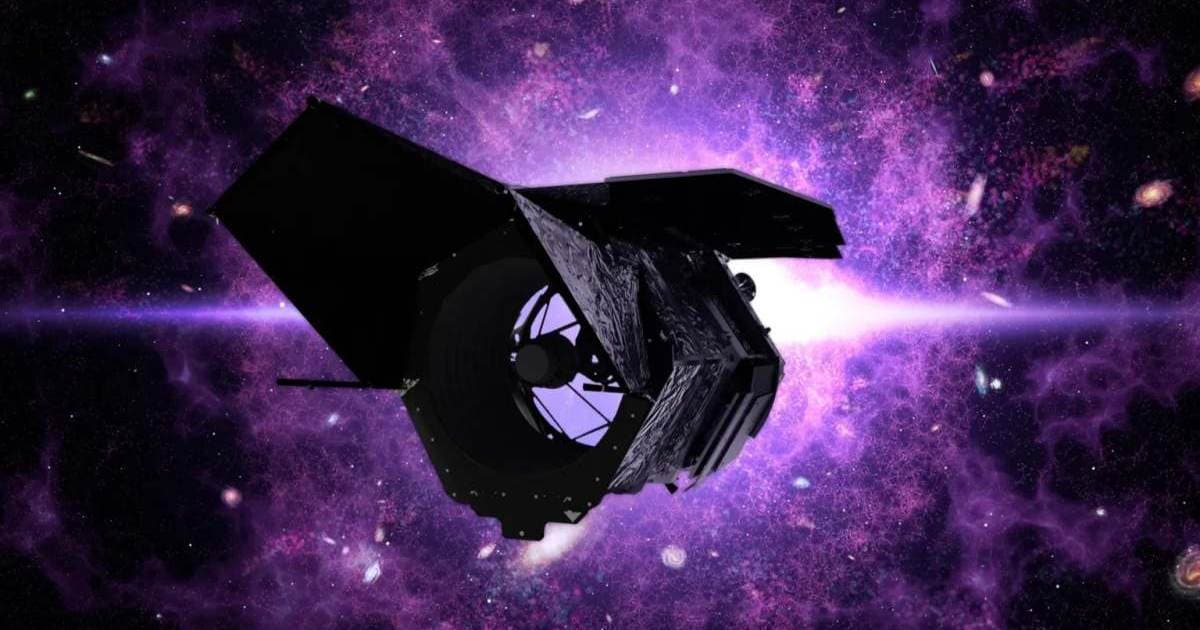
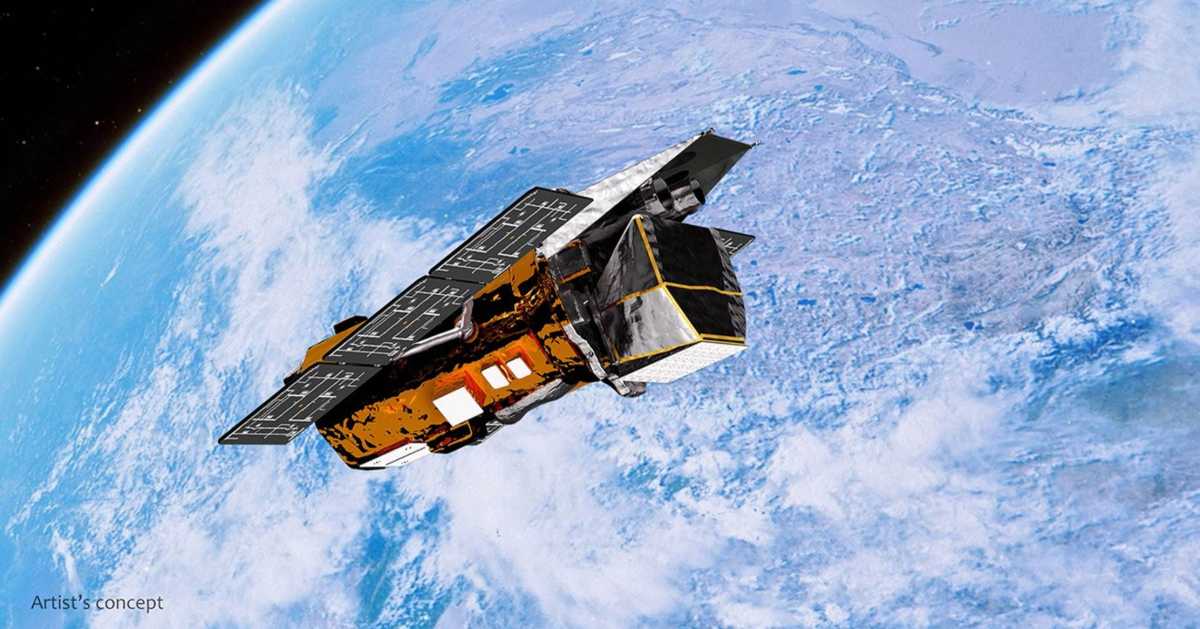
The Nancy Grace Roman Space Telescope has successfully undergone alignment of its optical instruments, NASA announced on Friday, marking another step towards the observatory's full operationalization. Dominic Benford, Roman’s program scientist at NASA Headquarters in Washington, stated, "Roman requires exquisite alignment because it has to be at least ten times more stable than our Hubble or Webb space telescopes to conduct the science it’s setting out to do." This alignment has brought the highly advanced space observatory closer to beginning its official science operations in the near future, with it set to reach its destination around the second Sun-Earth Lagrange point sometime next month.
Here we go! 🎶 Roman’s instruments are officially *in sync* and gearing up for exciting science. Now Roman will conduct a weekslong dress rehearsal, capturing and refining images of the cosmos. https://t.co/LBNeRnNtyx https://t.co/8Zc3nTRvf3
— Nancy Grace Roman Space Telescope (@NASARoman) November 13, 2026
Although the Roman team had been careful in aligning all of the observatory's optics while it was still being put together at the Goddard Space Flight Center in Maryland, its rough journey to space meant shifts in these alignments were anticipated in advance. It was launched aboard a SpaceX Falcon Heavy in August this year, and the extreme temperature fluctuations and transition to microgravity shifted Roman’s internal alignment. This was remedied by Roman-associated scientists taking images of specific stars and comparing those particular stars' actual locations to where they were expected to be. The Roman team was able to learn how to adjust future observations so the telescope will point flawlessly at its targets by identifying any minor differences in the stars’ positions.
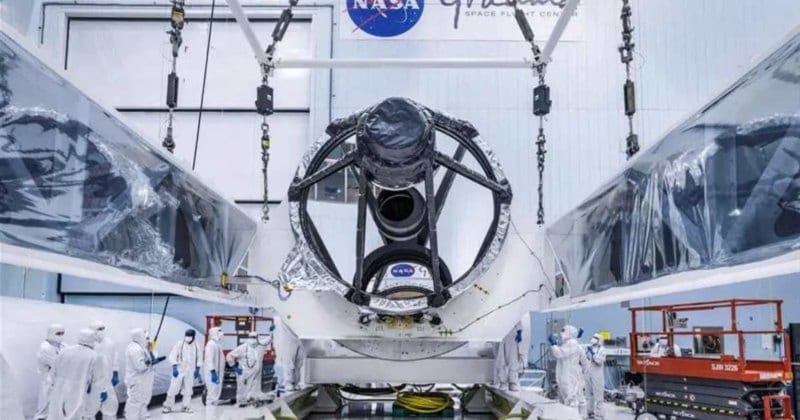
This tuning process has rendered observations by the telescope extremely sharp. Tony Sohn, an astronomer at the Space Telescope Science Institute, shared that the observatory is now "internally aligned to within a tiny fraction of a hair's breadth of perfection." This level of precision is a must for the observatory's Wide Field Instrument, which boasts a powerful 300-megapixel camera spread across 18 separate detectors. Astrophysicist Tyler Desjardins noted that these detectors must work in unison to keep certain guide stars in their sights in a precise fashion. “If our map says a star should land here on one detector and another star should land there on another detector, but one of those positions is wrong, it starts presenting problems for guiding. We need to know the positions of our guide stars very precisely so we can accurately aim and correct tiny drifts," explained Desjardins.
The Wide Field Instrument is not only Roman's main camera, but also serves as a means to guide and keep the telescope steady while a second device—the Coronagraph Instrument—searches for exoplanets and protoplanetary disks around distant stars. The search for exoplanets is a challenge because of the intense light from the stars they orbit. Optical engineer Brian Kern explains that because light travels as a wave, light from stars tends to spill over and flood the dark areas where planets might be found. To counter this glare, the coronagraph uses a series of perfectly aligned masks to absorb and redirect the spilled light. "We have precise alignment tolerances for positioning those masks individually, as a first step. That allows the next, more complex step to finish what alignment alone could not achieve," said Kern.
With the mirrors and masks now adjusted to make the telescope's vision as clear as possible, the team is moving to the next phase of the mission. Engineers will test the coronagraph's deformable mirrors, which put more than 3,000 tiny moving parts to use for rejecting excess light emitted by stars in a step-by-step fashion. "We have demonstrated this in a lab using an artificial space environment, but the second stage of active starlight control in space, with real starlight and real planets, will be a record-breaking first-time accomplishment," noted Kern. Meanwhile, as the coronagraph locks onto certain stars for long periods, the Wide Field Instrument will capture random neighboring patches of the sky. "It will be a very valuable additional bit of data that scientists will pore over, because those are largely going to be places where we have never had deep surveys," added Benford. Roman is currently over 800,000 miles away from Earth, and is on course to occupy a looping path around L2 called a quasi-halo orbit—similar to that of the James Webb Space Telescope (JWST). This vantage point close to a million miles away from us will allow Roman to save fuel while having a continuous view of the universe.
More on Starlust
NASA’s Nancy Grace Roman Telescope named one of the best inventions of 2026 by TIME
NASA's Nancy Grace Roman Telescope can now easily run for 22 years instead of 10. Here's how